
 Worksheets
Unit 7 & 8 Review
Total questions: 41
Worksheet time: 23mins
Waves cannot be transmitted through which of the following?
Plasma
Matter
A metal
A vacuum
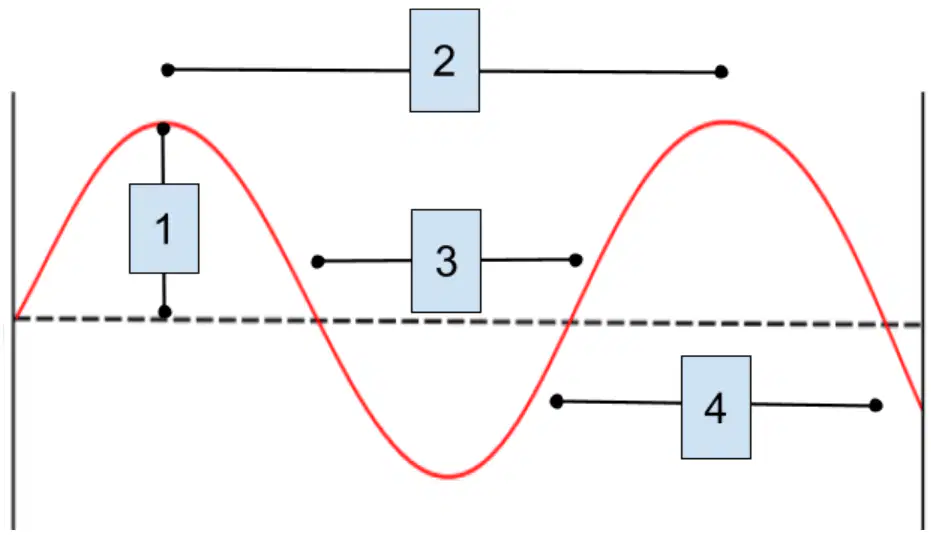
Which number represents a wavelength?
1
2
3
4
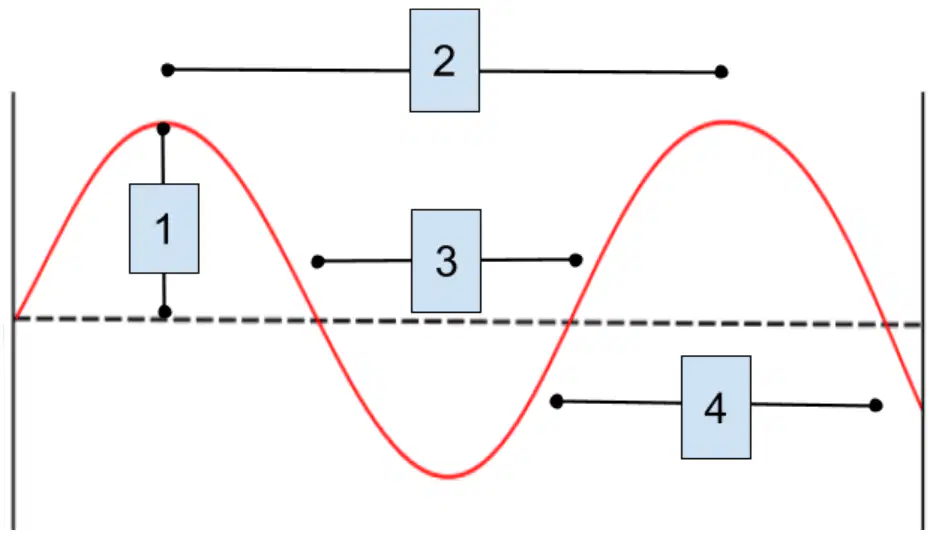
Which number represents the amplitude of the wave?
1
2
3
4
Waves transfer (a) from one place to another without a permanent transfer of (b) .
gravity
mass
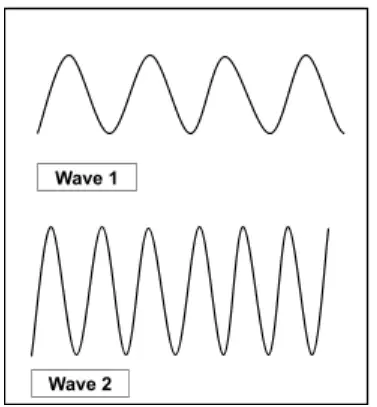
Which of the following is an inference that can be made based on this picture?
Wave 1 has more energy than Wave 2
Wave 2 has more energy than Wave 1.
Wave 1 is traveling through a vacuum and Wave 2 is traveling through a solid.
Both waves will have the same pitch.
Longitudinal waves are caused by—
Chemical changes
Static electricity
Gravity
Vibrations
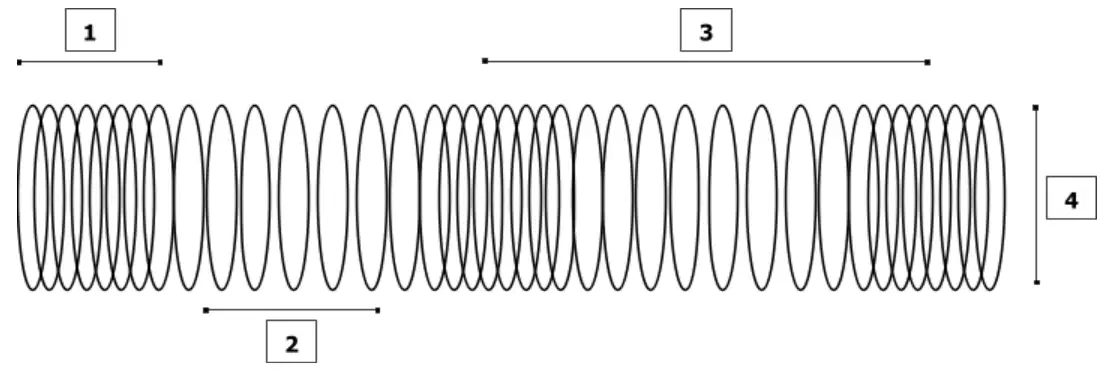
Use the picture to answer the item. Which of the following numbers in the picture best represents a rarefaction?
1
2
3
4
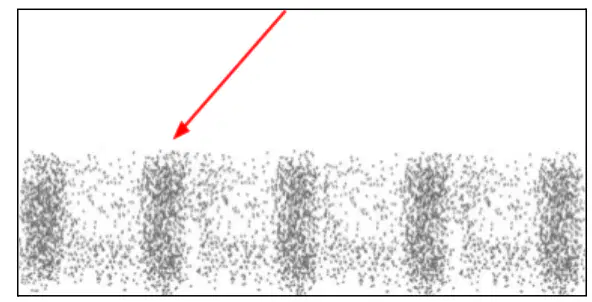
Which best describes what the arrow is pointing to?
Wavelength
Trough
Crest
Compression
Sound is a type of—
Thermal energy
Radiant energy
Electric energy
Mechanical energy
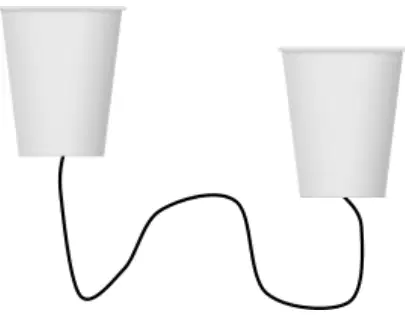
A student conducts an experiment to see how sound travels through two cups connected by a string. Which of the following is most likely a conclusion the student will draw? Choose two(2) correct answers.
Sound travels better when the string is pulled tight.
Multiple holes in the cup allow the sound to travel faster.
Adding more strings will cause the pitch of voices to increase.
Pinching the string will decrease how well the sound can travel.
The sounds will travel best if the cups are placed in liquid.
Using what you know about how sound travels through different mediums, correctly drag and drop the following mediums to the speed at which sound travels through them.
Air
1,087 ft./second
Steel
16,850 ft./second
Water
4,629 ft./second

What is the speed of sound in air according to the table?
1,087 ft./second
500 ft./second
2,000 ft./second
750 ft./second
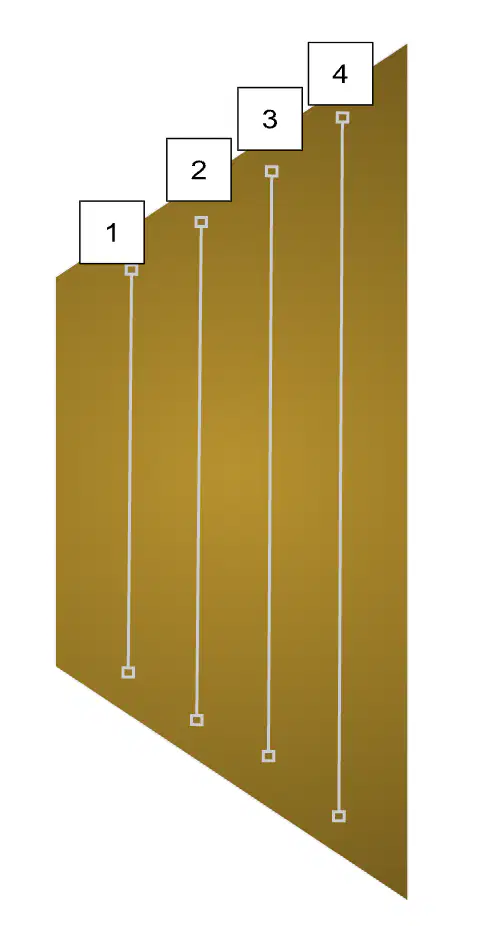
A student created an instrument using wires strung across wood. The wire with the highest pitch will most likely be wire number—
1
2
3
4

Use the picture below to answer the item. Drag and drop each of the following words to best show which object reflects, absorbs, or transmits light.
Absorbs
Leaves
Reflects
mirror
Transmits
window
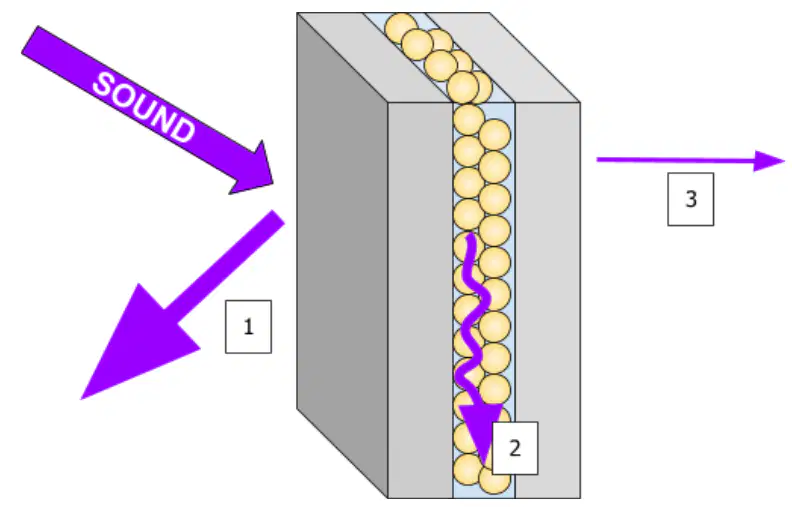
A builder installs some sound insulation materials in a recording studio, as seen below. Drag and drop the appropriate label to show which arrow best represents a sound that is absorbed, reflected, and transmitted.
Reflected
1
Absorbed
2
Transmitted
3
Which will happen as a wavelength increases?
The period will decrease.
The amplitude will increase.
The speed will decrease.
The frequency will decrease.
What will happen as the amplitude of a sound wave increases?
The pitch will go up.
The pitch will go down.
The sound will get louder.
The sound will get quieter.
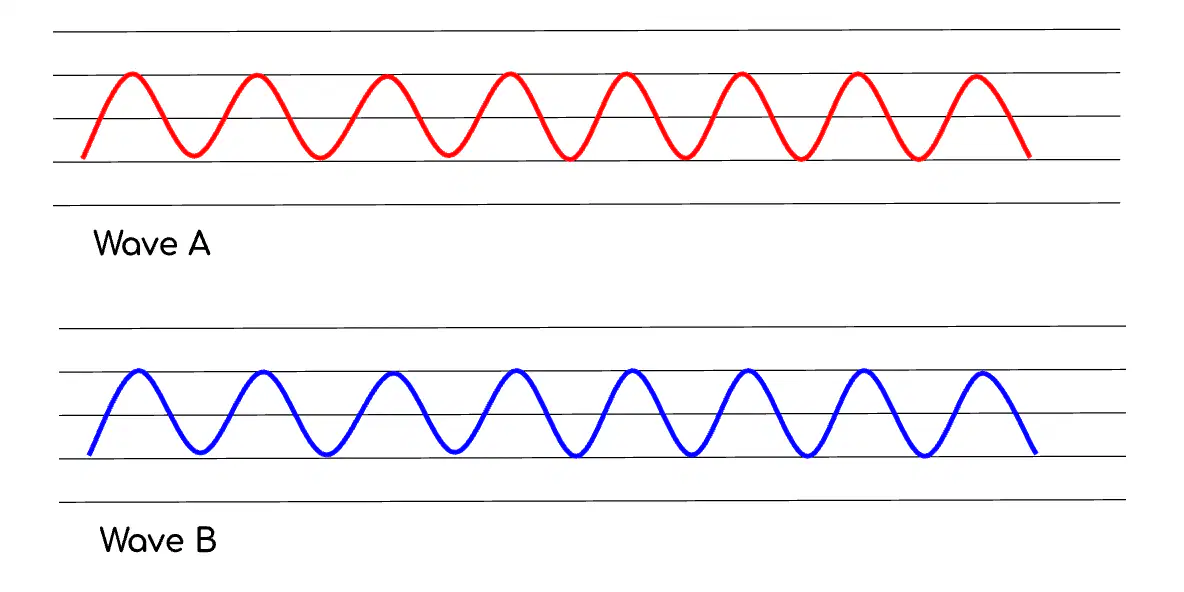
What will happen if Wave A and Wave B overlap? Choose 3 correct answers.
The total amplitude will double.
Negative interference will occur.
There will be no sound.
A new wave pattern will occur.
There will be resonance between the two waves.
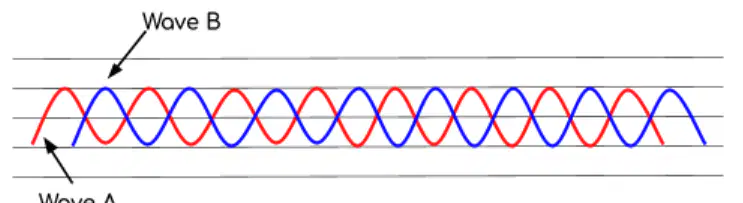
In this picture, Wave A and Wave B will create—
Resonance
Negative interference
A higher pitch
A lower pitch
Gamma rays, X-rays, and ultraviolet rays are all part of the—
Electromagnetic spectrum
Compression wave field
Mechanical energy theory
Law of Thermodynamics
Until it hits an object, radiant energy travels—
In straight lines
In circles
Backwards
In transverse waves
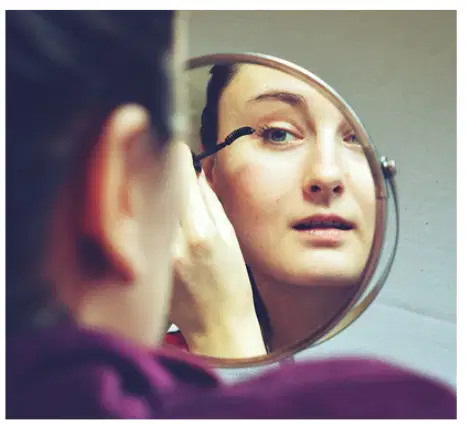
The woman in this picture sees her reflection as upright and magnified. She is using a—
Concave mirror
Convex mirror
Plane mirror
Rarefaction mirror
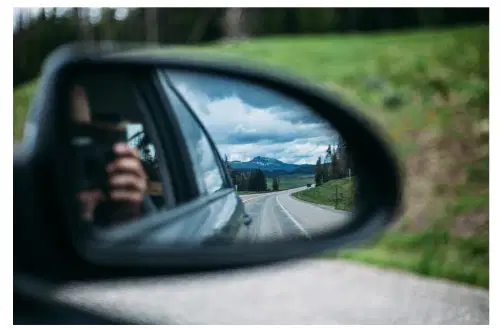
This car side mirror produces an image that is upright and smaller than what is being reflected because it allows a wider view than other types of mirrors. What kind of mirror is used in the car side mirror?
Concave mirror
Convex mirror
Plane mirror
Rarefaction mirror

A teacher is farsighted and needs glasses to read things that are close to her. The glasses focus light rays to a point, making the words larger and upright. Her glasses are using—
Concave lens
Plane lenses
Transverse lens
Convex lenses
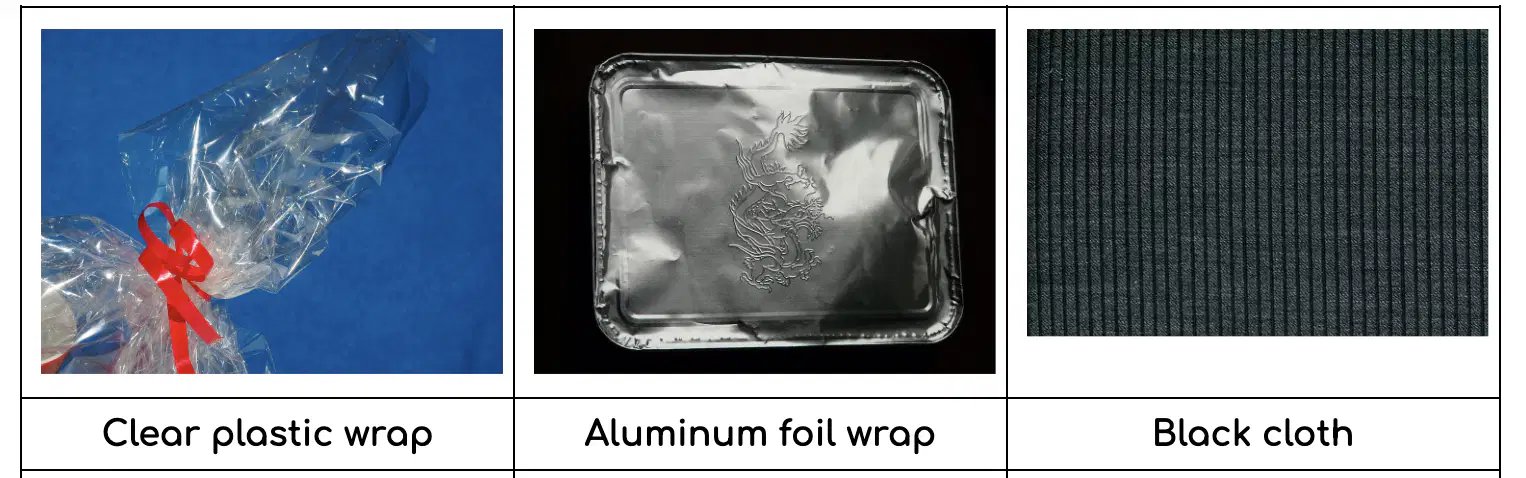
A student conducts an experiment to see which materials will absorb, reflect, or transmit light using the following materials: [Image: Clear plastic wrap, Aluminum foil wrap, Black cloth] Drag and drop each of the following words that will best explain what will happen to light rays when they are shone onto each of these materials: • Absorb • Reflect • Transmit Clear plastic wrap: ________ Aluminum foil wrap: ________ Black cloth: ________
Clear plastic wrap: Transmit Aluminum foil wrap: Reflect Black cloth: Absorb
Clear plastic wrap: Absorb Aluminum foil wrap: Transmit Black cloth: Reflect
Clear plastic wrap: Reflect Aluminum foil wrap: Absorb Black cloth: Transmit
Clear plastic wrap: Absorb Aluminum foil wrap: Reflect Black cloth: Transmit
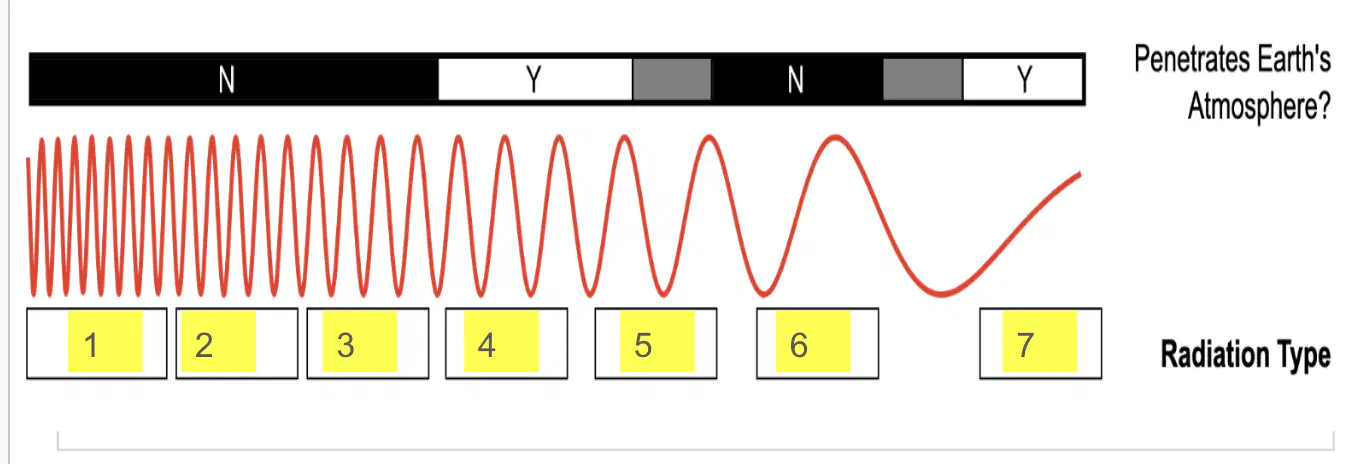
Drag and drop the different types of waves to where they belong on the graphic below.
1
Gamma ray
2
X-Ray
3
Ultraviolet
4
Visible
5
Infrared
Which of the following are true about gamma rays?
They have the highest frequency and the shortest wavelength.
They can only be absorbed by materials, never transmitted or reflected.
They have the lowest frequency and the longest wavelength.
They exist on the visible light spectrum.
When a wave passes through different materials, it frequently results in—
Ionic bonding of the elements in each material
Oxidation of the surrounding air
A change in the speed of the wave
A flip of the material from convex to concave
What two (2) quantities are needed to calculate the speed of an object?
Distance
Volume
Circumference
Time
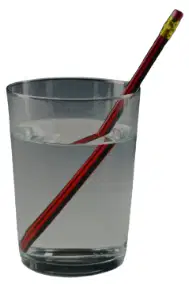
A student conducts an experiment in which a pencil is inserted into different levels of water to determine whether water volume impacts the level of light refraction. Which of these is the dependent variable in this experiment?
The type of pencil used
The amount of water
The refraction of the light
The electromagnetic wave type
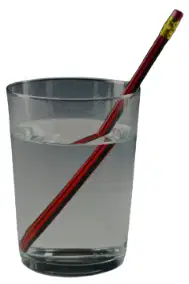
A student conducts an experiment in which a pencil is inserted into different levels of water to determine whether water volume impacts the level of light refraction. Which of the following needs to be kept constant for this to be a fair test? Choose two correct answers.
The pen used to record the results
The amount of water used
The type of glass used
The length of the pencil used
A device that makes work easier and has different purposes that change the effort needed to change a direction, distance moved, or force applied is called a –
Mechanical advantage
Compound machine
Simple machine
Mechanical complex machine
Mr. Smith likes to race motorcycles on the weekend. Last week in Dwindiee County, he placed first in his heat. If he covered 500 meters in 25 seconds, what was his average speed? Indicate your answer in the box (do not include units) Speed = distance/time
20
15
25
10
Which term relates to the same principles as speed but includes a direction in its measurement?
Linear speed
Constant speed
Velocity
Average speed
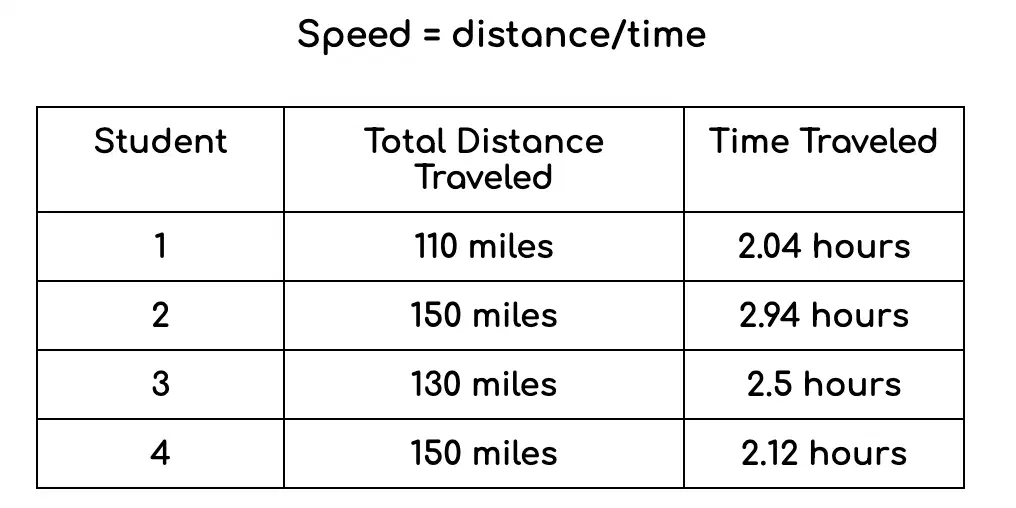
Examine the table below and use the formula to calculate the speed for each student. Speed = distance/time Four students left their school at the same time and traveled on Interstate 64. The speed limit on Interstate 64 is 55 miles per hour. Which student drove at a constant speed that was above the speed limit?
Student 1
Student 2
Student 3
Student 4
Calculate the force of a truck that has a mass of 450 kg and accelerates at 5 m/s².
2000 N
2250 N
90 N
11,250 N
As a space shuttle accelerates toward the sky, the exhaust pushes down on the Earth while it launches toward space. Which of the following Newton’s Laws is being described in this example?
Newton’s 1st Law of Motion
Newton’s 2nd Law of Motion
Newton’s 3rd Law of Motion
Newton’s 4th Law of Motion
Friction (a) motion when two surfaces are in contact.
Impede
Facilitates
Encourages
Solve for acceleration using the formula. Indicate your answer in the box, and do not include units. Acceleration = Vf - Vi / Time A roller coaster car rapidly picks up speed as it rolls down a slope. As it starts down the slope, its speed is 4 m/s. But 3 seconds later, at the bottom of the slope, its speed is 22 m/s. What is its average acceleration?
6
4
8
2
Work is done when an object is moved through a distance in the direction of the applied force. Which example best describes the work being done?
A student pushes the wall, but the wall doesn’t move.
A teacher pulls a chair across the floor.
A pencil on the table.
A Chromebook is being powered on.
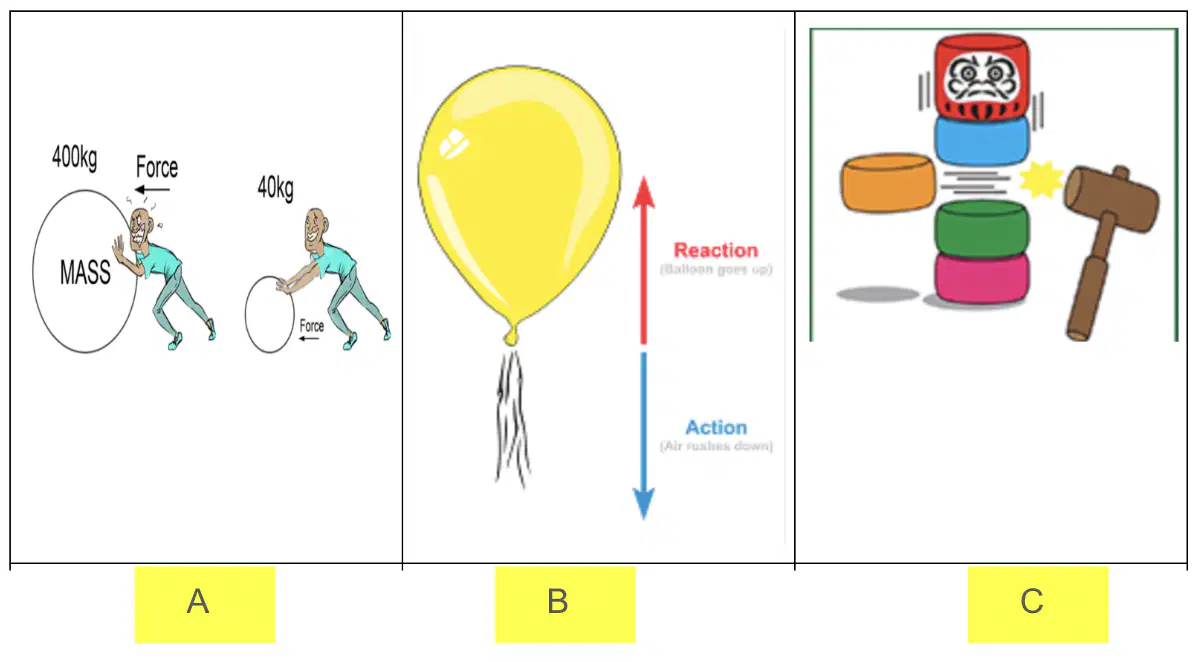
Match the example that illustrates Newton’s Laws of Motion.
Newton’s 1st Law
Newton’s 2nd Law
Newton’s 3rd Law
A
Newton's 2nd Law
B
Newton's 3rd Law
C
Newton's 1st Law

