
NEW
Font size
 Worksheets
French Revolution Quiz
Total questions: 76
Worksheet time: 38mins
What are the three key principles associated with the French Revolution?
Liberty, Equality, Fraternity
Peace, Love, Unity
Justice, Honor, Freedom
Strength, Courage, Wisdom
What percentage of the people belonged to the First Estate?
1%
2%
10%
97%
Which estate owned 25% of the land?
First Estate
Second Estate
Third Estate
Fourth Estate
Who were part of the Third Estate?
Clergy
Nobles
Middle class, peasants, city workers
Kings and Queens
How much land did the Third Estate own?
10%
25%
65%
100%
Who made up the first estate in the social hierarchy?
The clergy
The peasants
The merchants
The soldiers
What was the lifestyle of wealthy abbots in the first estate?
They lived in luxury off of wealthy church lands.
They lived like peasants.
They were merchants.
They were soldiers.
How did poor parish priests in the first estate live?
Much like the peasants
In luxury
As merchants
As soldiers
What did the second estate, the nobility, inherit?
Titles and wealth from the land
Money and power from the king
Land and castles from the peasants
Titles and wealth from merchants
What was true about some members of the nobility?
They had little money but all the privileges of noble rank
They had no privileges and no money
They had a lot of money but no privileges
They had no land but many titles
What did most members of the nobility enjoy?
Privileges and wealth
Only wealth
Only privileges
Neither privileges nor wealth
Who were included in the Third Estate in France?
Only the nobility
Wealthy merchants, doctors, and shopkeepers
Kings and queens
Foreign diplomats
What was the largest group in France during the time of the estates?
The First Estate
The Second Estate
The Third Estate
The Royal Family
Which of the following was NOT a part of the Third Estate?
Urban poor
Peasants
Nobility
Shopkeepers
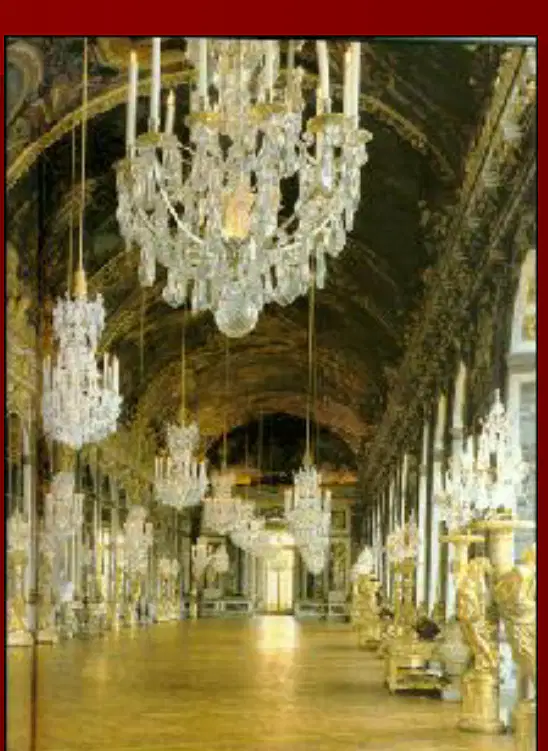
Where did the French royal family live in luxury?
The Palace of Versailles
The Tower of London
The Colosseum
The Eiffel Tower
What was a notable characteristic of Louis XVI according to the text?
He was very confident and outgoing.
He was awkward and clumsy.
He was known for his great military skills.
He was a famous artist.
How did Louis XVI feel about being King of France?
He loved it and was very proud.
He was indifferent and uninterested.
He was insecure and seemed to dislike it.
He was excited and enthusiastic.
What did Louis XVI say when one of his ministers resigned?
I am glad you are leaving.
Why can't I resign too?
You will be missed.
I will find a better replacement.

What was one of the reasons Marie Antoinette was considered irresponsible in her early years as Queen?
She spent huge amounts on clothes.
She was a skilled diplomat.
She was known for her charity work.
She focused on improving education.
Why was Marie Antoinette unpopular in France?
She was Austrian.
She was a great leader.
She was very generous.
She was a famous artist.
What was one reason for the financial crisis in France?
Efficient tax structure
Outdated medieval bureaucratic institutions
Surplus treasury
Low military spending
Who was most affected by the unfair tax structure in France?
The first estate
The second estate
The third estate
The royal family
Which of the following contributed to France's drained treasury?
Aiding the Americans during the American Revolution
Peace treaties with England
Reduced government spending
Increased tax revenue
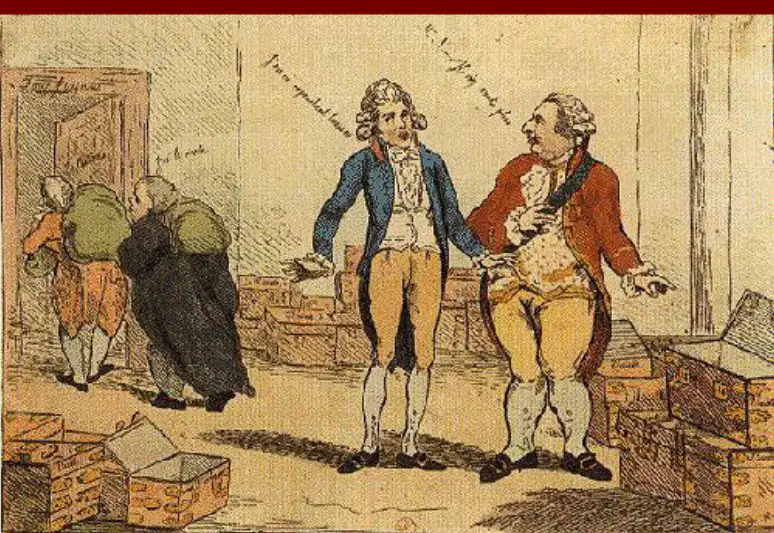
What question does Louis ask in the cartoon?
Where is the food?
Where is the tax money?
Where is the king?
Where is the treasure?
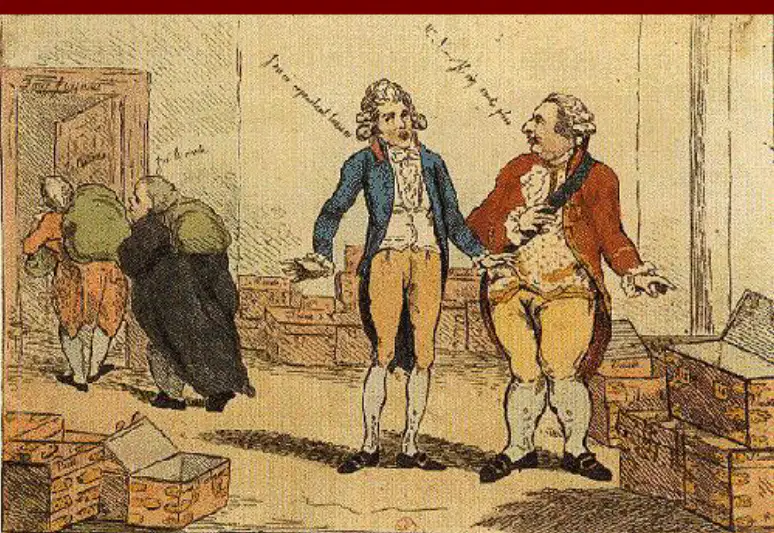
Who is looking on and commenting about the money in the cartoon?
The king
The queen
The financial minister, Necker
The general
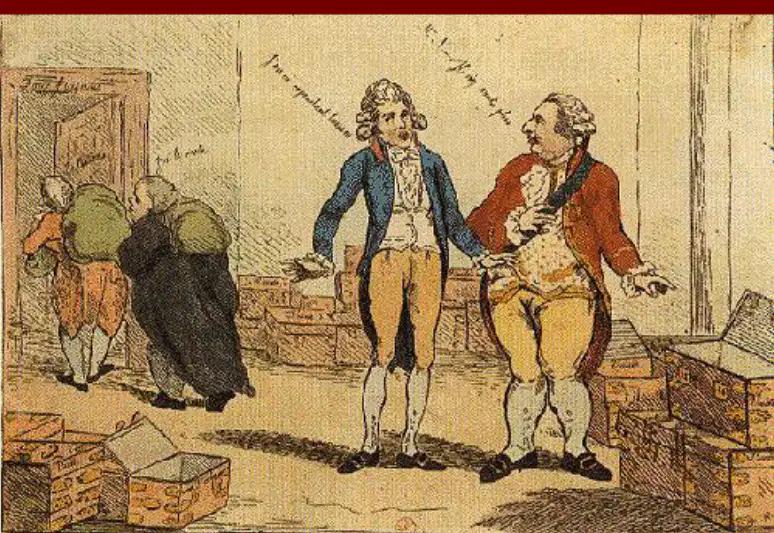
What are the nobles and clergy doing in the cartoon?
Singing a song
Sneaking out the door with sacks of money
Building a castle
Planting a garden
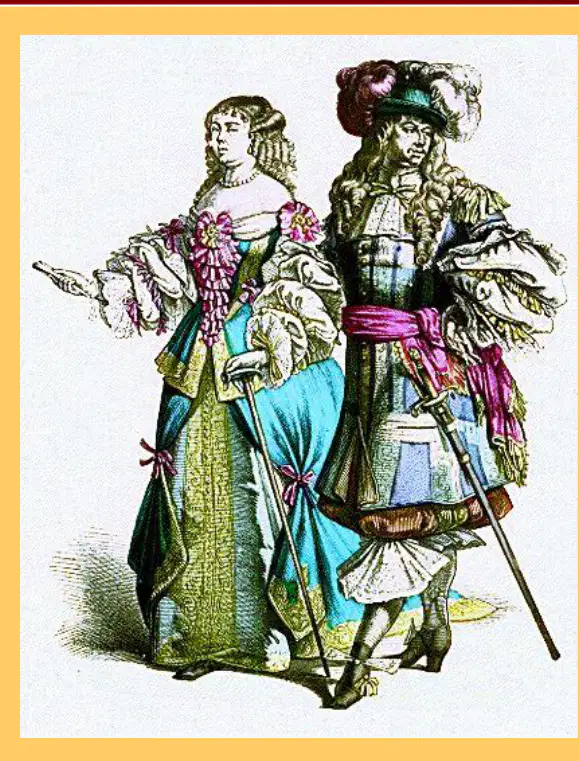
What did the nobility want according to the text?
Greater political influence for themselves
Equal rights for all estates
More land for the third estate
Less political influence for themselves
Who were the nobility not interested in helping, according to the text?
The first estate
The second estate
The third estate
The royal family
Why did the King attempt to remove some of the nobles' tax exemptions?
To solve the financial crisis
To gain more power
To make the nobles happy
To start a war
What was the reaction of the nobility to the King's attempt to remove their tax exemptions?
They agreed and paid more taxes
They saw themselves as special and entitled to privileges
They ignored the King's attempt
They supported the King's decision
What role did the Parlement play in the King's attempt to remove tax exemptions?
It supported the King's decision
It was a judicial organization that blocked the King's move
It ignored the King's decision
It helped the King enforce the new taxes
In what year was the meeting of the Estates General called?
1789
1787
1788
1790

What was the event depicted in the image?
The signing of the Declaration of Independence
The meeting of the Estates General
The coronation of a king
The founding of the United Nations
On what date did the meeting of the Estates General take place?
July 4, 1776
May 5, 1789
November 11, 1918
January 1, 1800
What did the third estate wear when the Estates General met?
All in black
In full regalia
In all their finery
In white robes
Where did the Estates General meet?
Versailles
Paris
Lyon
Marseille
How did the nobility dress for the Estates General meeting?
In all their finery
In black
In casual clothes
In full regalia
What did the delegates of the third estate insist on regarding the voting process?
Voting by order
Voting by head
Voting by region
Voting by age
Why did the third estate want the vote to be taken by head?
To make the process faster
To ensure fairness
To gain a majority
To follow tradition
What was the King's response to the third estate's request?
He agreed immediately
He refused to grant their request
He asked for more time
He suggested a compromise
How did the third estate react to the King's refusal?
They accepted the decision
They refused to budge
They proposed a new plan
They left the meeting
Who asked the question "What is the Third Estate?" and answered "Everything!"?
Abbe Sieyes
King Louis XVI
Napoleon Bonaparte
Marie Antoinette
What action did the commoners of France take at the suggestion of the liberal clergyman?
Declared themselves the National Assembly
Formed a new monarchy
Started a revolution
Built a new palace
Where did the delegates move when they found their meeting hall locked?
A nearby indoor tennis court
A local church
The king's palace
A public park
What did some people want to do during the debate about their course of action?
Return to Paris to the protection of the people
Travel to England for safety
Stay and wait for further instructions
Disband immediately
What did Mounier suggest during the debate?
To return to Paris
To swear an oath of allegiance
To disband immediately
To travel to England
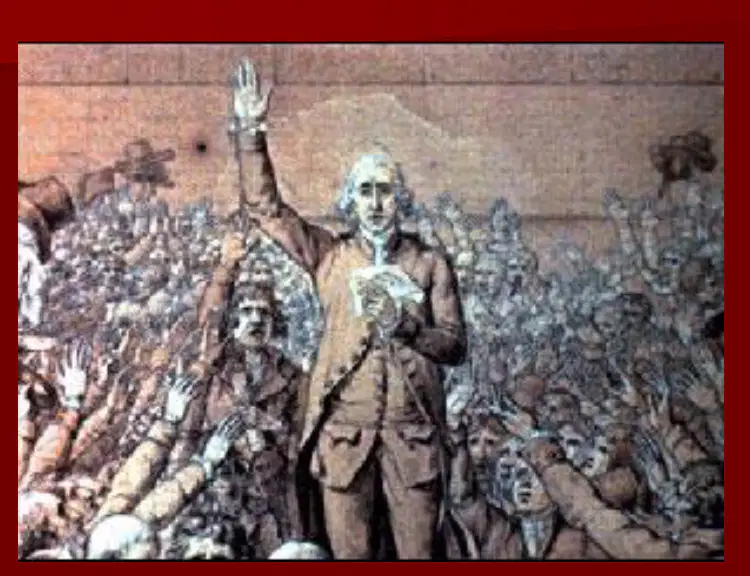
What did M. Mounier suggest in his statement?
To disperse immediately
To establish a sound and just constitution
To ignore the instructions
To leave the country
What is the name of the oath taken by the delegates?
The Royal Oath
The National Oath
The Tennis Court Oath
The Assembly Oath
How many delegates signed the Tennis Court Oath?
577
578
579
580
On what date was the Tennis Court Oath taken?
June 18, 1789
June 19, 1789
June 20, 1789
June 21, 1789
What is the title of the artwork shown in the image?
The Last Supper
The Tennis Court Oath
The School of Athens
The Night Watch
Who is the artist of the painting shown in the image?
Leonardo da Vinci
Michelangelo
Jacques Louis David
Rembrandt
What did the King ask the third estate to do at the end of the meeting?
Celebrate
Disperse
Vote
Sing
How did the third estate respond to the King's order to disperse?
They agreed
They refused
They laughed
They left quietly
What did one of the delegates declare about their presence?
We are here to celebrate.
We are here at the will of the people.
We are here to follow orders.
We are here to enjoy the meeting.
What did the King eventually order the first and second estates to do?
Use force against the third estate
Join the new National Assembly
Leave the country
Form a new government
Which estate was victorious in the end?
First estate
Second estate
Third estate
Fourth estate
What important document did the new National Assembly create?
The Universal Declaration of Human Rights
The Declaration of the Rights of Man
The Constitution of the United States
The Magna Carta
What principle did The Declaration of the Rights of Man state?
All men had equal rights under the law
Only some people have rights
Rights are given by the king
Rights depend on wealth
What has The Declaration of the Rights of Man influenced?
The creation of new countries
All subsequent declarations of human rights
The invention of new technologies
The development of new languages
What are the rights mentioned in the Declaration of the Rights of Man?
Liberty, property, security, and resistance to oppression
Freedom, equality, justice, and peace
Wealth, power, influence, and control
Happiness, prosperity, health, and success
According to the Declaration of the Rights of Man, where does the fundamental source of all sovereignty reside?
In the government
In the nation
In the king
In the military
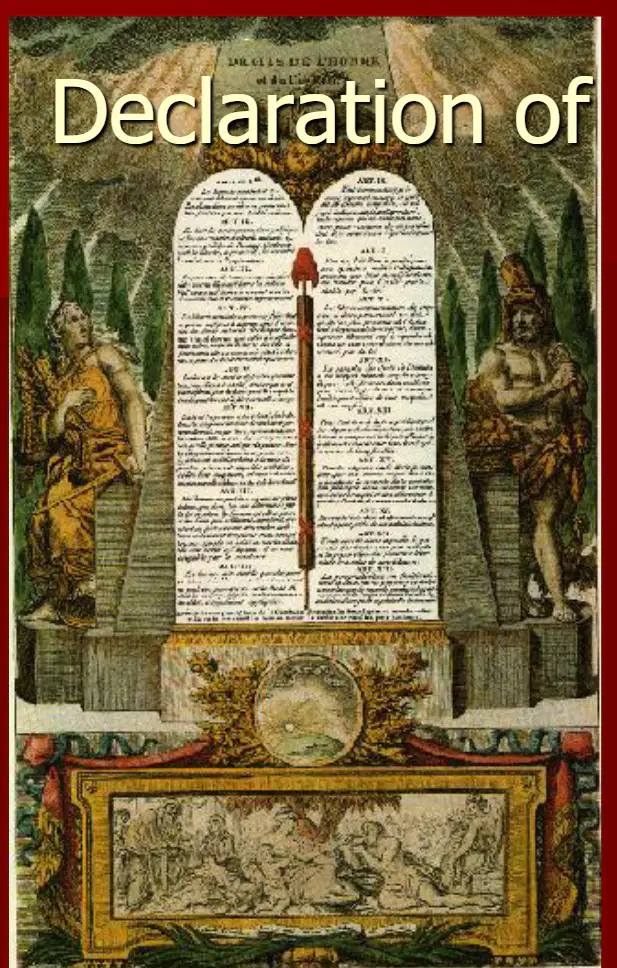
What does the Declaration of the Rights of Man say about the law?
The law is the expression of the general will
The law is the command of the ruler
The law is the decision of the wealthy
The law is the choice of the military
Who instigated the Revolution according to the text?
The common people
The nobility
The bourgeoisie
The government
Who set the Revolution in motion?
The common people
The nobility
The bourgeoisie
The government
To whom did the Revolution spread according to the text?
The government
The bourgeoisie
The common people
The nobility
What was one reason for the poor conditions in Paris for the common people?
The price of bread was low.
There was an abundance of supplies.
The price of bread was high due to harvest failures.
The King and Queen were popular.
What rumor spread about the King and Queen during the shortages?
They were helping the people.
They were responsible for the shortages.
They were leaving the country.
They were reducing taxes.
What event ignited the spark among the people in Paris?
The King gave a speech.
The Queen visited the capital.
The dismissal of Finance Minister Necker.
The price of bread decreased.
Where did the mobs find some muskets?
In a public hospital for wounded soldiers
In the Bastille
In a marketplace
In a school
Where was the ammunition stored?
In a public hospital
In the Bastille
In a library
In a warehouse
What significant event took place on July 14, 1789?
The signing of the Declaration of Independence
The storming of the Bastille
The end of World War I
The discovery of America
Who attempted to surrender during the storming of the Bastille?
The King
The Queen
The commander of the Bastille, de Launay
The President
What happened to the commander of the Bastille during the storming?
He escaped safely
He was captured and released
He was killed as they poured through the gates
He joined the mob

What is the structure shown in the diagram?
A modern skyscraper
A medieval fortress
A Roman amphitheater
A Gothic cathedral
What historical event is depicted in the image?
The American Revolution
The Fall of the Bastille
The Industrial Revolution
The Renaissance

