wayground logo

Free Printable Worksheets

NEW

Font size

S
M
L
XL
Worksheets

Chem Review

Total questions: 49

Worksheet time: 26mins

Name
Class
Date
1.
What are the states of matter?
a)
solid, liquid, and juice
b)
solid and liquid
c)
solid and gas
d)
solid, liquid, and gas
2.
Matter that has its own shape and takes up space.
a)
solid
b)
liquid
c)
gas
3.
Matter that always fills the shape in a container, such as air.
a)
solid
b)
liquid
c)
gas
4.
What happens when my glass of water is sitting in the sun and disappears into a gas?
a)
evaporation
b)
burning
c)
melting
d)
freezing
5.
Molecules are closest together in a 
a)
Solid
b)
Liquid
c)
Gas
d)
plasma
6.
Bonus Question: Change of state from a solid directly to a gas is called
a)
deposition
b)
melting
c)
evaporation
d)
sublimation
7.
Bonus Question: Change of state from a solid directly to a gas is called
a)
deposition
b)
melting
c)
evaporation
d)
sublimation
8.
Which of the following statements is NOT true of all different types of matter?
a)
They are made of atoms and molecules
b)
The particles are always in motion
c)
The particles always move at the same speed
d)
They are made of particles that are too small to see
9.
The steam coming off the pot of boiling water is an example of....
a)
a solid becoming a liquid
b)
a liquid becoming a solid
c)
a liquid becoming a gas
d)
a gas becoming a liquid
10.
At higher temperatures
a)
particles in an object have less energy
b)
particles in an object move faster
c)
a gas contracts
11.

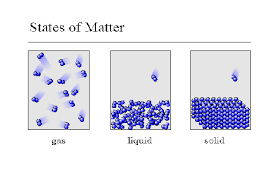
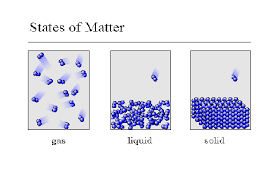
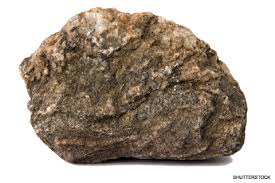
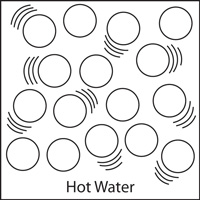
Which state of matter does this picture show?

a)

Solid

b)

Liquid

c)

Gas

12.

As temperature increases, what happens to particles?

a)

They speed up

b)

They slow down

13.

What is happening in this picture of this lake freezing?

a)

Molecules are speeding up

b)

Molecules are slowing down

14.

What are the states of matter?

a)

Liquid, water, fizz

b)

Solid, liquid, gas, plasma

c)

Rain, sleet, snow

d)

Solid and gas

15.
At higher temperatures
a)
particles in an object have less energy
b)
particles in an object move faster
c)
a gas contracts
16.
A gas
a)
has a definite shape but no definite volume
b)
has a definite volume but no definite shape
c)
has fast-moving particles
17.
Freezing
a)
Solid to gas
b)
Liquid to solid
c)
Gas to solid
d)
Liquid to gas
18.
Boiling
a)
liquid to gas
b)
gas to solid
c)
gas to liquid
d)
solid to liquid
19.
Which state of matter has tightly packed molecules?
a)
solid
b)
liquid
c)
gas
20.
What is happening when my ice cream changes from a solid to a liquid?
a)
freezing
b)
melting
c)
burning
d)
evaporation
21.
Define a liquid.
a)
Indefinite shape, indefinite volume
b)
Definite shape, definite volume
c)
Found in stars
d)
Definite volume, indefinite shape
22.
Particles (molecules) in a ______________________ have more energy than the other states of matter.
a)
gas
b)
solid
c)
liquid
23.
The speed of the molecules determines the _____.
a)
volume
b)
density
c)
pressure
d)
temperature
24.

What is a compound?

a)

Two different elements bonded together.

b)

Two of the same elements bonded together.

c)

A mixture of different substances.

d)

Two substances stuck together with glue.

25.

What two subatomic particles are found in the nucleus?

a)

proton and electron

b)

electron and neutron

c)

neutron and proton

d)

neutron and electron

26.

What is the proton?

a)

a negatively charged particle that orbits the nucleus

b)

a neutral particle found in the nucleus

c)

a positively charged particle found in the nucleus

d)

a neutral particle that orbits the nucleus

27.

What is the electron?

a)

a negatively charged particle that orbits the nucleus

b)

a neutral particle found in the nucleus

c)

a positively charged particle found in the nucleus

d)

a neutral particle that orbits the nucleus

28.

What is the neutron?

a)

a negatively charged particle that orbits the nucleus

b)

a neutral particle found in the nucleus

c)

a positively charged particle found in the nucleus

d)

a neutral particle that orbits the nucleus

29.

Which of the following is a chemical formula?

a)

H2SO4

b)

Si

c)

Hg

d)

C

30.

Which of the following is a chemical symbol?

a)

H2O

b)

O

c)

NaCl

d)

FeO

31.

The _______________ has a positive charge.

a)

electron

b)

proton

c)

neutron

d)

quark

32.

___________ combine together to form molecules.

a)

atoms

b)

compounds

c)

mixtures

d)

pikmon

33.

What is a small particle that is known as the basic building block of matter?

a)

molecule

b)

compound

c)

element

d)

atom

34.

Two oxygen atoms bond together, which vocabulary word best describes this type of matter?

a)

molecule

b)

compound

c)

element

d)

atom

35.

H2O is most accurately described as a ___________________.

a)

molecule

b)

compound

c)

element

d)

atom

36.

Oxygen, Nitrogen, Hydrogen, and Calcium are all examples of ______________________.

a)

molecules

b)

compounds

c)

atoms

d)

elements

37.

Which one of the following is a compound?

a)

NaCl

b)

O2

c)

Hydrogen

d)

He2

38.

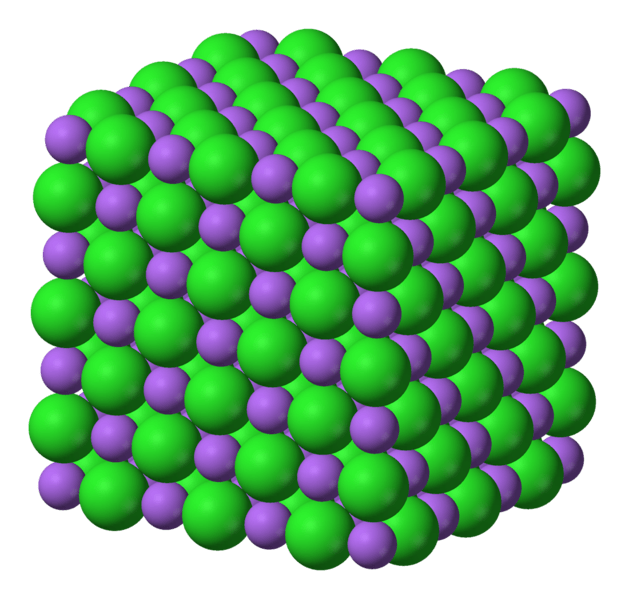
Which of these is only a molecule and not a compound?

a)

a

b)

b

c)

c

d)

d

39.

How many atoms are in this formula? H2OH_2O  

a)

2

b)

3

c)

5

d)

1

40.

How many elements are in this molecule? C6H12O6C_6H_{12}O_6  

a)

3

b)

24

c)

12

d)

18

41.

How would O2 O_2\  be described?

a)

An atom

b)

A molecule

c)

A compound

42.

How many atoms are in this formula? CaCO3CaCO_3  

a)

5

b)

4

c)

3

d)

9

43.

What are the three particles that make up an atom?

a)

Protons, Neutrons, Ions

b)

Electrons, Neutrons, Protons

c)

Elections, Neuters, Proteins

d)

Protons, Isotopes, Electrons

44.
How many Hydrogen are in 4H2O?
a)
6
b)
8
c)
2
d)
4
45.
How many Magnesium are in 10MgCl2?
a)
10
b)
5
c)
20
46.
2H2 + O2 ----> 2H2O What is the product?
a)
------>
b)
2H2O
c)
2H2+ O2
47.
2H2 + O--------> 2H2O What  are the reactants?
a)
----->
b)
2H2O
c)
2H2 +O2
48.
How many O's are in Al₂(SO₄)₃
a)
4
b)
12
c)
7
d)
24
49.
Number of N in (NH₄)₂CrO₄
a)
1
b)
2
c)
8
d)
16