
 Worksheets
knowledge check 3
Total questions: 27
Worksheet time: 16mins
According to the passage, what is an important skill for a plumber to learn?
Painting walls
Identifying, diagnosing, and rectifying faults in a plumbing system
Installing electrical wiring
Gardening
The noises a faulty system may make vary, from a squealing tap washer to the violent reverberation of pipework with _________
water hammer
air lock
rust build-up
loose valve
Most noises within a cold water system are a direct result of which of the following?
Low temperature and humidity
High pressure and flow rates
Old pipes and rust
Poor insulation
A high-pressure system will always create a certain amount of noise.
True
False
According to the passage on 'Noise faults,' what is a common cause of a humming or squealing noise when a tap is opened and water begins to flow?
The tap washer is split or worn
The water pressure is too high
The tap is not turned on fully
The pipes are blocked
According to the passage on 'Noise faults,' fitting a new ______ will cure the problem in most cases.
washer
bolt
spring
gasket
According to the passage on 'Noise faults,' fitting a new washer will cure the problem in most cases.
True
False
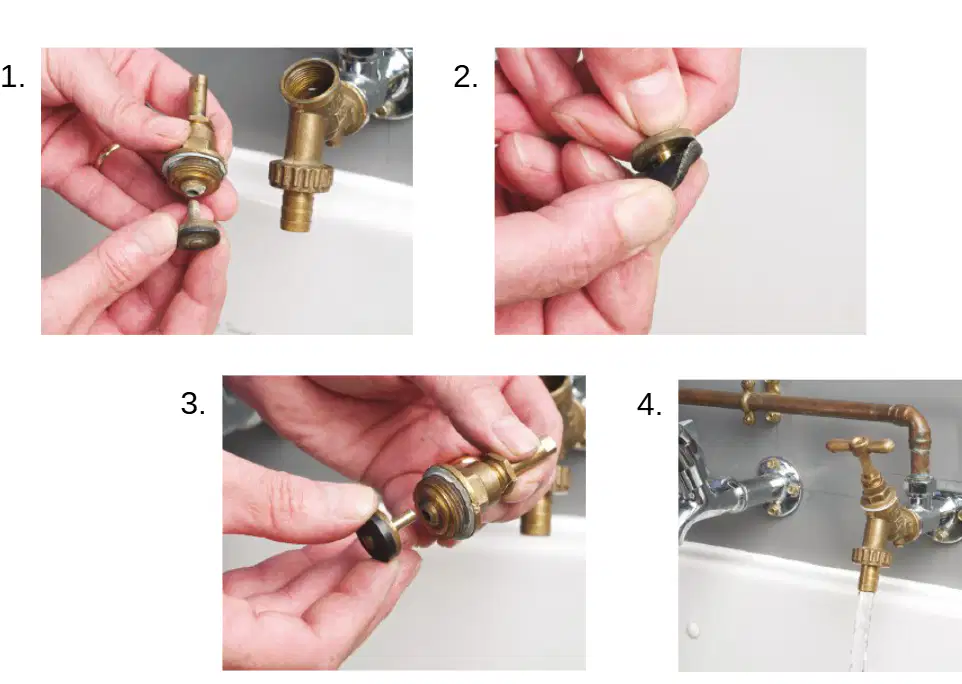
Look at the images showing the process of fixing a faulty tap washer. What is the first step in the process?
Remove the tap washer
Turn on the water supply
Unscrew the tap head
Replace the tap washer

Look at the images showing the process of fixing a faulty tap washer. What is being removed in the second step?
The tap handle
The tap washer
The tap spout
The water supply pipe
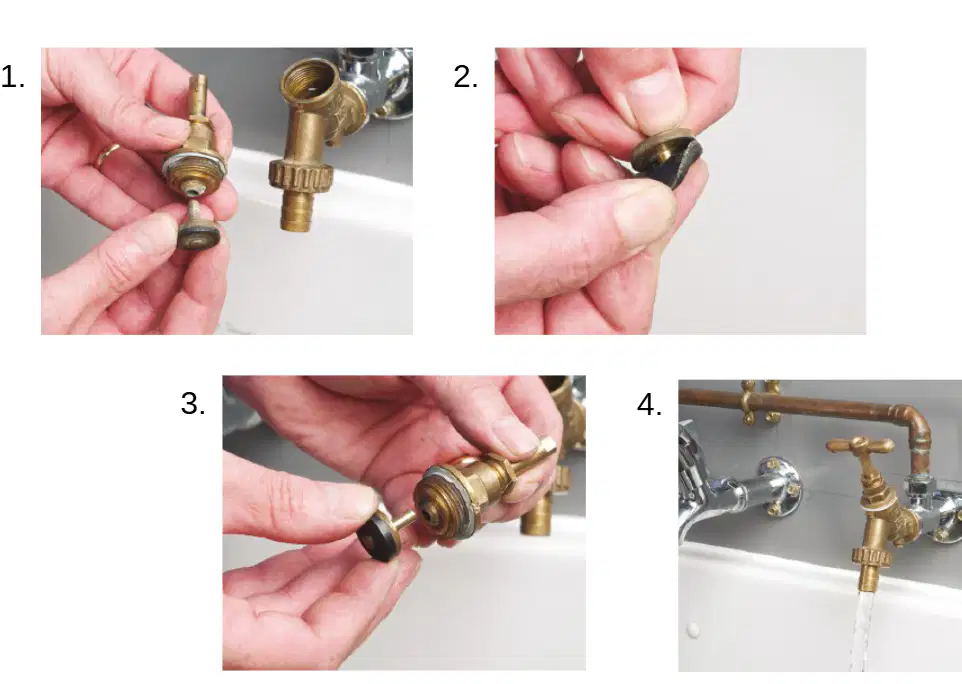
Look at the images showing the process of fixing a faulty tap washer. In the third step, the faulty washer is being ________.
replaced
painted
measured
cleaned
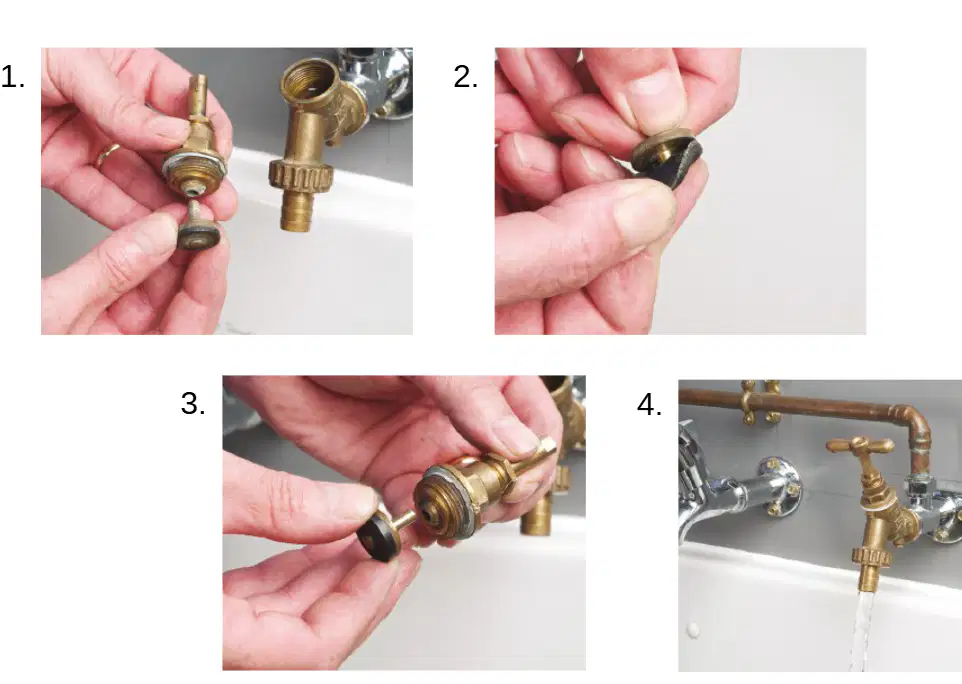
Look at the images showing the process of fixing a faulty tap washer. What is the final step after replacing the washer?
Leave the tap open
Reassemble the tap and turn on the water supply
Remove the tap completely
Call a plumber
What can cause a very loud hum throughout the pipework?
Faulty float-operated valve washer
Blocked drain
Leaking tap
Broken cistern
Where can the noise from a faulty float-operated valve washer be amplified?
In the basement
In a roof space
In the garden
In the kitchen
Fitting a new washer to the float-operated valve generally (a) the fault. (Fill in the blank)
What is one test to see if a float-operated valve (FOV) washer is at fault?
Open a cold water tap on the same circuit as the FOV and listen for changes in noise
Check the temperature of the water
Replace the washer immediately
Close all taps in the house
If the loud hum stops or becomes quieter when the tap is opened, what is probably at fault?
The FOV washer is probably at fault.
The water heater is probably at fault.
The main water supply is probably at fault.
The tap handle is probably at fault.
Noise faults
True
False
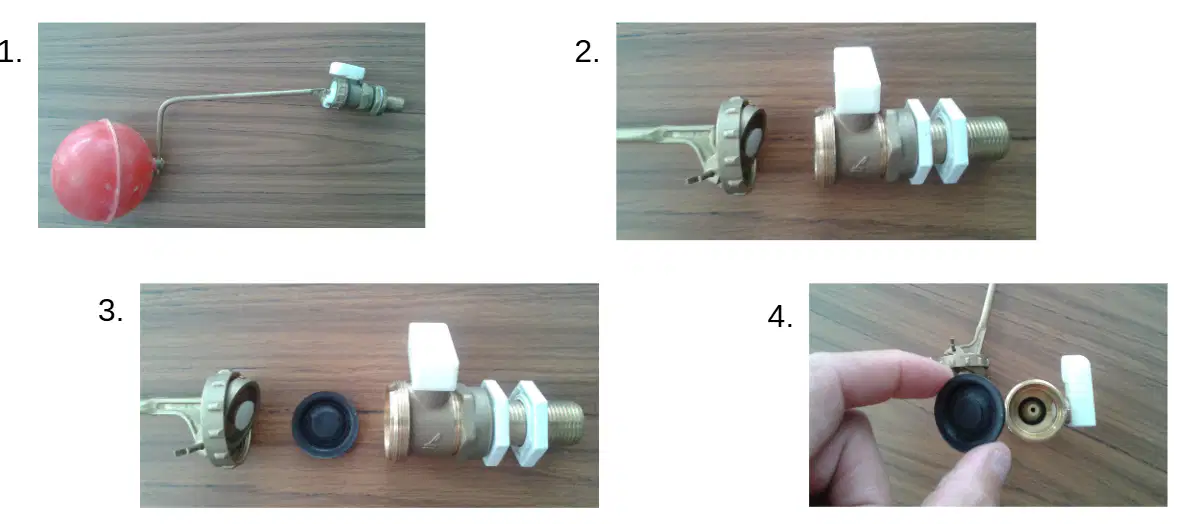
What component is shown in the image related to a float-operated valve washer?
The image shows a float-operated valve with a float attached.
The image shows a pressure gauge connected to a pipe.
The image shows a centrifugal pump impeller.
The image shows a solenoid valve coil.
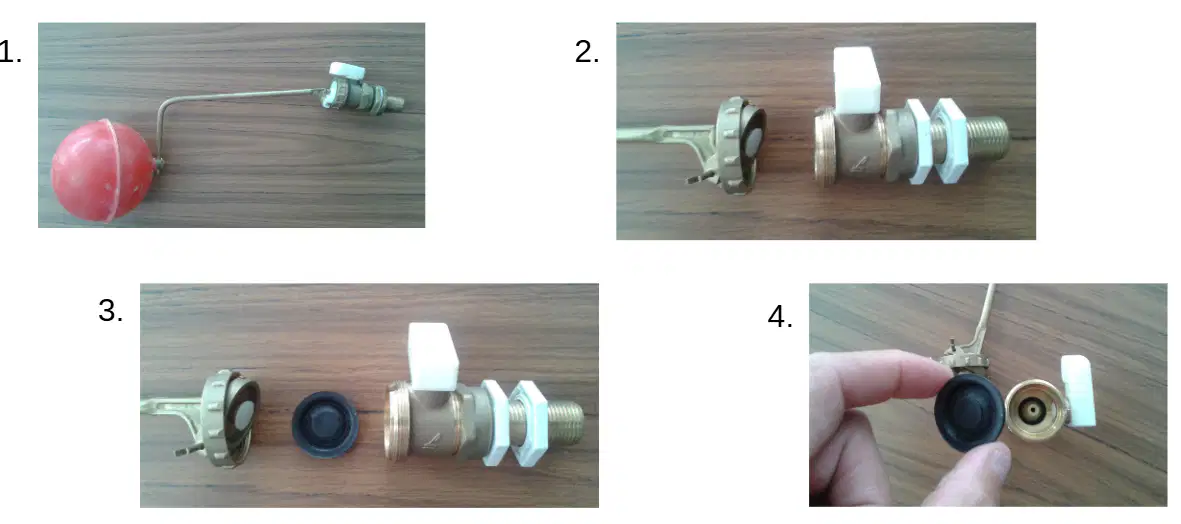
Look at the image labeled 2. Which part of the float-operated valve washer is being shown in this step?
The image shows the valve body with the float arm removed.
The image shows the float arm attached to the valve body.
The image shows the washer being installed onto the float arm.
The image shows the valve washer spring being compressed.
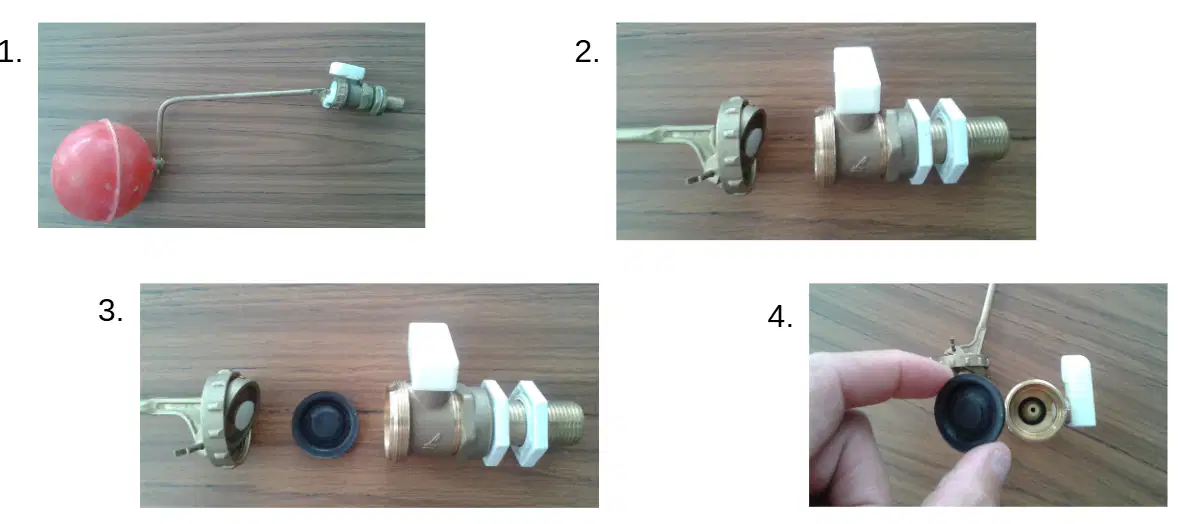
What is the black circular component shown next to the valve body?
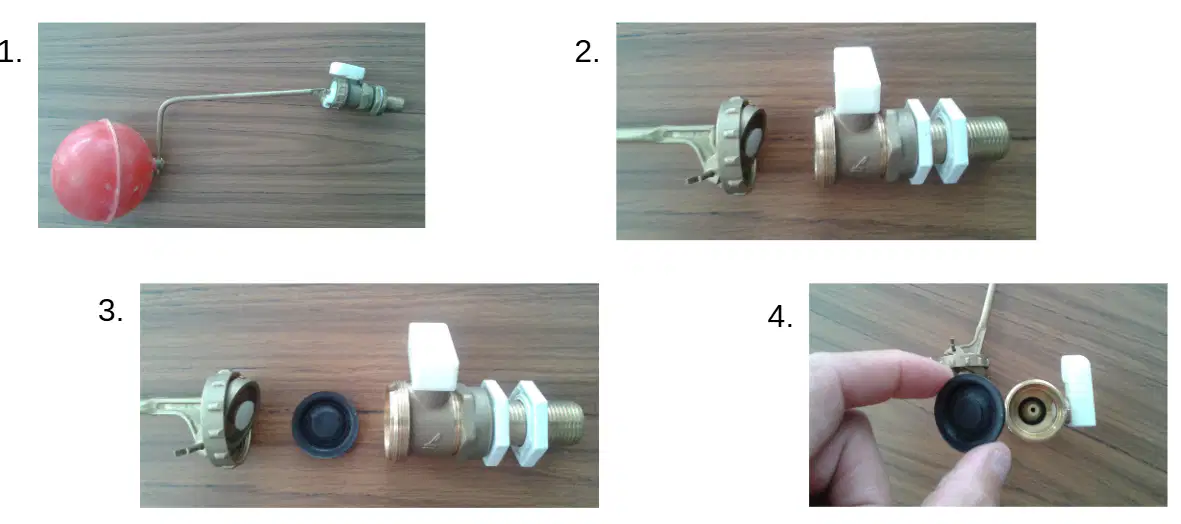
Look at the image labeled 4. What is being inspected in this step of the faulty float-operated valve washer process?
The washer is being inspected for faults or damage.
The float is being adjusted for proper height.
The valve body is being painted.
The water supply is being turned off.
What can cause a very violent banging within a plumbing system, which can eventually lead to fittings failing and leaks occurring?
Loose or incorrectly supported pipework
Blocked drains
High water pressure
Old pipes
The noise caused by loose or incorrectly supported pipework in a plumbing system is referred to as a _________.
water hammer
pipe echo
valve chatter
flow rattle
What is the best course of action if you find loose pipework in a plumbing system?
Find the loose pipework and re-fix it
Ignore the loose pipework and continue working
Paint over the loose pipework to hide it
Remove the pipework completely without replacing it
Noise faults: What is a recommended solution if the pipework that is loose is also hidden and it is not possible to get to it?
Replace the entire pipework
Install a water hammer arrester near to the incoming mains
Ignore the problem
Use more insulation
Noise faults: The arrester acts like a mini ________.
shock absorber
generator
transformer
condenser
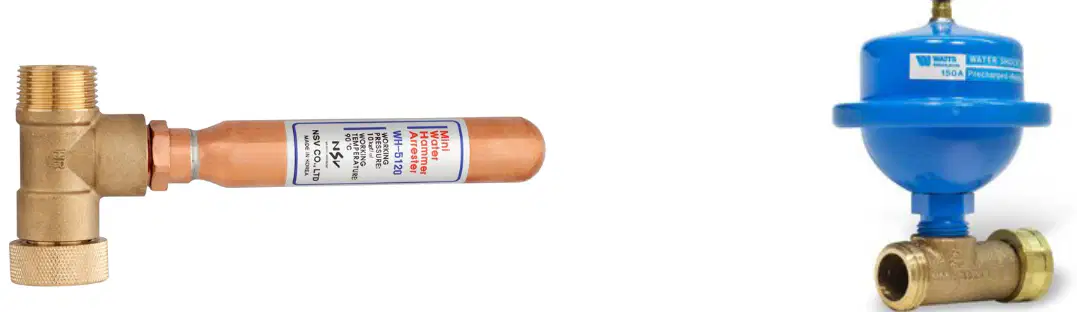
Which device, shown in the image, is used to cure the problem of loose or incorrectly supported pipework?
Water hammer arrester
Pressure gauge
Pipe clamp
Valve

