
 Worksheets
Unit 201 - H&S - 9. Electrical Safety
Total questions: 22
Worksheet time: 11mins
On building sites, the recommended safe voltage for electrical equipment is:
12 volts
24 volts
110 volts
230 volts
It is safe to work close to an overhead power line if:
You do not touch the line for more than 30 seconds
You use a wooden ladder
The power is switched off
It is not raining
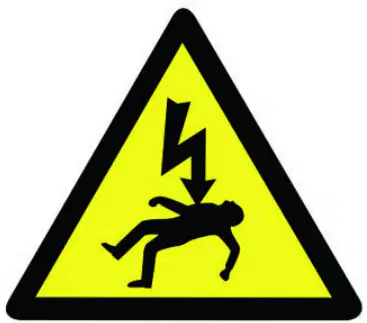
This warning sign means:
Risk of electrocution
Risk of thunder
Electrical appliance
Risk of lightning
You are using a 230 volt item of equipment when the fuse blows. What is the first thing you should do?
Fit another fuse of the same size
Fit a bigger fuse
Use a paperclip to link the contacts
Check for obvious damage
When do you need to check electrical hand tools for damage?
Before you use it
Every day
Once a week
At least once a year
You need to use an extension cable. What two things must you do?
Only uncoil the length of cable you need
Uncoil the whole cable
Clean the whole cable with a damp cloth
Check the whole cable for damage
Only check the cable you need for damage
You should use a Residual Current Device with 230 volt tools because:
It lowers the voltage
It quickly cuts off the power if there is a fault
It makes the tool run at a safe speed
It saves energy and lowers costs
The colour of a 110 volt power cable and connector should be:
Black
Red
Blue
Yellow
You are using an electric drill when it cuts out. You should:
Shake it to see if it will start again
Pull the electric cable to see if it is loose
Switch the power off and on a few times
Switch off the power and look for signs of damage
There is smoke coming from the motor of your electric drill. You should:
Pour water over it
Use a carbon dioxide extinguisher
Unplug the drill and see that no one else uses it
Allow the drill to cool for 30 minutes then try again
You need to run an electrical cable across an area used by vehicles. What two things should you do?
Wrap the cable in yellow tape so that drivers can see it
Cover the cable with a protection ramp
Cover the cable with scaffold boards
Put up a sign that says 'Ramp Ahead'
Run the cable at head height
You need to work near an electrical cable. The cable has bare wires. What should you do?
Quickly touch the cable to see if it is live
Check there are no sparks coming from the cable and then start work
Tell your supervisor and keep well away
Push the cable out of the way so that you can start work
If an extension cable has a cut in its outer cover, you should:
Check the copper wires don't show through the cut then use the cable
Put electrical tape around the damaged part
Report the fault and make sure no one else uses the cable
Put a bigger fuse in the cable plug
What is the best way to protect an extension cable while you work?
Run the cable above head height
Run the cable by the shortest route
Cover the cable with yellow tape
Cover the cable with pieces of wood
How do you check if the Residual Current Device connected to a power tool is working?
Switch the tool on and off
Press the test button on the Residual Current Device unit
Switch the power on and off
Run the tool at top speed to see if it cuts out
If you see burn marks on the casing of an electric drill, it means the drill has:
Been held too tightly
Had an electrical fault
Been left in the sun
Been left in the rain
You need to use a 230 volt item of equipment. How should you protect yourself from an electric shock?
Use a generator
Put up safety screens around you
Use a portable Residual Current Device
Wear rubber boots and gloves
The PAT test label on a power tool tells you:
When the next safety check is due
When the tool was made
Who tested the tool before it left the factory
It's earth-loop impedance
The temporary 110 volt electrical distribution box you want to use is too far away. What should you do?
Unplug the other extension leads and move the distribution box yourself
Tell an electrician who is working nearby to move it for you
Ask the supervisor to arrange for it to be moved
Use several extension leads plugged into each other
Why should you try to use battery-powered tools rather than electrical ones?
They are cheaper to run
They will not give you an electric shock
They will not give you hand-arm vibration
They do not need to be tested or serviced
Why do building sites use 110 volt electricity supply instead of the usual 230 volt domestic supply?
It is cheaper
It is less likely to kill you
It moves faster along the cable
It is safer for the environment
If you need to use a power tool in a waterlogged part of site, it is safest to:
Wear wellington boots
Use an air-powered tool if possible
Only use 230 volt equipment
Wrap a plastic bag around the tool

