
 Worksheets
Nutrition in plants
Total questions: 117
Worksheet time: 1hrs 2mins
modes of Nutrition
Answer choices
1.Autotrophic , Autotrophs , heterotrophs
2.base
3.acid
4.salt
1
2
3
4
ORGANISMS NEED NUTRITION TO.....
GROW
GET ENERGY
FIGHT AGAINST DISEASES
ALL THE ABOVE
PARASITES
PREPARE THEIR OWN FOOD
LIVE ON OTHER LIVING ORGANISMS
LIVE ON DEAD ORGANISMS
EAT INSECTS
WHICH OF THE FOLLOWING IS USED IN STARCH TEST
SAFRANIN
BLUE INK
IODINE
LITMUS
TO WHICH OF THE FOLLOWING CATEGORIES THE PITCHER PLANT BELONGS
HERBIVORE
CARNIVORE
INSECTIVORES
BOTH B AND C
GLUCOSE IS ......
FAT
PROTEIN
CARBOHYDRATE
VITAMIN
TWO ORGANISMS LIVING IN ASSOCIATION WITH EACH OTHER ARE CALLED........
SYMBIOTIC
PARASITIC
SAPROTROPHIC
HETROTROPHIC
WHICH ONE OF THE FOLLOWING IS USED FROM THE ATMOSPHERE DURING PHOTOSYNTHESIS
HYDROGEN
CARBON DIOXIDE
MINERALS
OXYGEN
PORES ON THE LEAVES ARE KNOWN AS
LEAF OPENING
STOMATA
LAMINA
PETIOLE
GREEN PLANTS:AUTOTROPS,THEN HUMAN BEINGS ARE?
OMNIVORES
HETROTROPHIC
SAPROTROPS
SYMBIOTIC

Cuscuta is an example of
autotroph
parasite
saprotroph
host

carbon dioxide is released during photosynthesis .
T
F
The term that is used for the mode of nutrition in yeast, mushroom and bread-mould is
autotrophic
parasitic
saprophytic
symbiotic
insectivorous plant is


which gas is produced during photosynthesis.
carbon dioxide
oxygen
hydrogen
nitrogen
The product of photosynthesis is not a protein .
T
F
Organisms that prepare its own food are called
Host
Autotrophs
Symbionts
Saprophytes

Identify this parasitic plant
Cuscuta
Cactus
Rhizobium
Venus trap
Green pigment that help in the process of photosynthesis is-
Stomata
Guard cell
Chlorophyll
Colour coatings
End product of photosynthesis is-
Protein
Fats
Carbondioxide
Starch
Green pigment that help in the process of photosynthesis is-
Stomata
Guard cell
Chlorophyll
Colour coatings

Name of this insectivorous plant is
Venus trap
Pitcher plant
Bladderwort
Cactus

Mode of nutrition by fungi is
Parasitic
Saprophytic
Symbiotic
Insect feedinh
In lichen we find the association between
Algae and fungus
Algae and insect
Fungus and roots
Fungus and insects
Rhizobium bacteria are present in
Roots of leguminous plants
Stem of leguminous plants
Found in roots of every plants
Flowers of leguminous plants
One of the example of leguminous plant is
Potato
Tomato
Bean
Sunflower
When we observe the lower surface of a leaf through a magnifying lens we see numerous small openings. Which of the following is the term given to such openings?
stomata
midrib
vein
lamina
Two organisms are good friends and live together. One provides shelter, water, and nutrients while the other prepares and provides food. Such an association of organisms is termed as
saprophyte
parasite
autotrophs
symbiosis
Which of the following is a parasite
Fungus
Cuscuta
Mushroom
Bacteria
What protects Stomata and helps it in opening and closing?
Guard Cells
Leaf
Stem
Carbon Dioxide
Which bacteria is there in the roots of the plants to convert atmospheric nitrogen to its solid form?
Coronovirus
Nipha Virus
Treponama
Rhizobium
What is the equation for photosynthesis
Carbon dioxide + water sunlight + chlorophyll = glucose + oxygen
Glucose + water + sunlight + oxygen = carbon dioxide
Which of the following is a parasitic organism?
Lichen
Leech
Dog
Algae

Lot of bacteria live in our stomach and help in digestion.What kind of relationship is it?
Parasitic
Saprophytic
Symbiotic
None

What do I get by eating the insects visiting me?
Potassium
Nickel
Phosphorus
Nitrogen
Organisms that make their own food on water__________
Fungi
Algae
Both Algae and Fungi
Venus Flytrap
Main modes of nutrition :
Heterotrophs
Autotrophs
Insectivorous
Both Heterotrophs and Autotrophs
Both heterotrophs and Insectivores
Living organisms obtain energy from
Carbon Dioxide
Food
Water
Oxygen
Ultimate source of energy for all living organisms is
Plants
Atmosphere
Earth
Sun
Foods synthesized in the process of Photosynthesis by plants is stored as
Starch
Protein
Vitamins
Fats
Which of the following is not necessary for photosynthesis
Chlorophyll
Carbon dioxide gas
Oxygen
Water
Which of the following component of food contains Nitrogen
Carbohydrate
Protein
Fat
Minerals
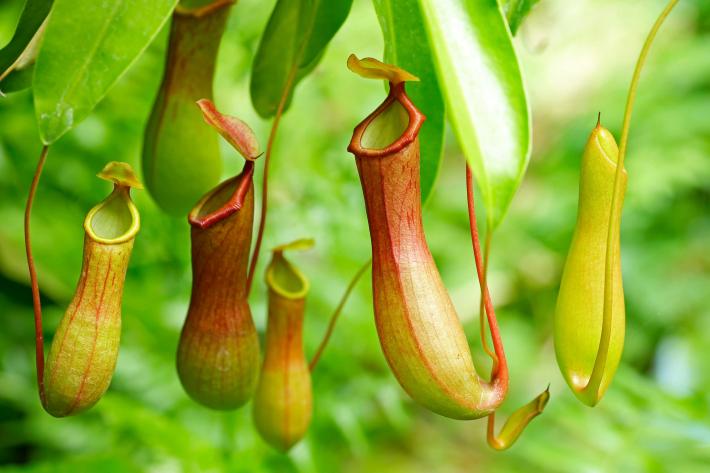
Identify the plant
pitcher
dodder
venus flytrap
bladderwort
Insectivorous plants eat insects to fulfill their needs of
Energy
nitrogen,
potassium
calcium

Identify the bacteria
Staphylococcus
Bacillus
Pseudomonas
rhizobium
What are the Raw materials essential for Photosynthesis?
Protein
Minerals
Carbohydrates
Sunlight
Oxygen
What are the nutrients plants get from Air?
Water
Oxygen
Carbon Dioxide
Chlorophyll
Sunlight
Fungi like Mushrooms are heterotrophs but what is the scientific term for it in Science?
Decomposers
Autotrophs
Saprotrophs
Carnivores
What are absorbed through Soil?
Water
Minerals
Carbon Dioxide
Sunlight
What are the examples of autotrophs?
Plants
Gorillas
Pandas
None of the above
An organism who eats dead and decaying matter is known as_____
Autotrophs
Heterotrophs
Parasite
Saprotrophs
The food synthesised by plants is stored as
Chlorophyll
Glucose
Chloroplasts
None of the above
During Photosynthesis, plants absorb_____ and release _____ gas.
Oxygen, Carbon Dioxide
Carbon Dioxide, Oxygen
Nitrogen, Water Vapor
None of the above
The plants which traps and feed on insects is
Pitcher Plant
China rose
Cuscita
Rose
Which plant does not have chlorophyll?
Cuscuta
Money Plant
Rose Plant
All of the above
A plant that is partially autotrophic
pitcher plant
fungus
pea
algae
During photosynthesis, the stomata help in the intake of
Oxygen
Carbon dioxide
Water
Nitrogen
Rhizobium is
A parasite and nitrogen-fixing bacterium
A non- symbiotic bacterium
A symbiotic and nitrogen-fixing bacterium
None of the above
Chlorophyll helps the plants to
Exchange gases
Absorb water from the stem
Transport food from the leaves to the other parts
Absorb energy from the sunlight
Pitcher Plant Traps Insects Because It
Is a heterotroph
Grows in soils which lack in nitrogen
Does not have chlorophyll
Has a digestive system like human beings
In Non-Green Plants And Animals, Their Mode Of Nutrition Is
Saprophytic
Parasitic
Heterotrophic
Autotrophic
Which of the following statements is NOT true ?
Heterotrophs cannot prepare their own food .
Dodder is an example of parasite .
Saprophytes are green .
Pulses and Beans are legumes .

2. Identify the given cells in the leaves of the plant:
White blood cells
Red blood cells
Guard cells
Platelets
3. All green plants are ____________________.
Autotrophs
Heterotrophs
Scavengers
Decomposers
Which of the Following is a Saprophyte
Green plants
Mushroom
Alga
Rhizobium
Stomata are
Tiny pores located underside of Leaves
Photo
Synthesis
Carbon
Rhizobium can convert atmospheric nitrogen into water-soluble compounds
False
True
Carbohydrates,Proteins and Fats are
Nutrition
Food
Nutrients
Autotrophs
chlorophyll captures
carbon dioxide from surroundings
energy of the sunlight
minerals from soil
water from air
Starch is also a
carbohydrate
fats
vitamins
proteins
Rhizobium is an example of
(a) Symbiosis
(b) Parasites
(c) Insectivorous
(d) none of these
Foods synthesized in the process of Photosynthesis by plants is stored as
Starch
Protein
Vitamins
Fats
In lichens ______________ and _____________ live in symbotic association.
Bacteria and fungi
Mushroom and Rhizobium
Cuscuta and mistletoe
Algae and fungi
Centrally located spherical structure in cell is the ___________________
cytoplasm
nucleus
cell membrane
cell wall
An organism who eats dead and decaying matter is known as_____
Autotrophs
Heterotrophs
Parasite
Saprotrophs
Which plant does not have chlorophyll?
Cuscuta
Money Plant
Rose Plant
All of the above
Which of the following is a parasite
Fungus
Cuscuta
Mushroom
Bacteria
Fungi like Mushrooms are heterotrophs but what is the scientific term for it in Science?
Decomposers
Autotrophs
Saprotrophs
Carnivores
Green plants use which of the following to prepare food?
Carbon dioxide
Sunlight
Water
Chlorophyll
All of these
Nutrients enable living organisms to
walk
build their bodies
to grow and repair damaged parts of their bodies
to provide energy
food factory of the plant is
root
stem
leaf
stomata
Process of making food by the plants is known as
Autrotopic
photosynthesis
Hetetrotopic
transplantation
Organisms other than plants which contain Chlorophyll are
Algae
Protozoa
Virus
Fungi
Organisms that live in or near the host and obtain their nutrition from the host are called ____________
Saprophytes
autotrophs
parasites.
insectivorous
Rhizobium is an example of ___
Parasites
Symbiosis
insectivorous
none of these
Iodine is used to detect the presence of starch.It gives starch
red color
green color
blue back color
colorless appearance
The term that is used for the mode of nutrition in yeast, mushroom and bread-mould is
(a) autotrophic
(b) insectivorous
(c) saprophytic
(d) parasitic
Which of the following is a symbiont?
Sundew
Lichens
Mushroom
Cuscuta
Which of the following statements is/are correct?
(i) All green plants can prepare their own food.
(ii) Most animals are autotrophs.
(iii) Carbon dioxide is not required for photosynthesis.
(iv) Oxygen is liberated during photosynthesis.
Choose the correct answer from the options below:
( i) and (iv)
(ii) only
(ii) and (iii)
(i) and (ii)
The term that is used for the mode of nutrition in yeast, mushroom and bread-mould is
autotrophic
parasitic
saprophytic
symbiotic
The plant from which a parasite gets its food is called
Host
Chloroplats
Doddar
Green plants
What does ‘photo ‘ in photosynthesis refer to
Sun
Water
Light
Carbon dioxide
Which of the Following is a Saprophyte
Green plants
Mushroom
Alga
Rhizobium
Photosynthesis means
Photo =Sun ;Synthesis = combine
Photo=Air ;Synthesis =Combination
Photo =Light ;Synthesis =Combination
Autotrophic means
Auto=Self ; Trophism =Food
Auto=Self ;Trophism =Feeding
The main function of a leaf is:
(a) To prepare food
(b) To prevent disease
(c) To support the plant
(d) To give a proper shape
Which of the following statements is NOT true?
(a) Heterotrophs cannot prepare their own food.
(b) Dodder is an example of parasite.
(c) Saprophytes are green.
(d) Pulses and Beans are legumes.
5.During photosynthesis plants
take oxygen and release carbon dioxide
take carbon dioxide and release oxygen
take carbon dioxide but do not release oxygen
take oxygen but do not release carbon dioxide
10.Which of the following is a nutrient?
Fats
Vitamins
Proteins
All of these
Choose the incorrect statements.
Rhizobium is a plant that helps leguminous plants obtain nitrogen in a soluble form.
Guard cells of stomata do not have a cell wall.
Xylem allows only unidirectional flow.
Root hairs help to increase the surface area covered by roots to absorb water for the plant
Nutrition is the process of intake of food and its excretion in an organism's body.
What is nutrition ?
It is the process of making food.
It is the mode of taking food by an organism and its utilisation by the body.
A process of checking conclusions against nature.
A guess about what might happen in the future, based on observations that you make.
Human beings can be categorised as _____________.
Heterotrophs
Autotrophs
Parasites
Saprotrophs
During photosynthesis ________________________________________.
solar energy is converted into mechanical energy.
chemical energy is converted into mechanical energy.
bioenergy is converted into chemical energy.
solar energy is converted into chemical energy.
The end products of photosynthesis are ______________ and______________
Carbohydrates, Oxygen and Water Vapours
Hydrogen, Oxygen
Carbohydrates, Water Vapours
Carbohydrates, Oxygen
Which of these obtain nutrition from dead and decaying matter
Parasitic plants
Saprophytic plants
Insectivorous plants
Symbiotic plants
Which of these is not needed to make food in a plant
Sunlight
Carbondioxide
Chlorophyll
Flowers
Which if the following statement is not true?
Heterotrophs cannot prepare their own food
Dodder is an example of parasite
Saprophytes are green
Pulses and beans are legumes
Carnivorous plants are found on
Nitrogen deficient soil
O2 deficient soil
CO2 deficient soil
None of these
.Which of the following describes the characteristic of a living being?
Nutrition
Excretion
Respiration
All the above
I Am White And Soft. I Grow Well In The Rainy Season. Children Pluck Me From The Ground And Admire Me. But I Absorb Nutrients From Dead Animals And Plants”.
[A]. White Lotus
[B]. Mushroom
[C]. Pitcher plant
[D]. White Marigold
Rhizobium is
A parasite and nitrogen-fixing bacterium
A non- symbiotic bacterium
A symbiotic and nitrogen-fixing bacterium
None of the above
Which of the following statements is/are correct?
All green plants can prepare their own food.
Most animals are autotrophs.
Carbon dioxide is not required for photosynthesis.
Oxygen is liberated during photosynthesis.
Which one of the following is a pair of symbiotic organisms?
Lichens
Rhizobium and a legume
None of these
Both (a) and (b)
Which part of the plant is called its food factory ?
Roots
Leaves
Stem
Flowers
Which of the following does not have a heterotrophic mode of nutrition?
Pitcher plant
Mushroom
Lice
Algae
The process of Photosynthesis produces
Carbon Dioxide
Nitrogen
Oxygen
Hydrogen

