
Font size
 Worksheets
Science Review
Total questions: 98
Worksheet time: 5hrs 54mins
Each winter, a family measures the snowfall and records the yearly average. This average is most common when describing what feature of the area?
weathering
water cycle
weather
climate
Which of these is an example of climate than weather?
A warm front is increasing temperatures.
Average high temperatures in the summer have increased over several years.
There was more rainfall this year than last year.
A tornado forms during a thunderstorm.
Which of the following does not show the moon phases in the correct order?
Full moon, Waxing gibbous, New Moon, Waning Crescent
New Moon, Waxing gibbous, Full moon, Waning Crescent
Full Moon, Waning gibbous, Waning Crescent, New Moon
New Moon, Waxing Crescent, Quarter Moon, Waxing gibbous, Full Moon
At what position is the moon during its New Moon phases?
On the backside of Mars
On the opposite side of the Earth from the sun
On the opposite side of the sun from the Earth
Between the Earth and sun
What season has very short, cold days?
Winter
Spring
Summer
Fall (Autumn)
To find the mass of a mixture, what operation will you use to solve?
Subtract
Multiply
Addition
Division
A volleyball player goes to hit a ball. When does the energy transfer to the ball?
After she hits the ball
When she makes contact with the ball
As her arm swings to hit the ball
When she picks the ball up off the ground
When mixing dirt and water together, what happens to the total amount of matter?
The total amount of matter changes because dirt and water react to form a new substance.
The total amount of matter increases because dirt particles spread out in the water.
The total amount of matter stays the same because no new substances are formed.
The total amount of matter decreases because dirt devolves in water.
Which of the following best describes climate?
day to day conditions of the atmosphere at a place in regards to heat, dryness, sunshine, wind, rain, etc.
long-term conditions (months/years) of the atmosphere at a place in regards to heat, dryness, sunshine, wind, rain, etc.
What causes the difference in temperatures and hours of daylight on Earth?
Size of Earth
Rotation of Earth
Location of Earth's Moon
Tilt of Earth on its axis
In a prairie food web, what organism receives energy directly from grasshoppers?
In the weather cycle, what causes evaporation?
Cold temperatures
Wind
Sun or heat
Rain

This fossil is known as a cephalopod. These fossils are found in places such as Texas and Canada.
Texas was a land environment in the past.
Texas and Canada were water environments in the past.
Both Texas and Canada were land environments in the past.
Canada was a land environment in the past.
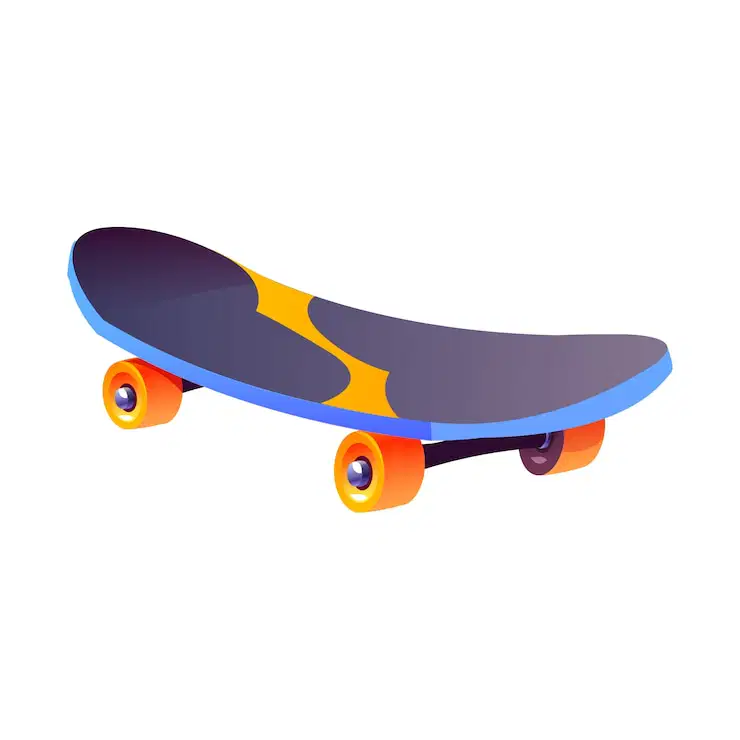
What is a question a student could test after looking at the parts of a skateboard?
Will large wheels go farther and faster than small faster?
Why are skateboard wheels bright colors?
How can I become a good skateboard?
Do girls enjoy skateboarding more than boys do?


What moon phase is pictured here?
waning gibbous
waxing crescent
waxing gibbous
waning crescent
What is a disadvantage of using Earth's renewable natural resources?
Renewable natural resources can provide energy and food.
Renewable natural resources can be used faster than they will be replenished.
Renewable natural resources take millions of years to replenish themselves.
Renewable natural resources are not able to be conserved.

Which of the following are consequences of climate change?
Glaciers are shrinking and sea levels are rising
Heat wave are longer and more intense
Plant and animal habitat ranges are shifting
All of the above
The color of your eyes, skin, and hair are examples of...
inherited traits
acquired traits

Hawks have sharp claws to help them catch their prey, this is an example of
a behavioral trait
a physical trait

Toads hide during the day and come out at night to feed when it is much cooler, this is an example of
a behavioral trait
a physical trait
Which of the following is an inherited trait?
Sally's basketball skills.
Johnny's brown hair.
Alexa speaking Chinese.
Billy's blue house.


Conduction is...
the transfer of thermal energy through touch
energy that travels in waves
heat moving through water or air
form of energy we can see
Light is...
the transfer of thermal energy through touch
form of energy we can see
energy in the particles that vibrate as they pass through matter
the transfer of thermal energy from one object to another
a form of the transfer of energy
generate
wave
shape
transfer
the transfer of thermal energy from one object to another
potential
sound
light
heat

Why does the following circuit not work?
The light bulb is broken
The switch is closed
The wood block is an insulator
The battery is dead

What forms of energy are you using if you close switch 1?
light and electrical
light, sound, and electrical
light
sound

The light bulb does not turn on, which statement explains why it is not working?
The battery is dead
The light bulb is broken
The bell is taking all of the energy
The light bulb is not part of a complete circuit
What is a NON-CONTACT force?
A push or pull force where the objects are not touching
A push force where the objects are touching.
An example would be pulling open a door.
The only type of force that exists in the world.
When two objects are closer to one another, the force of gravity between them ____________.
Increases
Decreases
Stays the same
Divides by a factor of 100
What is the difference between MASS and WEIGHT?
Mass DOES NOT change if the force of gravity changes. Weight DOES change if the force of gravity changes.
Mass DOES change if the force of gravity changes. Weight DOES NOT change if the force of gravity changes.
Mass is related to gravity while weight is not.
If an object is SMALLER, it always has more mass and less weight than a LARGER object.
What are the poles of a magnet called?
East and West Pole
North and East Pole
North and South Pole
Up and Down Pole
What are the three NON-CONTACT forces we are studying this unit?
Gravity, friction, air resistance
Forces, motion, human body systems
Friction, electricity, muscular system
Gravity, electricity, and magnetism

The three examples pictured are of
Non-contact Forces
Contact Forces


What is gravity?
The force that pulls objects together
The force that pushes objects apart
Earth's gravity pulls everything toward:
North
South
East
The center of the earth

wood is a
conductor
insulator

plastic is a
conductor
insulator

rubber is a
conductor
insulator

fabric is a
conductor
insulator

aluminum is a
conductor
insulator

copper is a
conductor
insulator

iron is a
conductor
insulator

steel is a
conductor
insulator


Weather is...
the average temperature in an area
the average rainfall in an area
the daily conditions of the air outdoors
the average weather in an area
Which part of a plant changes sunlight into energy?
Stem
Flower
Roots
Leaves
Where does a plant absorb nutrients from the soil?
In the flowers
In the stem
In the leaves
In the roots
How do flowers help a plant?
They attract insects to pollinate the plant.
They absorb sunlight to make food.
They are eaten by birds and other animals.
They bring nutrients in from the soil.
The process where plants make their own food (sugar) is
germinate
photosynthesis
function
structure
Which part of the plant brings in water and minerals?
leaf
stem
roots
flower
Which plant structure transports water and minerals from the roots to the leaves?
roots
flower
leaves
stem
What is erosion?
The deposition of sediments by wind, water, ice, or gravity
The process where rocks dissolve
The process of creating sand dunes
The process of moving pieces of rock and soil by water, ice, wind, or gravity
What is deposition?
The dropping of sediments by wind, water, ice, or gravity
The process of breaking down rock into smaller pieces
The process of creating sand dunes
The movement of sediments by water, ice, wind, or gravity
Weathering, erosion, and deposition change the Earth's surface over
a few minutes
a few weeks
a few months
many, many years

What rock formation process is represented in the rock below?
Weathering
Erosion
Compaction
Deposition
What process breaks rocks and turns the small fragments into sediment?
Weathering
Erosion
Deposit
Sediment
What is the process of moving sediments to another place?
Weathering
Erosion
Deposition
Cementation
What is the process of sediment deposition due to gravity?
weathering
erosion
deposition
sediment

The broken fragments of rock are called
sediment
cement
fossils
energy

What caused this canyon to form over many years?
Water
Deposition
Plants
Small pieces of sand are transported by the wind.
Weathering
Erosion
Water washes rocks and soils down the slopes, causing a landslide.
Weathering
Erosion
Rocks and pebbles in a river become smooth by colliding with other rocks.
Weathering
Erosion

The image shows rocks eroding from one side of the mountain.
What process caused the rock to break before falling?
weathering
erosion
deposition
How does deposition impact the Earth's surface?
breaks down rocks on the Earth's surface
moves rocks on the Earth's surface from one place to another
drops rocks in a new location
Which of the following is NOT needed to form a delta?
Water
Sediments
Ocean
Ice
Which of the following words goes with "delta?"
Break
Move
Drop
Not here
Where are deltas located?
At the mouth of a river
At the start of a river
On a beach
At the top of a mountain

