
 Worksheets
Sound (Review/Study Guide)
Total questions: 30
Worksheet time: 18mins
What happens to energy in the inner ear? Kinetic energy converts to ________ energy and signal is sent to the brain via the auditory nerve.
electrical
thermal
chemical
light
What do you know about Sound Waves? The hairs of different length vibrate with different frequencies. Long hairs react to ___ frequencies, and short hairs react to ___ frequencies.
low, high
high, low
medium, low
low, medium
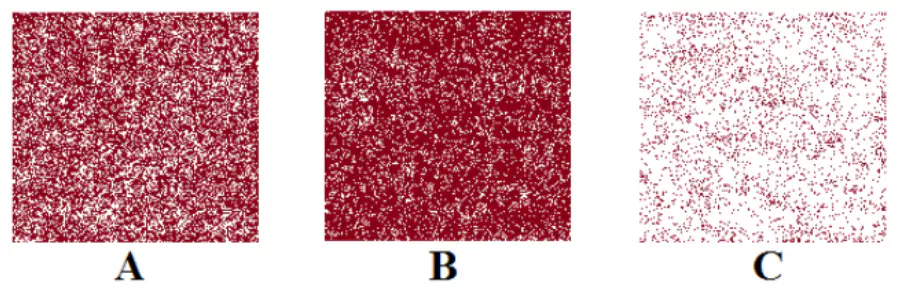
What do you know about Sound Waves? Rank from fastest to slowest for speed of sound in the following materials. (note how close together particles are) (Slowest) ___ , ___ , ___ (Fastest)
C, A, B
A, B, C
B, C, A
A, C, B
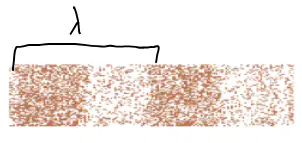
The wavelength and frequency of each wave below are:
Wavelength is the distance between two consecutive crests; frequency is the number of waves passing a point per second.
Wavelength is the height of the wave; frequency is the speed of the wave.
Wavelength is the time between two waves; frequency is the distance between two troughs.
Wavelength is the amplitude of the wave; frequency is the length of the wave.
Softest Sound = ________ (darker or lighter)
lighter
darker
loud
sharp
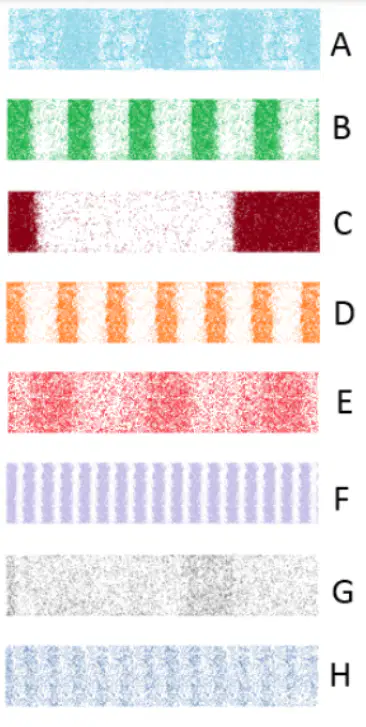
Rank the following from Lowest frequency to highest frequency: A (light blue), B (green), C (red), D (orange), E (pink), F (purple). Write the order from lowest to highest frequency.
C, E, A, B, D, F
A, B, C, D, E, F
F, D, B, A, E, C
B, A, D, F, C, E
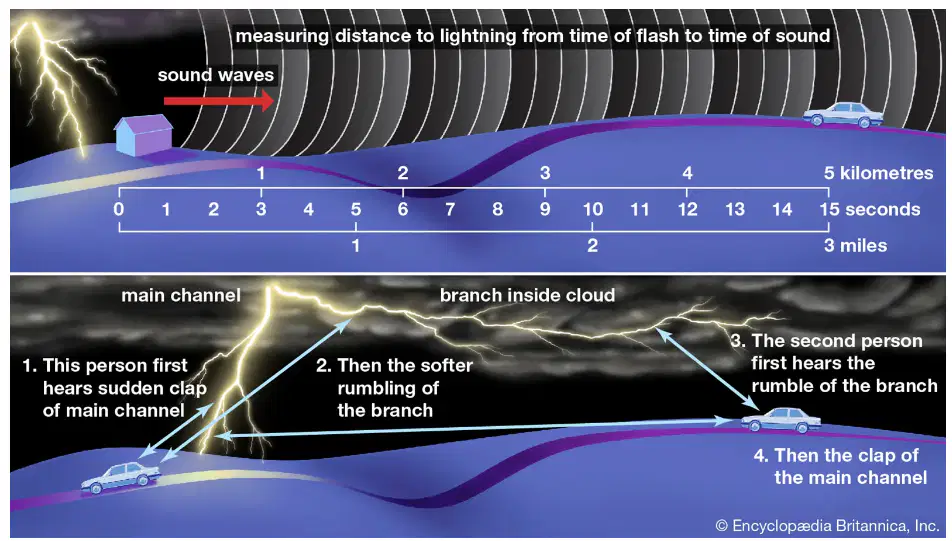
When you see lightning, start counting seconds. If it takes 20 seconds to hear thunder, then the strike was ___ miles away.
4
2
10
8
If the period is 2.5 seconds, what is the frequency?
0.4 Hz
2.5 Hz
4 Hz
0.25 Hz
If the Speed of the wave is 17 m/s and the frequency is 10 Hz, what is the wavelength?
1.7 m
0.59 m
27 m
170 m
Why is the morning quiet, and why can you hear farther at night?
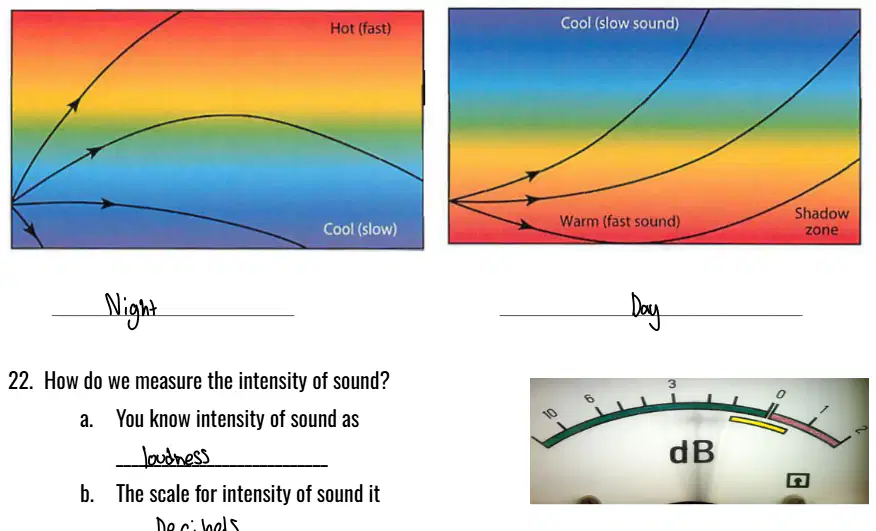
Label the diagrams as Night and Day.
Left diagram: Night, Right diagram: Day
Left diagram: Day, Right diagram: Night
Left diagram: Night, Right diagram: Night
Left diagram: Day, Right diagram: Day
The weird thing about the decibel scale is how the energy goes up. Here is the rule, every increase of +10 dB equals ______ the energy.
double
triple
half
ten times
Moving from 10dB to 20 dB = ___ the energy (+10 dB = 2 x the energy)
2x
5x
10x
20x
Moving from 10 to 30 dB = ___ the energy (+20 dB = 2 x 2)
4x
2x
8x
10x
Compare a whisper and a chat. ___ to ___ dB (How many dB does it change)? = ___ times the energy
30 to 60 dB, 30 dB, 8x
10 to 40 dB, 30 dB, 2x
20 to 50 dB, 30 dB, 4x
40 to 70 dB, 30 dB, 16x
Compare 60 dB to 120 dB = change of +60dB. (2 x 2 x 2 x 2 x 2 x 2) = ___ times the energy
64x
32x
128x
16x
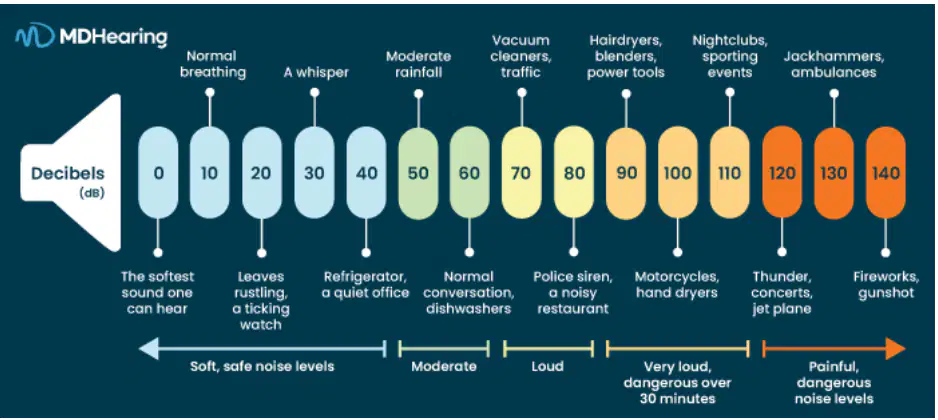
Sounds are painful when over ______ dB.
120
80
60
100
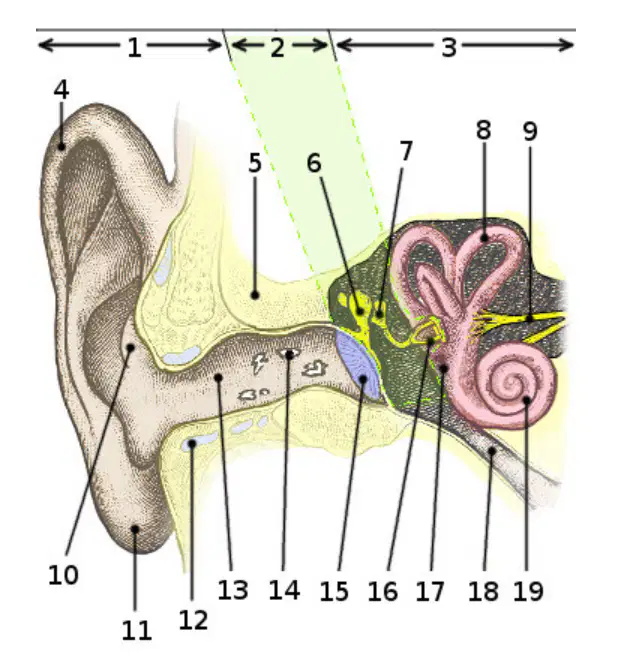
What is the name of the part labeled 4 in the diagram?
Pinna
Cochlea
Eardrum
Auditory Canal
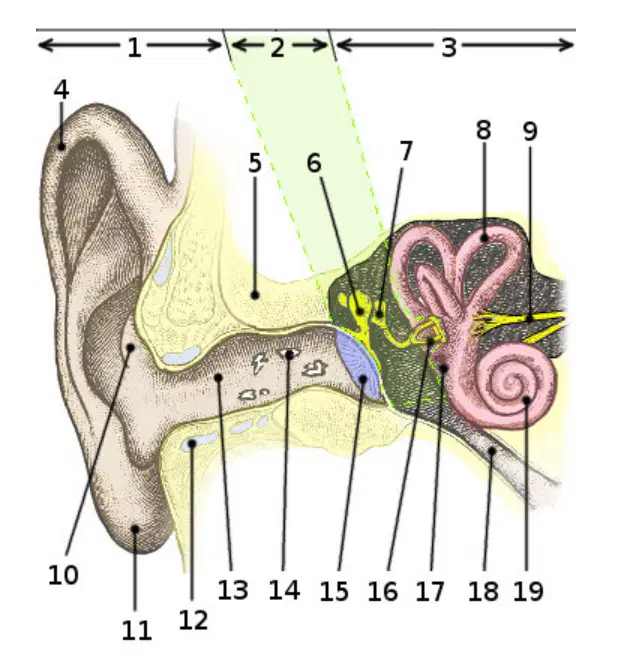
#'s 6,7 # 13 are
smallest bones in human body, the ossicles (hammer, incus, stirup)
external ear
Cochlea
Eardrum
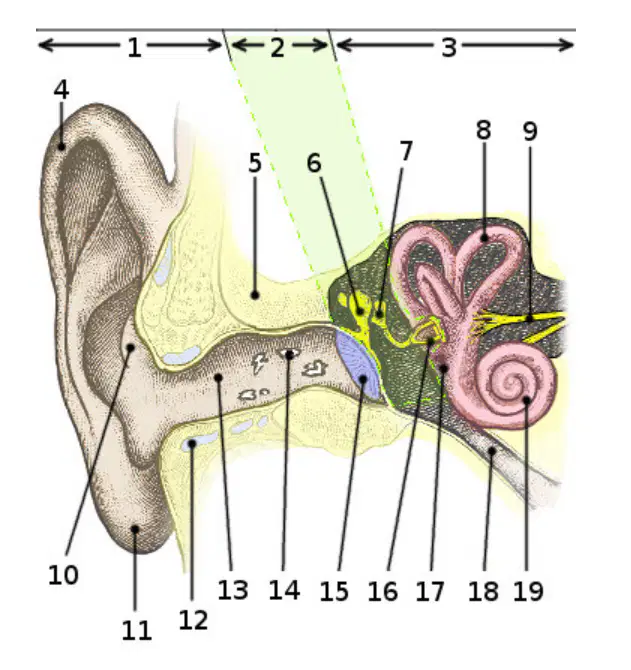
Label the missing parts of the ear anatomy. What is the name of the part labeled 8 in the diagram?
Semicircular canals
Cochlea
Eustachian tube
Auditory nerve
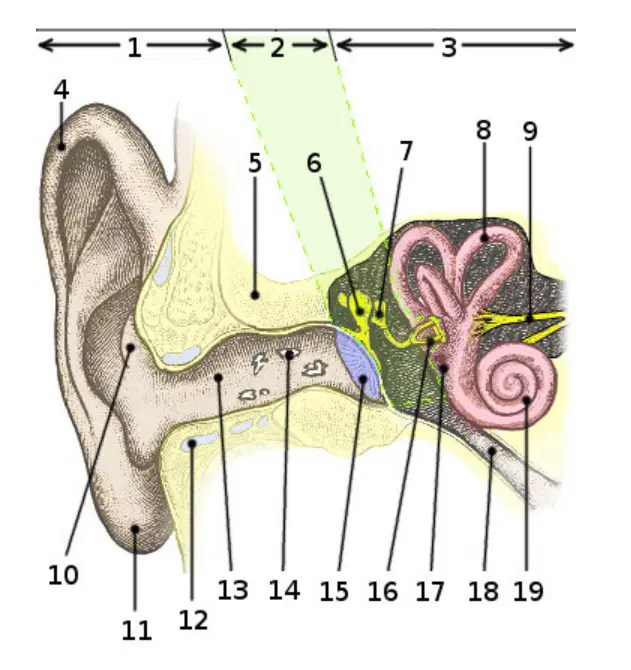
What is the name of the part labeled 9 in the diagram?
Auditory nerve (cochlear and vestibular nerves)
Semicircular canal
Auditory tube
Vestibular nerve
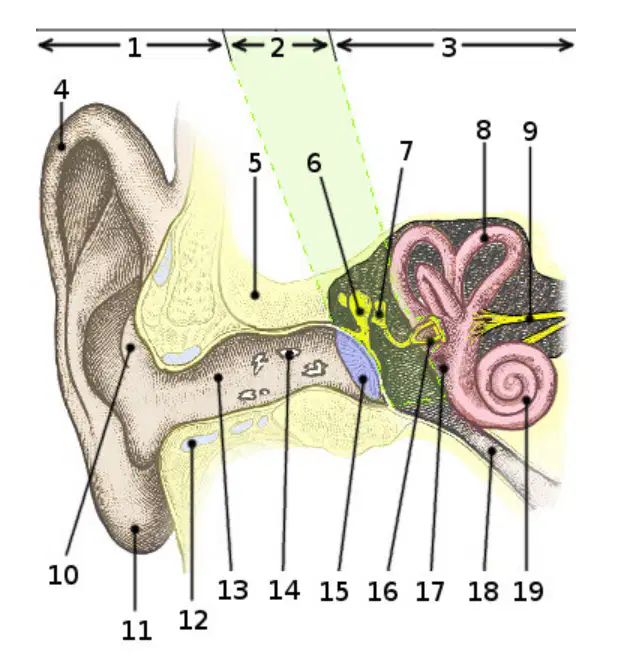
What part of your ear gives you a sense of balance
Outer ear (pinna and Ear canal)
8
18
15
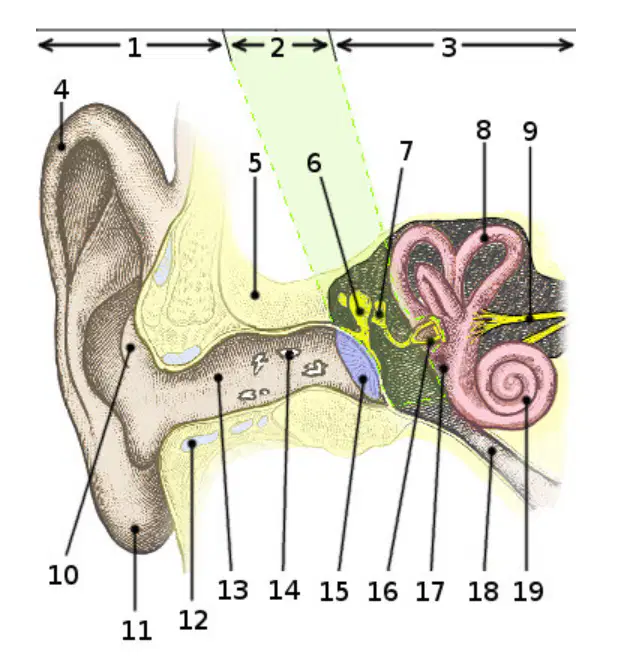
What is the name of the part labeled 13 in the diagram?
Ear drum
Cochlea
Auditory nerve
Eustachian tube
Ear Canal
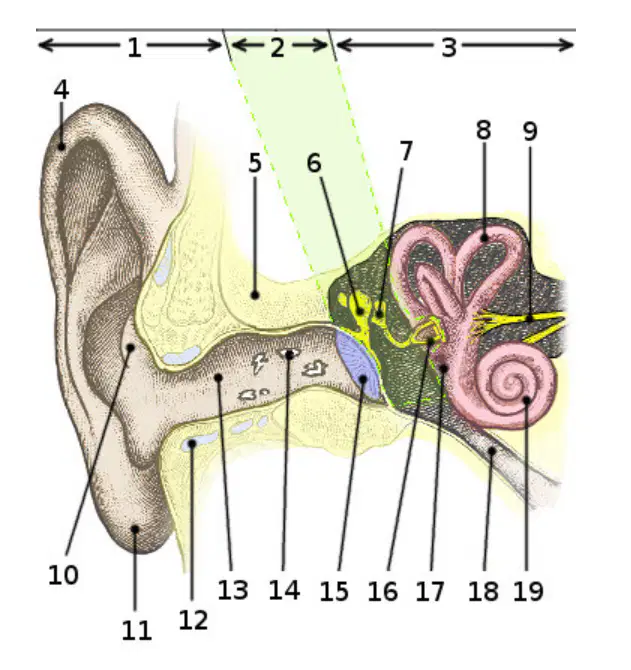
What is the name of the part labeled 15 in the diagram?
Ear canal
Eardrum / tympanic membrane
Cochlea
Auditory nerve
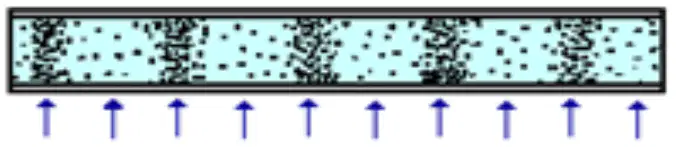
Type of Wave: ____________
Longitudinal
Transverse
Surface
Electromagnetic
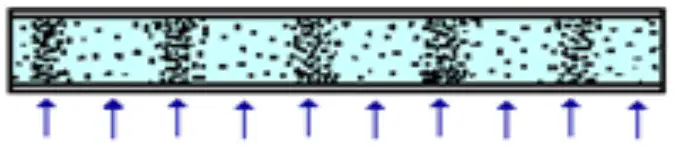
Matter moves ____________ to the motion of the wave?
parallel
perpendicular
randomly
in circles
What type of wave is a sound wave?
Transverse
Longitudinal
non mechanical wave
What is the highest point of a wave called?
Crest
Trough
Node
Amplitude
What is the lowest point of a wave called?
Trough
Crest
Node
Peak
What is the position of the medium when there is no disturbance called?
Rest Position / equilibrium position
Wave Position
Disturbed Position
Equilateral Position

