
 Worksheets
24-25 Final
Total questions: 45
Worksheet time: 25mins
What is typically introduced during the exposition of a story?
The final resolution
The climax
Characters and setting
The theme
The "rising action" in a story is:
The events that build up tension and lead to the climax.
The introduction of the main characters and setting.
The resolution of the main conflict.
The final outcome of the story.
Which part of the plot includes the turning point of the story?
Falling action
Exposition
Climax
Resolution
The resolution helps wrap up the story by:
Introducing new characters
Leaving the conflict unresolved
Tying up loose ends and resolving the conflict
Starting a new conflict
What does the theme of a story represent?
The plot
The message or lesson
6. A common theme in stories is:
Friendship overcoming obstacles
The color of the main character's shirt
The number of chapters in the book
The font used in the story
What is the main difference between theme and central idea?
Theme is a lesson; central idea is what the story is about
Theme describes the characters; central idea shows the setting
Theme comes at the end; central idea comes at the beginning
Theme is the plot; central idea is a summary
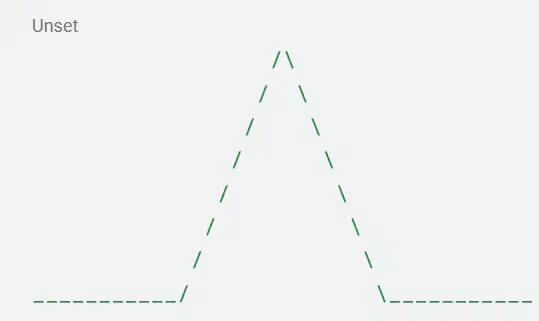
Below is a blank plot diagram. Label the following elements on the diagram: Exposition, Rising Action, Climax, Falling Action, Resolution.
Exposition, Rising Action, Climax, Falling Action, Resolution (placed in order on the diagram from left to right)
Climax, Exposition, Rising Action, Resolution, Falling Action (placed in order on the diagram from left to right)
Resolution, Falling Action, Climax, Rising Action, Exposition (placed in order on the diagram from left to right)
Rising Action, Climax, Exposition, Resolution, Falling Action (placed in order on the diagram from left to right)
Which point of view uses "I" and lets the reader experience the story through one character’s eyes?
Second person
First person
Third person omniscient
Third person limited
What is third person omniscient point of view?
The narrator knows everything about all characters
The narrator is a character in the story
The narrator speaks directly to the reader
The narrator only knows one character’s thoughts
Give an example of a sentence written in first person point of view.
I walked to the store.
She walked to the store.
They walked to the store.
You walked to the store.
An author might choose to write in third person omniscient instead of third person limited because:
It allows the narrator to know the thoughts and feelings of all characters.
It restricts the perspective to only one character.
It uses first person pronouns.
It avoids revealing any character's inner thoughts.
What is third person limited point of view?
Uses "I" and "me"
Reader knows thoughts of one characters
Using third person limited point of view helps readers understand a character’s feelings because:
It reveals only the thoughts and feelings of one character.
It shows the thoughts of all characters equally.
It provides no insight into any character’s feelings.
It focuses only on the narrator’s feelings.
Which is direct characterization?
'Liam is helpful and smart.'
'Liam offered to help her carry the books.'
'Liam always smiled at everyone.'
'Liam tapped his fingers and frowned.'
Which sentence is indirect characterization showing someone is nervous?
'She is nervous.'
'She paced the floor and bit her lip.'
'She said she was scared.'
'She acted like everything was fine.'
What is the mood of a peaceful and quiet poem?
Exciting
Calm
Confused
Frightening
The difference between mood and tone in poetry is:
Mood is the emotional atmosphere; tone is the poet's attitude.
Mood is the poet's attitude; tone is the emotional atmosphere.
Mood and tone both mean the same thing.
Mood refers to rhyme; tone refers to structure.
What is the figurative language in the line: "The forest forgets where your footsteps fall"?
Simile
Hyperbole
Personification
Alliteration
The theme of a poem where a message in a bottle drifts in the ocean, never reaching anyone, is:
Hope and reunion
Loneliness and unreceived communication
Celebration and joy
Adventure and discovery
Which sentence is an example of a simile?
Her voice was music to his ears.
He ran like the wind.
The flowers danced in the wind.
Time flew by.
Which sentence shows hyperbole?
The moon watched them walk.
I’ve told you a million times.
He’s as tall as a tree.
The classroom was a zoo.
Which is an example of metaphor?
A. Her heart is a locked box.
B. He was as fast as lightning.
Which clue would best suggest an author’s purpose is to inform?
The text includes facts and no opinions.
The text uses emotional language.
The author tries to make the reader laugh.
The author includes characters and dialogue.
24. How can knowing the author's purpose help you better understand a text?
It helps you identify the main idea and the author's message.
It makes the text longer.
It tells you the author's favorite color.
It shows you the publication date.
An article shares shocking statistics, asks questions, and urges readers to take action. What is the most likely purpose?
To inform
To persuade
To entertain
To explain a process
What is the author’s purpose in an argumentative essay?
To describe a setting
To persuade the reader
To entertain with humor
To give a timeline
What evidence can an author use to support their opinion in an argument?
Facts, statistics, and examples
Personal opinions only
Unrelated stories
Guesses and assumptions
How do writers respond to a counterclaim in their writing?
Ignore it
Agree with it
Explain why it is weak
Skip it and end with a joke
A passage describes the differences between electric and gas-powered cars. What is the text structure?
Cause and effect
Problem and solution
Compare and contrast
Chronological order
A passage tells about a series of events that happened during a field trip. What is the text structure?
Chronological
Cause and effect
Description
Problem and solution
What text structure would be best for writing about how a new school rule was created and what issue it solves?
Cause and effect
Compare and contrast
Description
Sequence
A paragraph lists several reasons why recess is important for students. What is the structure?
Which sentence correctly uses coordinate adjectives?
She adopted a playful small puppy.
It was a long exhausting trip.
He brought a large, comfortable blanket.
They live in an old brick house.
Which sentence correctly uses a semicolon?
I like pizza; and I like pasta.
I like pizza; I also like pasta.
I like pizza; but I like pasta more.
I like pizza; which is my favorite food.
Which sentence correctly uses subject-verb agreement?
The group of students are going on a trip.
The dogs barks at night.
She walk to school every morning.
The teacher explains the lesson clearly.
Which word in the sentence is an adverb? "She quickly ran to the store."
She
quickly
ran
store
Which sentence uses commas in a series correctly?
I like apples bananas and grapes.
I like apples, bananas and grapes.
I like apples, bananas, and grapes.
Which sentence is a complex sentence?
The dog barked and the cat ran.
While it rained, we stayed inside.
We ran to the store and bought milk.
I finished my homework.
The difference between a compound sentence and a complex sentence is:
A compound sentence joins two independent clauses, while a complex sentence joins an independent clause with a dependent clause.
A compound sentence joins an independent clause with a dependent clause, while a complex sentence joins two independent clauses.
Both sentences join only dependent clauses.
There is no difference between a compound and a complex sentence.
Which sentence contains a misplaced modifier?
The students who studied got good grades.
We saw a man with binoculars watching birds.
The cat chased the ball across the floor.
The teacher handed out the tests.
Which sentence has a dangling modifier?
While walking through the park, the flowers looked beautiful.
Before dinner, we washed our hands.
Listening to music, Jenna relaxed.
After class, Tom went to practice.
The rising action of a story is
at the end of the story.
the events that build tension and suspense.
the message the author shares with the reader.
the introduction

