
 Worksheets
CE Materials Midterm Exam
Total questions: 60
Worksheet time: 3600secs
Construction material structural matrix types include:
cyclic
amorphous
external
substrate
Masonry walls retain their structure for temperature in Celsius up to:
400
600
800
1000
Compared to 80 ksi steel, the yield strength for 70% glass-titanium alloy is:
0.5 times higher
2 times higher
3 times higher
5 times higher
The material group that is ductile but susceptible to fire is:
mineral-based materials
metal-based materials
organic materials
inorganic materials
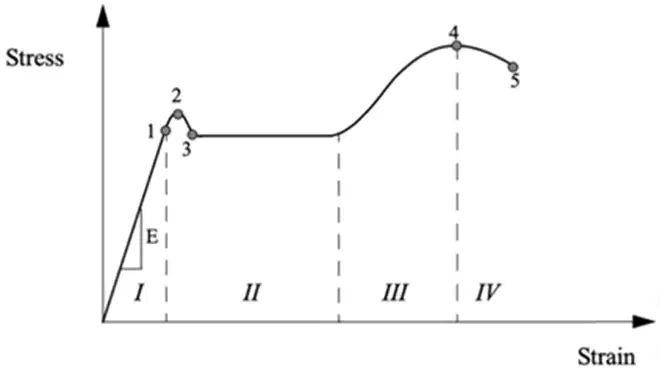
Plastic stress-strain for steel occurs in:
Zone I
Zone II
Zone III
Zone IV
Scratch resistance of minerals follows the hardness scale of:
Brinell
Moh
Rockwell
Vickers
The thermal entity involving thermal stress cracking of concrete is:
specific heat capacity
thermal conductivity
thermal expansivity
enthalpy of formation
Moisture absorption factors include:
volumetric water content
gravimetric water content
absorption weight
all the above
Example failure modes are:
tension parallel to grain
nail pull out
exposed rusting rebar
all of the above
The bond with shared electron pairs in a joint orbital is:
metallic
hydrogen
ionic
covalent
A metal with a face-centered cubic structure is:
magnesium
zinc
aluminum
titanium
Carbon entrapment in the α-iron structure during rapid quenching causes:
decreased strength and increased ductility
increased strength and increased ductility
increased strength and increased brittleness
decreased strength and increased brittleness
Hot-working of metals:
saves energy during production
prevents strain hardening through recrystallization
achieves greater metal hardness without decreasing strength
requires specialty materials additives to inhibit cooling
Cast iron’s strength and toughness improve by:
rapid cooling
added silicon
added cerium
increased carbon content
Tempering hardened steel:
allows recasting
increases brittleness
reduces internal stress
allows faster cooling after quenching
Chemical corrosion damage occurs for steel acting as the:
anode
cathode
diode
geode
Thermite welding’s most common use is:
laminate steel sheets
underwater
join large steel sections
spatial satellite repair
Galvanized steel has:
laminated sheets of multiple metals
a thin zinc coating
a high chromium content
a partial coat of gray paint
Cambering in steel production refers to:
stretching or compressing beams to increase axial strength
forging to a desired form
reshaping reclaimed steel at low temperatures
intentional bending of beams to offset dead-load deflection
Decreasing structural steel’s temperature from ambient conditions to below freezing:
increases ductility but decreases yield strength
decreases both ductility and yield strength
increases both ductility and yield strength
decreases ductility but increases yield strength
Direct oxidation for metals occurs:
at high temperature
in association with electrolytes like saltwater
after the onset of creep
as biochemical degradation in a moist environment
Beam connections forming the strongest bond are:
welded
bolted
riveted
forged
Concrete design application requiring both tensile and compressive loads include:
tip-up panels
road pavements
pre-cast I beams
residential footings
The water-cement ratio required for full hydration is:
0.25
0.35
0.45
0.55
Air-dried concrete compared to saturated concrete for compression tests is:
stronger
more ductile
weaker
more porous
Increasing lateral pressure on concrete causes increased:
voids
bonding with rebar
compressive strength
long-term creep
The initial tangent modulus for a reloaded concrete cylinder is:
equal to the initial tangent modulus for the initial load
lower than the tangent modulus near yield strength
equal to the final tangent modulus unloading
changes less quickly through the elastic region than the initial load
Concrete shrinkage caused by limited availability of free water is:
plastic
autogenous
elastic
carbonation
Concrete’s thermal expansion coefficient depends mainly on:
admixtures
water-cement ratio at placement
the current temperature
the current moisture content
Slump tests with shear failure typically indicate:
poorly graded aggregate
rounded aggregate
too little cement paste
high water-cement ratio
with shear failure typically indicate (5a_130):
poorly graded aggregate
rounded aggregate
too little cement paste
high water-cement ratio
The slump failure type shown is (5a_131):
perfect
true
shear
collapse
Workable concretes have (5a_132):
both high yield stress and plastic viscosity
low yield stress and high plastic viscosity
high yield stress and low plastic viscosity
both low yield stress and plastic viscosity
Workability reduces with time due to (5a_134):
water absorption into the aggregate
water evaporation
cement-admixture interaction
all of the above
Method(s) to slow reduction of workability include (5a_134):
continuous agitation
compaction
use of dry aggregate
all of the above
The rapidly hardening cement constituent that contributes to early strength is (PP05_14):
tricalcium silicate
dicalcium silicate
tricalcium aluminate
tetracalcium aluminoferrite
Water migration at the bottom or top of concrete is (PP05_02):
sweating
bleeding
separation
seepage
Surface coatings for aggregate particles typically include (04_200):
tetracalcium aluminoferrite
iron oxide
calcium oxide
dicalcium silicate
Rock porosity is defined as (04_196):
tetracalcium aluminoferrite
iron oxide
calcium oxide
dicalcium silicate
The four aggregate moisture states include: (04_197):
saturated, moistened, super-suctioned, dessicated
wet, saturated-surface-dry, air-dry, oven-dry
wet, oversaturated, normally saturated, and dehydrated
Oregon, Hawaii, Washington, and Alaska
The three rock classifications are: (04_190):
igneous, metamorphic, sedimentary
island, bed, continental
volcanic, layered, petrified
rough, smooth, angular
Aggregate gradations containing two main sizes are (04_193):
gap-graded
open-graded
continuously graded
ungraded
The porosity type also known as effective porosity is (04_196):
discontinuous
vuggy
interparticle
interconnected
Concrete has an aggregate percentage by weight of (PP4_2):
10-25%
30-55%
60-75%
80-95%
Aggregate shrinkage in concrete causes (PP4_11):
cracking
deflection of beams and slabs
chipping and crumbling
all of the above
Hydroxylated carboxylic acid is a (PP4_24):
mineral admixture
plasticizer
retardant
air entrainer
Aggregate considered heavyweight includes (PP4_5):
steel pellets
brick
ceramic
limestone
Applications for heavyweight aggregate in concrete include (PP4_5):
dams of large reservoirs
insulation in low temperature environments
shielding against radiation exposure
foundations for massive buildings
Air entrainers (PP4_5):
increase bleeding in wet concrete
create nanometer-scale pores in cured concrete
come in the form of wood resins
increase the rate of curing
Sparlock module widths are (8a_1):
4 inches
8 inches
12 inches
16 inches
Bulk winning advantages include (8b_1):
reduce the impact of localized variations
allows excavation during good weather only
mitigates impact of quarry operation stoppage on production
all of the above
Frogged bricks advantage over solid bricks is (labc.co.uk/news/dont-get-hopping-mad-about-laying-bricks):
lower risk of sound transfer if laid upside down
enhanced mortar adhesion
lower mortar requirement
all of the above
Wet bricks are conditioned before firing at (8b_3):
60-80oC in a dry environment
60-80oC in a moist environment
80-80oC in a dry environment
80-100oC in a moist environment
Vitrification of clay bricks includes (8b_3):
increased water resistance
volume expansion
hydration reaction
separation of clay and impurities
Economically the best kiln type is (8b_4):
branch
tunnel
intermittent
chamber
Lightweight concrete blocks (8a_6,9):
decrease thermal efficiency
increase lateral force resistance
decrease installation time
require grout to stabilize electrical and plumbing pipes
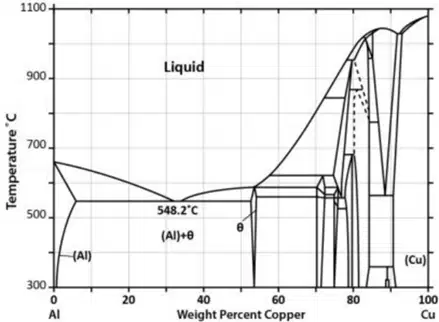
An 80%Al-20%Cu alloy at 500oC has a fractional Al:θ phase ratio of (imetllc.com/phase-diagram):
2:1
3:1
1:2
1:3
200 kN on a 0.25-m2 concrete column has normal vertical stress of (02_18):
800,000 Pa
800 kN/m2
0.0008 GPa
all of the above
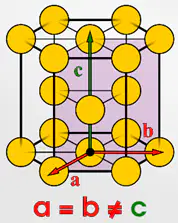
The molecular structure shown is (02_13):
face-centered cubic
hexagonal-close-pack
octahedral
body-centered cubic
Aluminum holds up to 5.7% copper in solution at (02_34):
126oC
232oC
548oC
783oC

