
NEW
Font size
 Worksheets
Ethics and Morals Learning Material Quiz
Total questions: 51
Worksheet time: 26mins
What is the main objective mentioned in the learning material?
To understand what ethics and morals are and their differences.
To learn about animals and plants.
To study mathematics and science.
To practice drawing and painting.
Which element should students recognize according to the learning material?
Elements of philosophical ethics.
Elements of physical education.
Elements of music and art.
Elements of natural science.
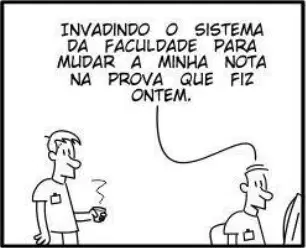
What does the comic strip show one character doing?
Hacking the college system to change his grade
Studying for a test
Helping a friend with homework
Playing a computer game
What is the main idea of the blue box on the right?
Sometimes we do what is right even if we don't want to.
Sometimes we know what is right but choose to do the opposite.
We always do what is wrong.
We never make mistakes.
According to the text, what do our actions about right and wrong relate to?
Our favorite color
Our morality
Our age
Our school grades
Why is it important to understand our actions about right and wrong?
To get better grades
To understand our morality
To make more friends
To play more games
If you know something is wrong but do it anyway, what should you think about?
How to do it better next time
Why you made that choice
How to hide it from others
How to get a reward
What is the main area of study that deals with the principles of actions, values, and human behavior?
Mathematics
Science
Ethics
Geography
Which philosophers are mentioned as important contributors to the debate about ethics?
Newton, Einstein, and Galileo
Sócrates, Platão, and Aristóteles
Darwin, Freud, and Marx
Shakespeare, Homer, and Dante
What kind of problems do philosophical reflections about ethics discuss?
The nature of animals
The nature of good and evil, right and wrong, justice, and virtue
The history of countries
The weather and seasons
What does the image of a person holding a balance scale and thinking represent?
Playing a game
Making decisions about right and wrong
Cooking food
Building a house
What is ethics mainly about?
A reflection about what is right and wrong
Only following rules
Doing whatever you want
Not thinking about actions
What does the word "ethics" come from?
The Greek word "ethos"
The Latin word "amor"
The English word "good"
The French word "belle"
What is "moral" described as in the text?
A set of habits, customs, beliefs, and values of a people, time, or culture
Only about laws
Just about feelings
Something you eat
Why is the construction of ethics considered collective?
Because it involves rules for everyone to live together
Because it is only for one person
Because it is about animals
Because it is about food
What does "moral" refer to?
A set of rules, values, and customs that a society or group follows
A type of animal
A kind of food
A place to visit
What is the main focus of ethics?
Studying values and rules and thinking about what is right or wrong
Making food
Building houses
Playing games
In some societies, why is eating certain animals considered immoral?
Because of religious or cultural reasons
Because they are too big
Because they are too small
Because they are colorful
How can ethics help us think about eating meat?
By questioning if it is right or wrong for animal well-being and the environment
By making the food taste better
By making animals run faster
By making people taller
Is eating meat a common custom in Brazil?
Yes, it is a common custom
No, it is never allowed
Only on holidays
Only for children
What is the main topic discussed in the activity?
Ethics
Mathematics
Science
Sports
In the comic, what does the child ask his father?
What is ethics?
What is your name?
Where are we going?
How old are you?
What does the father's answer suggest about his knowledge of ethics?
He does not remember what ethics is.
He knows everything about ethics.
He is teaching ethics at school.
He is reading a book about ethics.
Why do you think the activity asks students to talk with a classmate about ethics in society?
To help them think and share ideas about ethics.
To make them run faster.
To teach them how to draw.
To help them count numbers.
What does a conscious individual understand, according to the philosopher Marilena Chaui?
The difference between good and bad, right and wrong, allowed and forbidden, virtue and vice.
How to run fast and jump high.
The names of all the animals in the zoo.
How to cook a delicious meal.
What is needed for someone to have moral conduct?
To be a conscious individual.
To be the fastest runner.
To know how to draw pictures.
To have a lot of money.
What does moral conscience help a person do?
Recognize differences and evaluate the value of actions, acting according to moral values.
Win a sports competition.
Learn a new language quickly.
Build a tall building.
Why is it important to understand the difference between right and wrong?
So we can act according to moral values.
So we can eat more candy.
So we can play more games.
So we can sleep longer.
What is the person in the picture likely doing?
Thinking about what is right and wrong.
Playing a sport.
Sleeping in bed.
Cooking food.
What is the main topic of the learning material?
Moral Conscience
Mathematics
Science Experiments
Sports Rules
What did the student try to do in the story?
Suborn the teacher
Help the teacher
Draw a picture
Sing a song
What guides the teacher’s decision to give a higher grade to the student?
Her conscience
The weather
The student’s age
The color of the apple
What does conscience help us decide?
What is right or wrong
What to eat for lunch
How to draw a picture
Which game to play
Why is conscience important according to the text?
It helps us make moral choices using reason and values
It helps us run faster
It helps us sing better
It helps us sleep early
How should a person use their conscience, according to the text?
By using rational thinking and values
By copying others
By guessing
By always following friends
If you were the teacher, what would you do if a student tried to give you a gift for a better grade?
Think about what is right and make a fair choice
Take the gift and give a better grade
Ignore the student
Ask another student for help
What is the area of philosophy that studies human behavior called?
Ethics
Mathematics
Biology
Geography
Where does the word "ethics" come from?
The Greek word "ethos"
The Latin word "animal"
The English word "good"
The French word "belle"
Which of the following best describes what ethics studies?
The behavior and character of humans
The weather and climate
The history of countries
The structure of plants
If you want to understand why people act in certain ways, which area of philosophy should you study?
Ethics
Geometry
Astronomy
Chemistry
What does ethics help us decide?
What is good and what is bad for us
How to do math problems
What games to play
How to draw pictures
According to the text, are "good" and "bad" absolute values for humans?
No, they are not absolute values
Yes, they are always the same
Only "good" is absolute
Only "bad" is absolute
Why do people use ethics, according to the text?
To find the best ways to be and act
To learn new languages
To run faster
To build houses
Based on the text, which of the following best defines the concept of ethics?
Ethics is a set of fixed and unchangeable rules that determine what is right and wrong for everyone.
Ethics is the study of human behavior, investigating both its origin and the best way to act.
Ethics and morals are exactly the same and are only about social rules and customs.
Ethics is based exclusively on religion to define what is right and wrong.
What is ethics related to?
Human behavior and social circumstances
Only science
Only sports
Only food
Why do ethical principles need to be reviewed and adapted?
Because society changes and new questions appear
Because people like to change rules
Because it is fun
Because everyone is the same
Which of the following is a contemporary topic in ethics?
Digital ethics
Ancient history
Cooking recipes
Sports rules
Imagine a new technology is invented. What should people do with ethical principles?
Review and adapt ethical principles to fit the new situation
Ignore the new technology
Use old rules without thinking
Stop talking about ethics
What is "moral" according to the text?
A set of rules and customs that determine the behavior of individuals in a social group.
A type of food.
A kind of animal.
A place to visit.
What does "ethics" mean in the text?
Thinking carefully about customs to create rules for the common good.
Playing games with friends.
Learning a new language.
Building a house.
Why is it important to create rules for the common good?
To help everyone in the group live well together.
To make only one person happy.
To win a prize.
To travel to another country.

