
 Worksheets
Themes and Methods in Developmental Psychology
Total questions: 19
Worksheet time: 10mins
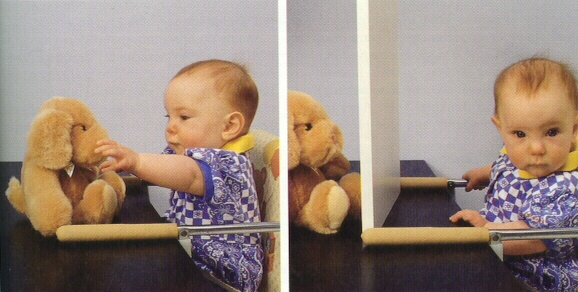
Sally attempts to retrieve her teddy bear after her father hides it under a blanket. This suggests that Sally has developed a sense of
egocentrism.
object permanence.
conservation.
accommodation.
Robby understands her world primarily by grasping and sucking easily available objects. Robby is clearly in Piaget's ________ stage.
preoperational
concrete operational
sensorimotor
formal operational
What did the monkeys do when they were frightened by a loud noise
Hide in the corner of the cage
Shriek at the noise
Run to the cloth mother
Run to the wire mother
Where did the monkeys in the cage spend most of their time
The wire mother
On the floor of the cage
Climbing the cage
The cloth mother
What conclusion can we draw from Harlow's research
The importance of food
Monkeys are better at socializing when they come out the cage
Contact comfort is the most important factor when forming attachment
Contact is equally as important as food when forming an attachment

infants using the Strange Situation model, which labeled infants as secure, and insecure in attachment
According to Harry Harlow what made the mother so important?
the comfort she provided
the food she provided
the protection she provided
the guidance she provided
This study provided evidence that infants seek their parents for emotional support and care, not just for biological nourishment.
Piaget (1932)
Harlow (1953)
Bowlby (1969)
Ainsworth (1970s)
What did Harlow determine by enacting the "Strange Situation" experiment technique where monkeys were left to explore an unfamiliar room with and without its mother?
The monkeys who had a mother in the room would only stay close to the mother and would not venture farther than a few feet.
There was no difference between whether the mother was present or not in the room.
When the surrogate mother was present, the monkey would explore the room freely because of their secure base of attachment.
When the surrogate mother was removed from the room, the monkey would be more confident in their exploration.
Adding new information because it fits an existing schema is
assimilation
accomodation
discrimination
gerneralization
Creating a new schema when new information does not fit an existing one
assimilation
accomodation
discrimination
generalization

