
 Worksheets
SS 7 G
Total questions: 143
Worksheet time: 1hrs 19mins

The Persians took land from the ______ who had previously defeated the Assyrians Empire.
Medes
Indians
Phoenicians

A Persian King named ________ conqured the Medes.
Hammurabi
Nebuchadnezzar
Cyrus the Great

The third Persian King was ________, a strong ruler.
Darius
Donavon
Cambyses

King Darius built the _________, a road for government purposes, which stretched from Anatolia to Babylonia.
The Royal Road
The Silk Road
The Lonely Road

How were Cyrus the Great and King Darius DIFFERENT as rulers? (Be specific.)

He created the large Persian Empire
Cyrus the Great
Alexander the Great
Darius
Hellenistic

An agreement to help others
Cavalry
Phalanx
Alliance
Reason

More than one of these happened between the Persians and Greeks
Peloponnesian War
Persian Wars
Hellenistic
Hippocrates

Persian emperor, he restored order to the Persian Empire, built roads and made other improvements to society
Cyrus the Great
Darius
Alexandar the Great
Aristotle

Greek like, a culture that combines Greek, Persian, and Egyptian
Phalanx
Hellenistic
Euclid
Hippocrates

Sparta and their allies fought against Athens and their allies for power in Greece
Persian War
Alexander the Great
Peloponnesian War
Phalanx

A group of soldiers standing close together as they march on the battlefield
Cavalry
Phalanx
Hellenistic
Alliance

Macedonian king, he was a brilliant military leader who defeated the Greeks. Alexander the Great was his son.
Philip II
Aristotle
Cyrus the Great
Plato

Son of Darius I, and ruler of Persia. He defeated Sparta and Athens.
Socrates
Aristotle
Cyrus the Great
Xerxes I
Based on the Youtube video. Who started the Greek-Persian Wars?
Darius I
Cyrus the Great
Alexander the Great
Cleisthenes
Match the following.
governor
satrap
territory
satrapy
Cyrus the Great
fair ruler of Persia
Darius
divided Persia into manageable provinces


Who was the "great" founder of the Persian Empire?
Cyrus
Darius I
Xerces
Darius III
Who tried and failed to conquer the Greeks?
Cyrus
Darius I
Xerces
Darius III
Who commissioned the creation of the Royal Road through Persia?
Cyrus
Darius I
Xerces
Darius III
What type of religion is Zoroastrianism?
Monotheistic (belief in one god)
Polytheistic (belief in many gods)
Belief in the legendary Zoro
Belief in Jesus Christ
Which is NOT a contribution of the Persian Empire?
System of government
Zoroastrianism
Royal Road
System of aqueducts
True or False: Cyrus the Great commissioned the building of the Royal Road
True
False
Which was one of the capitals of the Persian Empire?
Mesopotamia
Constantinople
Rome
Persepolis
What land did the Persian Empire span across?
Europe
NW Africa
SW Asia
Mediterranean Sea
The name of the coin used in the Persian empire was names after which ruler?
Cyrus II
Cambyses
Darius I
Herodotus

How many Immortals did the king have?
5,000
50,000
25,000
10,000
What was the name of the Persian ruler of each province or state?
King
Governor
Satrap
Lord
This Persian King expanded the Persian Empire and began construction of the Royal Road
Darius
Achaemenid
Cyrus the Great
Xerxes
What Persian king is famous for his victory against the Spartans at the Battle of Thermopylae but ultimately failed in invading Greece in 480 BCE?
Artaxerxes
Xerxes
Darius
Cambyses
King of Macedonia who invaded Greece
Phillip II
Cyrus the Great
Kublai Khan
Genghis Khan
Started the Persian empire; let people keep their customs
Alexander the Great
Phillip II
Cyrus the Great
Pericles
Young prince who became a leader of the Persian Empire
Alexander the Great
Xerxes
Cyrus the Great
Darius I
Phillip's son; built one of the world's largest empire
Pericles
Darius I
David
Alexander the Great
The Persian Empire was able to conquer all of these areas EXCEPT
Babylonian Empire
Egypt
Indus River Valley
Greece
______________ conquered the Persians.
Martin Vizcarra
Gilgamesh
Hammurabi
Alexander the Great
Cyrus the Great
king of Persia and founder of the Persian empire (559-529 BCE)
Greek Historian, considered the father of History.
Athenian politician and military leader who persuaded Athens to build a navy and then led it to victory over the Persians
priestess who would deliver advice from the gods in the form of a riddle
A governor of a province in ancient Persia
Satrap
Fleet
Hellespont
Oracle
Greek victory over the Persian army in the first land battle of the Persian Wars
Battle of Marathon
Ionian Revolt
Battle of Thermopylae
Battle of Salamis
Battle during the Persian Wars in which 300 Spartan troops fought to the death against a much larger Persian force. Considered the most "glorious" defeat in Greek history.
Battle of Thermopylae
Battle of Salamis
Battle of Marathon
Ionian Revolt
The naval battle that effectively ended the Persian war. The Greek fleet, although vastly outnumbered, defeated the Persian fleet. This helped end the Persian war, freeing Greece.
Battle of Salamis
Battle of Thermopylae
Battle of Marathon
Ionian Revolt
Athenian politician and military leader who persuaded Athens to build a navy and then led it to victory over the Persians
Themistocles
Cyrus the Great
Herodotus
Hellespont
Who united the Medes & the Persians?
(a)
King of Macedonia who conquered Greece, Egypt, and Persia
Darius
Alexander the Great
Socrates
Plato
A series of wars between the Greeks (mainly Athens) and the Persians in which the Greeks were usually victorious.
Peloponnesian Wars
Persian Wars
A piece of land that is surrounded by water on three sides.
Peninsula
City-State
Mythology
Crete
Greek culture spread across western Asia and northeastern Africa after the conquests of Alexander the Great. The period ended with the fall of the last major Hellenistic kingdom to Rome, but Greek cultural influence persisted until the spread of Islam.
Peloponnesian Wars
Persian Wars
Hellenistic Age
Golden Age
an ancient Greek city in Boeotia destroyed by Alexander the Great in 336 BC
SParta
Athens
Thebes
Persia
(431-404 BCE) The war between Athens and Sparta that in which Sparta won, but left Greece as a whole weak and ready to fall to its neighbors to the north.
Peloponnesian War
Persian War
son of Darius; became Persian king. He vowed revenge on the Athenians. He invaded Greece with 180,000 troops in 480 B.C.
Xerxes
Alexander the Great
Cyrus the Great
Homer
the peninsula forming the southern part of the mainland of Greece
Crete
Sicily
Peloponnesus
Persia
king of Persia who tried to invade Greece but was defeated
Alexander the Great
Cyrus the Great
Xerxes
Darius I


This Persian King expanded the Persian Empire and began construction of the Royal Road
Darius
Achaemenid
Cyrus the Great
Xerxes
What Persian king is famous for his victory against the Spartans at the Battle of Thermopylae but ultimately failed in invading Greece in 480 BCE?
Artaxerxes
Xerxes
Darius
Cambyses
What was the name of the Persian ruler of each province or state?
King
Governor
Satrap
Lord
The emperor's ___________ helped him make important decisions.
semi-arid
subject state
castes
bureaucracy
Which two opposing forces do Zoroastrians believe exist in the universe?
Light and dark
Fire and water
Good and evil
Mortal and immortal
The Great Royal Road was an achievement of —
India
Egypt
Persia
Rome

Which empire is best described by this list?
Chinese
Sumeran
Persian
Hittite
Which is NOT a characteristic of the Persian empire?
Imperial bureaucracy
Road systems
Hellenic culture
Monotheism
Macedonian ruer that conquers Persia.
Phillip II
Octavian
Alexander the Great
Precipices
Which statement best explains the successful unification of other cultures under Persian control?
Persians treated the people they conquered harshly.
Persians forced all peoples to practice the Persian religion.
Persians had a large military.
Persians had tolerance of traditions and customs of the people they conquered.

True or False: Xerxes was Darius son
True
False he was Cyrus the Greats Son
False he was Xerxes son
This King of Persia united all of Persia under one ruler
Xerxes
Cyrus the Great
Darius
This King of Persia vowed revenge against the Athenians after his fathers embarrassing defeat at the Battle of Marathon.
Xerxes
Cyrus the Great
Darius

This King of Persia reorganized the government and created satraps or provinces
Xerxes
Cyrus the Great
Darius
This race was named after the Greek runner, Pheidippies ran over 26 miles to deliver the news that Athens had defeated Persia.
Plateau
Salamis
Marathon
Thermopylae
True or False: Sparta fought the entire battle with the Athenians.
True
False

Who won the Battle of Marathon?
Athens
Sparta
Persians
Greeks

True or False: Athenians waited until the Persians were loading their ships to charge over the hill and attack the Persians.
True
False


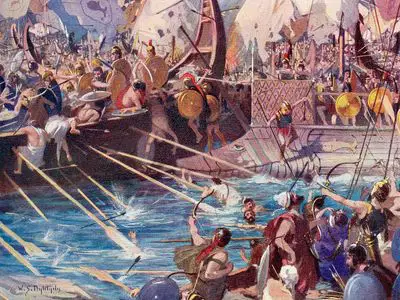
The Persian War began because
Athens traded with Ionian Greeks
Athens supported the Ionian Greek rebellion against Persia
Ionian Greeks rejected Athens and joined Persia
Ionians preferred Persian rugs to Athenian rugs.
Reason Persian War started
Athens supported the Ionain rebellion
Persian Soldiers
Massive numbers, wooden shields
Greek Soldiers
Hoplites with bronze shields, short swords
Athens
Diversified education
Sparta
Military education
A king of the PERSIAN Empire
Cyrus the Great
Hammurabi
Nebuchadnezzar II
Sargon II
Reason Persian War started
Athens supported the Ionain rebellion
Persian Soldiers
Massive numbers, wooden shields
Greek Soldiers
Hoplites with bronze shields, short swords
Athens
Diversified education
Sparta
Military education

an agreement to work together
cavalry
alliance
phalanx
reason

a group of warriors who stood close together in a square
cavalry
alliance
phalanx
reason

founder of the Persian Empire
Cyrus the Great
Darius I
Xerxes I

clear and ordered thinking
cavalry
alliance
phalanx
reason

Persian emperor who led the second invasion of Greece in 480 BCE
Cyrus the Great
Darius I
Xerxes I

a series of wars between Persia and Greece beginning in 490 BCE
Persian Wars
Peloponnesian War

a war between the two great Greek city-states of Athens and Sparta in the 400s BCE
Persian Wars
Peloponnesian War

powerful king of Macedonia
Philip II
Alexander the Great
Hellenistic

king of Macedonia who built the largest empire the world had ever seen
Philip II
Alexander the Great
Hellenistic

name for the blended culture that developed in Alexander’s empire
Philip II
Alexander the Great
Hellenistic


Which of the following statements is true concerning the Greco-Persian Wars?
The Persians defeated the Greek city-states
Athens started its decline after the end of the war
Sparta and Athens were united against the Persians
Persian ideas were adopted by the Athenians


This battle ended the Greco-Persian Wars and caused Persia to leave Greece.
The Battle of Marathon
Persian Wars
The Battle of Plataea
The Battle of Thermopylae


The Athenian general who led the Greek navy and devised the plan for the defense of Greece during the third Persian war was
Leonidas
Xerxes
Pheidippides
Themistocles


He was invaded Greece as revenge for his father's defeat at Marathon and to build a base for expansion into Europe.
Xerxes
Cyrus II (the Great)
Darius I
Who defeated and conquered the Persian Empire?
Alexander the Great
Julius Ceasar
Leonidas of the Spartans
King Tut of Egypt
The set of laws given to Moses by God on Mount Sinai were collectively called what?
the laws of Moses
the laws of Abraham
the 15 Commandments
the 10 Commandments
The monotheistic religion of the Hebrews is:
Judaism
Jewish
Jew
Hebrew

