
 Worksheets
Guttering and Rainwater Systems Quiz
Total questions: 63
Worksheet time: 32mins
What is one of the main purposes of a guttering system?
To increase water penetration
To protect the building's foundations
To enhance roof aesthetics
To collect dust
What is a key principle of any guttering and rainwater system?
To increase rainfall
To constitute a nuisance for the occupiers
To remove rainfall without damaging the building
To store rainwater indefinitely
What does guttering installation often involve?
Working at height
Underground digging
Painting walls
Planting trees
Which of the following materials is NOT used for rainwater systems?
PVCu
Extruded aluminium
Cast iron
Steel
What is a disadvantage of using PVCu for guttering systems?
It is easy to install
It is corrosion free
It goes brittle in cold temperatures
It requires no painting

Which gutter profile is described as the standard used on many domestic properties in the UK?
Ogee
High capacity
Half round
Victorian
What is the purpose of the ogee (or OG, ornamental gutter)?
To provide a modern look
To enhance water flow
To maintain a 'period' look on new builds and refurbishments
To reduce installation costs
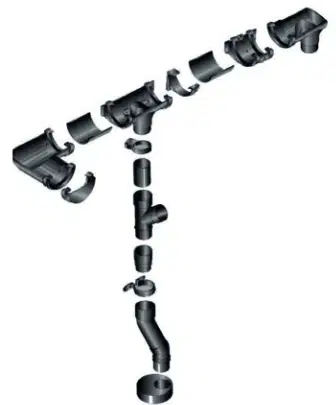
What does Figure 8.1 in the document represent?
A Victorian gutter profile
A modern roofing system
A typical PVCu gutter system
A rainwater harvesting system
What was the most common material for gutters and rainwater pipework before PVCu?
Aluminum
Cast iron
Plastic
Copper
Which of the following is a disadvantage of using cast iron for guttering?
Lightweight
Easy to install
Requires regular painting
Low maintenance
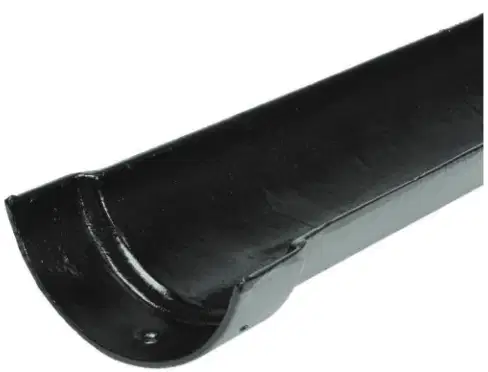
What is used to bolt together the two lengths of cast iron guttering?
Plastic clips
Zinc-plated gutter bolts
Rubber seals
Copper nails
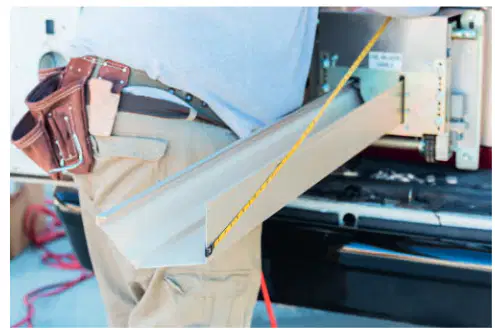
What is one advantage of using extruded seamless aluminium guttering systems?
Heavy and difficult to install
Prone to corrosion
Lightweight and corrosion resistant
Requires frequent maintenance
Which factor is NOT mentioned as determining the type and size of a guttering system?
Rainfall intensity
Roof area
Building height
Running outlet position
What is the purpose of fitting internal brackets spaced at 400 mm in the gutter?
To increase the weight
To reduce the cost
To withstand shock-load from ladders
To improve aesthetic appearance
What is the formula to calculate the effective maximum roof area according to BS EN 12056-3:2000?
(W+2H)×L
(W + H) \times L
(W \times H) + L
(W+2L)×H
What is the formula to calculate the effective roof area for a flat roof?
Length x Width
Length x Width x Pitch Factor
Length + Width
Length x Height
If a roof has a length of 10 m, a width of 6 m, and a pitch of 30°, what is the effective roof area using the pitch factor from Table 8.6?
60 m²
77.4 m²
90 m²
100 m²
What is the pitch factor for a roof pitched at 45° according to Table 8.6?
1.29
1.50
1.87
0.5
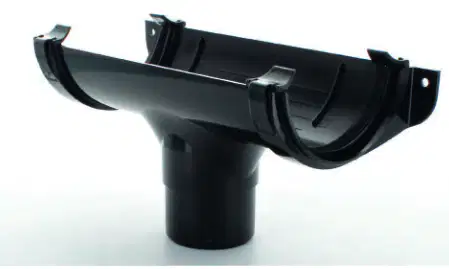
What is the purpose of a running outlet in a rainwater system?
To connect the guttering to the rainwater pipe
To increase the roof area
To block rainwater flow
To reduce the number of outlets needed
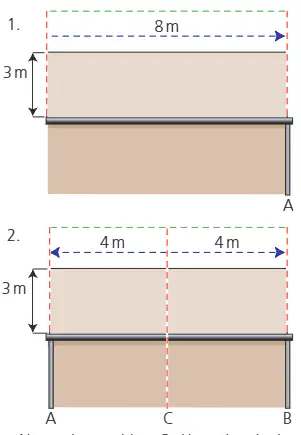
How does placing the outlet centrally affect the gutter system?
It decreases the total area of roof the gutter can serve
It increases the total area of roof the gutter can serve
It has no effect on the roof area
It blocks the rainwater flow
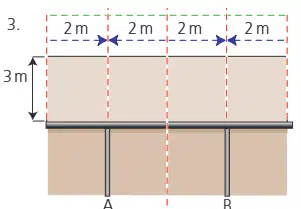
What is the effect of having more outlets on a gutter system?
It increases the distance water has to travel
It shortens the distance water has to travel
It has no effect on water travel distance
It blocks the water flow
What is the least effective outlet design according to the text?
Sharp edged corners
Slightly rounded corners
Fully rounded corners
No corners
According to BS EN 12056–3:2000, what is the recommended nominal gradient for gutters?
Between 1 mm/m and 3 mm/m
Between 2 mm/m and 4 mm/m
Between 0.5 mm/m and 2 mm/m
Between 3 mm/m and 5 mm/m
What is the effect of a 90° gutter angle on the effectiveness of the run of gutter?
Reduces effectiveness by 15%
Increases effectiveness by 15%
Reduces effectiveness by 10%
Increases effectiveness by 10%
What is the equivalent fall of 1:600 in terms of mm fall in 15 m?
25 mm
22 mm
30 mm
20 mm
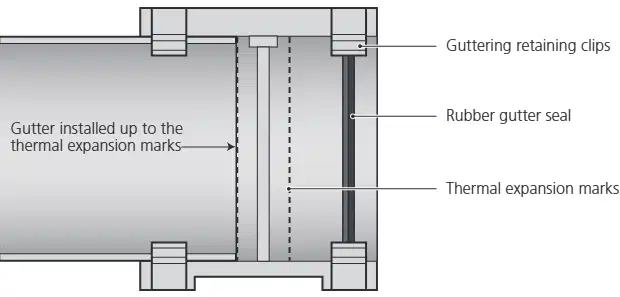
What is the purpose of the 10 mm expansion gap in PVCu gutter fittings?
To prevent joint failure
To increase water flow
To reduce material cost
To enhance aesthetic appeal
Which document provides important information regarding the design and installation of rainwater drainage systems?
Building Regulations Approved Document, Section H3
Work at Height Regulations 2005
BS EN 12056–3:2000
Manufacturers' instructions
What is the main reason for using a scaffold instead of a ladder when installing gutters and rainwater pipes?
Scaffolds are cheaper than ladders
Ladders are not a safe working platform
Scaffolds are easier to transport
Ladders are more stable than scaffolds
According to the text, what should always be performed before working at height?
A cost analysis
A risk assessment
A weather check
A time estimate
What should be used if working from a ladder is unavoidable?
A ladder stand-off
A longer ladder
A rope harness
A safety net
Which regulation must be adhered to if you are high enough to become injured from a fall?
Building Regulations Approved Document
Work at Height Regulations 2005
BS EN 12056–3:2000
Manufacturers' instructions
What should be done to secure a ladder if it cannot be secured by itself?
Use a ladder stand-off
Have a second person 'foot' the ladder
Place it on soft ground
Cover it with a plywood sheet
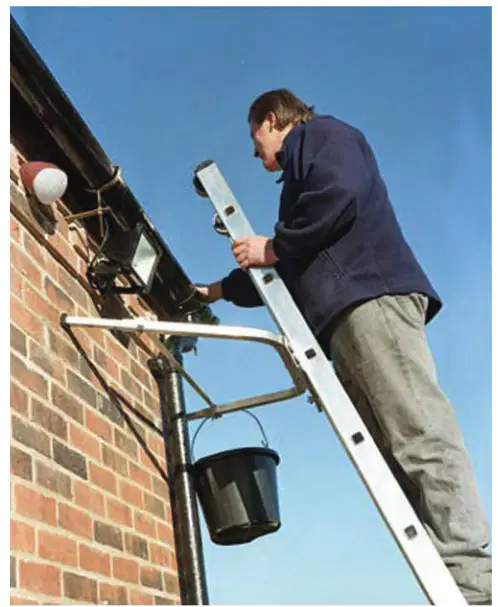
What is the purpose of using a ladder stand-off?
To prevent the ladder from slipping
To prevent scraping damage to brickwork or masonry
To make the ladder taller
To secure the ladder on soft ground
Why should lawns have walk boards placed on them?
To prevent grass from growing
To prevent lawn damage
To make the lawn look neat
To support the ladder
What should be checked before starting the installation of fascia boards?
That they are painted
That they are straight and level
That they are made of metal
That they are waterproof
What should be done with existing rainwater systems before new installations?
Leave them as they are
Remove them with care
Paint them
Cover them with plywood
What is the recommended fall ratio when measuring the distance between the high point and the outlet for PVCu gutters?
1:100
1:200
1:600
1:800
Why is it important to consult documents when designing or installing rainwater systems?
To find the cheapest materials
To ensure water is collected and discharged efficiently
To avoid using power tools
To reduce installation time
What should be used to ensure a fixed level when installing gutters?
Claw hammer
Spirit level
Hacksaw
File/rasp
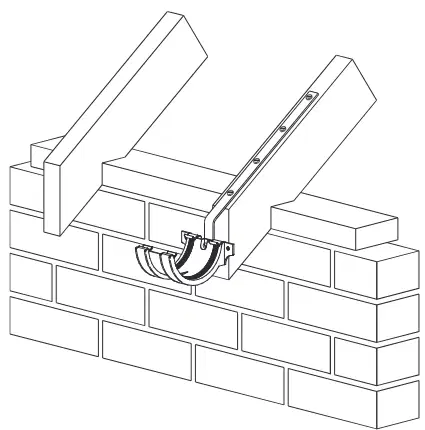
What is the purpose of using top or side-fitted rafter brackets in buildings without fascia boards?
To provide aesthetic appeal to the roof
To support the roof rafters
To screw into the top or side of roof rafters
To enhance the insulation of the building
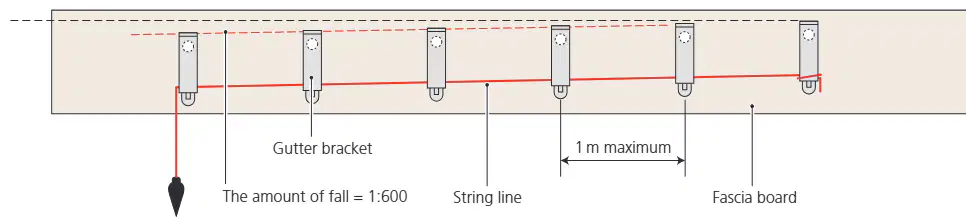
What is the function of drive-in rise and fall brackets in rainwater systems?
To adjust the gutter bracket height
To secure the fascia board
To provide a decorative finish
To increase the roof's slope
What is the maximum distance allowed between fascia brackets when installing them?
0.5 meters
1 meter
1.5 meters
2 meters
What tool is recommended for cutting gutter and rainwater pipes?
Fine-tooth saw
Hammer
Screwdriver
Pliers
How far should fascia brackets be fitted from the fitting or end of the gutter?
No more than 150 mm
No more than 200 mm
No more than 100 mm
No more than 250 mm
What is the purpose of using a file or rasp after cutting the gutter?
To de-burr the cut
To paint the cut
To measure the cut
To glue the cut
What type of jointing system do PVCu gutter systems use?
Snap-fit jointing system
Welded jointing system
Bolted jointing system
Glued jointing system
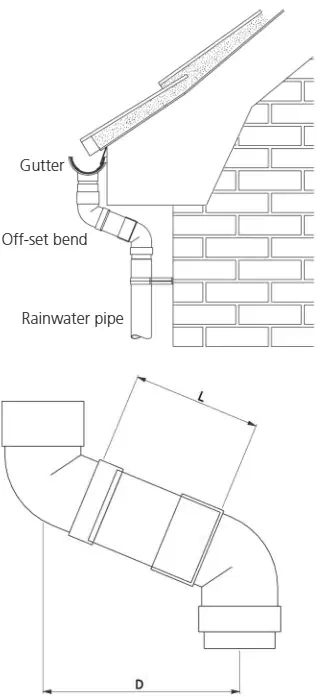
Is there a restriction on the number of bends that can be installed on rainwater pipes?
Yes, only two bends are allowed
Yes, only three bends are allowed
No, there is no restriction
Yes, only one bend is allowed
What is the recommended vertical distance for rainwater clip support for a 68 mm downpipe?
1.2 m
2.0 m
0.6 m
1.5 m
What should be avoided to maintain the aesthetic appearance of PVCu gutters?
Excessive painting
Excessive scratching
Excessive heating
Excessive bending
How should pipes and gutters be stored to prevent damage?
On uneven surfaces
On flat surfaces
In vertical stacks
In loose bundles
What is the first part of the maintenance and repairing activity for gutter systems?
Leakage repairs
Visual inspections
Replacement of defective fittings
Cleaning blockages
Which of the following is a remedy for leaking joints in rainwater systems?
Install extra fascia brackets
Carry out rectification operations
Clean and clear blockages
Replace the gutter with high-capacity gutter
What is a common sign of a leaking PVCu gutter?
Water pooling in the gutter
Black/green moss growth on the surface
Overflowing water during heavy rain
Misaligned fascia brackets
What should be done if water overflows from the gutter during heavy rain after a major extension?
Install extra fascia brackets
Clean and clear blockages
Install more rainwater pipe outlets
Replace the rubber seal
What are some visual signs of leaking cast iron joints?
Rust staining on the mouth of the joint
Cracks in the PVC pipe
Discoloration of the paint
Loose screws
Why is silicone sealant not recommended for repairing leaking joints?
It is too expensive
It breaks again as the gutter expands and contracts
It is difficult to apply
It is not waterproof
What should be worn when attempting guttering tasks?
Casual clothes
PPE (Personal Protective Equipment)
Sandals
Sunglasses
What is a common risk to PVCu gutters and rainwater pipes?
Rust
Ultraviolet (UV) rays from sunlight
Freezing temperatures
High winds
What is the first step in replacing a gutter?
Measure the length of the gutter
Visually inspect the job and assess the risks
Unclip the gutter from the fittings
Install the new gutter
Why is it important not to handle the removal of cast iron guttering alone?
The guttering is very heavy and requires a risk assessment.
The guttering is very light and can be easily misplaced.
The guttering is fragile and may break easily.
The guttering is expensive and needs careful handling.
What should be used to cut through the gutter bolts?
A nail punch
A junior hacksaw
A metal-cutting blade
A screwdriver
What is the purpose of applying a bead of soft linseed oil putty in the socket?
To prevent rust
To secure the new section of gutter
To ensure a watertight seal
To make the gutter aesthetically pleasing
What should be done after inserting the new section of gutter into place?
Paint the joint with black bitumen paint.
Re-tighten the gutter bolts.
Remove the old rafter bracket.
Test the gutter by discharging water.

