
NEW
Font size
 Worksheets
Questions
Total questions: 52
Worksheet time: 26mins
The Roman Catholic Church was:
very powerful
not powerful
somewhat powerful
powerless
The Crusades were:
A series of religious wars between Christians and Muslims.
A trade agreement between European and Asian countries.
A scientific movement in medieval Europe.
A period of peace in the Middle East.
The Crusades were caused by:
Religious conflicts between Christians and Muslims
Trade disputes between European nations
The discovery of new lands
Internal conflicts within Europe
The First Crusade was unsuccessful because:
the crusaders failed to capture Jerusalem
the crusaders faced strong resistance and supply issues
the crusaders were defeated by the Byzantine Empire
the crusaders never left Europe
Which Muslim leader took over Jerusalem during the Second Crusades?
Saladin
Nur ad-Din Zangi
Al-Kamil
Baibars
Which powerful leader fought in the Third Crusade?
Richard the Lionheart
Julius Caesar
Genghis Khan
Charlemagne
The effects of the Crusades included:
Increased trade between Europe and the Middle East
Decline in religious tensions
End of feudalism in Europe
Discovery of the Americas
The Inquisition was:
a religious court established to combat heresy
a trade route between Europe and Asia
a type of medieval architecture
an ancient Roman festival
What important changes were made to England’s government?
The monarchy gained absolute power
Parliament became more powerful than the monarchy
England became a republic
The government was controlled by the church
From the 11th through 15th centuries, which institutions were increasing in power?
The Roman Catholic Church and European monarchies
The Ottoman Empire and Mongol Empire
The Greek Orthodox Church and Russian Tsars
The Byzantine Empire and Islamic Caliphates
Many church officials helped political leaders run their kingdoms.
True
False
The Church also had great ________, which made it an even more powerful institution. The wealth of the pope was greater than any European Monarch.
wealth
poverty
weakness
ignorance
The pope’s power caused many kings to ________ with the church.
cooperate
rebel
ignore
compete

The Crusades were ________ from Christian Europe to Palestine.
military expeditions
trade agreements
religious festivals
diplomatic missions

What was one lasting impact of the Crusades?
They had no impact on Europe
They had lasting impact on European politics and society
They led to the fall of Rome
They started the Industrial Revolution
Why did European Christians begin the Crusades?
To explore new lands
Because Christians were being persecuted by the Muslims.
Which three religions consider Jerusalem and the area around it to be sacred?
Christians, Jews, and Muslims
Hindus, Buddhists, and Sikhs
Christians, Hindus, and Jews
Muslims, Buddhists, and Jews
The Seljuk takeover of Jerusalem in 1071 made Christian _______ to the Holy land nearly impossible.
pilgrimages
festivals
settlements
crusades
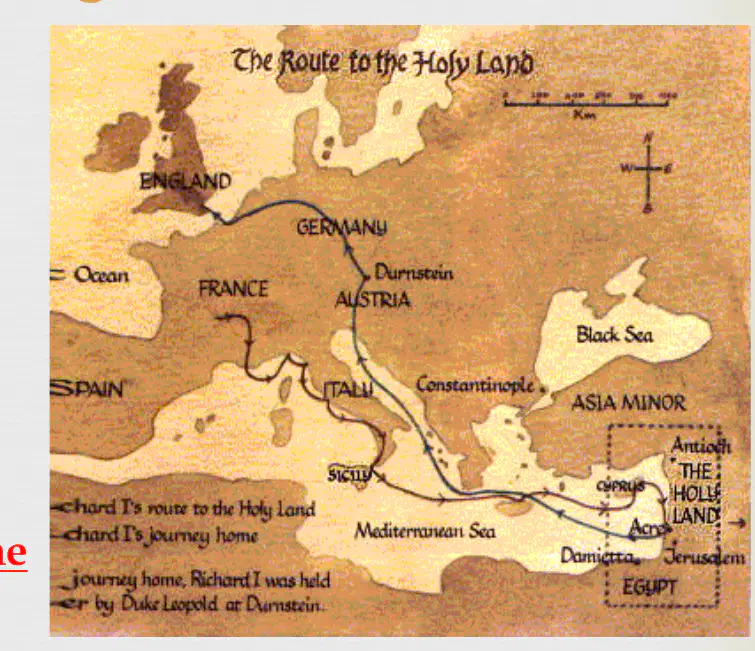
According to the map titled 'The Route to the Holy Land,' which of the following countries is NOT shown as part of the route?
England
France
Spain
Germany

According to the passage, why were European feudal princes eager to go on the Crusades?
They used success in warfare as a way to gain power.
They wanted to escape from their lands permanently.
They were forced by the church to participate.
They sought to establish trade routes with Asia.
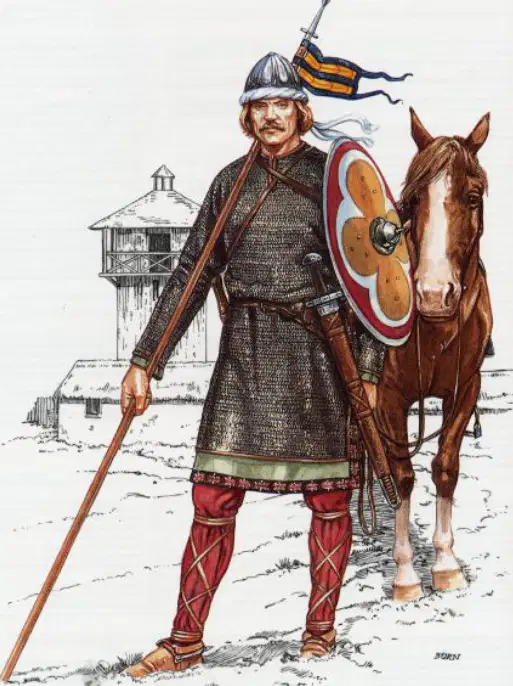
Who attacked the Byzantine Empire, leading the emperor to ask the pope for help?
Seljuk forces
Viking raiders
Mongol invaders
Frankish knights

In what year did European armies start out for the Byzantine Empire capital of Constantinople during the First Crusade?
1066
1096
1196
1296
Many Crusaders didn’t take enough supplies and thousands died on the way during the First Crusade.
True
False
What city did Christian forces capture in 1099 during the First Crusade?
Jerusalem
Rome
Constantinople
Alexandria
After capturing Jerusalem, Christian forces divided the city into several regions. Name two of these regions.
Edessa, Antioch, Tripoli, Jerusalem (any two)
Mecca, Medina
Rome, Constantinople
Paris, London
According to the passage, what event led to the beginning of the Second Crusade (1147-1149)?
The rise of Saladin
The recapture of Edessa by Muslim Turks in 1144
The fall of Jerusalem
The defeat of the Crusaders
Who was the new Muslim leader that helped defeat the Crusaders, as mentioned in the passage?
Saladin
Richard the Lionheart
Charlemagne
Frederick Barbarossa

Who is this historical figure, as described in the passage?
Richard the Lionheart
Saladin
Charlemagne
Suleiman the Magnificent

After the fall of Jerusalem, who called for another crusade?
King Richard the Lion-Hearted
The pope
Saladin
The Crusaders

Who became the leader of the Crusaders during the Third Crusade because of his courage and skill in battle?
King Richard the Lion-Hearted
King Philip II of France
Frederick Barbarossa
Saladin
In 1192, who agreed on a truce that allowed Christians to visit Jerusalem while it remained under Muslim rule?
King Richard the Lion-Hearted and Saladin
The pope and Saladin
The Crusaders and the pope
King Richard the Lion-Hearted and the pope
Why did the Crusaders agree to attack the Byzantine city of Zara?
To gain more land
To pay Italian traders who were transporting them
To spread Christianity
To escape the pope's anger
The Crusaders sacked Constantinople to put a political ally in charge of the ________ Empire.
Byzantine
Ottoman
Roman
Persian
True or False: The pope was pleased with the Crusaders for attacking a Christian city.
True
False
What was the result of the Fourth Crusade for the Byzantine Empire?
The Byzantine Empire was weakened.
The Byzantine Empire expanded its territory.
The Byzantine Empire formed an alliance with the Crusaders.
The Byzantine Empire conquered Jerusalem.

Europe began the Crusades but by 1270, the Muslims had driven the Crusaders out of ________, and the wars ended.
Palestine
Spain
Constantinople
Rome

True or False: The Crusaders had a permanent effect on Muslims in Palestine.
True
False

Who continued to visit Palestine after the Crusades ended?
Only Muslims
Only Crusaders
Christian traders and European pilgrims
No one

European contact with the cultures of the eastern Mediterranean grew during the Crusades. Crusaders brought back Asian goods, resulting in what effect?
Decreased trade
Increased trade
No change in trade
Decreased cultural exchange
Increased trade across the Mediterranean helped European towns to grow and made the role of urban merchants more _________.
important
difficult
unnecessary
invisible
What was one effect of increased trade across the Mediterranean after the Crusades?
It helped European towns to grow and made the role of urban merchants more important.
It caused the decline of all European cities.
It led to the complete isolation of Europe from Asia.
It resulted in the end of all trade with Africa.
What was one of the effects of the Crusades mentioned in the passage?
Rising Christian hostility toward Jews
Decrease in religious intolerance
Peaceful coexistence between all religions
Decline in Christian population
According to the passage, what happened to Jews in England and France after the Crusades?
They were given more rights
They were expelled
They became Crusaders
They moved to Palestine
After the Crusades, many Jews moved to ________ Europe.
eastern
southern
northern
western
According to the passage, Muslims allowed Jews and Christians to live in peace after the Crusades.
True
False

Based on the illustration and the passage, one way the Crusades affected Jewish communities in Europe was:
They were forced to convert to Christianity.
They experienced increased persecution and violence.
They gained new rights and freedoms.
They were invited to join the Crusades.
What was the Reconquista in Spain and Portugal?
A series of battles by Christian armies to recapture territory from the Muslims
A trade agreement between Spain and Portugal
The spread of Islam in the Iberian Peninsula
The construction of castles in Spain
In the early 700s, who conquered the Iberian Peninsula, which includes present-day Spain and Portugal?
Christian armies
Muslim armies
Roman Empire
French forces
By the 1000s, which kingdoms rose to defeat Muslim forces in the Iberian Peninsula?
Spanish and Portuguese kingdoms
French and German kingdoms
Roman and Greek kingdoms
English and Scottish kingdoms

Refer to the map of the Iberian Peninsula (1037-1270) shown. Which two present-day countries were involved in the Reconquista?
Spain and Portugal
France and Italy
Germany and Austria
England and Ireland
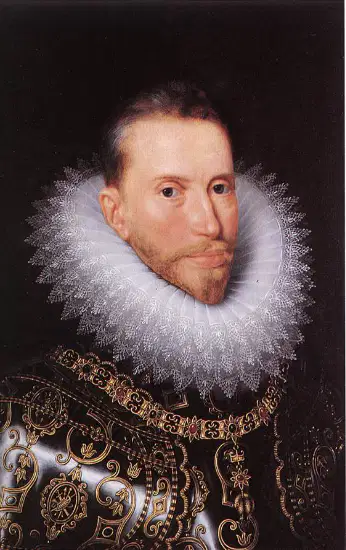
King Ferdinand and Queen Isabella unified Spain through ______ authority.
military and religious
economic and political
artistic and cultural
democratic and social
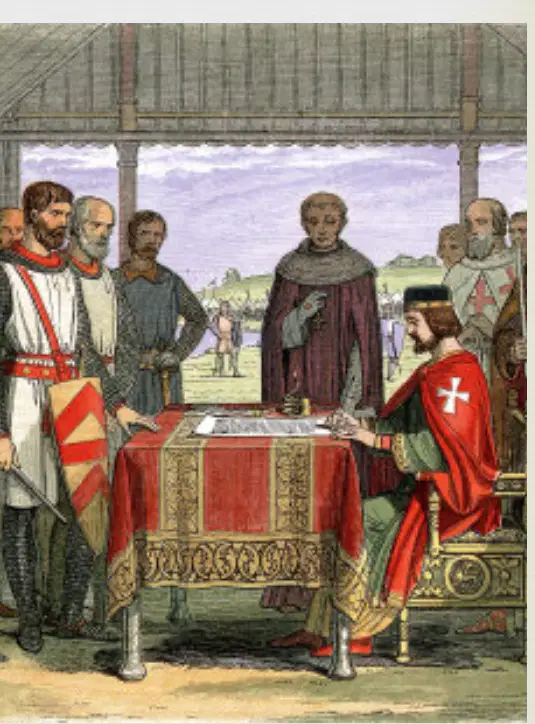
What important document is being signed in the image?
The Bill of Rights
The Magna Carta
The Constitution
The Petition of Right

