
 Worksheets
Chemistry Final Exam Review
Total questions: 95
Worksheet time: 1hrs 18mins
Which subatomic particle differs between isotopes of the same element?
Protons
Electrons
Neutrons
Nucleus
Carbon-14 has how many neutrons?
6
12
8
14
Which pair are isotopes of the same element?
12C and 14C
16O and 16N
19F and 20Ne
23Na and 24Mg
Atomic size increases as you move:
Down a group
Across a period left to right
Up a group
Toward fluorine
Which element has the highest electronegativity?
Sodium
Calcium
Fluorine
Iodine
A magnesium ion has a charge of:
-1
+2
-2
+1
Which element forms a –3 ion?
Calcium
Oxygen
Nitrogen
Sodium
An O²⁻ ion has how many electrons?
6
8
10
12
How many electron shells are in a Bohr model of sulfur?
1
2
3
4
How many dots are in the Lewis structure of chlorine?
5
7
8
6
Which is a shared property of metals and nonmetals?
Good conductors
Form compounds
High luster
Malleability
Which element is a nonmetal?
Sulfur
Iron
Magnesium
Aluminum
What is the electron configuration of oxygen?
1s² 2s² 2p⁶
1s² 2s² 2p⁴
1s² 2s² 2p²
1s² 2p⁴
How many valence electrons does nitrogen have?
6
5
3
7
Which element is in group 2 and period 6?
Boron
Barium
Calcium
Strontium
How many valence electrons do alkali metals have?
1
2
7
8
What is the molar mass of CO₂?
28 g/mol
44 g/mol
12 g/mol
32 g/mol
How many moles are in 18 grams of water (H₂O)?
1
0.5
2
3
How many atoms are in 1 mole of any substance?
3.01 × 10²²
6.02 × 10¹⁹
6.02 × 10²³
1.00 × 10⁶
What type of reaction is 2Na + Cl₂ → 2NaCl?
Synthesis
Decomposition
Combustion
Double replacement
In CH₄ + 2O₂ → CO₂ + 2H₂O, which is a product?
CH₄
O₂
CO₂
H₂
What is the atomic number of carbon?
6
12
14
8
The mass number of an atom is the sum of:
Protons and neutrons
Protons and electrons
Neutrons and electrons
Electrons only
What is the formula for aluminum oxide?
AlO
Al2O3
Al3O2
Al2O3
What is the formula for calcium chloride?
CaCl
CaCl2
Ca2Cl
Ca2Cl3
What type of bond is formed between two nonmetals?
Covalent
Ionic
Metallic
Polar
Which is an ionic compound?
CO2
NaCl
H2O
O2
How many hydrogen atoms are in H3PO4?
3
4
1
7
What coefficient balances this equation: __H₂ + O₂ → H₂O?
1
2
4
3
Which molecule is polar?
CO₂
CH₄
H₂O
Cl₂
What shape is a molecule with 4 bonds and no lone pairs?
Tetrahedral
Bent
Linear
Trigonal planar
Which statement describes conservation of mass?
Mass of reactants = mass of products
Matter is destroyed in reactions
Mass increases during reactions
Mass is only conserved in physical changes
Which indicates a chemical reaction occurred?
Formation of a gas
Melting
Dissolving sugar
Evaporation
Will zinc replace copper in a single replacement reaction?
Yes
No
Only in acidic solution
Only with heat
Which particle diagram represents a gas?
Widely spaced dots
Closely packed and vibrating dots
Dots in a fixed position
Randomly arranged solids
A single covalent bond contains:
One pair of electrons
Two pairs
Three pairs
Four pairs
What happens to average kinetic energy when a substance is heated?
Increases
Decreases
Stays the same
Disappears
A substance with high specific heat:
Heats up quickly
Heats slowly
Has high density
Is a metal
How much heat is absorbed by 10 g of water heated 10°C? (c = 4.18 J/g°C)
41.8 J
418 J
4.18 J
4180 J
Which is an exothermic process?
Freezing
Boiling
Melting
Evaporation
In an endothermic reaction:
Heat is released
Heat is absorbed
Temperature decreases
Bonds are formed
A catalyst works by:
Increasing the energy of reactants
Lowering activation energy
Raising temperature
Adding mass to the product
Which element has 2 valence electrons and forms a +2 ion?
Calcium
Nitrogen
Fluorine
Potassium
What’s the correct name for KCl?
Potassium dichloride
Potassium chloride
Potassium monochloride
Kalium chloride
What type of bond exists in H₂O?
Ionic
Polar covalent
Metallic
Nonpolar covalent
Which element is in Period 3, Group 17?
Oxygen
Fluorine
Chlorine
Bromine
Which formula represents dinitrogen tetroxide?
N₂O
NO₂
N₂O₃
N₂O₄
Which reaction type is NaOH + HCl → NaCl + H₂O?
Synthesis
Single replacement
Double replacement
Decomposition
How many total atoms are in Al₂(SO₄)₃?
A) 7
B) 10
C) 17
D) 12
Which change is physical, not chemical?
Burning
Melting
Rusting
Reacting with acid

Which of these samples shown best represents an element?
A
B
C
D

Compound
Mixture of elements and compounds
Mixture of elements
Mixture of compounds

This picture represents which of the following?
element
compound

Which type of intermolecular force is present in nonpolar molecules?
London dispersion forces
Dipole-dipole interactions
Hydrogen bonding
Ionic interactions
What is the strongest intermolecular force that occurs between polar molecules (no F, O, N bonded to H)?
London dispersion forces
Dipole-dipole interactions
Hydrogen bonding
Ionic interactions
Which type of intermolecular force is strongest?
London dispersion forces
Dipole-dipole interactions
Hydrogen bonding
Ionic interactions
What turns clear in the presence of phenolphthalein?
What pH is the strongest base?
1
7
4
14

The middle conversion factor is the
mole ratio of C2H18 to CO2
molar mass of CO2
molar mass of O2
combination lock of your locker
Given the unbalanced equation: Na2O + H2O → NaOH
How many grams of NaOH is produced from 120 grams of Na2O?
120 g NaOH
62 g NaOH
1.94 g NaOH
155 g NaOH
Which atom has the following configuration?
1s22s22p63s23p64s23d104p6
Argon
Krypton
Selenium
Bromide
What is the electron configuration for iron (atomic number 26)?
1s22s22p63s23p64s23d6
1s22s22p63s23p64s23d10
[Xe]3d10
1s22s22p63s23p64s2
The Law of Conservation of Mass States
Energy cannot be created nor destroyed, it can only change form.
Mass cannot be created nor destroyed, it can only change form.
Mass can be created or destroyed, it cannot change form.
How many atoms are in the products below?
4Fe +3O2 → 2Fe2O3
7
10
17
20

Determine the molecular geometry of the given structure.
Trigonal Pyramidal
Trigonal Bipyramidal
Trigonal Planar
Tetrahedral

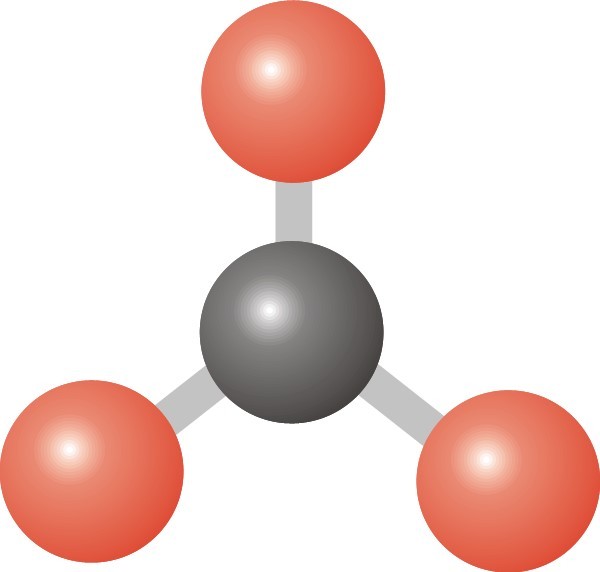
What molecular geometry would PH3 have?
Trigonal Pyramidal
Trigonal Bipyramidal
Bent
Linear

What energy is stored and waiting to be used?
Kinetic Energy
Potential Energy
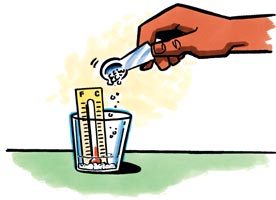


How does a catalyst work in speeding up a reaction?
By lowering the activation energy or reaction
by giving them more energy
by making them more available
Why does breaking up a solid reactant increase the rate of reaction?
it creates more solid
it creates more energy
it increases the total surface area
it increases the concentration
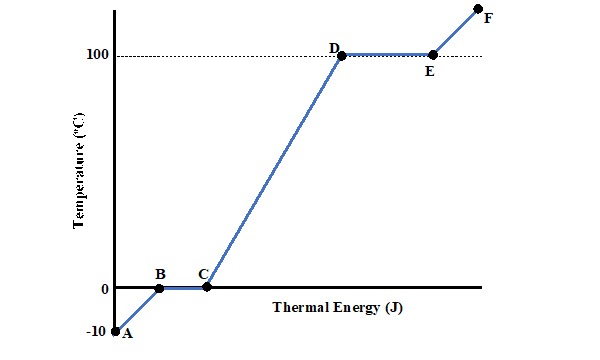
Between which two points is the gas heating up?
A ----> B
B <---- C
C ----> D
D ----> E
E ----> F

What type of reaction is this?
Exothermic
Endothermic
Energy Producing
No way to tell

The graph above is from which type of reaction?
Endothermic reaction
Exothermic reaction

Which of the following energy changes corresponds to the activation energy required for the forward reaction to take place?
A
C
B
E

Hydrogen and oxygen molecules combine to form water molecules as shown in the reaction below. Given the molecules provided, which of the following is true about the products of this reaction?
2 H2O molecules are produced, O2 is the limiting reactant
4 H2O molecules are produced, H2 is the limiting reactant
4 H2O molecules are produced, O2 is the limiting reactant
6 H2O molecules are produced, H2 is the limiting reactant

Draw the products (notes/whiteboard) that can be formed from the reactants shown. Then identify the limiting and excess reactants.
Fe is limiting and S is excess.
S is limiting and Fe is excess.
FeS is both limiting and excess.
There is no limiting or excess reactants.

