wayground logo

Free Printable Worksheets

Font size

S
M
L
XL
Worksheets

Melanin Final Exam Practice

Total questions: 60

Worksheet time: 2hrs 36mins

Name
Class
Date
1.
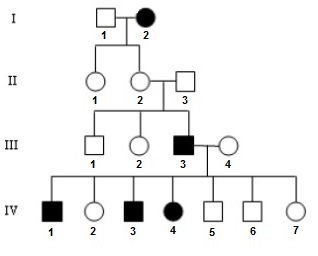
What does a filled in square represent?
a)
Not affected Female
b)
Not affected Male
c)
Affected Male
d)
Affected Female
2.
This pedigree represents the inheritance of hemophilia in this family. How many of the females have the hemophilia trait?
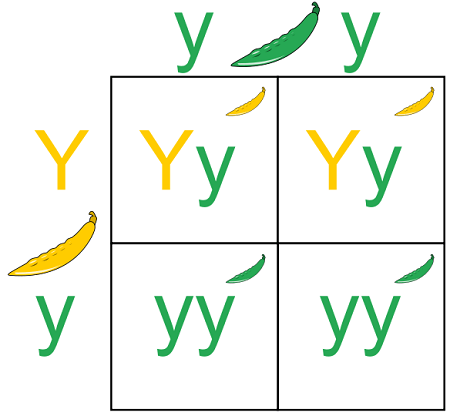
a)
8
b)
5
c)
2
d)
3
3.
What does an open circle represent?
a)
Not Affected Male
b)
Not Affected Female
c)
Affected Male
d)
Affected Female
4.
Is this trait (the shaded individuals) dominant or recessive?
a)
dominant
b)
recessive
5.
How many females are in this pedigree?
a)
3
b)
4
c)
6
d)
7
6.

Objective #13

This is a pedigree that follows blue eyes which is a recessive trait. What is the genotype of the father (square) in generation 1?

a)

Aa

b)

AA

c)

aa

d)

A?

7.

What is a phenotype?

a)
A phenotype is the genetic makeup of an organism.
b)
A phenotype is the observable traits of an organism.
c)
A phenotype refers to the evolutionary history of a species.
d)
A phenotype is the internal biological processes of an organism.
8.

What is a genotype?

a)
A genotype is a physical trait of an organism.
b)
A genotype is the genetic makeup of an organism.
c)
A genotype refers to the environment an organism lives in.
d)
A genotype is the observable characteristics of an organism.
9.

What is an allele?

a)
A type of chromosome
b)
A type of protein
c)

A variation of a gene.

d)
A genetic mutation
10.

Define homozygous

a)
An organism with two different alleles for a specific gene.
b)
An organism that can produce multiple types of alleles for a specific gene.
c)
An organism with two identical alleles for a specific gene.
d)
An organism with no alleles for a specific gene.
11.

Define heterozygous

a)
An organism that has no alleles for a specific gene.
b)
An organism with three different alleles for a specific gene.
c)
An organism with two different alleles for a specific gene.
d)
An organism with two identical alleles for a specific gene.
12.

Generation 2 individuals 5 and 6 are

a)

brother and sister.

b)

cousins.

c)

married.

d)

not related.

13.
What is the genotype of the father?
a)
AA
b)
aa
c)
Aa
d)
AA or aa
14.
What is the genotype of the mother?
a)
BB
b)
bb
c)
Bb
d)
BB or Bb
15.
G = green, g = yellow
The genotype for a yellow plant is...
a)
GG
b)
Gg
c)
gg
d)
all of the choices result in yellow
16.

Which of the following genotypes is homozygous dominant?

a)

AA

b)

Aa

c)

aa

17.
If B = brown hair and b = blonde hair, what is the probability of brown hair?
a)
25%
b)
50%
c)
0%
d)
75%
18.
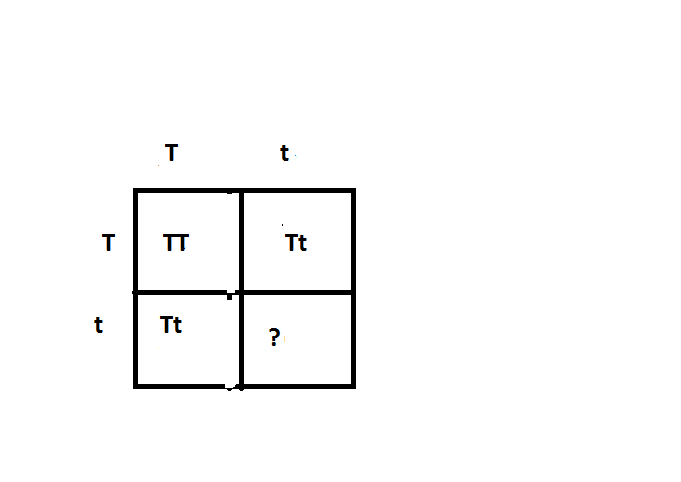
T - tall and t = short
In the punnett square below, what belongs in the missing square
a)
tt
b)
Tt
c)
Bb
d)
TT
19.

A genotype is the _____.

a)

genetic make up of an individual

Ex) Tt

b)

a picture of the chromosomes

c)

what the individual looks like

d)

the physical trait shown by an individual

Ex) Brown Hair

20.

Which statement about this Punnett square is true?

a)

All of the offspring will have brown eyes.

b)

1 parent has brown eyes and the other has blue.

c)

Both parents have blue eyes.

d)

They have a 25% chance of offspring with brown eyes.

21.

Which of the following correctly states the genotype probabilities for the offspring of the parents shown in this punnett square?

a)

50% heterozygous 50% homozygous dominant

b)

50% heterozygous 50% homozygous recessive

c)

50% heterozygous 25% homozygous recessive 25% homozygous dominant

d)

100% heterozygous

22.

The heterozygous genotype will ALWAYS show the ____ phenotype.

a)

Dominant

b)

Recessive

23.

Basic unit of heredity that is a specific sequence of nucleotides in DNA.

a)

gene

b)

allele

c)

trait

24.

If the father is homozygous recessive for dimples, what must the mother be for this Punnett Square?

a)

Dd (Heterozygous)

b)

DD (Homozygous Dominant)

c)

dd (Homozygous Recessive)

25.

Select TWO answers. Which are the missing parts?

a)

BB

b)

bb

c)

Bb

26.

Which choice best represents the genotypic ratios for the offspring of this cross?

a)

1 Yy: 2 yy: 0 YY

b)

2 Yy: 2 yy: 0 YY

c)

3 Yy: 1 yy: 0 YY

d)

1 Yy: 3 yy: 0 YY

27.
Black hair color is dominant to white hair color in mice.  Determine the phenotypic ratio for the offpring of a heterozygous black mouse and a white mouse.
a)
4 Black: 0 White
b)
3 Black: 1 White
c)
2 Black: 2 White
d)
0 Black: 4 White
28.

How many alleles does a child get from each parent for a trait?

a)

1

b)

2

c)

3

d)

4

29.

How many alleles does a person carry for a trait?

a)

1

b)

2

c)

3

d)

4

30.

What is a mutation?

a)
A mutation is a change in the DNA sequence of an organism.
b)
A mutation is a type of organism.
c)
A mutation is a form of cell division.
d)
A mutation is a type of protein.
31.

What is translation?

a)
Translation is the process of copying DNA into RNA.
b)
Translation is the modification of proteins after synthesis.
c)
Translation is the synthesis of proteins from mRNA.
d)
Translation is the breakdown of proteins into amino acids.
32.
RNA is read in sections called:
a)
Triplets
b)
Genes
c)
Codons
d)
Genes
33.

For proteins to be made, DNA must be copied into________.

a)

Chromosomes

b)

Chromatin

c)

RNA

d)

cytoplasm

34.

The process to go from DNA to mRNA is

a)

Transcription

b)

Translation

c)

Replication

35.

What is the central dogma of biology?

a)

RNA--> DNA --> Protein

b)

Protein --> RNA --> DNA

c)

DNA-->RNA-->Protein

d)

RNA --> RNA --> RNA

36.

There are tons of different possible codons and 20 different amino acids- what explains this idea?

a)
Each codon corresponds to multiple amino acids without redundancy.
b)
There are only 16 amino acids that can be encoded by codons.
c)

Multiple codons can code for the same amino acid

d)
Codons are determined solely by the amino acid structure.
37.

What amino acid corresponds to the following mRNA?

AGU

a)

Serine

b)

Valine

c)

Glycine

d)

Proline

38.
A long chain of amino acids is a/an
a)
protein
b)
nucleic acid
c)
tRNA
d)
mRNA
39.

The change in the second codon of DNA sequence from GAA to GAG does not affect the amino acid sequence. This is an example of ........................................

a)

Nonsense mutation

b)

Missense mutation

c)

Silent Mutation

d)

Frameshift Mutation

40.

What type of mutation is this?

a)

STOP (nonsense) mutation

b)

Missense mutation

c)

Silent mutation

d)

Frameshift mutation

41.

A type of mutation that affect every codon beyond the point of mutation.

a)

Point Mutation

b)

Silent Mutation

c)

Nonsense Mutation

d)

Frameshift Mutation

42.

Match the following

a)

1.

Substitution Point Mutation

b)

2.

Insertion Frameshift Mutation

c)

3.

Deletion Frameshift Mutation

43.

What is the role of mRNA

a)

Carry an amino acid to the ribosome

b)

Copy the instructions from DNA and carry it out of the nucleus

c)

Make up the ribosomes

44.

What type of mutation involves substituting a DNA base with a different base but still forms the same protein?

a)

point mutation

b)

frameshift mutation

c)

silent mutation

d)

chromosomal mutation

45.

What type of mutation involves adding or deleting bases from the DNA, which results in new codons (a shift in the reading of the codons)?

a)

point mutation

b)

frameshift mutation

c)

silent mutation

d)

chromosomal mutation

46.

Label the steps of proteins synthesis

47.

A frameshift mutation where a nucleotide base

is removed from the DNA sequence.

a)

Deletion Mutation

b)

Substitution Mutation

c)

Translocation

d)

Silent Mutation

48.

In DNA, C pairs with G , and A pairs with

a)

U

b)

A

c)

C

d)

T

49.

In RNA, C pairs with G , and A pairs with

a)

U

b)

A

c)

C

d)

T

50.

Select the RNA sequence or sequences for Glutamine.

a)

CGU

b)

CAG

c)

CUA

d)

CAA

51.

Find the amino acid that this segment of RNA codes for: UUG

a)

Glycine

b)

Asparagine

c)

Lysine

d)

Leucine

52.
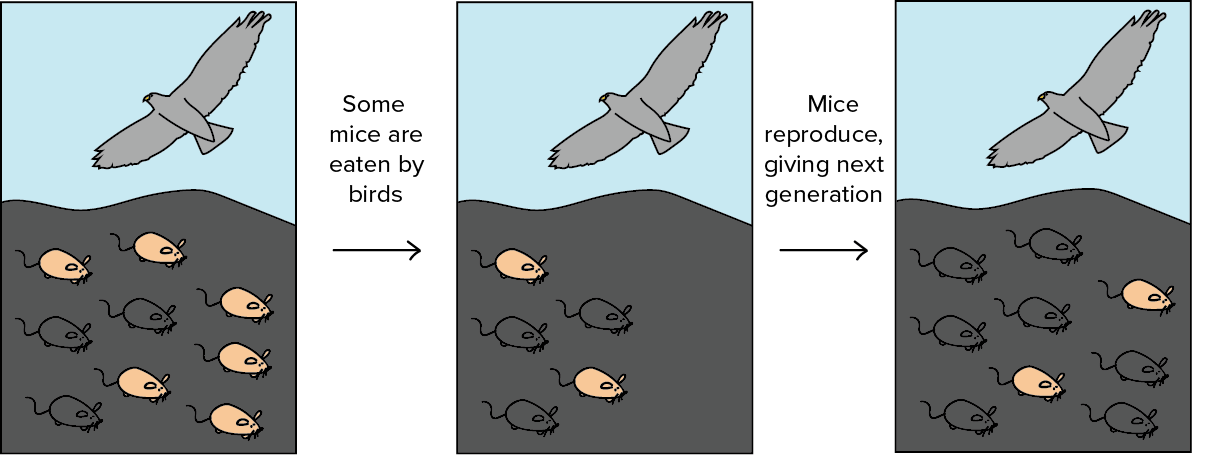
Why is the mouse population changing over time?
a)
The light mice can reproduce more successfully than the dark mice
b)
The hawks eat more dark mice than light mice because the dark mice taste better
c)
The hawks eat more light mice than dark mice because they can see the light mice more easily
d)
The hawks eat more dark mice than light mice because they can see the dark mice more easily
53.
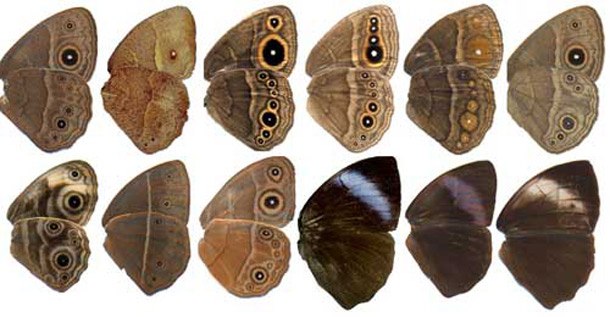
These moths are all the same species. The differences between their wings is an example of ________________
a)
Natural Selection
b)
Variation
c)
Homeostasis
d)
Extinction
54.
The ability of an organism to survive and reproduce in its specific environment 
a)

diversity

b)

evolution

c)

mutation

d)

 fitness

55.
Which of the following is a factor in natural selection?
a)
Individuals of species compete with one another to survive.
b)
All species are genetically diverse.
c)
Individuals better able to adapt to changes leave more offspring.
d)
All are correct 
56.

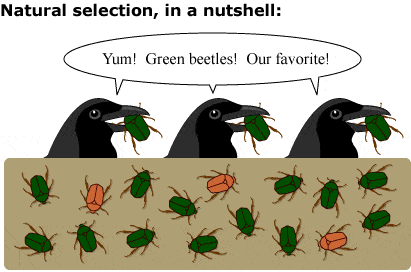
What is the selective pressure acting on the beetle population?

a)

Sand color

b)

Natural selection

c)

Weather

d)

Predation by birds

57.
Mutations are important because they bring about
a)
death of the organism in which they develop
b)
genetic variation needed for a population to evolve
c)
benefits for the individual, not for the population
d)
Hardey-Weinberg equilibrium within a population
58.
When an organism of a species has an adaptation, it will compete for resources better, survive longer and pass that adaptation on to it's offspring. This process is called
a)
evolution by natural selection
b)
artificial selection
c)
inbreeding
d)
outbreeding
59.

Organisms evolve new traits in the presence of selective pressures.

a)

TRUE

b)

FALSE

60.
Question Image

Match the following genotypes with their descriptions.

a)

Homozygous dominant

1.

Genotype TT

b)

Heterozygous

2.

Genotype Tt

c)

Homozygous recessive

3.

Genotype tt