
 Worksheets
Electronic Circuits and Components
Total questions: 37
Worksheet time: 19mins
Indicate which of the following statements is true:
a) A thermistor is the same thing as a transistor.
b) A thermistor is a variable resistor that I can manually set to the desired value.
c) A transistor can amplify the electric current flowing through its base.
d) An LDR is a temperature-dependent variable resistor.
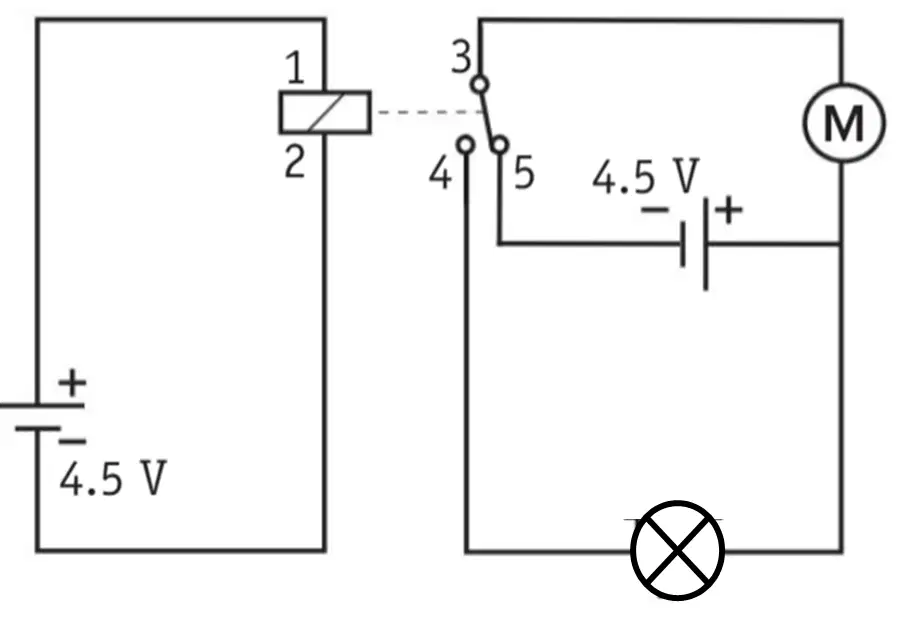
In the circuit of the figure, with a motor and a bulb, which statement is the correct one
There is a transistor that is allowing current by the motor but not by the bulb
There is an alternator that change current to bulb when motor works
There is a variable resistor allowing the current by the motor circuit and lighting up the bulb
There is a relay that is switching the circuit of the motor so bulb is lighting down
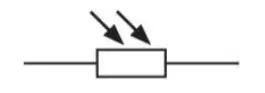
The attached symbol represents:
a LDR
a NTC
a PTC
a NPI
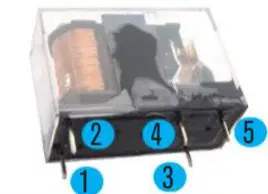
A relay is a electromagnetic device that:
acts as a switch and is controlled by an electromagnet
it is used to store and discharge electrical energy
works like a power source increasing the role of the battery
increases the current flow allowing changes in the current direction
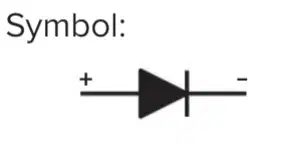
A diode is an electronic component that:
allows the current to flow in the anode-cathode direction, but no the reverse
allows the current to flow in the cathode-anode direction, but no the reverse
allows the current to flow in the anode-cathode direction, and the reverse if necessary
acts as a variable resistor controlling the flow of the current

In the circuit of the figure calculate how much time LED is lighting up if capacitor is full charged
3 seconds
1,5 minutes
2 minutes
1,5 seconds

The attached figure shows how resistance varies with temperature. Which of them is a PTC?
A
B
C

What electronics symbol is shown?
diode
ground
transistor
transformer

What is this component?
Light Emitting Diode
LED
Lamp
Motor
Solenoid
The ___ of an LED is connected to positive.
Cathode
Anode
LED
Resistor

What is this?
Light Bulb
Photoresistor
LED
Pushbutton
Diode

To use an LED, you need to connect it in a circuit with a...
resistor
capacitor
transistor
inductor
You use it to control the voltages and the currents in your circuit.
capacitor
LED
switch
resistor
...... is like a switch that is controlled by an electrical signal.
transistor
capacitor
resistor
inductor
A transistor has three pins named base, collector, and ...?
emitter
transistor
transmitter


To use an LED, you need to connect it in a circuit with a...
resistor
capacitor
transistor
inductor
...... is like a switch that is controlled by an electrical signal.
transistor
capacitor
resistor
inductor
A transistor has three pins named base, collector, and ...?
emitter
transistor
transmitter

Microprocessor
Resistor
Transistor
Diode
Which of the following is the symbol for capacitor?


Thermistors are
are resistors of which the resistance changes significantly when temperature changes
are resistors of which the resistance changes significantly when Light changes
are resistors of which the resistance is fixed
None of the answers

This symbol is for
Thermistors
Fixed Resistor
LDR
Pot
What is a capacitor?
A device that permits current to flow through it in only one direction.
An electrical device used to store electrical charge.
A group of electronic components that work together to perform a specific function.
A resistor that changes its resistance with a change of temperature.
What is the function of a diode?
A device that permits current to flow through it in only one direction.
An electrical device used to store electrical charge.
A group of electronic components that work together to perform a specific function.
A diode that will produce light when current flows through it.
What is the function of a transistor?
A device that permits current to flow through it in only one direction.
An electrical device used to store electrical charge.
A small electronic device used in a circuit as an amplifier or switch.
A diode that will produce light when current flows through it.
What is the purpose of a thermistor in an electronic circuit?
To control the flow of current in a circuit.
To store electrical charge.
To perform a specific function in a circuit.
To change its resistance with a change of temperature.
What is a diode that will produce light when current flows through it?
Resistor
Photoresistor
LED (Light emitting diode)
Transistor
A resistor whose value can be varied between its minimum and maximum values.
Photoresistor
Fixed resistor
LED
Variable resistor

What is the relationship between the brightness of an LED and the value of the resistor?
The higher the resistence, the brighter the LED output.
The lower the resistence, the brighter the LED output.
There is no relationship.

