
 Worksheets
PIG Final Review
Total questions: 160
Worksheet time: 1hrs 27mins
Why might someone brainstorm the requirements for US citizenship before starting the process?
To memorize the US Constitution
To plan and prepare for the application process
To avoid paying taxes
To travel internationally
Which of the following best describes a person who is a member of a state or nation, owes allegiance to its government, and is entitled to its protection?
A native or naturalized citizen
A temporary visitor
A foreign diplomat
A permanent resident alien
Explain the difference between a native citizen and a naturalized citizen in the context of United States citizenship.
Native citizens are born in the U.S., while naturalized citizens are born abroad and become citizens later.
Native citizens are temporary residents, while naturalized citizens are permanent.
Native citizens are government officials, while naturalized citizens are not.
Native citizens are only allowed to vote, while naturalized citizens are not.
What is the process called that allows most immigrants in the United States to become citizens?
Naturalization
Registration
Emigration
Adoption
Naturalization is the way for which group to become U.S. citizens by fulfilling certain requirements?
Immigrants
Tourists
Students
Diplomats
What does the 14th Amendment guarantee according to its very first sentence?
The right to vote for all citizens
Birthright citizenship to all persons born or naturalized in the United States, and subject to the jurisdiction thereof
Freedom of speech and religion
The right to bear arms
Originally, the birthright citizenship clause in the 14th Amendment was designed to give citizenship to which group?
Immigrants from Europe
Formerly enslaved people and their children
Native Americans
Women seeking the right to vote
What is the common name for the document that makes you a legal permanent resident in the United States?
Blue Card
Green Card
Red Card
Yellow Card
If your family member is a U.S. citizen, who can they sponsor for a green card?
Only their spouse
Their spouse, unmarried children under 21, parents, siblings, married children, and unmarried children over 21
Only their parents
Only their siblings
Which of the following best describes a refugee?
A person who has been forced to cross national boundaries and cannot return home safely
A person who travels for leisure
A person who moves to another country for a job
A person who studies abroad
What is required for refugees and asylum seekers in the United States to petition for a green card?
They must have been in the United States for one year
They must have a job offer
They must be students
They must own property
To meet the physical presence requirement for naturalization, how many months must you have been physically present in the U.S. during the five years before applying?
Twelve months
Eighteen months
Thirty months
Sixty months
Which of the following is NOT a personal requirement for naturalization?
Owning property
Being at least 18 years old
Having good moral character
Being able to speak, write, and read in English
To demonstrate proficiency in English for naturalization, what must applicants do?
Pass an exam
Write an essay
Attend a seminar
Submit a video
As of 2024, what is the filing fee for submitting a naturalization application?
$710
$500
$1,000
$850
What biometric information do most applicants need to provide during the naturalization process?
Their fingerprints, photograph, and signature
Their birth certificate and passport
Their social security number and address
Their school records and employment history
Which of the following best describes a "sham marriage" in the context of U.S. immigration?
A marriage for love
A marriage for immigration benefits only
A marriage between two citizens
A marriage with a large wedding ceremony
What is one requirement for applying for naturalization if you served in the military during peacetime?
Serve honorably for at least one year.
Serve during wartime.
Be a U.S. citizen.
Have a college degree.
What is the main difference in requirements for naturalization if you serve during wartime instead of peacetime?
You can immediately apply to become naturalized.
You must wait five years to apply.
You need a college degree.
You must serve for at least ten years.
What was the original purpose of the birthright citizenship clause in the 14th Amendment?
To give citizenship to immigrants
To give birthright citizenship to formerly enslaved people and their children
To allow only property owners to become citizens
To grant citizenship to people who serve in the military
Which of the following best describes the Supreme Court's interpretation of the 14th Amendment's citizenship clause?
It only applies to people whose parents are citizens
It promises citizenship to anyone born in America
It excludes children of undocumented immigrants
It only applies to people born after 1900
Which of the following is a responsibility of a US citizen?
Support and defend the Constitution
Ignore community issues
Disobey local laws
Refuse to pay taxes
What does participating in the democratic process as a US citizen primarily involve?
Voting
Traveling abroad
Starting a business
Learning a new language
What is the responsibility of a US citizen regarding taxes?
Pay income and other taxes honestly and on time
Pay taxes only if convenient
Pay taxes only to the federal government
Avoid paying taxes whenever possible
If the need arises, what is a duty of US citizens regarding national defense?
Defend the country (selective service)
Move to another country
Refuse to participate in defense
Only support the military financially
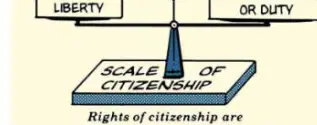
What does the "Scale of Citizenship" diagram illustrate?
Rights and responsibilities of citizenship must be balanced
Only rights are important in citizenship
Only responsibilities matter in citizenship
Citizenship has no requirements
Which of the following best explains why some people believe voluntary obligations should be made mandatory?
Because it would increase civic participation
Because voluntary obligations should remain optional
Because it would make society more responsible
Answers may vary depending on opinion

Which is NOT a qualification to become a naturalized citizen?
must be 18 years old
must have basic knowledge of American History
must have a high school diploma
must be of "good moral character"

Which of the following answers best completes the chart?
pledge allegiance to the United States
Be interviewed and pass a citizenship test
complete a background check
wait five years

The 14th Amendment defines citizenship as...
any person born in the Unites States
any person who resides in the Unites States
any person who loves the Unites States
any person born or naturalized in the United States

Persons born outside the U.S. are not permitted to pursue citizenship because they do not own property.
Persons born outside the U.S. are not permitted to pursue citizenship because they are unemployed.
A naturalized citizen possesses all the rights of a native citizen according to the Constitution.
To deny a native person citizenship rights does not support the 14th Amendment of the constitution.
What is the 14th Amendment?
Income Tax
define Citizenship as persons born or naturalized in the U.S.
Prohibition
Women get the right to vote
What is one responsibility that is only for United States citizens?
Paying taxes
Serving on a jury
Obeying traffic laws
Attending school
What is an example of exercising a citizenship right in a democracy?
Refusing to pay taxes
Participating in a peaceful protest
Ignoring jury duty summons
Selling votes
What is the relationship between citizenship rights and duties?
Rights and duties are unrelated
Rights exist without any duties
Duties are more important than rights
Rights and duties are interconnected, with each supporting the other
What is a fundamental right of citizenship in a democracy?
The right to privacy
The right to own property
The right to vote
The right to free healthcare
How does citizenship in a democracy differ from citizenship in a dictatorship?
Citizens have no rights in a democracy
Citizens can vote in a dictatorship
Citizens have more rights and freedoms in a democracy
There is no difference
Which of the following is a citizenship right?
The right to a fair trial
The right to win the lottery
The right to unlimited wealth
The right to ignore laws
Citizens of the United States have the right to “life, liberty and the pursuit of ___________.”
happiness
free speech
money
information
Pete and Sally are visiting Canada from the United States where they were born. During their vacation Sally gave birth to their new son Herbert. Who are citizens of the United States?
Pete and Sally
Sally
Herbert and Sally
Sally, Pete, and Herbert
True or False: You can only be a citizen by birth if you were born on U.S. soil.
True
False
Ben was born in Washington, D.C., but both parents are Irish citizens. Is Ben a U.s. Citizen? Why?
Citizen - Because of Law of soil
Not a Citizen - Because of law of blood
Citizen - Because of Law of blood
Not a citizen because of naturalization
True or False: You can only be a birthright citizen if you were born on U.S. soil.
True
False
You can only be a citizen by birth if you were born on U.S. soil.
True
False
John was born in New York City. He moved to Brazil to learn Portuguese and fell in love with Ana Luiza. They got married and had a baby named Ronaldinho. They still live in Brazil. Is Ronaldinho a citizen by birth?
no because he was not born in the U.S.
yes because of the law of soil
no because his name is not American
yes because of the law of blood

first federal law restricting Asian immigration to the U.S.
Sherman Antitrust Act
Chinese Exclusion Act
Homestead Act
Dawes Act
5th Amendment
No self-incrimination
No double jeopardy
Due process
The right to a jury trial in civil cases involving more than $20
No cruel and unusual punishment
No excessive bail
The right to a fair, speedy and public trial in criminal cases.
The right to a lawyer.
6th Amendment
No self-incrimination
No double jeopardy
Due process
The right to a jury trial in civil cases involving more than $20
No cruel and unusual punishment
No excessive bail
The right to a fair, speedy and public trial in criminal cases.
The right to a lawyer.
7th Amendment
No self-incrimination
No double jeopardy
Due process
The right to a jury trial in civil cases involving more than $20
No cruel and unusual punishment
No excessive bail
The right to a fair, speedy and public trial in criminal cases.
The right to a lawyer.
8th Amendment
No self-incrimination
No double jeopardy
Due process
The right to a jury trial in civil cases involving more than $20
No cruel and unusual punishment
No excessive bail
The right to a fair, speedy and public trial in criminal cases.
The right to a lawyer.

You can protest in public against the government
True
False

True or False: According to the 5th Amendment, you have the right to remain silent
True
False

A newspaper that writes about the problems of the government is protected by the freedom of
Speech
Press
Assemble
Protest

A right is...
Opportunities for some people
Freedoms everyone has that are protected by the law
A promise

An amendment is a...
Change to a law
A law
A long list of laws
Article 5 of the Constitution establishes the -
Executive Branch
process to amend the Constitution
obligations of the states to each other
Judicial Branch
The right to Due Process is found in which amendment?
3rd
4th
5th
6th
The right to not self incriminate (also knows as the right to remain silent) is found in which amendment?
4th
5th
6th
8th
The right to freedom of speech is found in which amendment?
1st
2nd
4th
6th
The right to bear arms is found in which amendment?
1st
2nd
3rd
4th
Which amendment says you cannot be forced to quarter soldiers?
2nd
3rd
4th
5th
Which amendment says the government cannot punish you in cruel and unusual ways?
2nd
4th
6th
8th
Which amendment says the government cannot force you to pay unreasonable fines or bail?
1st
6th
7th
8th
Which amendment protects you right to exercise the religion of your choice?
1st
2nd
3rd
5th
Which amendment says the government will never establish a state religion, also known as the separation of church and state?
1st
4th
5th
8th
Which amendment says the government cannot put you on trial for the same crime twice, also known as "Double Jeopardy"?
5th
6th
7th
8th
The right to a free press is found in what amendment?
1st
3rd
5th
7th
Which amendment contains the right to assembly?
1st
2nd
5th
6th
The right to petition the government is found in which amendment?
1st
2nd
7th
8th
The right to "Counsel" or a lawyer is found in which amendment?
3rd
4th
6th
7th
The right to a speedy trial is found in what amendment?
3rd
4th
5th
6th
The right to a public trial is found in which amendment?
5th
6th
7th
8th
Which amendment says that you can confront witnesses against you?
6th
7th
8th
1st
Which amendment says they can make witnesses come to court and testify in their defense?
2nd
3rd
5th
6th
2 of these rights are not in the 1st amendment. Which 2?
Right to Free Speech
Right to Bear Arms
Right to Assembly
Right to a Lawyer
Right to Exercise your Religion
2 of these rights are not in the 6th amendment. Which 2?
Right to a Public and Speedy Trial
Right to a Lawyer
Right to Confront Witnesses
Right to Not Self Incriminate
Right to No Cruel and Unusual Punishment
Which amendment says you have the right to petition the government?
1st
2nd
3rd
4th
Which amendment protects you from unreasonable searches and seizures?
4th
5th
6th
8th
Which amendment says that a valid warrant is needed before a search and seizure?
1st
2nd
4th
5th
What percentage of the US population voted in the 2016 election?
58% of voter eligible population
66% of voter eligible population
50% of voter eligible population
70% of voter eligible population
What percentage of the US population voted in the 2020 election?
58% of voter eligible population
66% of voter eligible generation
60% of voter eligible population
72% of voter eligible population
Which age group is most likely to vote?
Baby Boomers
Generation X
Millennials
Generation Z

What is the most important form of political participation in a democracy?
Protesting
Voting
Petitioning
Lobbying
Why is voting considered crucial in a democracy?
It allows politicians to assign power.
It ensures politicians are elected by the people.
It is a form of entertainment.
It is a way to avoid taxes.
What is another important form of political participation besides voting?
Writing letters
Protests
Watching debates
Donating money
What is the hoped outcome of participating in protests?
To influence or initiate change
To gain personal fame
To disrupt daily life
To avoid political engagement
How has email impacted contacting public officials?
Made it more expensive
Made it less effective
Made it cheaper and easier
Made it unnecessary
What can a petition generate?
Confusion
Attention and momentum
Financial support
Legal action

What is one effect of signing a petition?
It guarantees a change in law
It pressures lawmakers to act
It results in immediate action
It creates a new law
What can campaign activity include using to share videos and enlist supporters?
Social networks
Television ads
Newspaper articles
Radio broadcasts

What activity might members of an interest group participate in to publicize their concerns?
Writing novels
Hosting parties
Demonstrations
Painting murals
What is the main purpose of the new district-wide protest policy?
To restrict all forms of student protests
To allow protests without any rules
To apply to student protests and public events near schools
To eliminate the First Amendment rights
Which amendment must the protest policy follow?
Second Amendment
First Amendment
Fourth Amendment
Fifth Amendment
How does Snyder v. Phelps influence how we write policy?
It has no influence.
It encourages stricter policies.
It highlights the importance of free speech.
It discourages policy writing.
Should the law protect the speaker or the audience more?
The speaker should be protected more.
The audience should be protected more.
Both should be equally protected.
Neither should be protected.

What type of voter ID law does Texas have?
No ID required
Non-strict non-photo ID
Non-strict photo ID
Strict photo ID

Which state requires a strict non-photo ID for voting?
Ohio
Arizona
Kansas
New Mexico

Which state has a non-strict photo ID requirement?
Florida
New York
Wisconsin
Georgia

Which state requires a strict photo ID for voting?
Georgia
Oregon
Vermont
Nevada

Which state does not require any ID for voting?
Nevada
Oregon
Texas
Alabama
Which quality is NOT listed as important when evaluating a candidate?
Appearance
Personality
Favorite Color
Level of Education
What is one of the qualities mentioned that relates to a candidate's beliefs?
Age
Stance on Important Issues
Gender
Appearance
Which quality focuses on a candidate's history in their field?
Past Experience
Personality
Political Party
Personal Life
Which quality is concerned with a candidate's age?
Personal Life
Age
Personality
Appearance
Which quality is about how a candidate presents themselves visually?
Personality
Appearance
Level of Education
Past Experience
Which quality involves a candidate's character traits?
Personality
Age
Gender
Political Party
What is a swing state? Select all that apply.
States that have predictable election results
States that take a long time to count their votes
States that are divided by multiple political beliefs.
States that have unpredictable voting tendencies
What do lobbyists try to do?
help Congress in writing legislation for the common good
ensure the federal budget balances
help the President to choose Supreme Court justices and Cabinet members
influence the decisions made by government officials
The 2000 election outcome was impacted by...
The U.S. Senate
U.S. Supreme Court Ruling
Bush winning the popular vote
the U.S. House of Representatives
Which person is more likely to vote?
older, female, white collar workers, college educated
younger, male, blue collar worker, lower income and lower education
Group of people chosen from each state to formally select the President/VP
Delegates
Caucus
Electoral College
National Conventions
When political parties meet to select their nominees to run for President
National Conventions
Electoral College
Primaries
Candidates
The National Convention is where...
candidates announce their intention to run for office
candidates debate over key issues
a presidential candidate assumes the role of chief executive
a candidate is officially chosen to represent their political party
The Democratic and Republican candidates for president are formally nominated by the
presidential caucuses.
presidential primaries.
electoral college.
national party conventions.
The first step in the election process where candidates from the same party compete for their parties nomination?
electoral college
general election
primaries/ caucuses
national convention
What is the purpose of caucuses and primaries in the U.S. Presidential election process?
To select the party's nominee for the general election
To choose the President and Vice President directly
To determine the number of electors each state gets
To campaign and win the support of the general population
What does it mean to petition the government?
To vote in an election
To request a change in law
To run for office
To pay taxes
Citizens in Michigan have noticed that the condition of the state parks has suffered recently due to budget cuts, and many parks have rundown facilities, increased litter, and limited staff. They want to improve the quality of the parks system by getting more funds allocated to park maintenance and operations.
Which of the following plans to solve the problem has the greatest chance of increasing public funds for park maintenance?
Citizens stop using the parks
Citizens organize convicted inmates to clean up the parks
Citizens privately donate money to the State of Michigan
Citizens write letters to their congressional representatives and organize a publicity campaign using social media to generate support for their initiative
Why is it important for citizens to participate in elections?
It helps increase community sales
It is a good way to meet neighbors
It influences government decisions
It is required by law
What is the role of the Electoral College in the U.S. Presidential election?
To directly elect the President and Vice President
To select electors who then vote for the President and Vice President
To organize the national conventions
To oversee the primaries and caucuses
Which factor is most likely to influence a voter's decision in an election?
Weather on election day
Length of the ballot
Candidate's stance on key issues
Location of polling station
What is the significance of the First Amendment in relation to protests?
It allows the government to restrict protests
It guarantees the right to free speech and peaceful assembly
It mandates government approval for all protests
It limits protests to specific areas
What is the role of the Electoral College in U.S. Presidential elections?
To formally elect the President based on state votes
To provide a backup in case of a tie
To count the popular vote
To directly elect the President
Which method is commonly used by citizens to express their opinions to lawmakers?
Writing letters or emails
Joining sports clubs
Attending concerts
Boycotting products
What is the primary function of a political party's national convention?
To select the party's presidential nominee
To organize local elections
To draft new legislation
To elect the President directly
Which of the following is a common method for citizens to express their opinions to elected officials?
Attending town hall meetings
All of the above
Writing letters or emails
Voting in elections
What is the significance of voter turnout in elections?
It determines the number of electoral votes
It reflects the level of public engagement in the political process
It influences the length of the ballot
It affects the weather on election day
What is the primary purpose of a political campaign?
To generate revenue for the government
To entertain the public
To create social media content
To inform voters about candidates and issues
Which of the following is a key factor in determining voter turnout?
Weather conditions on election day
The number of candidates running
Voter education and awareness
The length of the ballot
What role do debates play in the election process?
They are used to raise campaign funds
They determine the election outcome
They allow candidates to showcase their policies and ideas
They are a form of entertainment
What is a swing state? Select all that apply.
States that have predictable election results
States that take a long time to count their votes
States that are divided by multiple political beliefs.
States that have unpredictable voting tendencies
What is the primary role of the media in a democracy?
To generate revenue through advertisements
To entertain the public
To inform citizens about current events and issues
To promote government propaganda
Which of the following is a common method for citizens to participate in the democratic process?
Ignoring political news
Voting in elections
Watching reality TV shows
Playing video games
What is the main purpose of a public opinion poll?
To predict the weather
To gauge public sentiment on various issues
To measure the popularity of TV shows
To determine the best-selling products
What is the primary function of a political party in a democracy?
To create laws
To organize elections
To represent diverse interests
To entertain the public
Which of the following is a key reason for the existence of interest groups?
To manage government budgets
To provide entertainment
To influence public policy
To organize social events
What is a common method for citizens to participate in the legislative process?
Running for office
Writing to their representatives
Attending sports events
Watching television
What is a common reason for low voter turnout in elections?
High voter registration fees
Too many polling stations
Lack of interest in the candidates
Excessive media coverage
Which of the following is a primary role of interest groups in politics?
To nominate candidates for elections
To influence public policy and legislation
To organize national conventions
To conduct elections
What is the significance of the 19th Amendment to the U.S. Constitution?
It abolished slavery
It lowered the voting age to 18
It granted women the right to vote
It established the Electoral College
What is the significance of voter turnout in elections?
It affects the length of the election campaign
It influences the number of candidates running
It reflects the level of public engagement in the political process
It determines the winner of the election
Which of the following is a responsibility of a citizen in a democracy?
All of the above
Voting in elections
Paying taxes
Serving in the military
What is the primary purpose of a political debate?
To entertain the audience
To provide a platform for candidates to discuss their policies
To determine the winner of the election
To raise funds for the campaign
What is the primary role of the Electoral College in U.S. presidential elections?
To nominate candidates for the presidency
To formally elect the President and Vice President
To conduct primaries and caucuses
To organize national conventions
Which of the following is a common way for citizens to participate in the political process besides voting?
Running for office
All of the above
Joining a political party
Participating in a protest or demonstration
What is the significance of a candidate's stance on key issues during an election?
It determines the length of the ballot
It influences voter decisions and turnout
It affects the weather on election day
It decides the location of polling stations
What is the main function of the U.S. Supreme Court in the context of elections?
To organize national debates
To oversee the counting of votes
To interpret the constitutionality of election laws
To manage the Electoral College
Which of the following is a common method for citizens to express their opinions on government policies?
Ignoring political news
Voting in elections
Paying taxes
Attending sports events
What is a primary reason for the existence of political parties in the U.S.?
To manage the economy
To provide a platform for collective political action
To enforce laws
To control the media
percentage of eligible voters who actually vote is the (a)

