
 Worksheets
Political Ideology and 'Ism's' Quiz
Total questions: 47
Worksheet time: 24mins

What does pluralism hold about people of different beliefs, backgrounds, and lifestyles?
They must assimilate into one culture.
They can coexist in the same society and participate equally in the political process.
They should be separated into different societies.
Only one group should participate in the political process.
According to pluralism, what is expected to result from its practice among decision-makers?
Solutions that benefit only the majority.
Negotiated solutions that contribute to the “common good” of the entire society.
Decisions made without negotiation.
Solutions that favor only one group.
Who first conceived the idea of the “common good” as mentioned in the context of pluralism?
Plato
Socrates
Aristotle
Confucius
How has the concept of the “common good” evolved since it was first conceived?
It now refers only to economic benefits.
It refers to anything that is of benefit to and shared by the members of society.
It is limited to political rights.
It only applies to minority groups.
Explain how pluralism can influence the decision-making process in a diverse society.
By encouraging only the majority to make decisions.
By promoting negotiation and solutions that benefit the entire society.
By excluding minority groups from the process.
By focusing only on individual interests.
What is the foundation of secularism?
The combination of religion and state
The separation of religion and state
The dominance of religion in government
The exclusion of all religions from society
Which of the following is NOT a principle of secularism?
Separation of religious institutions from state institutions
Freedom to practice or change one's faith
Equality regardless of religious beliefs
Promotion of one religion over others
According to the principles of secularism, what does "freedom" mean?
The right to force others to follow your religion
The right to practice, change, or not have a religion without harming others
The right to dominate public institutions with religious beliefs
The right to ignore the laws of the state
Why is equality important in secularism?
It ensures that only religious people have rights
It allows one religion to dominate others
It prevents anyone from being advantaged or disadvantaged based on their religious beliefs
It requires everyone to have the same religion

A country is considering a law that allows only one religion to participate in government decisions. Based on the principles of secularism, what is the main issue with this law?
It supports freedom of religion
It violates the principle of separation between religion and state
It promotes equality among all religions
It encourages people to change their beliefs
Which of the following best describes the main belief of Egalitarianism?
All people should be treated as equals from birth, especially under the law and in society.
The government should control all aspects of society.
Only certain groups should have privileges.
Individual liberty is more important than equality.
According to the text, what does Egalitarianism advocate for?
The removal of inequalities and discrimination among people.
The increase of government control over individuals.
The prioritization of economic freedom over equality.
The promotion of private charity over state welfare.
Which of the following freedoms is NOT specifically mentioned as a goal of Libertarianism in the text?
Freedom of speech
Freedom of assembly
Freedom to bear arms
Freedom to education
Libertarianism promotes which of the following over the provision of welfare services by the state?
Private charity and personal responsibility
Government welfare programs
Socialism and Communism
Economic equality
Based on the text, how does Libertarianism view the role of government?
It should be minimal, allowing for maximum individual liberty.
It should control all economic activities.
It should enforce strict equality among all citizens.
It should provide extensive welfare services.
If a society prioritizes the removal of discrimination based on race, gender, or religion, which philosophy does it most closely align with according to the text?
Egalitarianism
Libertarianism
Socialism
Communism
A government that rejects the compulsions of Socialism and Communism and instead emphasizes economic freedom and ownership is following which philosophy?
Libertarianism
Egalitarianism
Authoritarianism
Totalitarianism
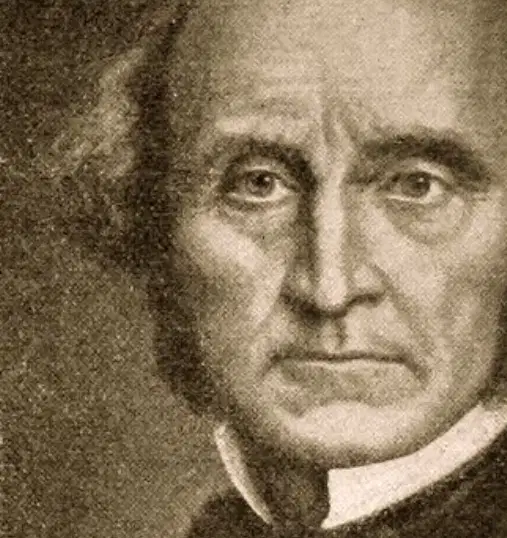
Which two thinkers are most closely associated with the development of liberalism?
John Locke and John Stuart Mill
Karl Marx and Friedrich Engels
Thomas Hobbes and Jean-Jacques Rousseau
Plato and Aristotle
According to liberalism, what is the main justification for limiting the freedom of individuals?
To protect the interests of the state
To safeguard the freedom of other individuals
To promote economic growth
To maintain social order
Which of the following statements best describes a core belief of liberalism?
The state should control all aspects of life.
Individuals should have the freedom to live their lives as they see fit, and this freedom should be enjoyed equally by all members of society.
The interests of a particular social class should guide government policy.
Freedom should only be granted to those who contribute most to society.
Why, according to liberalism, should the interests of the state or a particular social class not be used to restrict individual freedom?
Because the state is always corrupt
Because individual freedom is the highest value and should be equally enjoyed by all
Because social classes do not exist
Because the state has no legitimate authority
Which of the following is a key justification for liberalism according to the provided material?
Liberalism allows humans to flourish to their full potential by respecting their ability to make free choices.
Liberalism requires everyone to follow the same way of life.
Liberalism discourages individual freedom.
Liberalism is based on authoritarian principles.
Why does liberalism support allowing people to choose how to live their own lives?
Because there is only one correct way to live.
Because it links to the idea of pluralism, recognizing more than one way to live a good life.
Because it imposes a way of life on everyone.
Because it discourages diversity.
According to the pragmatic argument for liberalism, what is a likely outcome for societies that are basically liberal?
They tend to be wealthier and more stable than authoritarian societies.
They become less stable and poorer.
They lose individual freedoms.
They discourage economic growth.
Which of the following best describes the concept of pluralism as it relates to liberalism?
The belief that there is only one way to live a good life.
The acceptance that there are multiple ways to live a good life.
The idea that everyone should follow the same rules.
The rejection of individual choice.
Which of the following is a criticism of liberalism mentioned in the material?
Liberalism places too much stress on individual liberty, which can create or allow inequality.
Liberalism always ensures equality for all individuals.
Liberalism discourages individual liberty in favor of collective control.
Liberalism is primarily focused on government intervention in all aspects of life.
According to the criticisms of liberalism, what is a consequence of the belief in the autonomous "free" individual?
It helps people recognize manipulation by corporate and government interests.
It allows people to ignore the ways in which they are manipulated by corporate and government interests.
It guarantees that all individuals are truly free.
It eliminates poverty and inequality.
Which concept challenges the liberal idea that individuals are completely free?
Determinism
Capitalism
Socialism
Utilitarianism
Explain how the focus on individual liberty in liberalism can lead to social inequality, according to its critics.
It creates/permits inequality, resulting in millions living in poverty.
It ensures everyone has equal wealth.
It eliminates all forms of poverty.
It prevents manipulation by corporations.
According to the criticisms of liberalism, what is one negative effect of stressing the individual over the community?
It strengthens community bonds
It erodes community life and weakens the bonds that tie society together
It increases happiness for everyone
It encourages collective decision-making
What argument is made about the relationship between freedom and happiness in the context of liberalism?
More freedom always leads to greater happiness
Freedom has no impact on happiness
Increased freedom can lead to unhappiness due to consumerist pressures and unrealistic ideals
Freedom eliminates the influence of media and advertisers
Why might people feel unhappy in a liberal society, according to the criticisms presented?
Because they have too many restrictions
Because they cannot live up to the ideal of the perfect lifestyle promoted by advertisers and the media
Because they are forced to live in large communities
Because they lack access to information

Which thinkers are most closely linked to the development of socialism?
Marx and Rousseau
Smith and Locke
Plato and Aristotle
Hobbes and Mill
What is the main goal of socialism according to the provided material?
To maximize individual wealth
To preserve social equality and justice
To eliminate all forms of government
To promote free market competition
According to the material, what is socialism a reaction against?
The rise of democracy
The tendency of capitalist societies to concentrate wealth among owners
The spread of religious institutions
The decline of monarchies
Which statement best describes the relationship between socialism and democracy as noted in the material?
All forms of socialism are associated with dictatorships.
Socialism always rejects democratic principles.
There is a tradition of democratic socialism that rejects the communist model.
Socialism and democracy are mutually exclusive.
Explain why some people associate radical socialism with dictatorships, according to the material.
Because all socialist countries are dictatorships
Because the Communist world was/is not democratic
Because socialism requires a monarchy
Because socialism promotes free markets

Which of the following is a key criticism of capitalism according to the justifications for socialism?
It encourages innovation among workers.
It disadvantages workers by keeping wages low to maximize profits.
It ensures equal distribution of wealth.
It eliminates the need for businesses.
According to the justifications for socialism, what is one way a socialist society is considered fairer than a capitalist one?
Workers own the means of production and share the wealth created.
Businesses are allowed to set any wage they want.
Only the most skilled workers benefit.
Wealth is distributed based on business profits.
Why might more people be happier in a socialist system, as suggested by the text?
Only the wealthy benefit from the system.
Everyone’s needs are met and a decent standard of living is ensured for all.
People are forced to work harder.
Happiness is not considered important.
How does socialism address the concept of "moral luck"?
By rewarding only those born into wealth.
By ensuring that people are not overly disadvantaged by their birth situation.
By ignoring differences in social background.
By promoting competition among individuals.
Using evidence from the text, explain how the happiness index of Scandinavian countries is used to justify socialism.
It shows that socialist systems can lead to higher happiness by meeting people's needs and ensuring a decent standard of living for all.
It proves that capitalism is more effective in creating wealth.
It demonstrates that only wealthy countries can be happy.
It suggests that happiness is unrelated to economic systems.
Which of the following is a common criticism of socialism mentioned in the material?
Socialism encourages free-riders.
Socialism increases individual liberty.
Socialism always leads to economic growth.
Socialism is based on competition.
According to critics, why is socialism considered idealistic?
Because people will always prefer to look after themselves more than society as a whole.
Because it always leads to economic prosperity.
Because it encourages individual competition.
Because it is based on historical evidence.
Which criticism argues that socialism negatively affects personal motivation?
Socialism limits ambition and innovation.
Socialism increases personal wealth.
Socialism promotes individual liberty.
Socialism encourages competition.
What is a historical criticism of socialism according to the material?
Historically, socialism just doesn’t work.
Historically, socialism has always succeeded.
Historically, socialism increases ambition.
Historically, socialism promotes free markets.
Which of the following best describes a concern about individual liberty under socialism?
Socialism requires taking away too much liberty from individuals.
Socialism increases individual freedom.
Socialism has no effect on liberty.
Socialism guarantees absolute liberty.

