
 Worksheets
Tyre Function Worksheet
Total questions: 57
Worksheet time: 29mins
What is the function of a tyre?
To provide traction and support the weight of a vehicle
To generate electricity for the vehicle
To control the steering system
To cool the engine
What is the primary function of a tyre?
To cushion the wheel from the road and provide grip and traction.
To increase the speed of the vehicle.
To reduce the weight of the vehicle.
To decorate the vehicle.
What is the function of the beads in a tyre?
To provide grip on the road
To act as a ring of steel wire in the rubber
To wrap fabric and cords around the tyre
To protect the tyre from punctures
What are body plies in a tyre made of?
Steel wires only
Rubber and plastic
Fabric and cords wrapped around the beads
Pure rubber
Which part of the tyre is in contact with the road?
Beads
Body plies
Tread
Liner
Which of the following best describes the tread of a tyre?
The inner lining of the tyre
The surface in contact with the road
The steel wire ring in the rubber
The sidewall of the tyre
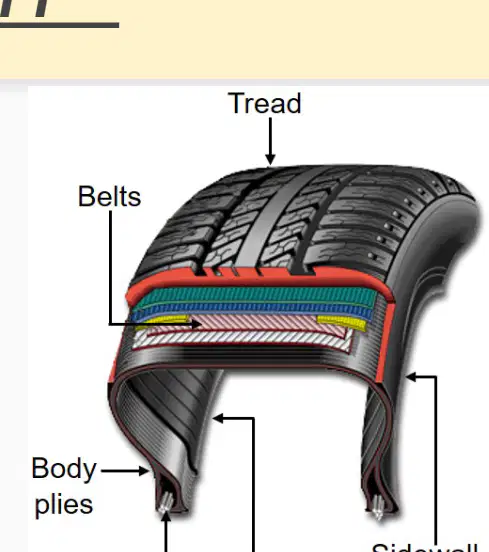
Identify the correct order of tyre construction from the inside out.
Beads, Body plies, Tread
Tread, Beads, Body plies
Body plies, Tread, Beads
Tread, Body plies, Beads
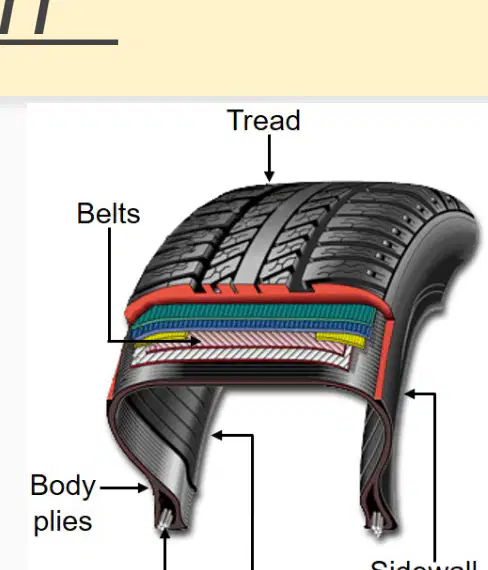
What is the section of the tyre from the bead to the tread called?
Sidewall
Tread
Liner
Beads
What is the function of belts in a tyre?
Strengthen body plies and tread
Provide grip on the road
Absorb shocks from the road
Prevent air leakage
What is the liner in a tyre?
Thin layer of rubber bonded inside the tyre
Outer layer that contacts the road
Metal wires for reinforcement
Section between the tread and the bead
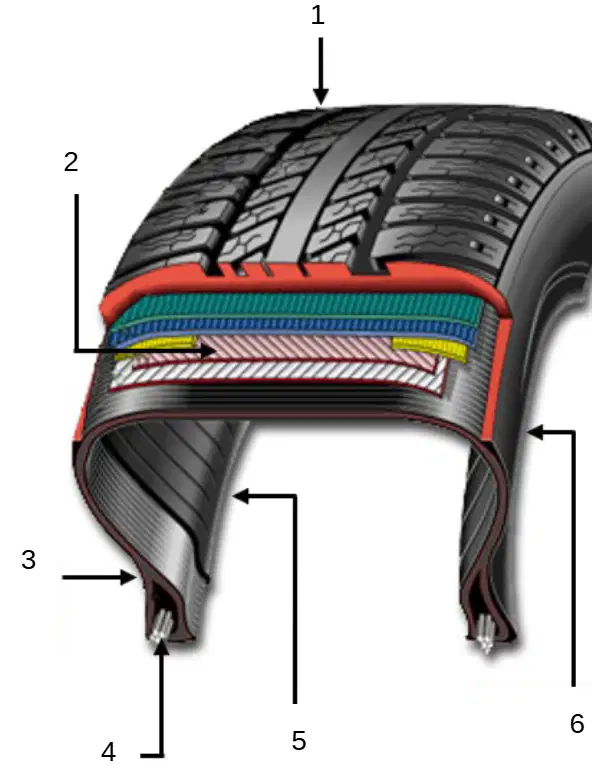
Which part of the tire is typically responsible for providing traction and contact with the road surface?
1
2
3
4
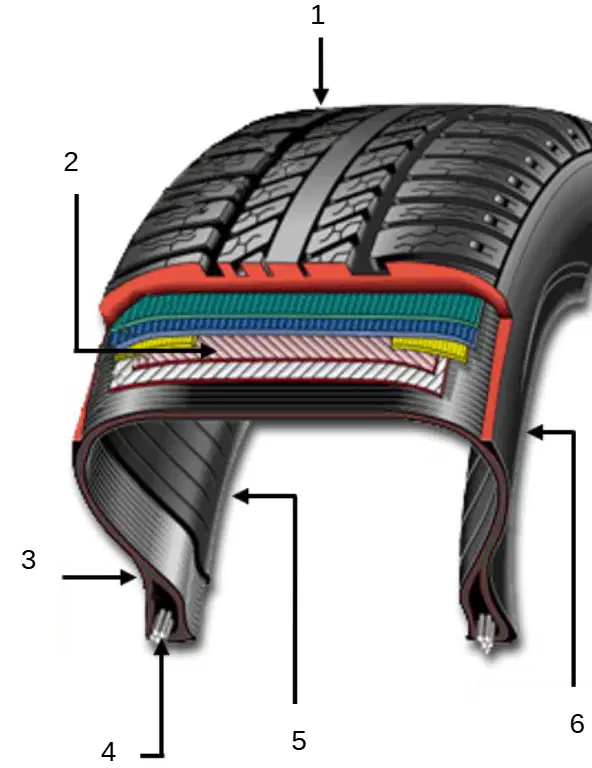
In a typical tire cross-section, which labeled part is most likely to be the bead, responsible for securing the tire to the rim?
1
2
4
6
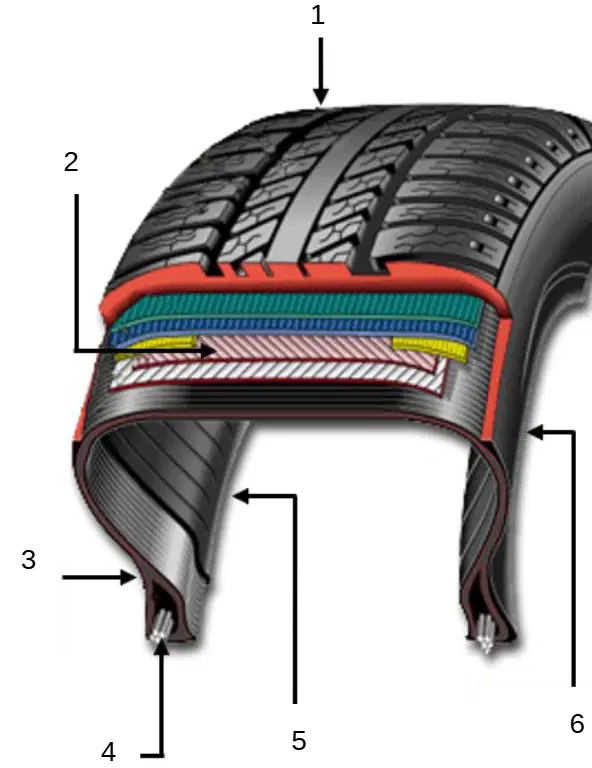
Which labeled part in the tire cross-section is most likely to be the sidewall, providing lateral stability and protection?
1
3
5
6
What materials are tyres commonly made of?
Natural rubber or neoprene (synthetic)
Steel and copper
Aluminum and plastic
Wood and glass
Which of the following materials is NOT typically used to make tyre cords that support the tread?
Kevlar
Fiberglass
Nylon
Copper
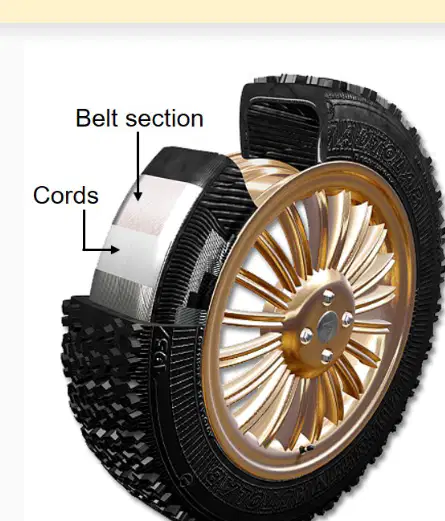
What material is often used in the belt section of a tyre?
Steel cords
Wooden rods
Plastic fibers
Aluminum wires
Which of the following is a synthetic material used in tyre construction?
Neoprene
Leather
Cotton
Silk
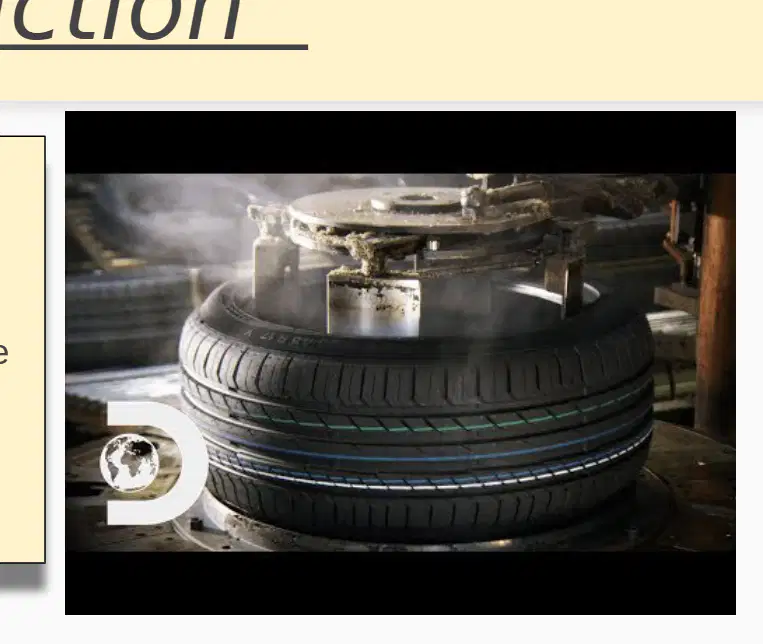
What does the term "Vulcanisation" refer to in the context of tyre construction?
A process of painting tyres for better appearance.
A chemical reaction that strengthens rubber compounds during the moulding of a tyre's tread.
The method of inflating tyres with air.
The process of recycling old tyres.
What is the angle at which the interlocking cords are layered in a cross-ply tyre?
30 degree
45 degree
60 degree
90 degree
What material is used to encase the network of interlocking cords in a cross-ply tyre?
Plastic
Leather
Vulcanised rubber
Steel
Which of the following best describes a cross-ply tyre?
Constructed with parallel cords
Constructed with interlocking cords layered at a 45 degree angle
Made entirely of steel
Made without any cords
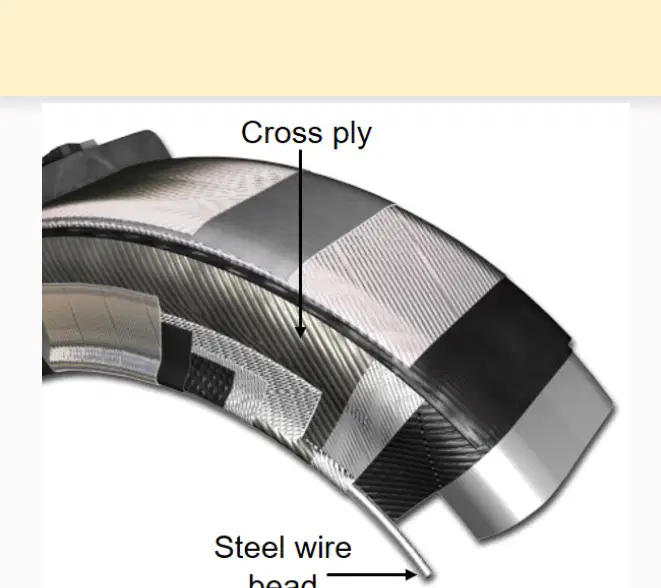
What is the function of the steel wire bead in a tyre?
To provide color
To encase the cords
To reinforce the tyre structure
To reduce weight
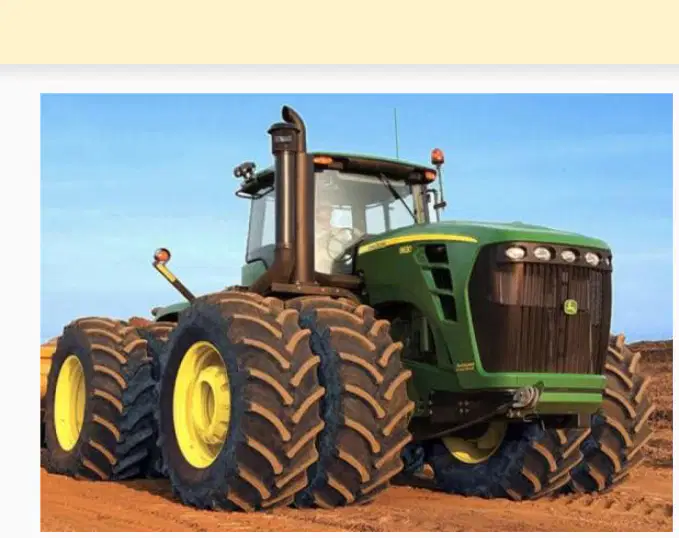
On which types of vehicles are cross-ply tyres most commonly used?
Older vehicles (vintage), vans, and vehicles used off road or in areas prone to sidewall damage
Modern sports cars and luxury sedans
Electric scooters and bicycles
High-speed trains and airplanes
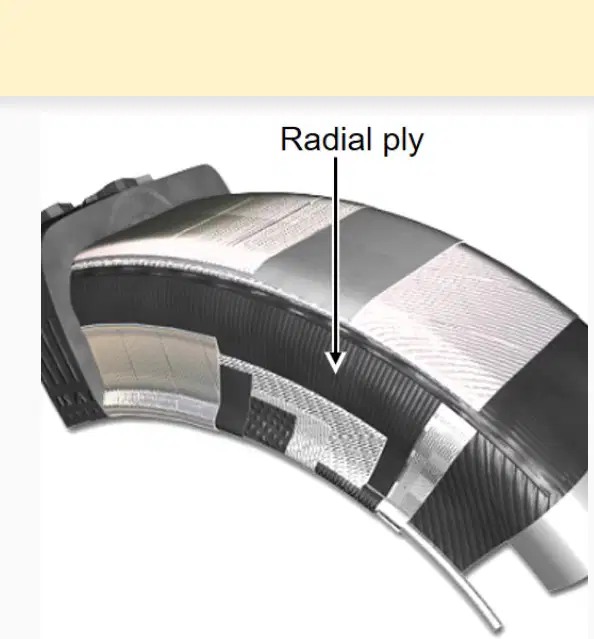
Where are steel cord plies placed in a radial tyre?
On the heel of the tyre
On the tread of the tyre
On the sidewall of the tyre
On the valve of the tyre
Why do the sidewalls of radial tyres remain very flexible?
Because cord plies are placed directly on top of each other
Because the tyre is made of rubber
Because the belt is placed under the tread
Because the air pressure is high
What is placed across the casing of a radial tyre?
A belt
A tube
A valve
A rim
What is one benefit of the flexibility of the sidewall in radial tyres?
Enhances vehicle stability
Reduces fuel efficiency
Decreases tyre lifespan
Increases road noise
How does the flexibility of the sidewall in radial tyres affect the contact of the tyre with the road surface?
It provides maximum contact
It reduces contact
It has no effect on contact
It makes the tyre slippery
What is a result of the enhanced stability and maximum contact provided by radial tyres?
A more comfortable ride
Increased risk of skidding
Higher maintenance costs
Reduced braking efficiency
According to the material, what does the improved comfort from radial tyres allow the driver to do?
Work longer
Drive faster
Change tyres more often
Use less fuel
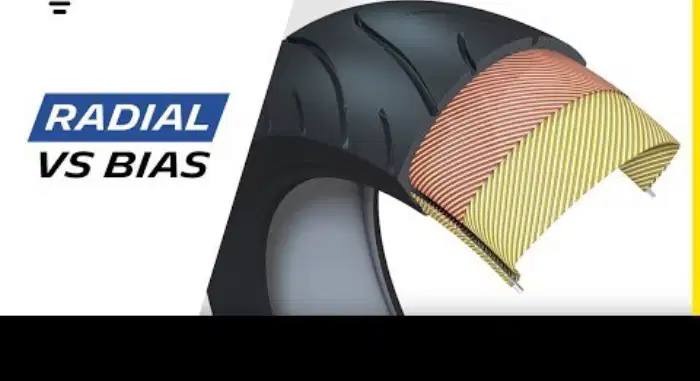
Which two types of tyres are compared in the provided material?
Radial and Bias
Tubeless and Tube-type
Summer and Winter
Performance and All-season
What is the main topic discussed in the provided material?
Tyre Specifications
Car Engine Types
Brake System Maintenance
Fuel Efficiency
Which of the following is an example of a tyre specification as shown in the material?
225 / 45 R17 91 W
A 150 / 60 S15 80 Z
B 200 / 55 Q16 85 Y
C 175 / 70 T14 75 X
What is the purpose of the group discussion mentioned in the material?
To discuss what each section means on a tyre
To compare different car models
To analyze fuel consumption rates
To learn about car insurance policies
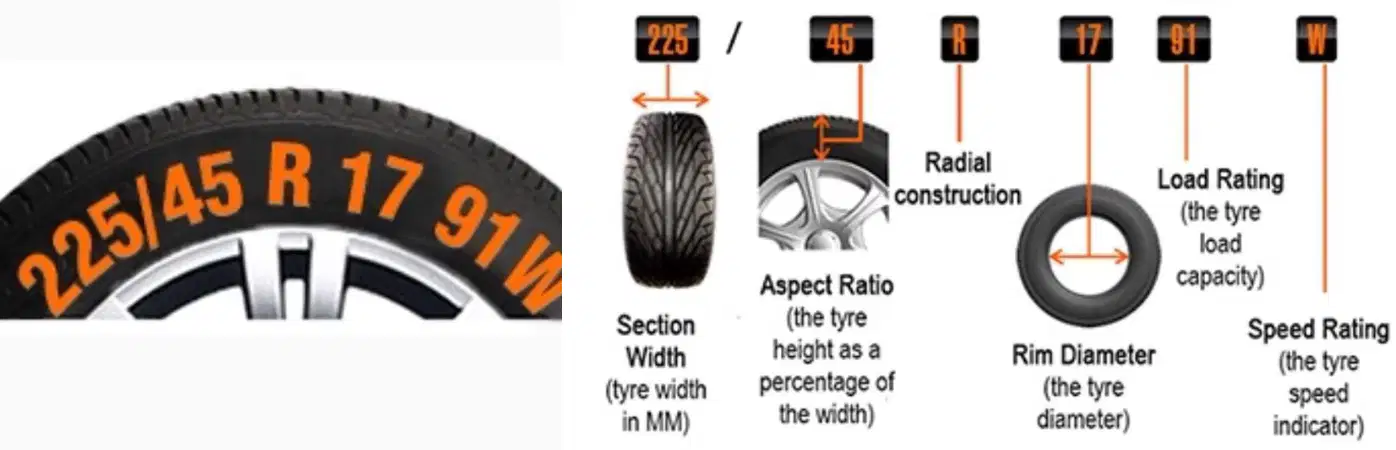
What does the number "225" represent in the tyre specification "225/45 R 17 91W"?
Section Width (tyre width in MM)
Aspect Ratio (tyre height as a percentage of the width)
Rim Diameter (the tyre diameter)
Load Rating (the tyre load capacity)
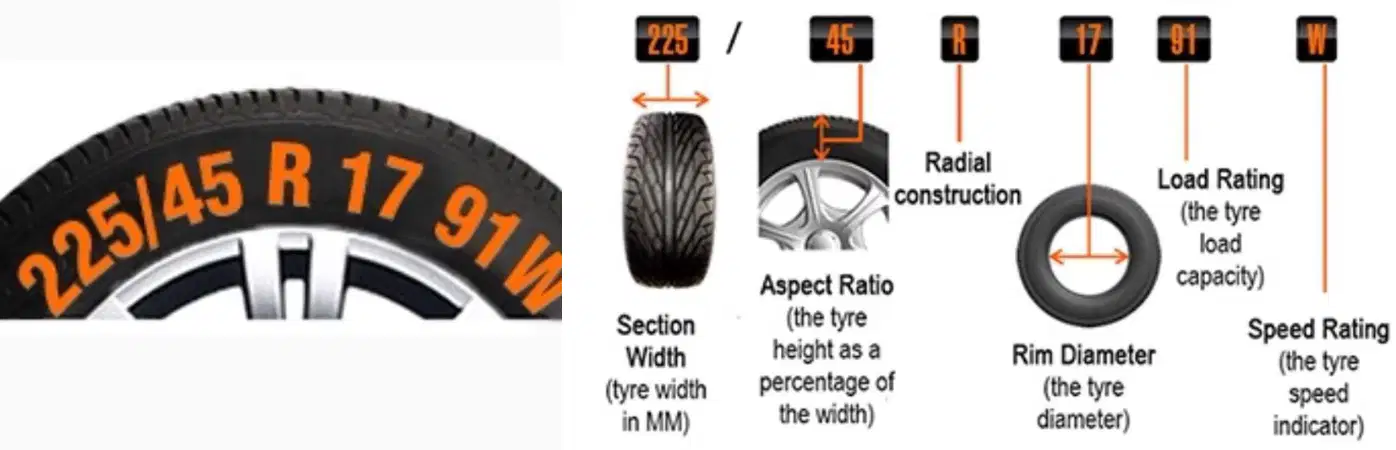
In the tyre specification "225/45 R 17 91W", what does the "45" indicate?
Section Width (tyre width in MM)
Aspect Ratio (tyre height as a percentage of the width)
Rim Diameter (the tyre diameter)
Speed Rating (the tyre speed indicator)
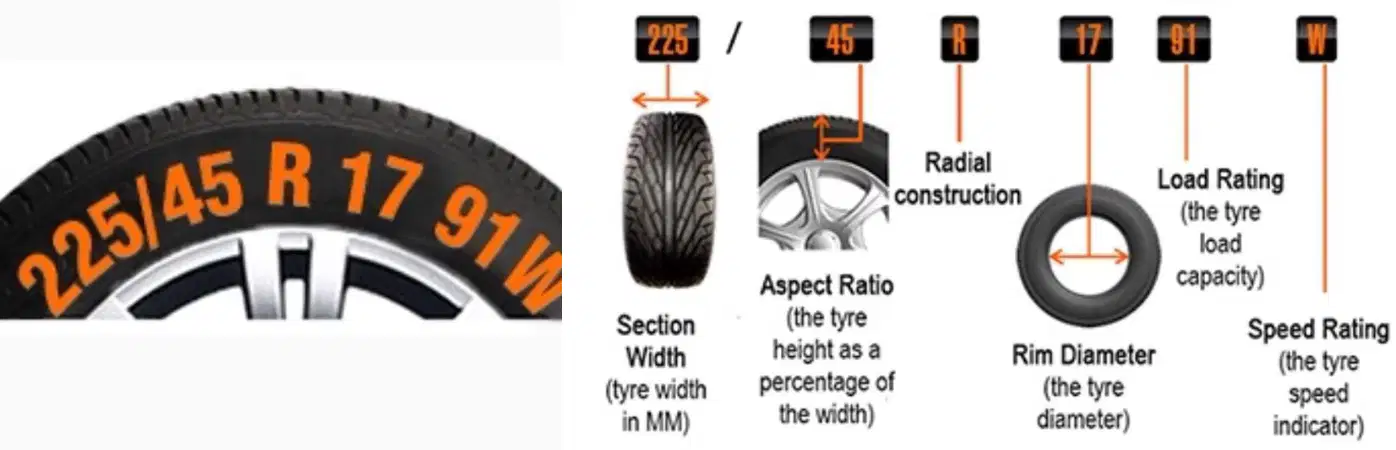
What does the letter "R" stand for in the tyre specification "225/45 R 17 91W"?
Rim Diameter
Radial construction
Load Rating
Speed Rating

In the tyre specification "225/45 R 17 91W", what does "17" refer to?
Section Width (tyre width in MM)
Aspect Ratio (tyre height as a percentage of the width)
Rim Diameter (the tyre diameter)
Load Rating (the tyre load capacity)
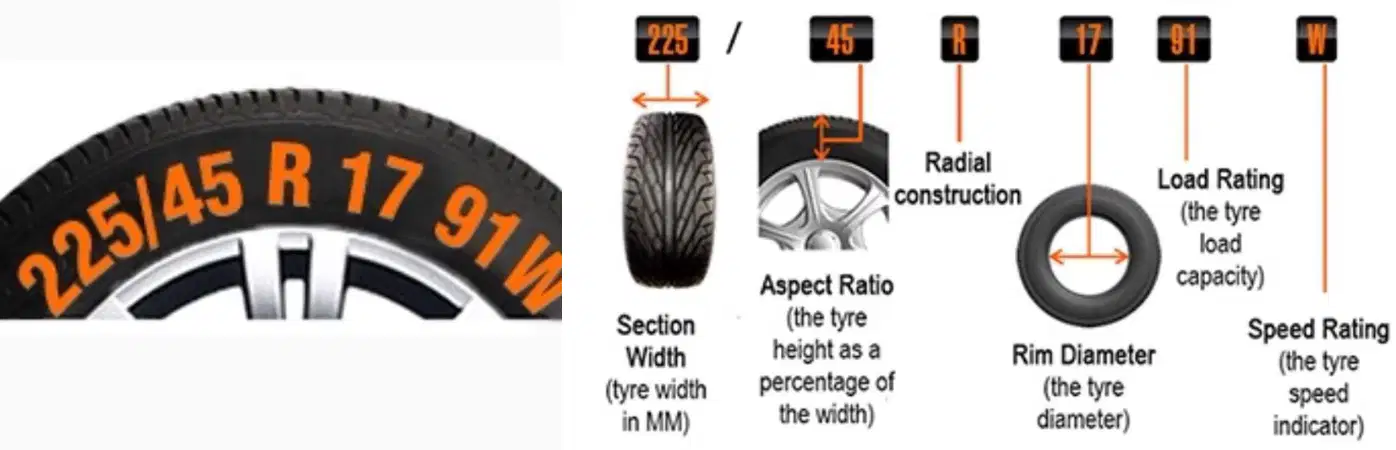
What does the "91" indicate in the tyre specification "225/45 R 17 91W"?
Speed Rating (the tyre speed indicator)
Load Rating (the tyre load capacity)
Section Width (tyre width in MM)
Aspect Ratio (tyre height as a percentage of the width)
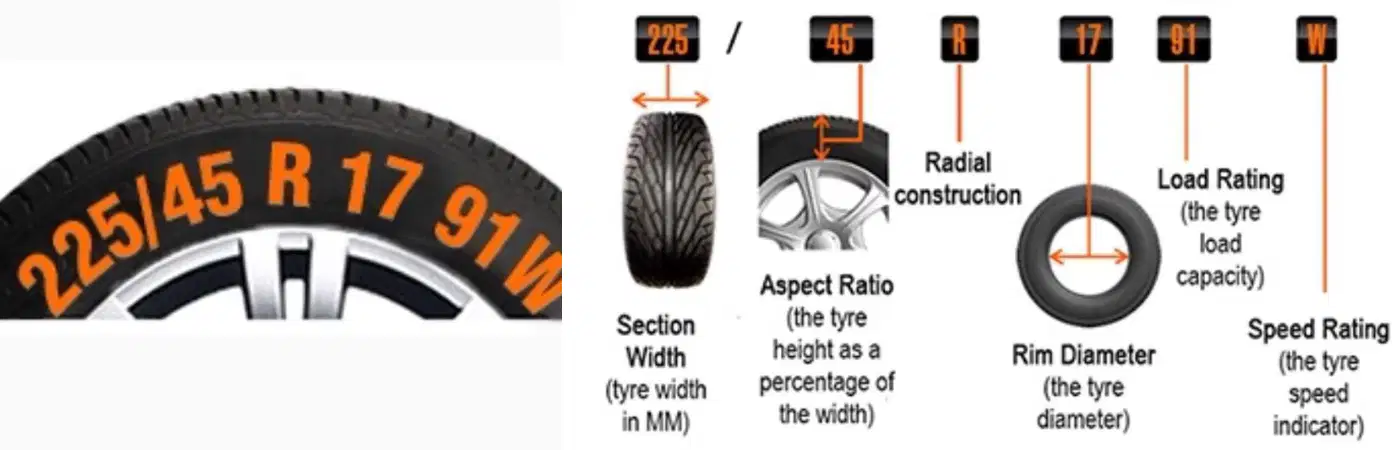
In the tyre specification "225/45 R 17 91W", what does the "W" represent?
Load Rating (the tyre load capacity)
Rim Diameter (the tyre diameter)
Speed Rating (the tyre speed indicator)
Section Width (tyre width in MM)
What does the load capacity of a tyre determine?
The weight each tyre is able to carry.
The speed at which the tyre can travel.
The size of the tyre.
The color of the tyre.
How are speed ratings for tyres determined?
By running the tyre at 6.2 mph steps in 10 minute increments until the required speed is met.
By measuring the tyre's diameter.
By checking the tyre's color.
By weighing the tyre.
What is the speed rating for a tire that can travel up to 99 miles per hour?
N
Q
S
U
Which speed rating corresponds to a maximum speed of 210 kilometers per hour?
H
U
V
W
A tire with a speed rating of "Y" can travel up to how many kilometers per hour?
300
270
240
210
Which of the following speed ratings has a maximum speed of 124 miles per hour?
U
T
R
P
What is the speed rating for a tire that can travel up to 170 kilometers per hour?
R
S
Q
T
Which speed rating allows for speeds greater than 150 miles per hour?
Z
V
H
U
If a tire is rated "W", what is its maximum speed in miles per hour?
168
186
130
124
What is the speed rating for a tire that can travel up to 93 miles per hour?
P
N
Q
S
Which speed rating corresponds to a maximum speed of 180 kilometers per hour?
S
T
R
Q
A tire with a speed rating of "T" can travel up to how many miles per hour?
118
112
106
124
What is the load in kg for a Load Index of 66?
265
300
325
350
Which Load Index corresponds to a load of 1000 kg?
108
110
106
112
If a tire has a Load Index of 69, what is its load rating in kg?
325
265
315
290
What is the load in kg for a Load Index of 85?
515
500
530
545
A Load Index of 113 corresponds to what load in kg?
1150
1120
1090
1060

