
 Worksheets
Chemistry
Total questions: 21
Worksheet time: 11mins
Name
Class
Date
1.
The idea of arranging the elements in the periodic table according to their chemical and physical properties is attributed to
a)
a. Mendeleev
b)
b. Moseley
c)
c. Bohr
d)
d. Ramsay
2.
Which change results in the formation of different substances?
a)
burning of propane
b)
solidification of water
c)
melting of NaCl(s)
d)
freezing of CO2(g)
3.
What is the difference between the substances represented by the symbols Co and CO?
a)
❍ A They are two different ways to represent the element cobalt.
b)
❍ B One is the symbol for an element, and one is a formula for a compound.
c)
❍ C Co represents the element cobalt, and CO represents the element copper.
d)
❍ D They represent two substances, each made up of two elements
4.
Orange juice is classified as a -
a)
Compound because the composition of its atoms is fixed.
b)
Compound because the composition of its atoms can vary.
c)
Mixture because the composition of its components is fixed.
d)
Mixture because the composition of its components can vary.
5.
Predict the missing product CH4 + O2 → ________ + H20
a)
C2
b)
H2
c)
CO2
d)
CH2
6.
What was Mendeleyev’s purpose for reorganizing the periodic table?
a)
❍ A He wanted to fit all the elements on one page instead of in a long line.
b)
❍ B He wanted to put elements with similar characteristics in the same column.
c)
❍ C He wanted to order the elements from the lightest to the heaviest.
d)
❍ D He wanted to put all the metals on one side of the table and gases on the other
7.
Which property is not a physical property?
a)
Mass
b)
Volume
c)
Flammability
d)
Shape
8.
Which of the following is a pure substance?
a)
cereal
b)
koolaid
c)
vinegar
d)
Air
9.
A chemical compound
a)
a. is the same as a mixture
b)
b. has the same properties as the elements it is made of
c)
c. can be seperated using physical properties
d)
d. is chemically combined and has different properties from individual elements
10.
Select the true statement
a)
1. A pure substance made of two or more elements that are chemically combined is a mixture.
b)
2. An element is a pure substance that cannot be broken down into any other substances by chemical means.
c)
3. During a chemical change, the form of a substance is altered, but not its identity.
d)
5. Ice is an example of the liquid state of matter.
11.

This picture represents:
a)
Atoms of an element
b)
Molecules of an element
c)
Molecules of a compound
d)
A mixture
12.
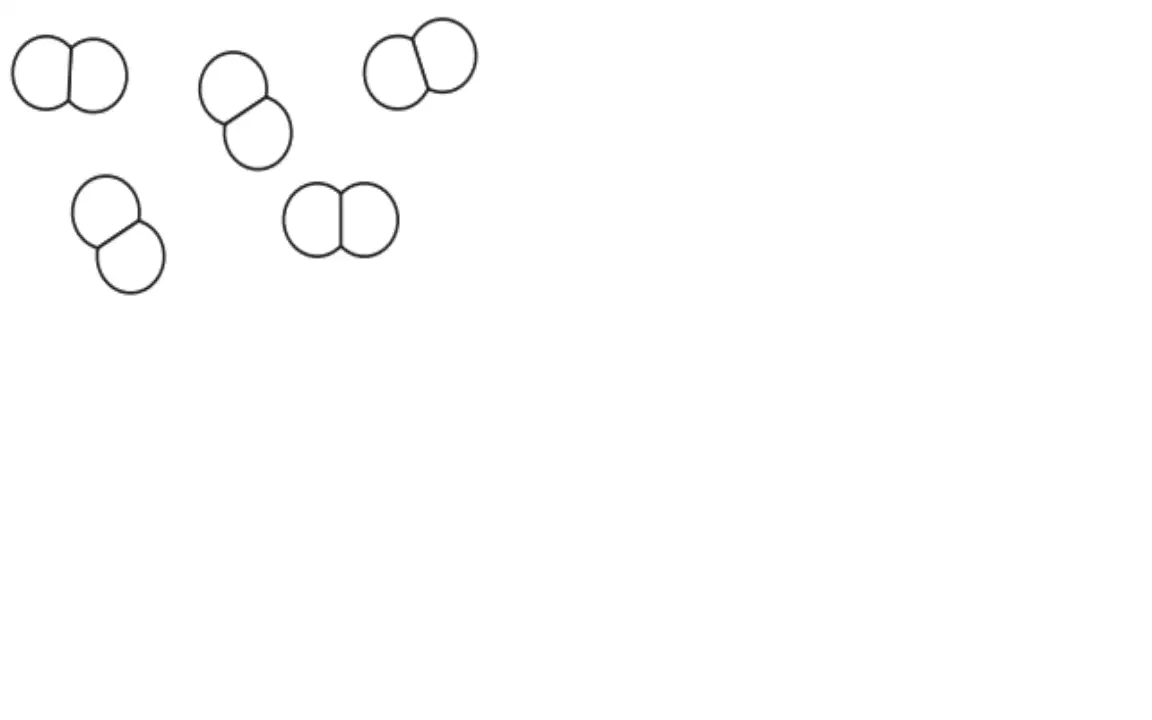
This picture represents:
a)
Atoms of an element
b)
Molecules of an element
c)
Molecules of a compound
d)
A mixture
13.

This picture represents:
a)
Atoms of an element
b)
Molecules of an element
c)
Molecules of a compound
d)
A mixture
14.

This picture represents:
a)
Atoms of an element
b)
Molecules of an element
c)
Molecules of a compound
d)
A mixture
15.

This picture represents:
a)
Atoms of an element
b)
Molecules of an element
c)
Molecules of a compound
d)
A mixture
16.

This picture represents:
a)
Atoms of an element
b)
Molecules of an element
c)
Molecules of a compound
d)
A mixture
17.

This picture represents:
a)
Atoms of an element
b)
Molecules of an element
c)
Molecules of a compound
d)
A mixture
18.
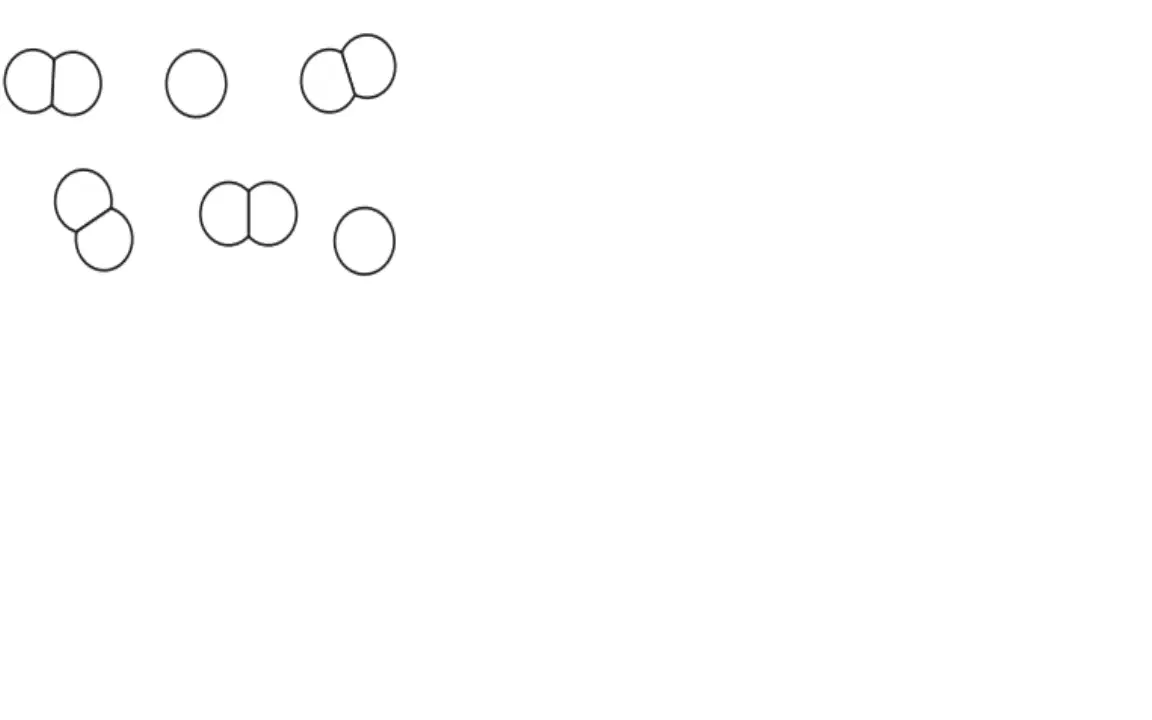
This picture represents:
a)
Atoms of an element
b)
Molecules of an element
c)
Molecules of a compound
d)
A mixture
19.
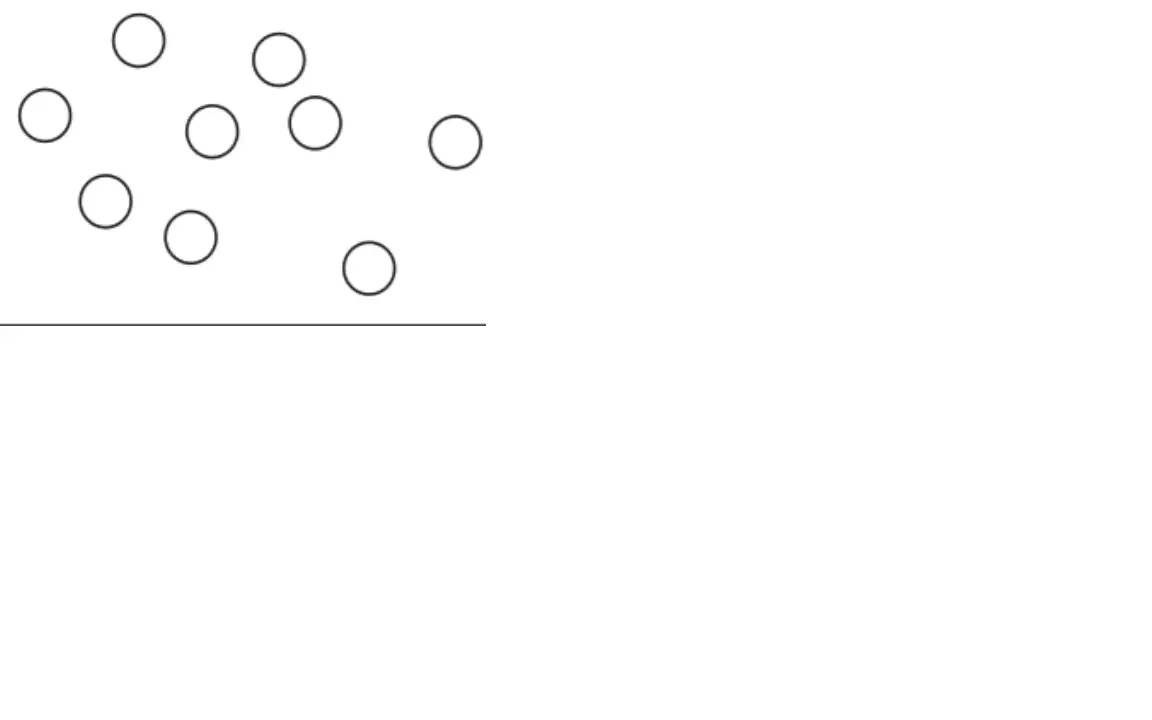
This picture represents:
a)
Atoms of an element
b)
Molecules of an element
c)
Molecules of a compound
d)
A mixture
20.
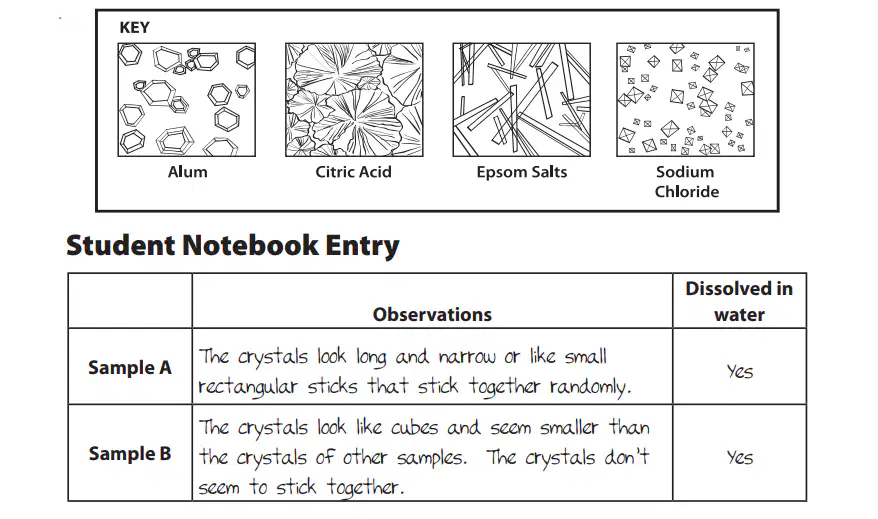
In class, a group of students added water to two mystery substances and allowed the water to evaporate. They recorded their observations in their notebooks. Compare the student’s observations to the key that shows the crystal formation of four substances. Sample A is most likely_____________.
a)
Alum
b)
Citric Acid
c)
Epsom Salts
d)
Sodium Chloride
21.
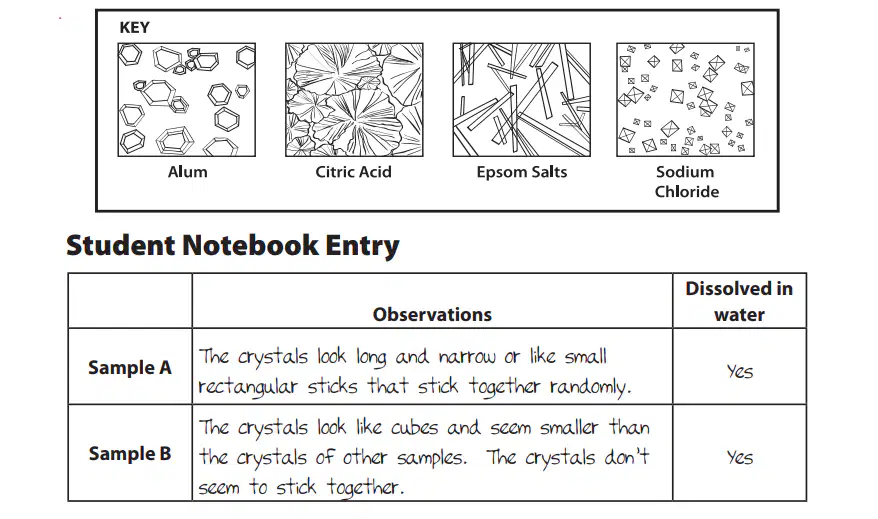
In class, a group of students added water to two mystery substances and allowed the water to evaporate. They recorded their observations in their notebooks. Compare the student’s observations to the key that shows the crystal formation of four substances. Sample B is most likely_____________.
a)
Alum
b)
Citric Acid
c)
Epsom Salts
d)
Sodium Chloride
100 %

