
 Worksheets
Year 7HPE Nutrition Quiz
Total questions: 22
Worksheet time: 15mins

What is one of the benefits of eating locally grown, chemical-free produce?
There are no benefits
Better for the environment
Reduces nutritional value
What is the role of fats and oils in a healthy diet?
They should be completely avoided
They are high in kilojoules and should be consumed in large amounts
They are necessary in small amounts
They are not part of a healthy diet

What is the risk of regularly replacing nutritious foods with 'junk' foods?
Improved health
Reduced risk of disease
Increased risk of illnesses and/or obesity

According to the Australian Guide to Healthy Eating, which food group should be consumed in small amounts?
Vegetables and legumes/beans
Lean meats and poultry
Oils and spreads
Fruits
Which nutrient is a major source of energy for the body?
Protein
Fat
Carbohydrate
Fibre
What is one of the functions of fat in the body?
Repair damaged tissue
Keep the digestive system regular
Insulate from cold
Build new cells
What is one of the main functions of water in the body?
Assist in energy production
Build muscle
Controlling body temperature
Build red blood cells
How many serves of vegetables are recommended per day for young people according to the Australian Guide to Healthy Eating?
4
3
5
What is the recommended daily intake of water for 9 to 13 years old?
10 to 12 cups
5 to 6 cups
There is no recommendation
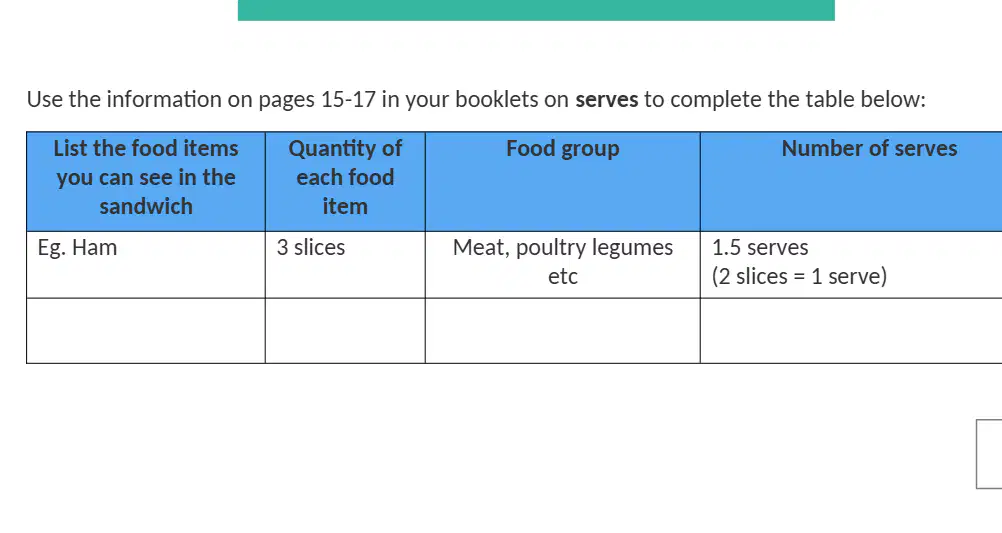
What is the food group for ham in the sandwich example?
Dairy
Vegetables
Meat, poultry, legumes
Grains
What happens in the mouth during digestion?
Bile is secreted into your mouth
Nothing
Food is broken down into smaller parts
The five food groups include
Fruits, Vegetables, vitamins and minerals
Fruits, vegetables, grains, proteins and calcium.
fruits, vegetables, grains, meats and alternatives and dairy
Which of the following is a good source of dietary fibre?
Meat
Cheese
Fruit and Vegetables
White bread
What nutrient is mainly responsible for building and repairing tissues in the body?
Carbohydrates
Dairy
Protein
Eating a health breakfast improves (a)
Match the following food groups to their food examples
Grains
Bread
Meat & alternatives
Egg
Fruit
Apple
Vegetables
Lettuce
Dairy/ Milk Yoghurt, Cheese
Cottage cheese
Vitamins and minerals are essential nutrients needed in ....................
Large amounts by the body
small amounts by the body
How many serves of fruit are recommended per day for young people according to the Australian Guide to Healthy Eating?
as many as you like
5
2
The Australian Dietary Guidelines recommend that we limit foods containing:
Protein
Carbohydrates
Added sugars, salt and saturated fats
If you are between the ages of 5 to 12, it is recommended that you complete at least __________ minutes of exercise a day, combining moderate and vigorous activity
10
60
90
Food that a sportsperson eats is no different than any other person except they need ________ quantities of food, particularly from carbohydrate sources.
smaller
larger
the same

