
 Worksheets
ОИС 55 ВОПРОС ТОГЖАН 100/100 БУЙЫРСА
Total questions: 55
Worksheet time: 33mins
What is a system made of tools like computers (hardware), programs (software) and networks
that work together to collect and manage information, helping people in a company make
decisions and stay organized?
It's objective is to provide appropriate information to the user, gather the data, process the data,
and communicate information to the user of the system.
Database Management System
Information System (IS)
SRS
Information Technology (IT)
______________________is the use of computers, storage, networking and other physical devices, infrastructure and processes to create, process, store, secure and exchange all forms of electronic data.
Information system (IS)
Database management system
Network communications
Information technology (IT)
The set of instructions or programs used to control and coordinate hardware, and analyze and process data, is called
networking communication
software
IT
hardware
The information system is made up of five essential components. What are these components?
programming, hacking, debugging, coding, and designing
software, dbms, internet, tools and users
hardware, software, database, networking communication, and people
hardware, storage, applications, networking communication, and customers
(a) means raw facts like numbers, letters, sounds, pictures, and symbols. By itself, it isn’t very useful. But when we collect it, organize it, and store it in a database, it becomes meaningful and helpful for decision-making.
(a) is the physical technology that includes all physical devices and materials used in information processing. That means it includes all the tangible equipment used for input, output, and processing of data.
Which type of Information System helps a business handle daily tasks like sales, payments, bookings, and payroll?
Decision Support System (DSS)
Executive Support System (ESS)
Management Information System (MIS)
Transaction Processing System (TPS)
Which of the following is an example of an Office Automation System (OAS)?
Clash of Clans – for playing games
Spotify – for listening to music
Adobe Illustrator – for graphic design only
Google Docs – for typing and sharing documents
Which of the following sequences correctly represents the main functions of an Information System?
Input → Output → Storage →Processing → Feedback
Input → Processing → Storage → Output → Feedback
Processing → Input → Storage→Output → Feedback
Feedback →Storage → Output → Input → Processing
Which function of an IS involves the activity of gathering and capturing raw data?
Output
Processing
Input
Feedback
Which of the following is an example of the "Output" function in an IS?
Data being analyzed and transformed.
A correction made to a process based on performance data.
A report generated from processed data.
Data entered into a system.
Examples of databases include:
Cloud computing
MySQL
relational database management systems
NoSQL
MongoDB
Examples of IS:
Microsoft Word for writing text with no data processing or storage
Google Maps for showing locations and analyzing geographic data+
Platonus, a university platform for grades and schedules+
Adobe Photoshop for editing images
_____1____ focuses on the technology itself. This includes hardware, software, and networks. On the other hand, ____2_____ involves more than just technology. ______2_____ combines technology, people, and processes to solve problems. It's about how people use technology to manage data and support decision-making.
1 - IS, 2 – process
1 - IS, 2 – IT
1 - technologies, 2 – systems
1 - IT, 2 – IS
What type of Information System helps businesses manage customer relationships effectively?
Executive Support System (ESS)
Geographic Information System (GIS)
Customer Relationship Management System (CRM)
Management Information Systems (MIS)
Transaction Processing System (TPS)
On those social media platforms IS components are:
● the Twitter or Facebook app and the web version are the _______1________
● the computers in Facebook's and Twitter's offices and their data centers are the _______2_____. It could also involve the devices on which users access those social media platforms
● the ______3_____ is the biodata of users, the tweets and posts, and the engagements they have
● the ______4______are the employees of the social media platforms, and possibly the users
● the ______5_________are the steps taken to convey the data and the resulting information to the users
1 - technologies, 2 - systems, 3 - information, 4 - people, 5 – processes
1 - programs, 2 - IT, 3 - information, 4 - people, 5 – processes
1 - software, 2 - hardware, 3 - data, 4 - people, 5 – processes
1 - software, 2 - hardware, 3 - processing data, 4 - people, 5 - managing data
(a) refers to processed, organized, and structured data. It gives context for the facts and facilitates decision-making. In other words, it is processed data that makes sense to us.
What are examples of Data? (more than one answer)
Student Grades: A list of numerical scores obtained by students on a test, like “85”, “92”, “78”.
Weather Report: Based on the temperature reading a weather report can be generated.
Temperature Readings: Numbers representing temperature throughout the day, such as “72°F”, “68°F”, “75°F”.
Grade Average: Based on the student grades, the average grade of class can be derived.
Which sequence correctly describes how an Information System (IS) works?
1) The system takes data and information from a variety of sources, including sensors, keyboards, scanners, and databases.
2) The system converts raw data into useful information using a variety of techniques such as sorting, classifying, calculating, analyzing, and synthesizing.
3) The system stores the processed data in a structured and safe manner, such as in a database, file system, or cloud storage.
4) The system displays information to users such as reports, graphs, charts, or dashboards.
5) The system requests feedback from users and other stakeholders to assess its effectiveness and enhance its design and functioning.
1 - Data, 2 - Processing, 3 - Ouput, 4 - Storage, 5 – Feedback
1 - Input, 2 - Storage, 3 - Processing, 4 - Output, 5 – Control
1 - Input, 2 - Processing, 3 - Storage, 4 - Output, 5 – Feedback
1 - Gather input, 2 - Processing, 3 - Storage, 4 - Feedback, 5 – Output
Databases are managed using specialized software called a ____________________, which allows users to store, retrieve, and manipulate data efficiently.
Software Development Life System
Relational Databases
Database Management System (DBMS)
Centralized Databases
A (a) is an electronically stored, systematic collection of data that can include words, numbers, images, videos, and other types of files.
Write your answer in CAPITAL LETTERS (one word)
Examples of Relational Database Management System (RDBMS)
MySQL
Oracle
Microsoft SQL Server
Postgre SQL
Cassandra
__________ is a common language used for reading, updating, creating and deleting data from the RDBMS.
Software Query Language
Structured Query Language
Structure Quality Language
System Queries Language
________________ organizes data into tables composed of rows and columns. It uses primary keys to uniquely identify rows and foreign keys to establish relationships between tables.
Hierarchical Database
Object-Oriented DBMS
Relational Database Management System (RDBMS)
NoSQL DBMS
_________________ are commands used to interact with the database, allowing users to retrieve, manipulate, or update data. For instance, SELECT * FROM Customers WHERE Country = 'USA'; retrieves all customers from the USA.
Data
Queries
Schema
DBMS
Match types of databases:
1) ______________ contents are arranged as a collection of tables with rows and columns. It is used in e-commerce platforms, banking systems, and HR management.
2) The data is represented and stored asobjectswhich are similar to the objects used in the object-oriented programming language.
3) ________________ handle unstructured and semi-structured data. They are highly scalable and flexible, making them ideal for real-time applicationssuch as social media platforms, IoT applications.
1 - Graph Databases, 2 - Object-Oriented Databases, 3 - NoSQL Databases
1 - Relational Databases, 2 - Object-Oriented Databases, 3 - Cloud Databases
1 - Relational Databases, 2 - Object-Oriented Databases, 3 - Hierarchical Databases
1 - Relational Databases, 2 - Object-Oriented Databases, 3 - NoSQL Databases
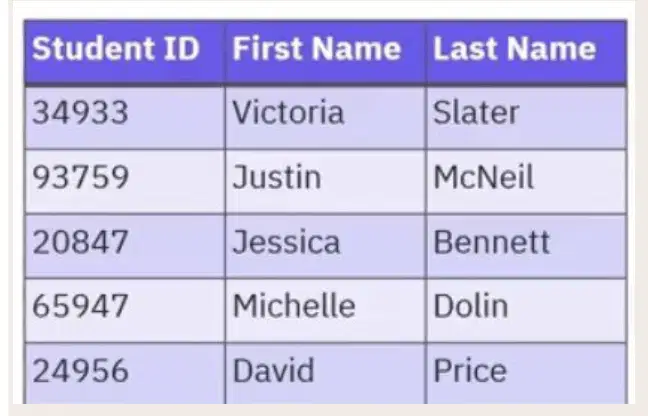
Here data is stored in tabular form - columns and rows. This table is an example of _____________________
NoSQL databases
Hierarchical databases
Relational databases
Graph databases
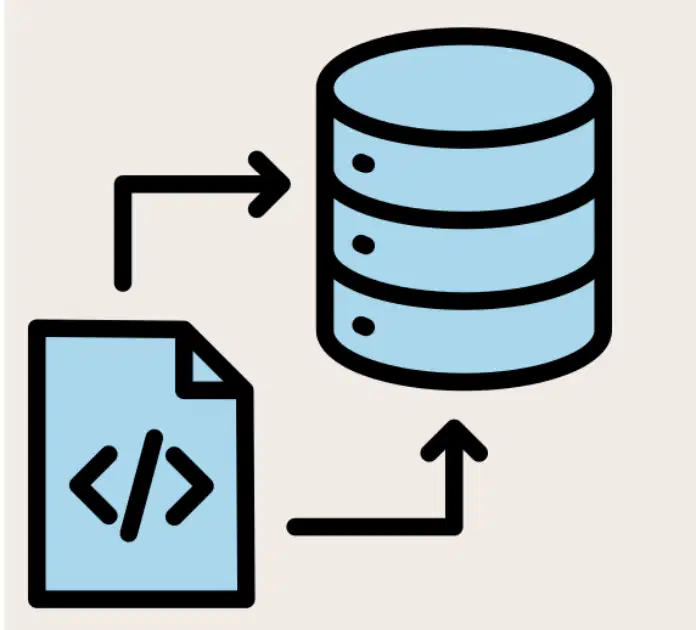
_
is a repository of data.
Write your answer in CAPITAL LETTERS (one word)
(a)
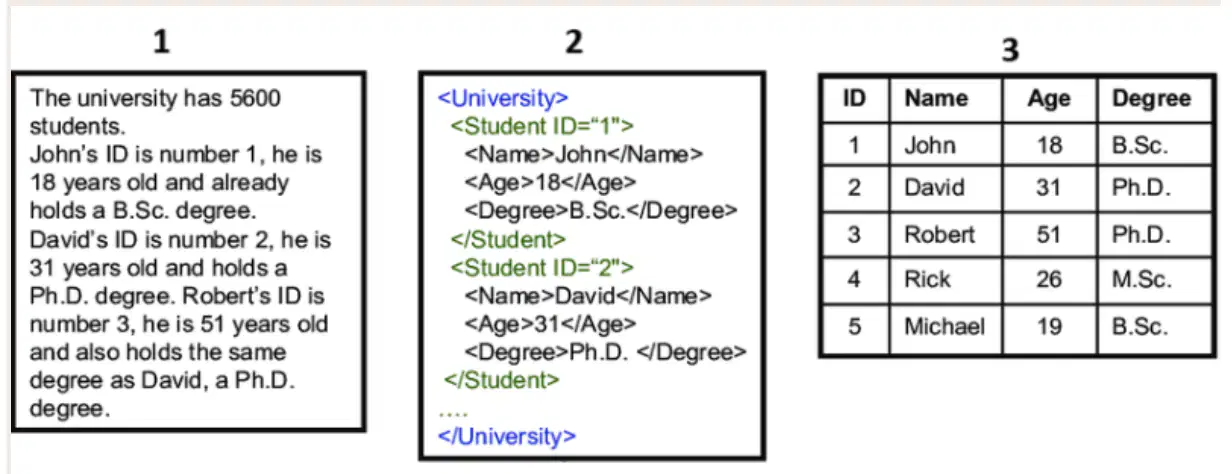
What are data types are shown here?
1 - Unstructured, 2 - Hierarchial data, 3 - Structured data
1 - Non organized, 2 - Semi-organized data, 3 - Organized data
1 - Unstructured, 2 - Semi-structured data, 3 - Structured data
1 - Structured, 2 - Semi-structured data, 3 - Relational data
Examples of structured data include:
(more than one answer)
Text documents (e.g., PDFs, Word documents, and open-ended survey responses)
Customer demographic information (e.g., name, address, age, gender)
Photos and videos, because multimedia files are usually stored as raw data and lack predefined fields.
Entity relationship diagrams (e.g., tables, rows, columns, primary keys, foreign keys)
Financial transactions (e.g., sales data, purchase orders, accounting entries)
DBMS examples:
PostgreSQL
MySQL
Microsoft Access
Apache Cassandra
MongoDB
A______is software that helps create and manage databases.
● It lets users add, view, change, and delete data in a database.
● It keeps data safe, accurate, and allows many users to work at the same time.
● It also connects users or apps with the database so the data stays organized and easy to
access.
relational database
Spreadsheet
Database technologies
SQL
DBMS
The data in RDBMS is stored in database objects called ____________. A ___________ is a collection of related data entries and it consists of columns and rows.
database
Table
sql
data structure
Which SQL keyword is used to choose all columns in a table?
EVERY
AND
GET
ALL
*
Which SQL query shows students who wrote a comment that includes the phrase “I love studying OIS”?
SELECT * FROM students WHERE comment LIKE '%I love studying OIS%';
SELECT * FROM students WHERE comment LIKE 'I love studying OIS';
SELECT * FROM students WHERE comment = "I love studying OIS';
SELECT * FROM students WHERE comment CONTAINS 'I love studying OIS';
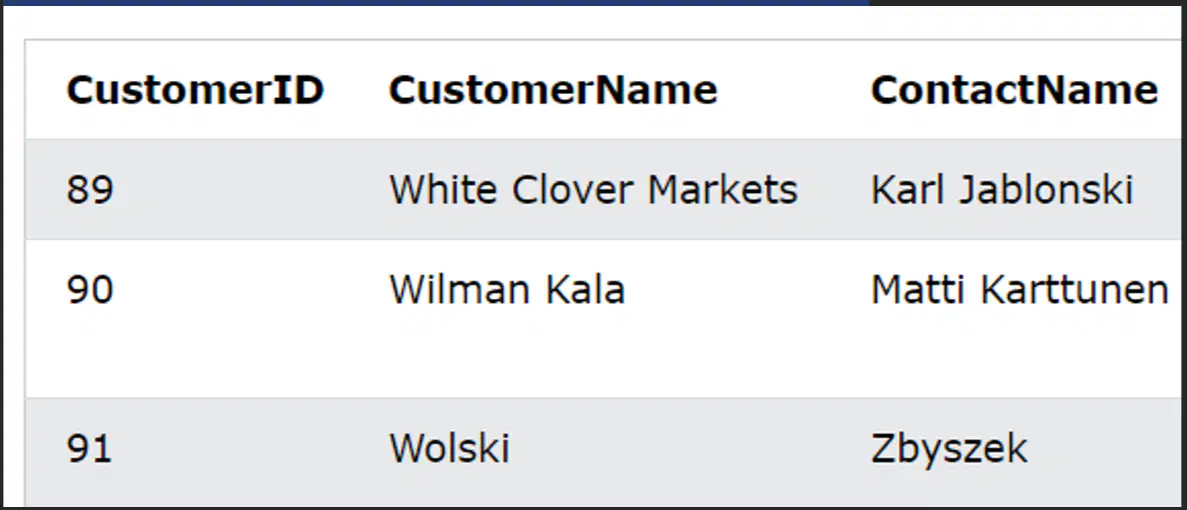
Which SQL statement correctly adds a new customer to the table?
INSERT INTO customers ('CustomerID', 'CustomerName', 'ContactName') VALUES (92, 'Global Foods', 'Anna Ivanova');
INSERT INTO customers (CustomerID, CustomerName, ContactName) VALUES (92, 'Global Foods', 'Anna Ivanova');
INSERT customers Values (92, 'Global Foods', 'Anna Ivanova');
CREATE customers VALUES (92, 'Global Foods', 'Anna Ivanova');
Which of the following statements is incorrect regarding keys in a relational DBMS?
The rules for primary and foreign keys serve the same purpose
Each table can have only one primary key
A table can contain multiple foreign keys or none at all
A foreign key links one table to another by referencing a primary key
What kind of document is being described in the text above?
Usually, clients and developers speak different languages.
The client imagines how the system will work from the outside: what it should do and how users will interact with it.
Developers, on the other hand, think about the internal logic of the product.
A business analyst helps them understand each other.
The analyst turns the client’s needs into requirements, and those requirements into tasksfor developers.
This process begins by creating a specific document that describes what the software should do which is called ________.
API
SDLC
SRS
SRSP
Technical task reports
A table can have only one (a) key, and that key is used to uniquely identify each row in the table. It must UNIQUE values, and cannot contain NULL values.
Write your answer in CAPITAL LETTERS (one word)
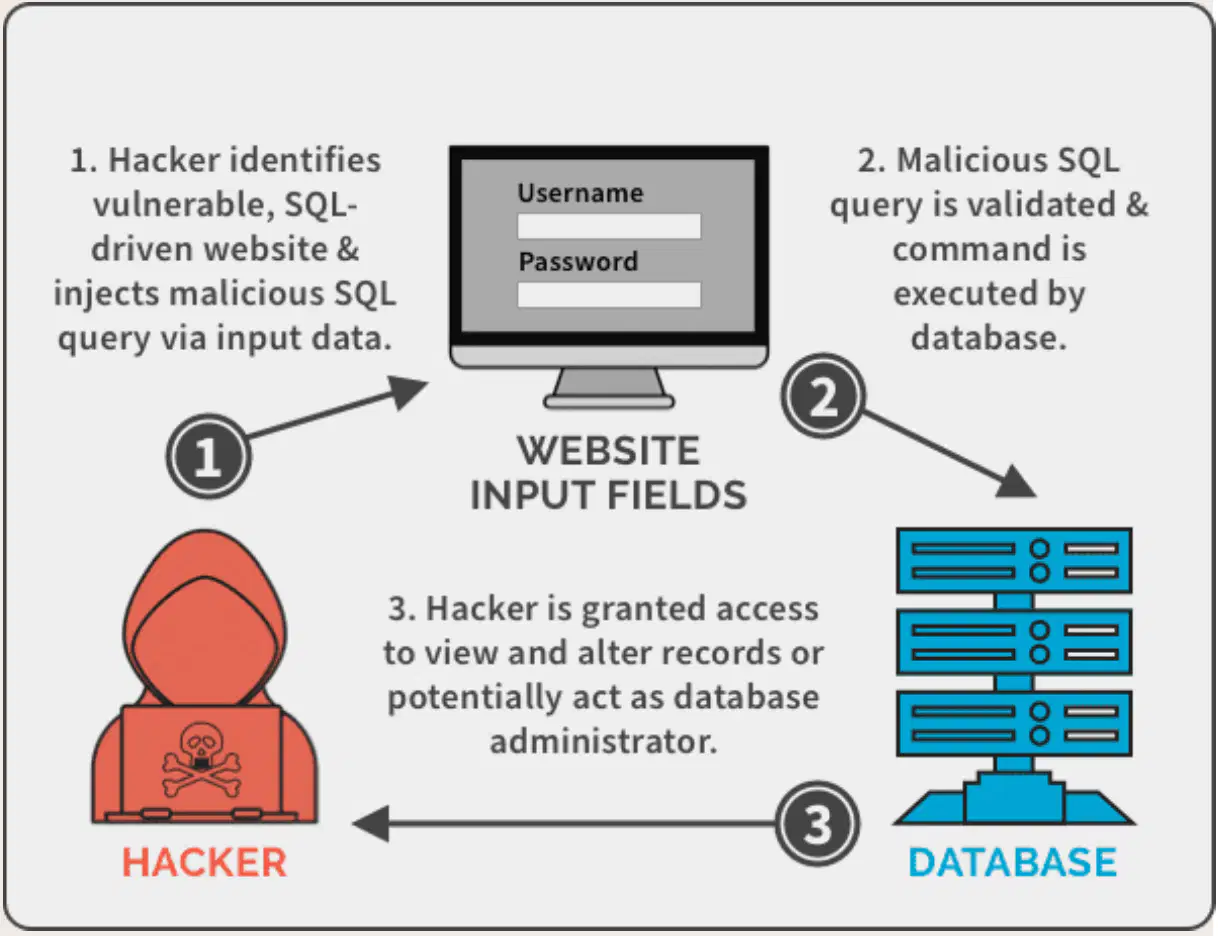
_____________________ is a cyberattack where malicious SQL queries are injected into input fields to manipulate a database, enabling unauthorized access, data modification, or corruption.
Phishing
SQL Hacking
SQL Injection
SQL DDos
An ________ is a set of rules that allow different software applications to communicate with each other. Think of it like a bridge that connects two systems and lets them share data or services.
API (access program interface)
API (application programming interface)
API (application protocol interface)
Hypertext Transfer Protocol (HTTP)
(SRS) Software Requirement Specification
What type of API is a simple, flexible API architecture that uses HTTP methods (GET, POST, PUT, DELETE) for communication?
SOAP (Simple Object Access Protocol)
REST (Representational State Transfer)
Web API
GraphQL
What is being described in the text?
A third-party developer creates their own application, function, or operating system.
They create it— a set of rules that allows other developers to use their work in different ways.
You receive it— it might be publicly available or accessible upon request for clients.
You call it inside your own application and use the functions you need.
You don’t need to know how its function works internally. It might be very complex and contain thousands of lines of code, but you can use it with a single call and get the result you want.
You can also create your own its functions for your web application, which is a set of instructions that other apps can follow to interact with yours. This allows other services to integrate with your system.
How the IS works
How a database stores information
How the API works
How to write full applications from scratch
How to test code for errors
Having a clear list of requirements helps developers build software that meets the client’s needs.
An SRS helps estimate cost, plan the work, and choose the right technologies.
It’s not just for developers:
● Designers use the SRS to understand how the design should look based on user needs.
● Testers use it to create tests that match business needs.
● Investors can understand the project better through presentations based on the SRS.
● It keeps everyone on the same page — developers, project managers, and clients.
What is the main role of an SRS (Software Requirements Specification)?
It helps design the company logo and better interface for clients
It stores user information involved in the project
It manages the project budget for stakeholders
It is a roadmap that guides everyone involved in the project
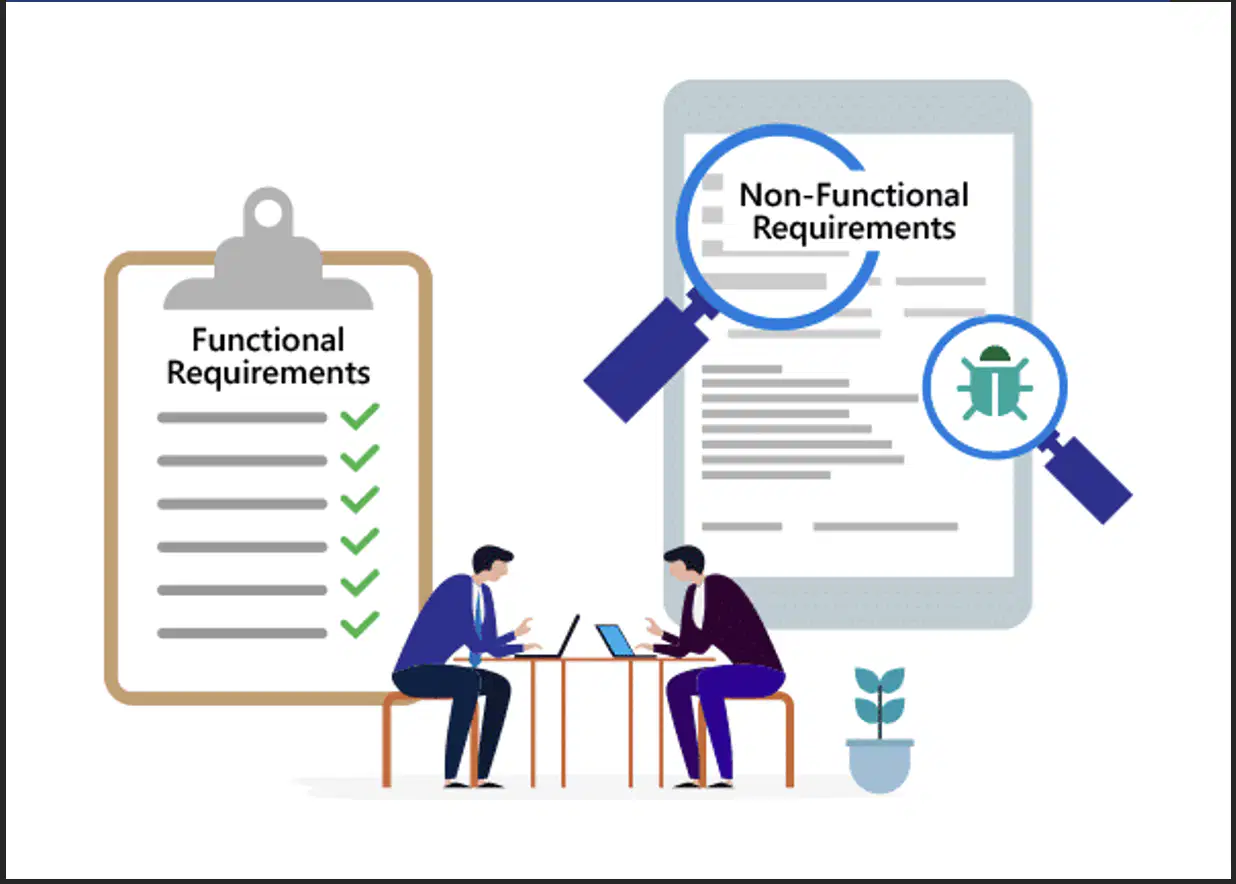
What distinguishes functional requirements from non-functional requirements in an SRS?
Functional requirements describe what the system should do; non-functional requirements describes how the system should perform.
Functional requirements are optional; non-functional requirements are mandatory and define the purpose, scope, and intended audience of the document
Functional requirements are about system performance; non-functional requirements are about system features
Functional requirements relate to user interfaces; non-functional requirements relate to databases.
Examples of Functional Requirements for Online Banking System
(3 answers)
The system should be able to handle 100 million users with minimal downtime.
The system should respond to user actions in less than 2 seconds.
Users should receive notifications after making a transaction.
Users should be able to log in with their username and password.
Users should be able to check their account balance.
Examples of Non-functional Requirements for Food Delivery App
(3 answers)
The app should load the restaurant menu in under 1 second.
Users can browse the menu and place an order.
The system should support up to 50,000 concurrent orders during peak hours.
The app should be easy to use for first-time users, with an intuitive interface.
Users can make payments and track their orders in real time.
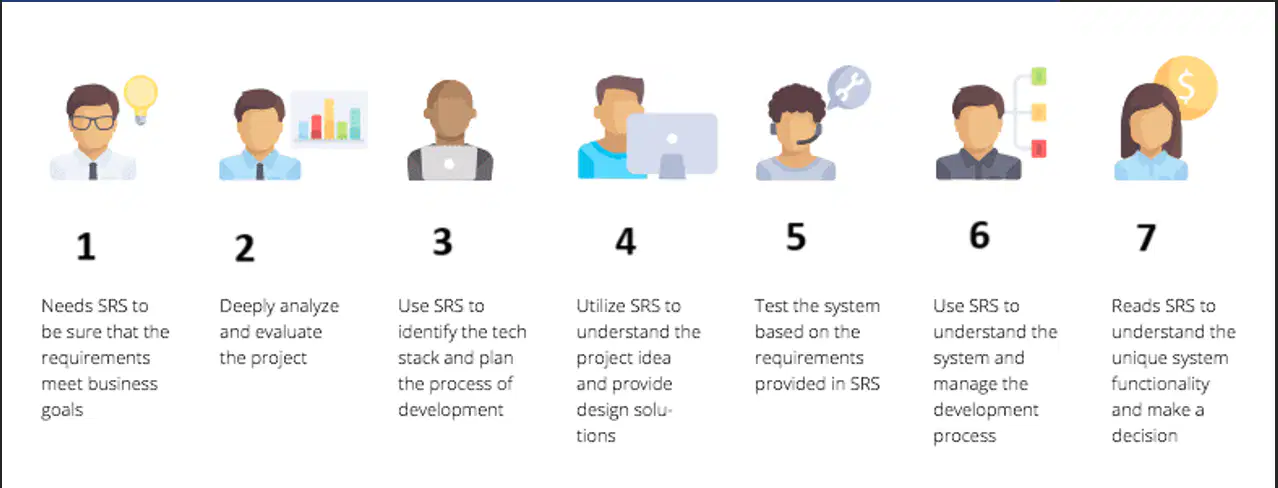
Match each SRS user to how they utilize the document. Choose the correct order:
1 - Investor, 2 - Business Analysts, 3 - Software Developers, 4 - Architect, 5 - QA/QC Engineers, 6 - Project Managers, 7 - Client
1 - Customer, 2 - Business Analysts, 3 - Software Engineers, 4 - Designers, 5 - QA/QC Engineers, 6 - Project Managers, 7 – Investor
1 - Customer, 2 - Project Managers, 3 - Programmers, 4 - Designers, 5 - Testers, 6 - Data and Business Analytics, 7 - Investor and Client
1 - Customer, 2 - Business Analysts, 3 - Software Engineers, 4 - Architect, 5 - QA/QC Engineers, 6 - Project Managers, 7 - Stakeholder
__________ is a way to visually describe how a system works. Just like an architect draws a plan of a building before it’s built, software developers use ___________ to draw a plan of their software system before they start coding. We use _________ diagrams to show the behavior and structure of a system.
UML
HTML
SQL
SDLC
Use Case Diagram Notations:
1)_____________ are external entities that interact with the system. These can include users,
other systems, or hardware devices. In the context of a Use Case Diagram, _______________
initiate use cases and receive the outcomes.
2) _____________
are like scenes in the play. They represent specific things your system can
do. In the online shopping system, examples of
could be "Place Order," "Track
__________
Delivery," or "Update Product Information".
3) _________________
is a visual representation of the scope or limits of the system you are
modeling. It defines what is inside the system and what is outside.
1) Actor 2) Actions 3) System border
1) Users 2) Entities 3) System boundary
1) Actors 2) Use Cases 3) System boundary
1) Customers 2) Use Case 3) System line
Use cases are represented by ___________.
diamonds
square
rectangles
Ovals
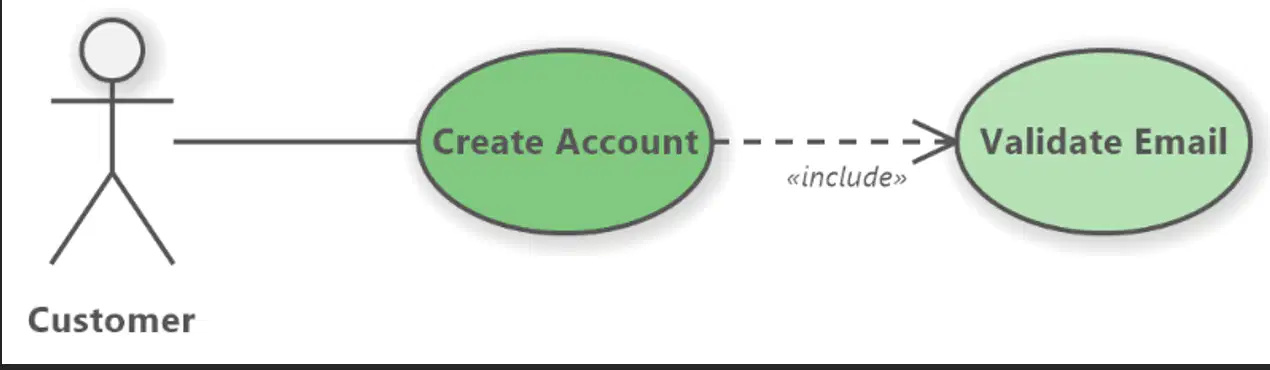
What does <<include>> mean?
the use case is optional and comes after the base use case.
this relationship is useful for handling optional or exceptional behavior.
a use case can be extended by another use case. This means that the main use case can be enhanced by adding the functionality of the other use case.
a use case includes the functionality of another use case. The use case being included is a part of the main use case and cannot be used on its own.
_________________ visualizes the relationships between entities like people, things, or concepts in a database. It will also often visualize the attributes of these entities.
Class diagram
Use Case Diagram
ER diagram
Sequence diagram
A __________________ is a type of UML diagram that represents the interaction between actors (users or external systems) and a system under consideration to accomplish specific goals. It provides a high-level view of the system's functionality by illustrating the various ways users can interact with it.
Class diagram
Use Case Diagram
Database design
ER Diagram

