
 Worksheets
WHG - Final Exam Review
Total questions: 100
Worksheet time: 50mins

One reason for the construction of the Berlin Wall in 1961 was to:
promote reunification of East Germany and West Germany
keep East Germans from fleeing to the Western sector of Berlin
complete the post–World War II rebuilding of Berlin
meet the requirements of the North Atlantic Treaty Organization (NATO)
One reason Mikhail Gorbachev implemented the policies of glasnost and perestroika in the Soviet Union was to:
eliminate freedom of speech and press
destroy the power of the opposition party
dominate the governments of Eastern Europe
encourage political discussion and economic reform
The North Atlantic Treaty Organization (NATO) was initially formed to:
promote religious freedom
defend Western Europe from Soviet aggression and communism
isolate member nations from the rest of the world
spread communism to each member nation
The Marshall Plan was designed to stop the spread of communism by providing:
government housing to refugees
military assistance to Vietnam
funds for economic recovery in war-torn European nations
nuclear weapons to North Atlantic Treaty Organization (NATO) members
“A Jewish State Is Created” ... “Six-Day War Results in Major Arab Losses” ... “Egypt and Israel sign the Camp David Accords” - Which situation is referred to in these headlines?
Persian Gulf War
Scramble for Africa
conflict between Israelis and Palestinians
collapse of the Ottoman Empire
One way in which the Korean War and the Vietnam War are similar is that both:
resulted in unification of two formerly independent nations
reflected the success of the Western policy of containment
attempted to remove French imperialists from power
developed from Cold War tensions
The primary purpose of the United Nations is to:
control world grain prices
promote democratic governments
resolve conflicts between nations peacefully
unite all nations militarily through alliances
One way in which the Great Leap Forward and the Four Modernizations are similar is that each was an attempt to:
increase farm and factory output
develop a democratic government
strengthen economic ties with communist neighbors
reduce the gap between rich and poor
The destruction of the Berlin Wall and the breakup of the Soviet Union signify the:
end of the Cold War
collapse of the Taliban
strength of the Warsaw Pact
power of the European Union
Between 1945 and 1947, the differences between Hindus and Muslims in India led to the
Sepoy Mutiny
Salt March
policy of nonalignment
partitioning of the subcontinent
One reason the Chinese Communists were able to gain control of China was primarily due to the support of the:
peasants
foreigners
landed elite
warlords
The events in these headlines, “Korea Divided at 38th Parallel” “Hungarian Revolution Crushed” “Missile Sites Spotted in Cuba” contributed to the:
development of peacetime alliances
collapse of the Soviet Union
rejection of imperialism by Western nations
tensions between the superpowers
What were the defining characteristics of the Cold War?
Prohibition, Flappers, Jazz
Arms Race, Space Race, Red Scare
Holocaust, Nazi Germany, Pearl Harbor
Poverty, Unemployment, Dust Bowl
What foreign policy guided American presidents during the Cold War to stop the spread of Communism?
Open Door Policy
Dollar Diplomacy
Big Stick Policy
Containment
During what event did the U.S. bypass the Soviet blockade without provoking a military conflict?
Berlin Airlift
Cuban Missile Crisis
Korean War
Vietnam War
Which of these was a cause of the Korean War?
NATO air and naval forces blocked ships sailing to North Korea
United Nations inattention allowed guerrillas to infiltrate South Korea
North Korean forces, with Soviet approval, invaded South Korea
Widespread anti-colonial riots forced the Korean government to begin the war
What is significant about the 38th parallel?
It divided Western and Eastern Europe, this line is also described as the Iron Curtain
The division between North and South Korea
The division between China and North Korea, also known as the Iron Curtain
The 38th Parallel was the location of all communist satellite nations
What is the term used to describe the invisible line that separated communist Eastern Europe from democratic western Europe?
Berlin Wall
Iron Curtain
38th Parallel
Maginot Line
As a reform to society, China instituted the ( _ ) as a way of removing previous capitalist influences and implementing communist policy throughout the country.
Cultural Revolution
Satellite Nations
Spheres of Influence
Universal Declarations of Human Rights
What was NOT a major long-term cause of World War I?
militarism
nationalism
lack of global natural resources
imperialism
The Nuremberg Laws stated that…?
all women would be subject to genocide
anyone with Jewish blood was considered Jewish
All german boys must join the Nazi movement
ethnic groups were subject to removal from Germany territory
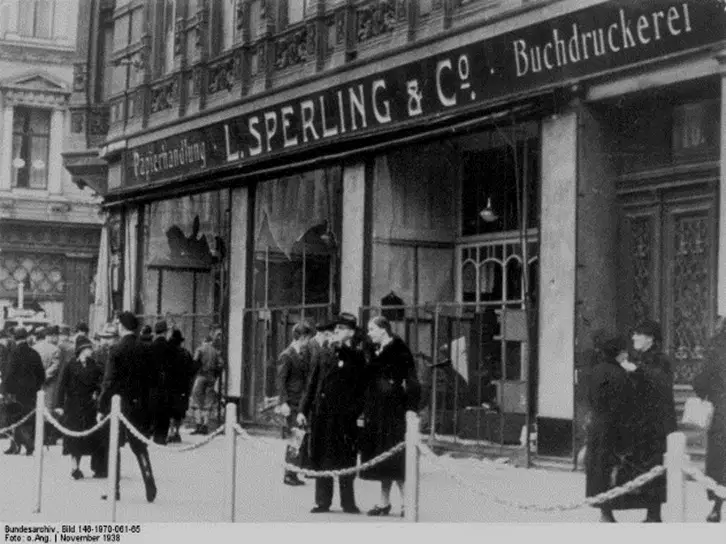
“Kristallnacht” meant…?
Night of the German conquering
Era of german rule
Germany Above All
Night of Broken Glass
Nazi leaders were sentenced and punished during the …?
German War Trials
Tokyo Trials
War Crimes Conference
Nuremberg Trials
The Holocaust is best described as - ?
ethnic cleansing
ethnocentrism
a genocide
crime against the state
What famous book did Adolf Hitler write?
The Power of Fascism
Germany and The World
Mein Kampf
Unt Liva Deutschland
Hitler, Tojo and Mussolini were all…?
Communists
Monarchs
Authoritarians
Elected Leaders
In 1938, what did Hitler want that was forbidden by the Treaty of Versailles?
The Annexation of The Czech Republic
Expansion into France
A union with Austria
The expansion of Germany's nuclear arsenal
Who led and planned the famous D-Day operation in France?
Winston Churchill
Dwight D. Eisenhower
Franklin D. Roosevelt
Charles De Gaulle
General Douglas McArthur…?
Led the D-Day operation in France
headed Operation Torch and the invasion into North Africa
accepted and signed Japan's official surrender in 1945
was killed by Hitler's Nazi army in an anti-communist operation
Germany’s non-aggression pact with the Soviet Union was meant to…?
help conquer France
keep Britain from entering the war
spread communism faster
decrease trade taxes
Why was the League of Nations created?
to create a universal currency for the world
to create trade networks between Europe and North America
to peacefully resolve international disputes
to spread democracy into communist nations
New military technologies and the glorification of war were all part of…?
imperialism
nationalism
militarism
communism
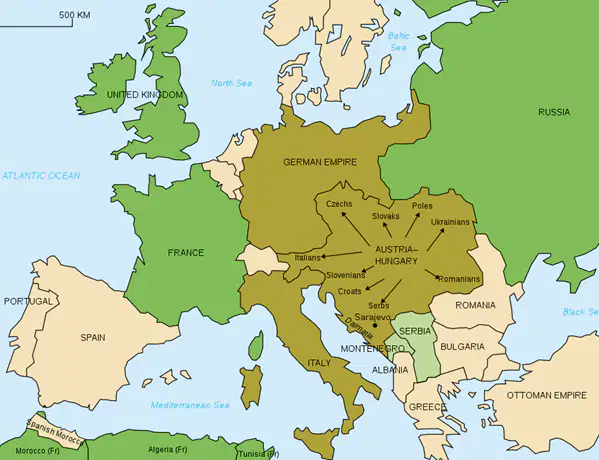
During WWI Russia, France, and Britain all made up the…?
Triple Alliance
Triple Entente
The Balkans
The Communist states
An alliance is…?
an agreement between groups of people to provide financial support
agreements to aide each other if attached
an offensive attempt to seize new territory
an imperialist method to spread democracy
During WWII Spain, Norway, and Sweden were all…?
allied powers
Balkan states
central powers
neutral states
What was the immediate cause and initiation of World War I?
the assassination of Austria's Franz Ferdinand
a world economic crash
Hitler's creation of Fascism
Hitler's invasion of the Czech Republic
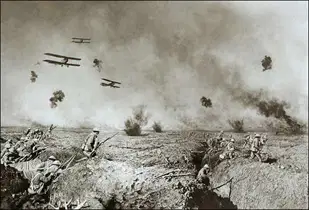
During WWI which battle in northern France resulted in 1 million casualties between July and November 1916?
Verdun
The Somme
The Marne
Normandy
Who led the communist Bolsheviks during the Russian Revolution?
Vladimir Putin
Vladimir Lenin
Joseph Stalin
Nikita Khrushchev
In 1915, who declared “unrestricted submarine warfare”?
Italy
Russia
Germany
China
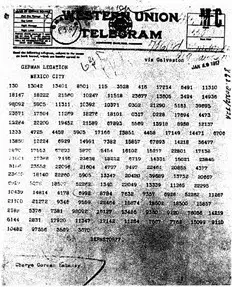
The Zimmerman Telegraph was sent by Germany and…?
proposed an alliance with the U.S.
proposed an alliance with Mexico against the U.S.
offered France a second chance at joining Hitler's movement
warned the West of imminent nuclear warfare
The US Congress officially declared war in order to…?
beat Hitler
save world democracy
maintain open trade channels
save French soldiers
Woodrow Wilson’s plan for long lasting peace was called..?
The Democratic Convention
The 14 Points
The League of Nations
The Treaty of World Peace
What was created as a result of the Treaty of Versailles?
a military pact between France and America
The European Union
a universal tax-cut agreement
The League of Nations
After the fall of the imperialist family, who officially renames Russia the “Soviet Union”?
Joseph Stalin
Vladimir Lenin
Vladimir Putin
Nikita Khrushchev
This explorer, "discovered" America for Europe, and made 4 successful voyages to modern day Cuba. However, Vikings were there 1st.
Christopher Columbus
Ferdinand Magellan
Bartholomew Dias
Francisco Pizarro
During the Renaissance, there was a revival of interest in
perspective
individual achievement
humanism
supernaturalism
How was Renaissance art different from the art of the Middle Ages?
It was more realistic and portrayed some non-religious subjects.
It was less realistic and portrayed only religious subjects.
It was always based on Greek and Roman subjects.
It was usually placed in churches and other religious places.
The printing revolution meant that
the arts lost many patrons.
the Bible could be read for the first time.
an end to illiteracy in Europe.
exposed educated readers to new ideas and places.
Who was executed for opposing the Act of Supremacy?
Elizabeth I
Thomas Cranmer
Thomas More
Henry VIII
Which of the following best describes the Catholic Reformation?
Protestant views were adopted.
Calvin became a Catholic.
Many began to doubt their faith.
Church abuses were reduced.
Choose two things the Americas gave the Old World
Tomatoes
Potatoes
Horses
Christianity
Choose two things the Old World gave the New World
Horses
Corn
Salt
Slaves
What technology invented by the Greeks allowed sailors to navigate using the position of the stars?
Magnetic Compass
Cartography
Astrolabe
Caravel
Which was NOT one of the places involved in the Triangular Trade?
England
Africa
Americas
India
What is divine right?
The right to rule was given to the monarch by God
a birth right
soldiers for hire
a monarch for hire
Where did Louis XIV move France's palace?
Lyon
Gordes
Versailles
Dinan
Legislative, or law-making, body in government representing the interests of the people in Great Britain.
Congress
House of Burgesses
Duma
Parliament
What did Peter the Great do to those who opposed his transformation of Russia in the Early 1700s?
He praised them for their use of Democracy
He allowed them freedom of speech but wanted them to leave
He tried desperately to convince them to join his cause
He killed, imprisoned, and enslaves those who opposed him
What biggest issue did Elizabeth I leave behind for England?
longest reigning Queen
never marries leaving no heir to the throne
defeated the Spanish Armada
falls in love with Sir Walter Raleigh
Who was the monarch of England when Phillip II went to war with his Spanish Armada and lost?
Mary of Scots
James I
Charles I
Elizabeth I
Who modernized Russia bringing better shipbuilding, gov't, manufacturing, city planning, music, and fashion
Louis XIV
Catherine the Great
Peter the Great
Ivan III
In the grand society of France, who belongs to the First Estate?
the Clergy
people with special privileges
people who did not pay taxes
all of the abve
Imagine a society where reason, not tradition, leads the way to glory and revolution! From where does this grand idea originate?
the Declaration of Independence
the Scientific Revolution
the Enlightenment
all of the above
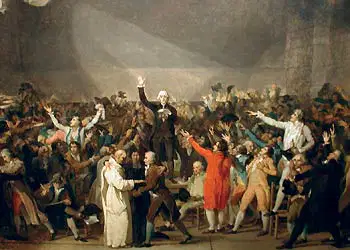
What is the significance of the Tennis Court Oath?
it led to a new constitution for France
it started the French Revolution
it was the beginning of the Reign of Terror
it marked the beginning of the rule of Napoleon
Which of the following conflicts sparked the flames of revolution in France?
The American Civil War
The French and Indian War
American Revolution
The Seven Years War
In which country did the Industrial Revolution begin?
The United States
England
France
Germany
Mass production led to:
Products being more superior in quality
goods became less expensive
laborers received higher wages
industries moved to rural areas
Who designed the first efficient steam engine?
James Hargreaves
John Kay
Richard Arkwright
James Watt
The Industrial Revolution happening during the _____ and the ____.
1700s, 1800s
1800s, 1900s
1900s, 2000s
1500s, 1600s

Who invented the steamboat?
Robert Fulton
Samuel Morse
Cyrus McCormick
Francis Cabot Lowell
A right, such as life and liberty, that a person is born with
divine right
philosophes
natural rights
contract
An agreement between rulers and the people to cooperate for mutual social benefits in pursuit of a better society
divine right
free enterprise
laissez-faire
social contract
Separation of Powers refers to:
Separating the ruler from the military.
Dividing powers equally among organizations
Dividing powers equally among three people
Dividing powers equally among three branches of government.
Enlightenment thinker who viewed humanity in a negative way and believed people were naturally wicked.
John Locke
Mary Wollstonecraft
Thomas Hobbes
Enlightenment thinker who believed in the natural rights of "Life, Liberty, and the right to Property".
Montesquieu
John Locke
Rousseau
Enlightenment thinker who was a pioneer for women's rights and education.
Mary Wollstonecraft
Voltaire
Thomas Hobbes
____ fought for freedom of speech and opposed religious intolerance and corruption in government
John Locke
Thomas Hobbes
Montesquieu
Rousseau
Voltaire

WHAT IS THOMAS HOBBES KNOWN FOR?
MAGNA CARTA
MAYFLOWER COMPACT
SOCIAL CONTRACT
NONE OF THESE
A political idea where the government is divided into branches that share power.
Checks and Taxes
Checks and Monarchy
Checks and Balances
Natural Laws and State of Nature
Feudalism: What did lords give to knights?
Loyalty
Land/Fiefs
Food
Protection
What was Pope Urban’s reason for launching the First Crusade?
to free the Holy Land
to defeat Saladin
to destroy the Feudal System
to control the Byzantine empire
During the Fourth Crusade, Muslim armies
fought other Muslim armies.
retook Jerusalem.
defeated the Europeans at Acre.
looted Constantinople.
Which of the following was one result of the Crusades?
an economic slowdown in Europe
a decrease in the power of monarchs
a legacy of hatred between Jews and Muslims
d. a legacy of hatred between Christians and Muslims
How did religious policy in Spain change under Ferdinand and Isabella?
Toleration for Jews and Muslims began.
Toleration for Jews and Muslims ended.
Support for the Inquisition halted.
Religious refugees were welcomed.
What was the Black Death?
Another name for the Guillotine
A disease that killed many people in Europe
A religious cult during the dark ages
The name for a secret soldier in the Roman Army
What carried the Black Death and transferred it to humans?
Fleas
Birds
Dogs
Mosquitoes
Where do historians think that the Black Death started?
In Africa
In North America
In England
In Asia
What did some people, at the time, think caused the disease?
They thought it was punishment from God
A star exploded and poisoned the Earth's air
All of the Above
None of the Above
All things were under its domain - the most powerful institution during the Middle Ages...
The Germanic Monarchs
The Church
The Medieval Lords
The knights' authority
Middle Age knights followed a code of conduct called...
Bushido
Honor
Chivalry
Code of Justinian
Which Frankish king was crowned by the Pope, uniting their powers?
Charlemagne
King John
King Henry
St. Cyril
Christian monasteries did all of the following except...
Provide shelter for travelers
Care for the sick and needy
copy books/manuscripts
enforce laws
If you disobeyed church rules you were kicked out and not allowed into heaven. What's this called?
Slavation
Ordination
Excommunication
Denunciation
Feudalism is a political and economic system. In the Middle Ages, it worked because it provided something that people needed. What did people need?
Freedom
Protection
Rights
Education
A grant of land given by a lord to a vassal in exchange for loyalty and service is called...
Convent
Monastery
Fief
Divine Right of King
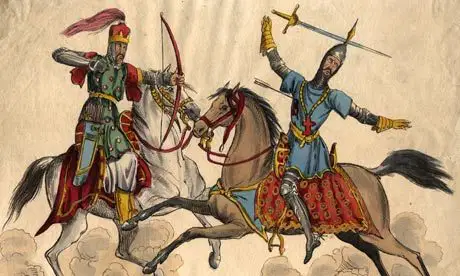
The crusades were wars between Christians and
Hindus
Buddhists
Muslims
Catholics
________ ________ is the most powerful church in Medieval Europe
Catholic Church
Orthodox Church
Islamic Church
Community life in western Europe during the Middle Ages centered around...
the theater
the church
the school
the town hall
After the Black Death, why did cities start to grow?
The House of Medici rose to power in Florence.
People sought job opportunities.
Brunelleschi designed the dome of the Florence Cathedral.
Humanism became an important idea throughout Europe.
What was one result of the Black Plague in England?
France was able to defeat England in the Hundred Years’ War.
Trade activities between England and France improved.
The population was reduced, and working people had more power.
Laws were passed to retain the nobles’ power.

