
 Worksheets
Final Review Day 1
Total questions: 60
Worksheet time: 2hrs 32mins

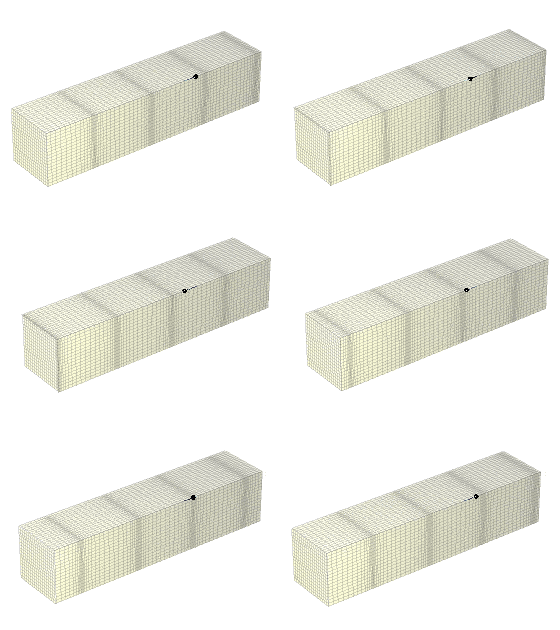
The image shows the formation of the solar system from a cloud of gas.
Based on the image, which explanation best describes how gravity helped to form the solar system?
the disintegration of the protosun into planets
accumulation of leftover materials that formed into planets
collisions between gas molecules that resulted in planet formation
condensation of gas and dust molecules that formed the protosun
What is the primary reason Earth has fewer visible craters compared to the Moon?
The Moon has a stronger gravitational pull
Earth's atmosphere burns up small meteors
The Moon is closer to the asteroid belt
Earth's surface is constantly changing due to erosion
Which process is responsible for the transformation of a protostar into a main-sequence star?
Nuclear fusion
Gravitational collapse
Radioactive decay
Erosion
What is the primary reason Earth has less visible cratering compared to the Moon?
Earth's atmosphere burns up smaller meteors
The Moon attracts more meteors due to its gravitational pull
Earth's surface is constantly changing due to erosion and tectonics
The Moon's surface is more resistant to impacts
What is the main component of the early solar nebula that led to the formation of the Sun and planets?
Silicon dust
Carbon dioxide
Hydrogen gas
Iron particles


What is the correct order (starting from the surface) of Earth’s layers?
crust, outer core, inner core, mantle
mantle, outer core, inner core, crust
crust, mantle, outer core, inner core
outer core, inner core, crust, mantle



What particle completes this reaction?
alpha particle
beta particle
gamma particle
neutron

Which type of nuclear radiation is being emitted here?
alpha
beta
gamma
none

Gamma rays are represented by which symbol?
42He
0-1 e
00Y
178O
What is a beta particle?
2 protons & 2 neutrons
a high energy EM wave
an electron
a large unstable nucleus
What is an isotope?
An atom with the same number of neutrons and electrons, but a different number of protons.
An atom with the same number of protons and electrons, but a different number of neutrons.
An atom with the same number of neutrons and protons, but a different number of electrons.
In the context of isotopes, what does the term "stable" refer to?
An isotope that does not undergo radioactive decay
An isotope that decays very quickly
An isotope that can sustain a chain reaction
An isotope that is commonly found in nature
If nuclear fission, nuclear fusion, and radioactive decay were ordered by the amount of energy released in each process from greatest to least, which of the following would be the correct ranking?
Nuclear fusion, nuclear fission, radioactive decay
Nuclear fission, radioactive decay, nuclear fusion
Nuclear fission, nuclear fusion, radioactive decay
Radioactive decay, nuclear fission, nuclear fusion
The % of the parent isotope remaining after 1 Half Life.
50%
25%
12.5%
6.25%
The % of the parent isotope remaining after 2 Half Lives.
50%
25%
12.5%
6.25%
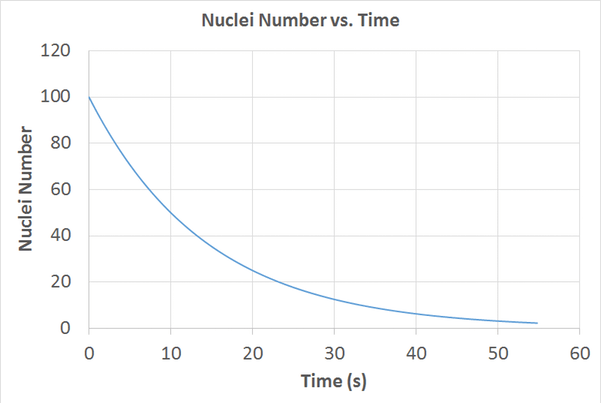
What is the Half life of this isotope?
5 seconds
10 seconds
15 seconds
20 seconds
Why do some elements have half-lives?
they radioactively decay
half of their atom gets stolen
They are Twizzlers that break in half
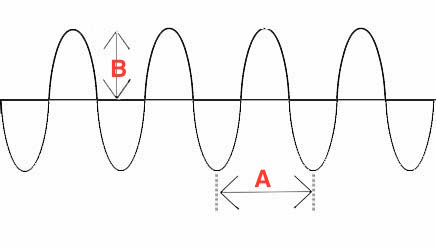
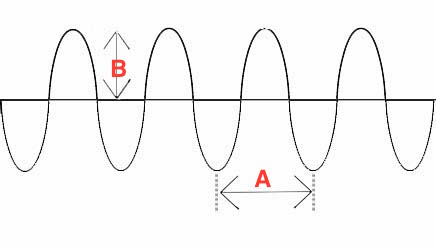
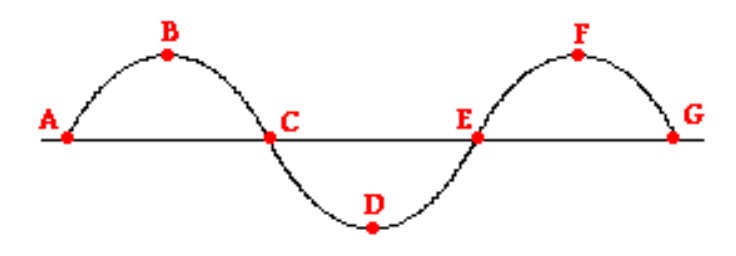
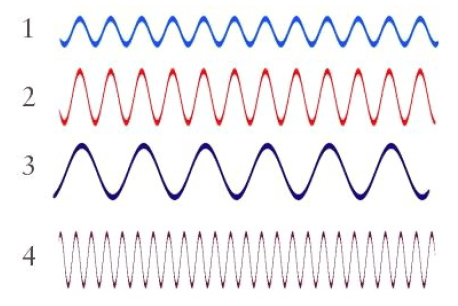
The unit for frequency is...
meters
meters/second
hertz
newtons

The top wave is a _____________ wave
longitudinal
stadium
medium
transverse

Francine is at the beach, watching the waves. She notices waves are reaching the shore about 4 seconds apart. She estimates the crests of the waves are about 12 meters apart.
What is the frequency of the waves?
4 s
4 Hz
1/4 s
1/4 Hz

Francine is at the beach, watching the waves. She notices waves are reaching the shore about 4 seconds apart. She estimates the crests of the waves are about 12 meters apart.
What is the wavelength of the waves?
12 meters
24 meters
4 seconds
3 meters per second
Water waves and light waves are both examples to ___
Longitudinal Wave
Transverse Wave
Frequency wave
Sound Wave

