
 Worksheets
Module 6: Aircraft Performance & Design - Quiz
Total questions: 85
Worksheet time: 43mins
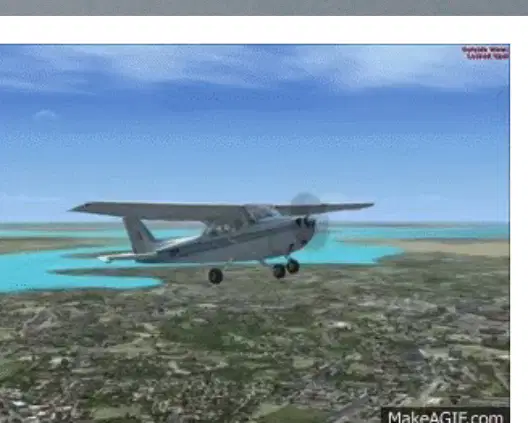
What is shown in the bottom right image of the learning material?
A small airplane flying over land and water
A bird flying in the sky
A rocket launching
A helicopter landing
What is the main topic of Module 6 in the learning material?
Configuration Design
Longitudinal Stability
Role of the Tail
Aerodynamic Centre
Which topic is covered in Topic 3 of Module 6?
Longitudinal Stability
Aerodynamic Centre
Summary & Questions
How to Make a Stable Aircraft
What is compared in the introduction of this module?
Aerodynamic Centre vs Centre of Pressure
Longitudinal Stability vs Lateral Stability
Role of the Tail vs Role of the Wing
PME vs Centre of Gravity
What is one use of the PME mentioned in the module?
Longitudinal Stability
Making a paper airplane
Flying a kite
Painting an aircraft
What is the role of the tail in an aircraft, according to the module?
To help make a stable aircraft
To make the aircraft faster
To decorate the aircraft
To carry passengers
What is the aerodynamic centre of an aerofoil?
The point where the pitching moment about CG due to angle of attack is zero.
The point where the total lift is maximum.
The point where the airspeed is highest.
The point where the wing is thickest.
What does the centre of pressure represent on an aerofoil?
The point where the total sum of pressure distributed over the aerofoil acts.
The point where the air is calmest.
The point where the wing bends.
The point where the engine is attached.
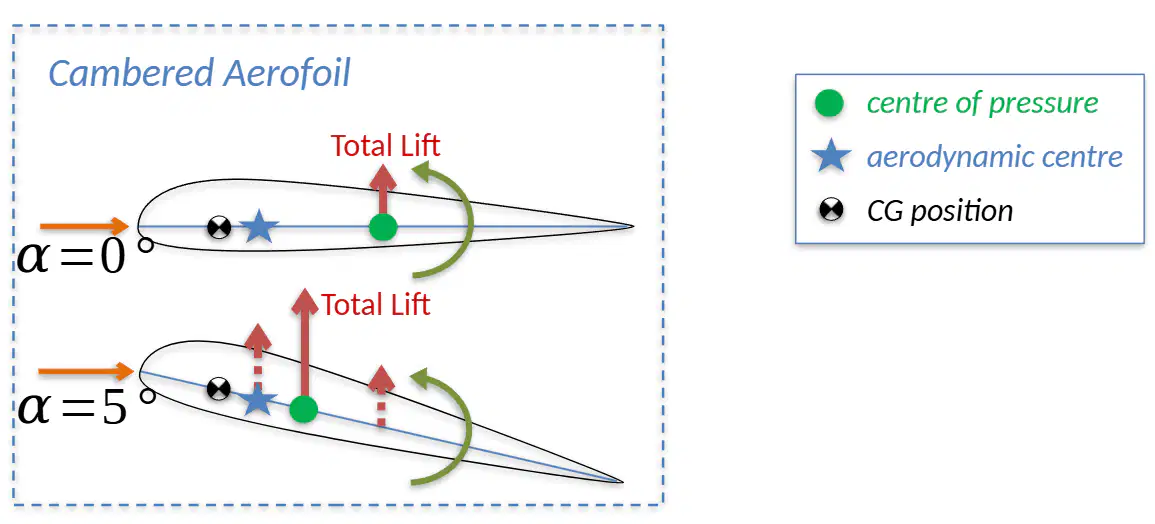
Which symbol in the diagram represents the aerodynamic centre?
Green dot
Blue star
Red arrow
Black circle with cross
If you want to find the point where the resultant force acts on an aerofoil, which centre should you look for?
Centre of pressure
Aerodynamic centre
CG position
Wing tip
Why is the aerodynamic centre important for an aerofoil?
It is where the pitching moment about CG due to angle of attack is zero.
It is where the wing is painted.
It is where the passengers sit.
It is where the engine is located.
What is the neutral point (np) of an aircraft better known as?
The moving point of the aircraft
The fixed aerodynamic centre of the aircraft
The tail of the aircraft
The wing of the aircraft
In the simplified analogy, what is the tail's contribution to lift lumped into?
The wing force
The pitching moment only
The camber moment
The resultant aerodynamic force
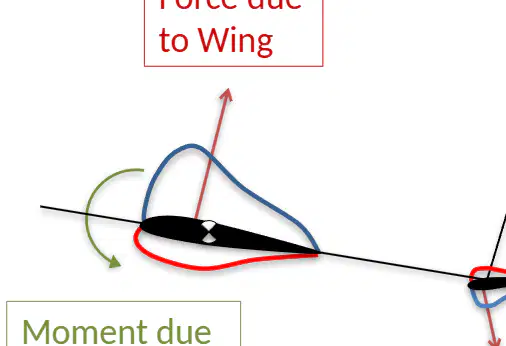
Which force is shown acting upwards from the wing in the diagram?
Force due to Tail
Resultant Aerodynamic Force
Force due to Wing
Moment due to Camber
What does the whole aircraft model analogy help with?
Making the aircraft fly faster
Easing performance modelling
Painting the aircraft
Making the aircraft heavier
What is the pitching moment of a zero-lift aircraft mainly produced by?
The zero-lift moment due to wing camber and the tail
The engine power and the wheels
The color of the aircraft and the windows
The number of seats and the doors
Which part of the aircraft can still produce lift and a pitching moment even when there is no net lift force from the wing?
The tail
The wheels
The cockpit
The propeller
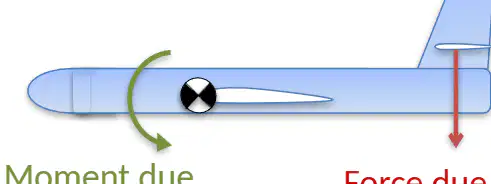
What does the diagram with the airplane and arrows show?
How forces and moments act on a zero-lift aircraft
How to land an airplane
How to paint an airplane
How to open the airplane door
Why can an aircraft have a pitching moment even when the net lift force is zero?
Because of the wing camber and the tail
Because of the color of the plane
Because of the number of passengers
Because of the shape of the windows
What is the neutral point of an aircraft also called?
The aerodynamic centre
The tail
The wing tip
The cockpit
What must we assume about the aerodynamic force due to angle of attack in the equivalent aircraft model?
It is created wholly by the wing
It is created by the tail only
It is created by the engine
It is created by the landing gear
What happens to the tail effects in the equivalent aircraft model?
They are wrapped up in the Aircraft Zero-Lift Moment
They are ignored
They are doubled
They are moved to the cockpit
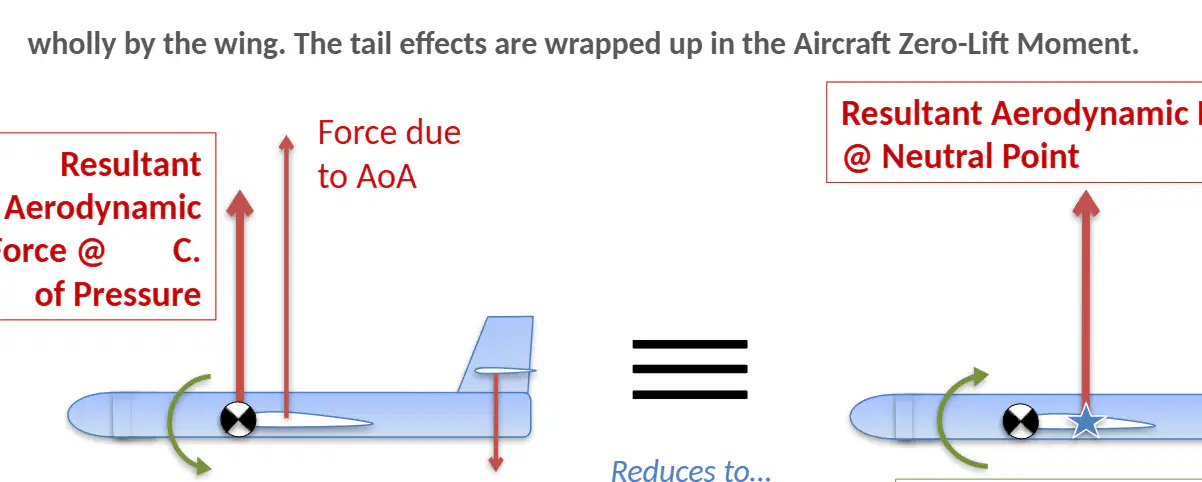
Which point on the airplane diagram is marked with a star?
Neutral point
Cockpit
Tail
Wing tip
What is the main topic discussed in this section?
Longitudinal Stability
Weather Patterns
Types of Engines
Air Traffic Control
What is one use of the pitching moment equation mentioned in the material?
Stability Explanation
Fuel Calculation
Passenger Counting
Weather Forecasting
Which type of aircraft is mentioned in the material?
Stable Aircraft
Fast Aircraft
Large Aircraft
Old Aircraft
Why might someone use the pitching moment equation according to the material?
To explain stability
To find lost luggage
To book tickets
To paint the aircraft

What does PME stand for in the context of the image?
Pitching Moment Equation
Perfect Motion Equation
Plane Movement Equation
Primary Motion Equation
Which of the following is one use of the Simplified Pitching Moment Equation?
Tail Lift for Trim
Engine Thrust Calculation
Fuel Efficiency
Wing Color Selection
What is the Neutral Point used for, according to the image?
Useful in Aircraft Design
Useful in Cooking
Useful in Car Repair
Useful in Painting
If you want to know about Static Margin, which equation would you use based on the image?
Simplified Pitching Moment Equation
Simplified Thrust Equation
Simplified Drag Equation
Simplified Lift Equation
Why is Tail Lift for Trim important in aircraft performance?
It helps keep the airplane balanced.
It changes the airplane's color.
It makes the airplane go faster.
It helps the airplane land in water.
What does stability in mechanics refer to?
The tendency of a rigid body to return to equilibrium after a disturbance
The speed of an object
The color of an object
The size of an object
How many types of stability are there?
One
Two
Three
Four
Which of the following is NOT a type of stability mentioned in the material?
Positive stability
Neutral stability
Negative stability
Rotational stability
In aircraft, what determines stability?
The color of the aircraft
The position of the centre of gravity relative to the centre of lift
The number of passengers
The type of fuel used
Why is it important to learn about how aircraft design influences stability?
To know how to paint an aircraft
To understand why stability is important for safe flight
To learn how to make aircraft faster
To find out how to make aircraft heavier

Match the drawing to the 'type' of stability shown in the diagram.
Positive stability, Neutral stability, Negative stability
Negative stability, Positive stability, Neutral stability
Neutral stability, Negative stability, Positive stability
Positive stability, Negative stability, Neutral stability
What does a simple weather vane always do when the wind changes direction?
It points into the wind.
It falls to the ground.
It spins in circles.
It stops moving.
What can cause an aircraft to face a change in wind direction?
A gust of up- or down-moving air.
A flat tire.
A broken engine.
A sunny day.
What does a stable aircraft do when there is a disturbance to its equilibrium?
It acts like a weather vane and returns to its original position.
It falls out of the sky.
It speeds up very fast.
It stops moving.
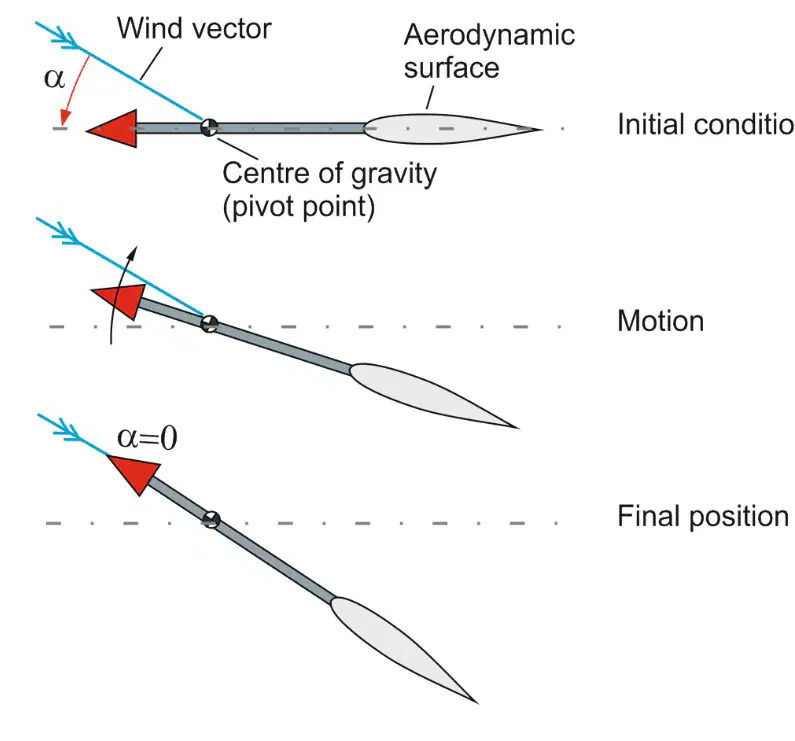
Look at the diagram showing the weathercock analogy. What does the final position of the weather vane show?
The weather vane points into the wind after being disturbed.
The weather vane breaks apart.
The weather vane spins forever.
The weather vane points away from the wind.
What happens to the aircraft's centre of pressure when the angle of attack changes?
It stays in the same place
It shifts
It disappears
It becomes the centre of gravity
Where is the centre of pressure when the aircraft is trimmed?
On the centre of gravity
At the tip of the wing
At the tail of the aircraft
Under the aircraft
What is the centre of pressure the locus of?
The aircraft’s total lift
The aircraft’s speed
The aircraft’s weight
The aircraft’s fuel
When the angle of attack increases, what happens to the centre of pressure in a stable aircraft?
It shifts forward
It shifts back
It stays the same
It moves to the tail
If the angle of attack decreases, what does the centre of pressure do in a stable aircraft?
Shifts forward
Shifts back
Disappears
Moves to the wingtip
Why is there no moment when the aircraft is trimmed?
Because the centre of pressure is on the centre of gravity
Because the aircraft is flying upside down
Because the wings are flat
Because the engine is off
What does a restoring moment do in a stable aircraft?
Helps the aircraft return to its trimmed position
Makes the aircraft go faster
Turns the aircraft upside down
Stops the aircraft from flying
What is the centre of pressure in an aircraft?
The place where the aircraft's total lift acts
The place where the aircraft's total weight acts
The place where the aircraft's engine is located
The place where the aircraft's fuel is stored
When the aircraft is trimmed, where is the centre of pressure located?
On the centre of gravity
On the wingtip
On the tail
On the nose
What happens to the centre of pressure when the angle of attack changes?
It shifts
It disappears
It stays in the same place
It moves to the tail
Why is there no moment when the centre of pressure is on the centre of gravity?
Because the forces are balanced
Because the aircraft is upside down
Because the engine is off
Because the wings are folded
If the angle of attack increases in a stable aircraft, what happens to the centre of pressure?
It shifts back, restoring moment
It shifts forward, causing a spin
It stays in the same place
It moves to the tail and stays there
If the angle of attack decreases in a stable aircraft, what happens to the centre of pressure?
It shifts forward, restoring moment
It shifts back, causing a stall
It stays in the same place
It moves to the wingtip
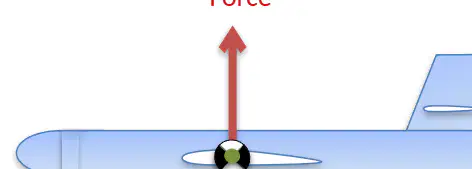
What does the green dot represent in the diagram?
Centre of pressure
Centre of gravity
Engine
Tail
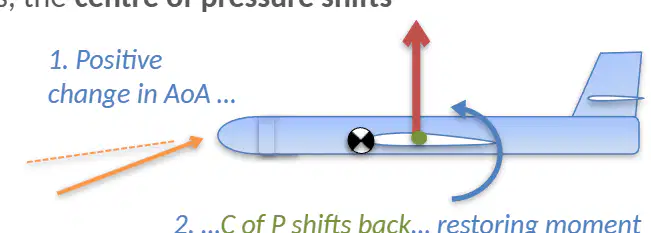
What does the black-and-white circle represent in the diagram?
Centre of gravity
Centre of pressure
Wingtip
Cockpit

What happens when a stable aircraft encounters rising air?
The aircraft increases its angle of attack (AoA)
The aircraft decreases its angle of attack (AoA)
The aircraft stops moving
The aircraft flies upside down
What does a stable aircraft do after it encounters rising or descending air?
It rotates back to its original angle of attack
It keeps flying in the new direction forever
It lands immediately
It spins in circles
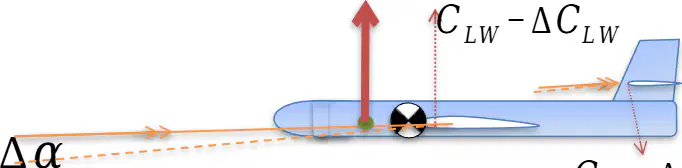
When a stable aircraft encounters descending air, what happens to the total force locus?
It moves forward
It moves backward
It disappears
It stays in the same place
Why does a restoring moment get produced in a stable aircraft?
To help the aircraft return to its original angle of attack
To make the aircraft go faster
To make the aircraft stop
To make the aircraft fly upside down
What is the neutral point of an aircraft also called?
The aerodynamic centre
The tail
The wing
The cockpit
What does the moment due to camber represent in an aircraft?
The pitching moment created by the tail and wing camber when total lift is zero
The speed of the aircraft
The color of the aircraft
The number of passengers
Which force acts at the neutral point of an aircraft?
Resultant Aerodynamic Force
Gravity
Engine Thrust
Friction
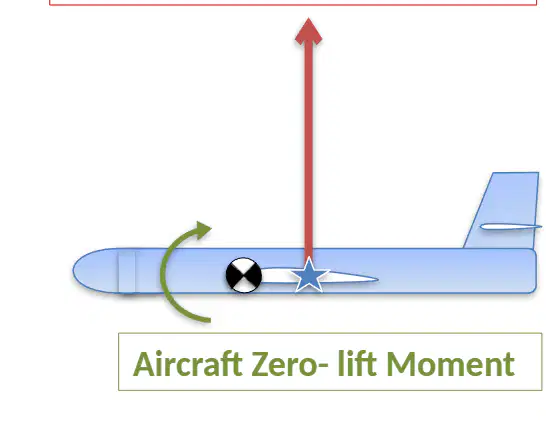
What does the star symbol in the second airplane diagram represent?
Neutral point
Engine
Wing tip
Landing gear
If the total lift of an aircraft is zero, what is the moment due to camber similar to?
The pitching moment created by the tail and wing camber
The speed of the aircraft
The color of the aircraft
The number of seats
What does the analytical explanation help with?
It is more convenient to the maths
It is easier to understand
It is only about the tail
It ignores the main wing
What do we ignore during a perturbation according to the simplification?
Any extra production of lift from the tail
The main wing
The centre of gravity
The neutral point
Where is all the aircraft CL produced according to the simplification?
By the main wing
By the tail
By the centre of gravity
By the neutral point
What is the neutral point also called?
Aerodynamic centre
Centre of gravity
Main wing
Tail
What does the neutral point represent?
The locus of the lift due to angle of attack
The centre of gravity
The tail of the aircraft
The main wing
What happens when there is a positive change in angle of attack (AoA)?
Lift force increases, restoring moment
Lift force decreases, restoring moment
The tail produces more lift
The centre of gravity moves

What happens when there is a negative change in angle of attack (AoA)?
Lift force decreases, restoring moment
Lift force increases, restoring moment
The main wing disappears
The neutral point moves
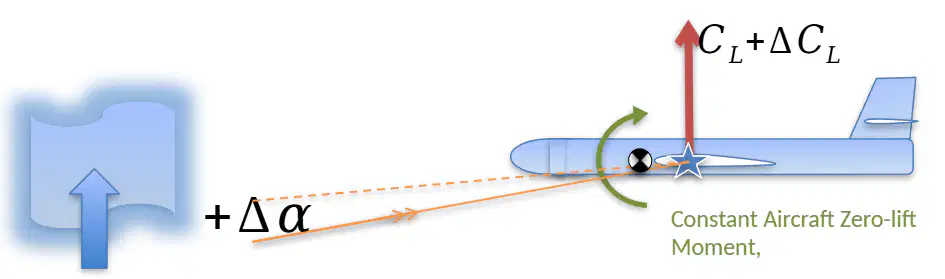
What happens when a stable aircraft encounters rising air?
The aircraft increases its angle of attack (AoA).
The aircraft stops moving.
The aircraft decreases its angle of attack (AoA).
The aircraft flies upside down.
What is produced when a stable aircraft encounters either rising or descending air?
Restoring moment
Loud noise
Engine failure
Lightning
If a stable aircraft encounters descending air, what happens to its angle of attack (AoA)?
The angle of attack decreases.
The angle of attack increases.
The angle of attack stays the same.
The aircraft lands immediately.
Why does a stable aircraft return to its original angle of attack after encountering rising or descending air?
Because a restoring moment is produced.
Because the pilot turns off the engine.
Because the wings fall off.
Because it runs out of fuel.
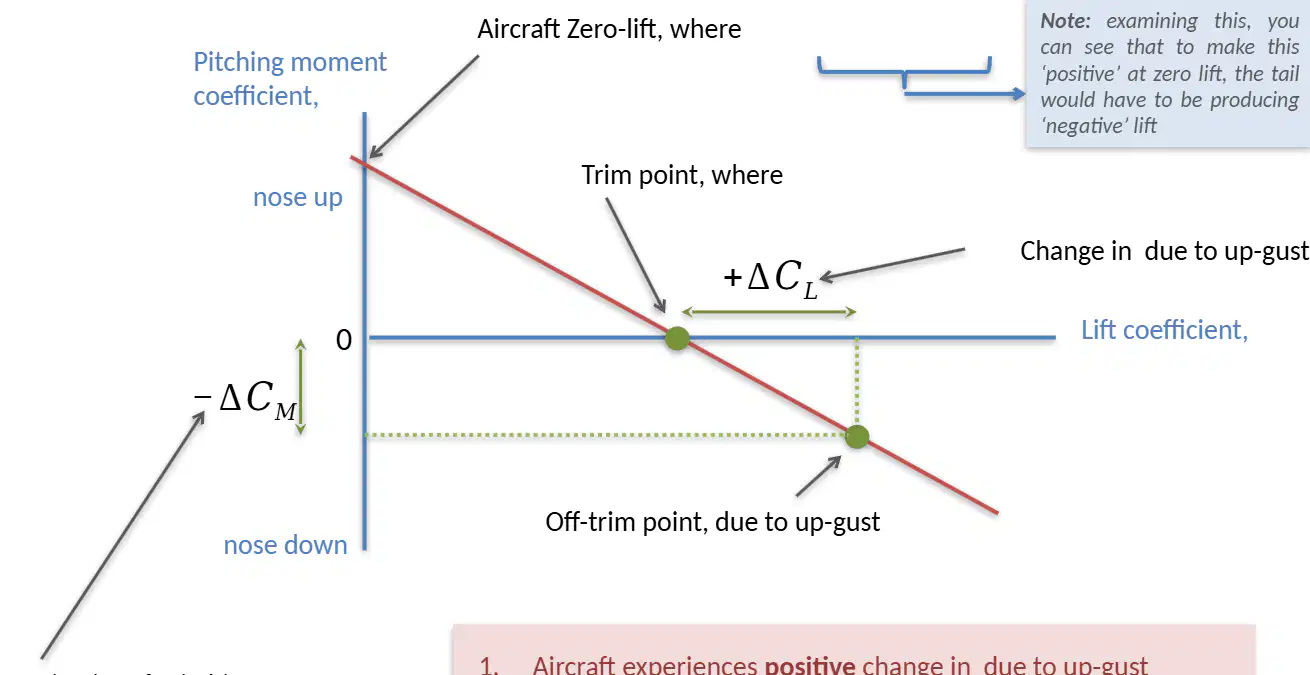
What happens to the aircraft when there is an up-gust?
The aircraft experiences a positive change in lift coefficient.
The aircraft experiences a negative change in lift coefficient.
The aircraft does not change at all.
The aircraft stops moving.
What does a negative change in pitching moment coefficient cause in the aircraft?
Nose-up moment
Nose-down moment
The aircraft flies faster
The aircraft lands
What does the subsequent motion do after an up-gust affects the aircraft?
Makes the aircraft fly higher
Restores the aircraft to original
Makes the aircraft turn left
Stops the aircraft
If the tail of the aircraft is producing 'negative' lift at zero lift, what does this help to achieve?
Makes the aircraft go faster
Makes the aircraft stable
Makes the aircraft heavier
Makes the aircraft land
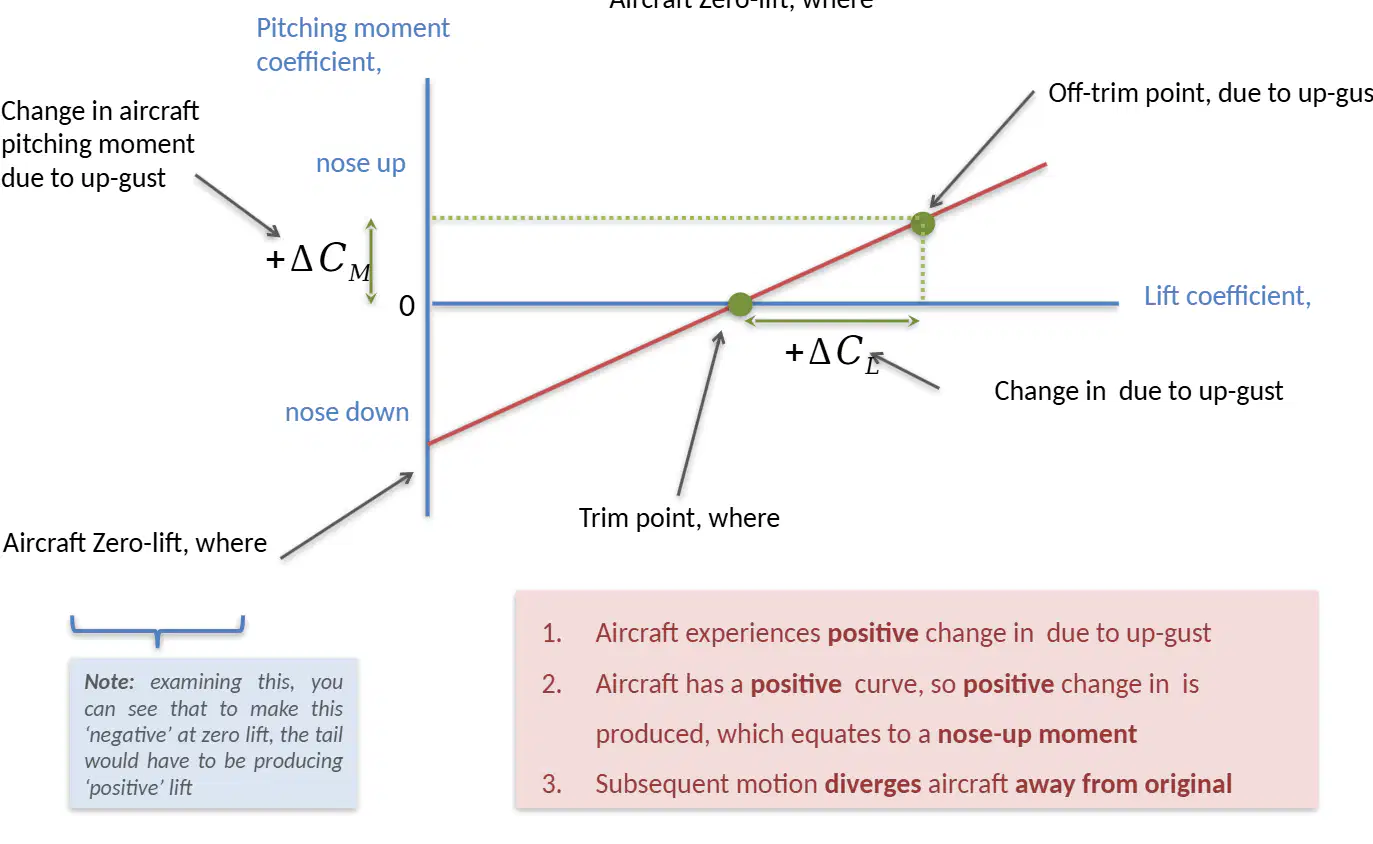
What happens to the aircraft's nose when there is a positive change in pitching moment due to an up-gust?
The nose goes up
The nose goes down
The wings fall off
The aircraft stops moving
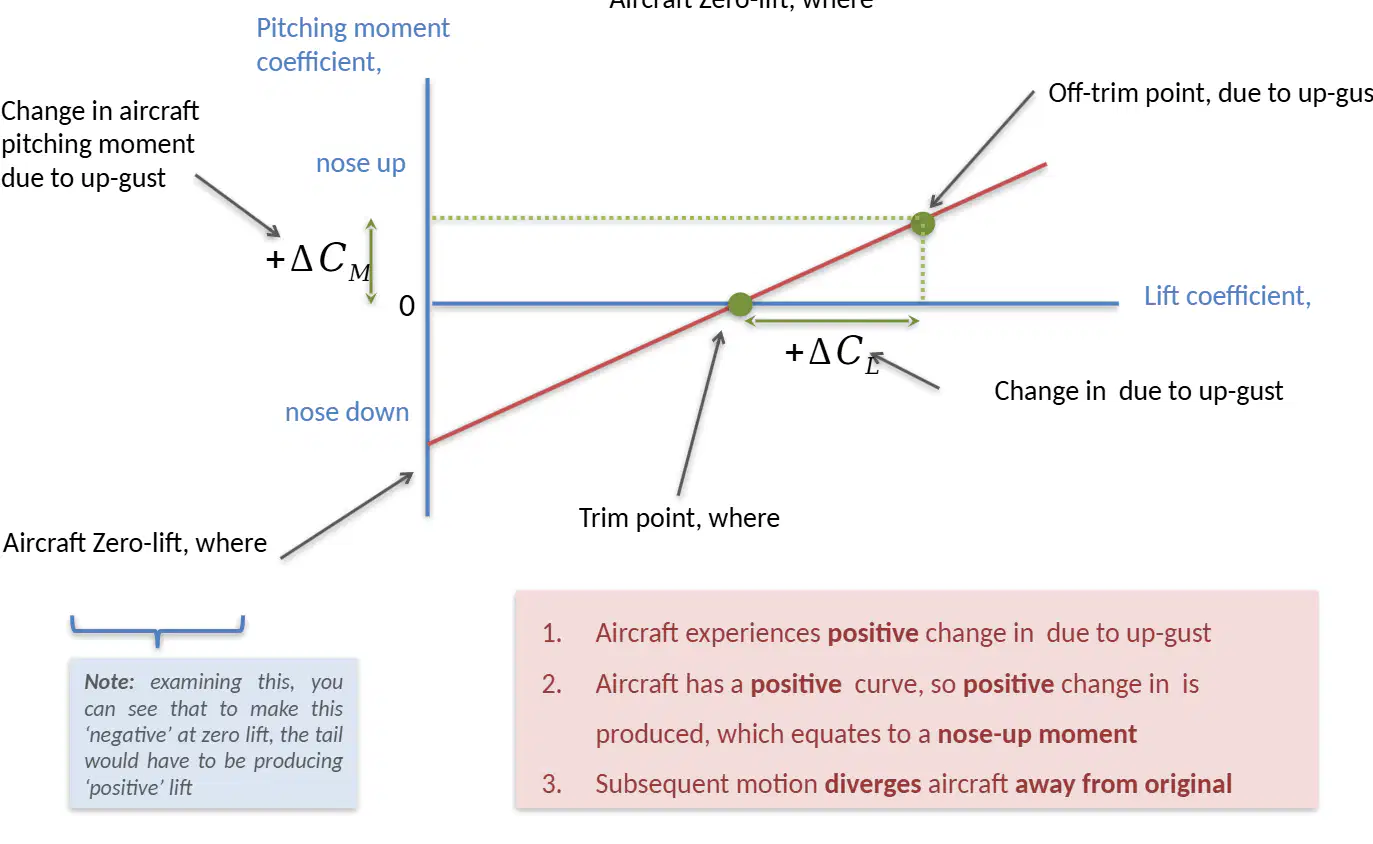
What does a positive change in the lift coefficient due to an up-gust cause in an unstable aircraft?
A nose-up moment
A nose-down moment
The aircraft slows down
The aircraft lands

According to the diagram, what happens to the motion of an unstable aircraft after an up-gust?
The motion diverges away from the original position
The motion returns to the original position
The aircraft stops in the air
The aircraft flies in circles

If the tail of the aircraft is producing positive lift at zero lift, what does this mean for the pitching moment at zero lift?
The pitching moment would be negative
The pitching moment would be zero
The pitching moment would be positive
The aircraft would not fly

