
 Worksheets
FINAL EXAM REVIEW PART 2
Total questions: 50
Worksheet time: 36mins
Name
Class
Date
1.
Which of the following atoms is most likely to bond with another atom?
a)
b)
c)
d)
2.
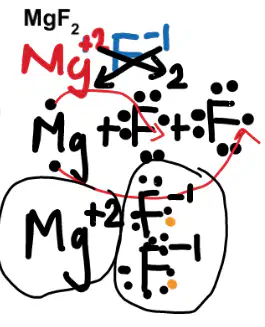
In this ionic bonding diagram, which element is the cation?
a)
Magnesium because it gains two electrons
b)
Magnesium because it loses two electrons
c)
Fluorine because it gains one electron
d)
Fluorine because it loses one electron
3.

Which of the following correctly shows the bonding of the following molecule?
a)
b)
c)
d)
4.

Which of the following correctly shows the bonding of the following molecule?
a)
b)
c)
d)
5.

What is wrong with the bonding diagram?
a)
Hydrogen needs more electrons
b)
Sulfur needs a double bond to both hydrogens
c)
Sulfur needs another pair of lone electrons
d)
Hydrogen needs another atom
6.
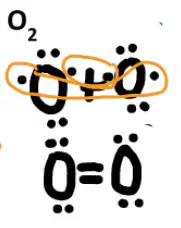
Why does this diagram of the diatomic molecule of Oxygen need a double bond?
a)
It needs to transfer two electrons
b)
It needs to share two protons
c)
It needs to share two pairs of electrons
d)
It needs to lose two electrons
7.

Which of the following is the correct name for N2O5?
a)
Nitrogen Oxide
b)
Nitrous Oxide
c)
Dinitrogen Pentoxide
d)
Nitrite oxide
8.
What is the correct formula for the compound sulfur hexafluoride?
a)
b)
c)
d)
9.
An extremely strong base would have a pH of:
a)
1 pH
b)
5 pH
c)
7 pH
d)
10 pH
10.
Healthy environments for life have pH closest to distilled , pure water which is :
a)
1 pH
b)
5 pH
c)
7 pH
d)
10 pH
11.
Which of the following correctly describe an acid?(There are more than 1!)
a)
Reacts with metals
b)
Tastes sour
c)
pH of 0 to 7
d)
Feels slippery
12.
Which of the following is the correct formula for hydrochloric acid?
a)
HClO3
b)
HCl
c)
HClO2
d)
ClOH
13.
Which of the following correctly describe a base? (There is ONLY one answer!)
a)
Reacts with metals
b)
Tastes sour
c)
pH of 0 to 7
d)
Feels slippery
14.
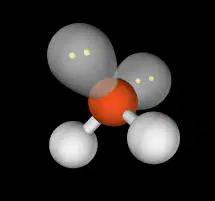
What is responsible for the bent shape of the water molecule?
a)
Lone pair electrons
b)
Single bond
c)
Double bond
d)
Triple bond
15.

What is responsible for the pyramidal shape of the following molecule?
a)
Lone pair electrons
b)
Single bond
c)
Double bond
d)
Central atom
16.

Which of the following shows the correct relationship between a mole of carbon and its number of particles and mass?
a)
1 mole = 100 g = 12 particles = 50 L
b)
1 mole =12.01 g =. 6.02x10^23 particles = 22.4 L
c)
1 mole = 12..01 g = 12 particles = 1 L
d)
1 mole = 1200 g = 6.02 particles = 22.4 L
17.

Which shows the correct way to calculate the formula molar mass for NaCl?
a)
Divide the atomic mass by the number of atoms then subtract the values
b)
Divide the number of atoms by a whole number
c)
Multiply the atomic mass by the number of atoms then add the values
d)
Multiply the number of atoms by a whole number
18.
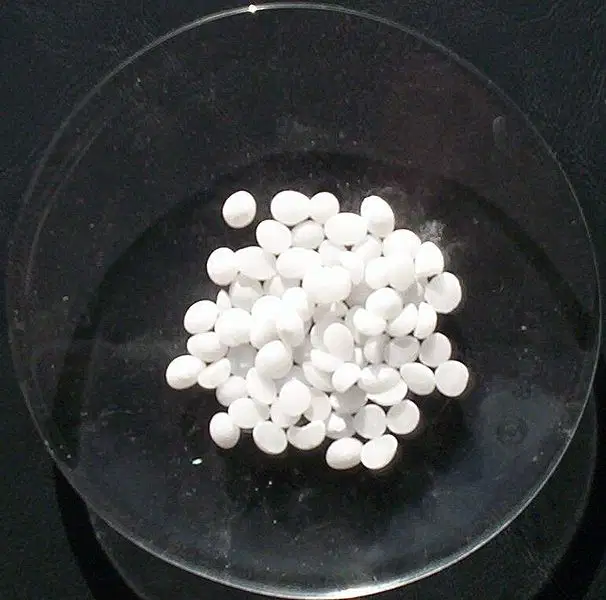
Calculate the molar mass of the formula: KOH
a)
46.11g/mol
b)
56.11g/mol
c)
66.11g/mol
d)
76.11 g/mol
19.
What do we call the strategy to organize the conversion of moles, grams, and atoms?
a)
the "box"
b)
the "fence"
c)
the "criss-cross"
d)
the "cat and onion"
20.
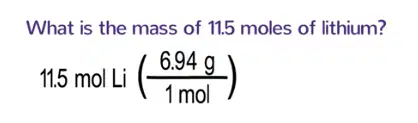
Why did the teacher put the conversion factor of g/mol like this?
a)
She wanted to cancel out the gram units
b)
She wanted to cancel out the mole units
21.

What is wrong with the set up of this conversion?
a)
The molar mass is wrong.
b)
The value for Avogadro's number is wrong.
c)
The number of grams is wrong.
d)
The units do not cancel out.
22.
How many atoms are in 2.0 g of water(H20)? (THIS IS A TWO-STEP PROBLEM, SO BE CAREFUL!! DON'T FORGET TO SHOW YOUR WORK FOR EXTRA CREDIT!)
a)
b)
c)
d)
23.
Using the solubility table, select the compound that is soluble in water?
a)
NaOH
b)
BaSO4
c)
FePO4
d)
AgBr
24.
Which of the following is insoluble in water?
a)
LiOH
b)
Fe(OH)2
c)
NaOH
d)
AgClO3
25.
Which is not a factor affecting solubility rate?
a)
Temperature
b)
Color
c)
Agitation
d)
Surface area
26.
Can a polar solvent dissolve a non polar solute?
a)
yes
b)
no
c)
sometimes
d)
only if it is water
27.
How would you dissolve a non polar solute like oil?
a)
with water
b)
with a polar solvent
c)
with a non polar solvent
d)
all of the above
28.
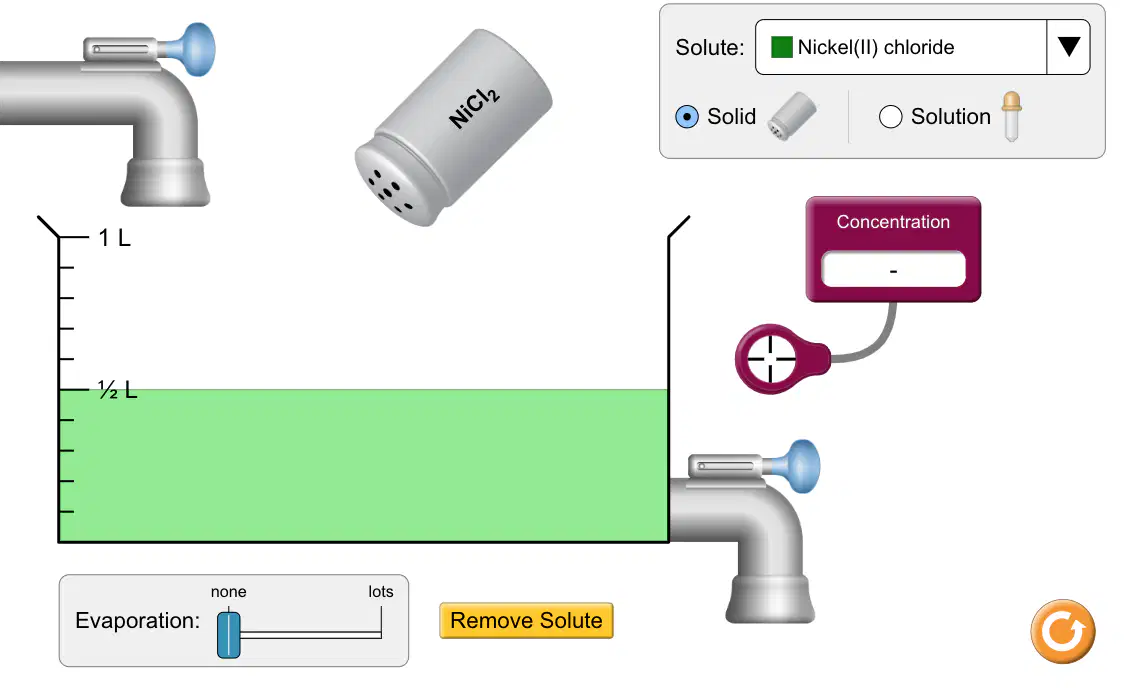
Which is the solute in this example?
a)
Water
b)
Nickel(II) chloride
c)
Faucet
d)
Concentration indicator
29.
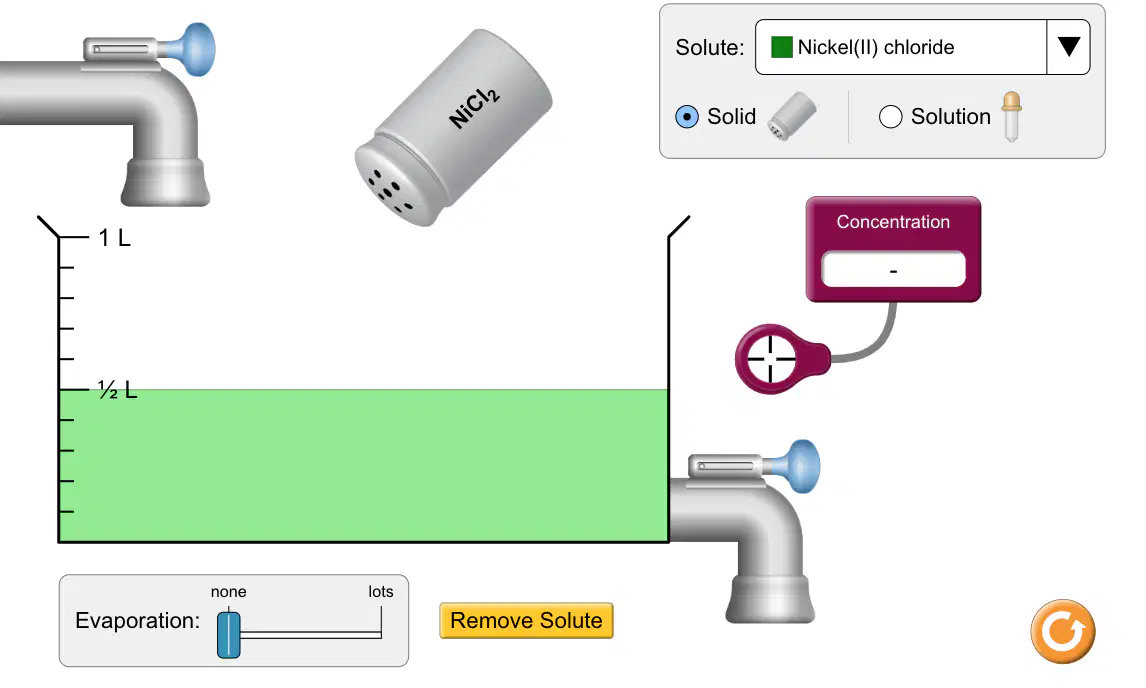
Which is the solvent in this example?(hint: It's the universal solvent that we use in Kool-aid)
a)
Water
b)
Drink mix
c)
Faucet
d)
Concentration indicator
30.

What happens to the particles of a solute if they are added to a supersaturated solution?
a)
They disappear
b)
They dissolve
c)
They drop to the bottom
d)
They stick to the sides
31.
Which one of the following actions CANNOT change the concentration (saturation) of a solution?
a)
Adding more solvent
b)
Adding more solute
c)
Pouring half the solution out
d)
Evaporating the solution
e)
32.
Calculate the molarity of a 2.0 L solution containing 12 moles of NaCl. (do all the problem-solving steps!)
a)
3.0 M
b)
4.0 M
c)
5.0 M
d)
6.0 M
33.
How many moles of NaCl are present in 4.0 L of a 5.0 M ? (do all the problem solving steps!)
a)
1.25 moles
b)
0.80 moles
c)
20. moles
d)
45 moles
34.
In a combustion reaction, what two products will always be produced?
a)
oxygen gas and water
b)
a hydrocarbon and oxygen gas
c)
carbon dioxide and water
d)
a hydrocarbon and water
35.

In the equation below, the type of reaction is a:
a)
synthesis reaction
b)
decomposition reaction
c)
single replacement reaction
d)
double replacement reaction
e)
combustion reaction
36.

In the equation below, the type of reaction is a:
a)
synthesis reaction
b)
decomposition reaction
c)
single replacement reaction
d)
double replacement reaction
e)
combustion reaction
37.
What is the Law of Conservation of Mass?
a)
States that mass CAN be created, but NOT destroyed.
b)
States that mass CANNOT be created nor destroyed.
c)
States that mass CAN be destroyed, but NOT created.
d)
States that mass CAN be created or destroyed.
38.
When balancing an equation, coefficients and subscripts can be added and removed.
a)
True
b)
False, you can only add subscripts
c)
False, you can only add coefficients
d)
False, you can change the elements
39.

Balance and identify the type of reaction:
a)
2:1:4:1 single replacement reaction
b)
2:1:2:1 combustion
c)
2:1:4:1 combustion
d)
2:1:2:1 single replacement reaction
40.
What is the first step in any stoichiometry problem?
a)
determine the mole ratio
b)
write a balanced equation
c)
determine the molar mass of the known
d)
determine the molar mass of the unknown
41.
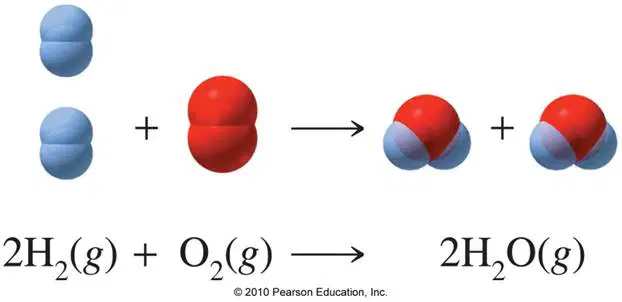
In the reaction shown, what is the mole ratio of hydrogen to oxygen?
a)
1:1
b)
2:1
c)
2:2
d)
1:2
42.

In order to make 14 grilled cheese sandwhiches, how many slices of bread would you need?
a)
28
b)
7
c)
14
d)
2
43.

Which two elements would NOT form an ionic bond?
a)
calcium and lithium
b)
calcium and oxygen
c)
lithium and oxygen
d)
calcium and carbon
44.

NaBr
a)
ionic
b)
covalent
c)
metallic
45.
What is the correct name for the compound with the formula CaCl2?
a)
Dicalcium chloride
b)
Calcium(II) chloride
c)
Calcium chloride
d)
Calcium dichloride
46.
What is the correct name for the molecular compound CO?
a)
Monocarbon monoxide
b)
Carbon dioxide
c)
Carbon monoxide
d)
Carbon oxide
47.
Which of the following correctly shows the percent composition of calcium in the compound CaCl2(calcium chloride)?
a)
26% of calcium
b)
36% of calcium
c)
46% of calcium
d)
56% of calcium
48.

How many grams of oxygen would be in would be in a bag of 1000 grams of sugar if its formula is the one shown?
a)
515 g
b)
615 g
c)
700 g
d)
800 g
49.
Which of the following is an example of an empirical formula?
a)
b)
c)
d)
50.
Which of the following could be an empirical formula?
a)
b)
c)
d)
100 %

