
 Worksheets
Gas Consumption and Measurement Quiz
Total questions: 29
Worksheet time: 15mins
What does the gas rate refer to in the context of gas consumption?
The amount of gas used in cubic meters per hour
The amount of heat generated in kilowatts
The cost of gas per cubic meter
The efficiency of gas appliances
How is the gross heat input expressed and calculated?
In kilowatt hours, by multiplying the gas rate in m³ by the calorific value and dividing by 3.6
In cubic meters, by dividing the gas rate by the calorific value
In kilowatt hours, by multiplying the gas rate in m³ by 3.6
In cubic meters, by multiplying the gas rate by the calorific value
What is the conversion factor used to convert ft³/h into m³/h?
35.3
3.6
30
10
How do you find the gas rate over an hour using a metric meter?
Multiply the difference in readings over two minutes by 30
Divide the difference in readings over two minutes by 30
Multiply the difference in readings over two minutes by 3.6
Divide the difference in readings over two minutes by 3.6
What is the formula to find the heat input when 0.84 m³/h of gas is consumed with a calorific value (CV) of 38.5?
0.84 × 38.5 ÷ 3.6
0.84 × 39.1 ÷ 3.6
0.84 × 38.5 × 3.6
0.84 ÷ 38.5 ÷ 3.6
How do you find the net heat input from the gross input?
Divide the gross input by 1.1
Multiply the gross input by 1.1
Subtract 1.1 from the gross input
Add 1.1 to the gross input
If the gross input is 9.12 kW, what is the net heat input?
8.29 kW
9.29 kW
8.98 kW
9.98 kW
What is the calorific value (CV) used for the gas rate/heat input tables?
38.6
40.0
35.0
37.5
What should be done to determine the gas rate/heat input of an appliance?
Turn off all other appliances and run the appliance for about 10 minutes
Increase the calorific value
Use a different type of gas meter
Record the reading immediately
How is the gas volume measured for meters reading in m³?
By observing the test dial for 1 ft³
By recording a reading over a two-minute period
By using a stopwatch
By calculating the calorific value
According to Graham's Law of Diffusion, how does the rate of diffusion of a gas relate to its density?
Directly proportional to the density
Inversely proportional to the square root of the density
Directly proportional to the square root of the density
Inversely proportional to the density
What does Boyle's Law state about the relationship between the pressure and volume of a gas?
Pressure is directly proportional to volume
Pressure is inversely proportional to volume
Pressure is equal to volume
Pressure and volume are unrelated
In Charles's Law, what is the relationship between the volume of a gas and its temperature?
Volume is directly proportional to temperature
Volume is inversely proportional to temperature
Volume remains constant with temperature change
Volume decreases as temperature increases
What is the significance of the temperature 273K in Charles's Law?
It is the freezing point of water
It is the boiling point of water
It is the temperature at which gas volume doubles
It is the reference point for absolute zero
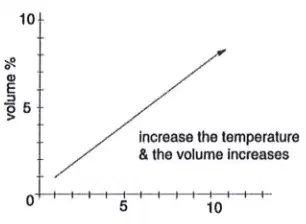
What does Charles's Law state about the relationship between volume and temperature when pressure is constant?
Volume × Temperature = Constant
Volume + Temperature = Constant
Volume - Temperature = Constant
Volume ÷ Temperature = Constant
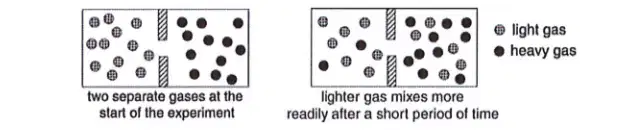
According to Graham's Law of Diffusion, which type of gas mixes more readily after a short period of time?
Heavy gas
Light gas
Both mix equally
Neither mixes
What are the two main classes of gas meters ?
Displacement and inferential
Positive and negative
Mechanical and digital
Analog and digital
How do displacement meters record the volume of gas?
By measuring the temperature
By the displacement of gas through a bellows chamber or spaces between impellers
By calculating the pressure difference
By using electronic sensors
What is the function of the valves in a positive displacement meter?
To measure the temperature of the gas
To control the passage of gas through the measuring compartments
To calculate the pressure of the gas
To convert gas flow into electrical signals
What material is the diaphragm in the U-type meter made from?
Natural rubber
Reinforced nitro-rubber
Plastic
Metal
What is the badged rating in m³/h for a U10 'U'-type meter?
6
10
25
65
Which connection type is used for a U160 'U'-type meter?
25 mm (1") threaded
32 mm (1 1/4") threaded
80 mm (3") flanged
100 mm (4") flanged
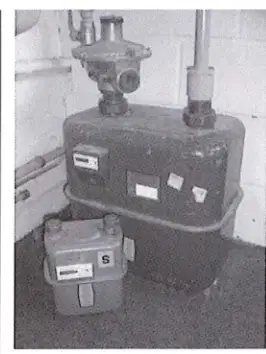
What is the badged rating in ft³/h for a U25 'U'-type meter?
1412
3530
883
2295
What is the primary function of a rotary displacement meter?
To measure gas flow by trapping it between rotating impellers.
To measure gas flow by using a turbine.
To measure gas flow by detecting temperature changes.
To measure gas flow by using a flat aluminum blade.
What is one of the key features of inferential meters?
They measure the rotation speed of a turbine.
They use flat aluminum blades.
They operate only at low pressures.
They require manual operation.
How do turbine meters record the flow of gas?
By using a magnetic coupling to an index mechanism counter.
By trapping gas between impellers.
By measuring temperature changes across a wire.
By using a flat aluminum blade.
What is the operating pressure range for turbine meters?
7 bar to 100 bar
2 bar to 50 bar
1 bar to 10 bar
5 bar to 75 bar
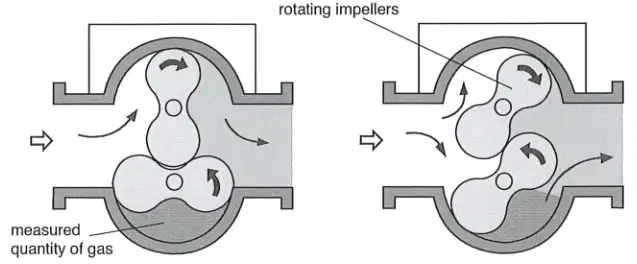
What is the primary function of a Rotary Displacement Meter?
To measure the flow of liquid
To measure the quantity of gas
To measure temperature
To measure pressure
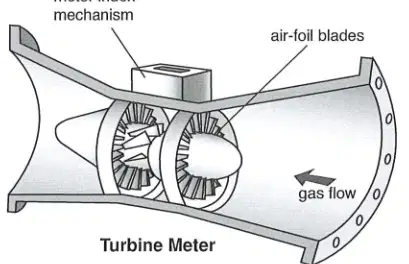
Which component is essential in a Turbine Meter for measuring gas flow?
Rotating impellers
Air-foil blades
Pressure gauge
Temperature sensor

