
 Worksheets
y3 final revision
Total questions: 96
Worksheet time: 1hrs 13mins

The above diagram shows that ____
Light is reflected
Light has speed
Light travels in a straight line

Amin conducted an investigation to investigate the nature of the light. He arranged the cardboard like the diagram above. What happens when Amin moves C cardboard to the side?
Amin can see the candle light
Amin can see the shadows
Amin couldn't see the candle light.

Based on this image, what conclusion can be drawn?
The light is invisible
Light can be reflected
Light can be refracted
Light travels in a straight line
our main source of light ...
moon
candle
lamp
sun
The above diagram shows that ____
Light is reflected
Light has speed
Light travels in a straight line
Amin conducted an investigation to investigate the nature of the light. He arranged the cardboard like the diagram above. What happens when Amin moves C cardboard to the side?
Amin can see the candle light
Amin can see the shadows
Amin couldn't see the candle light.

The bouncing back of light waves off of a surface is...
Reflection
Refraction
Light
Lens

A mirror _________ light.
absorbs
reflects
refracts

Smooth and shiny surfaces can _____________ light.
reflect
refract
absorb

Light bounces when it is
reflected
absorbed
refracted

When an object soaks in the light it _____________
absorbs
reflects
refracts

What causes shadows?
An object blocking the light source
The water cycle
An object letting the light source through
The moon
What causes a shadow to change during the day?
a. The sun's position in the sky
b. Where the moon is located during the day
c. When the sun sets

The ray that bounces off the mirror.
Angle of Reflection
Incidience Ray
Reflected Ray
Angle of Reflection
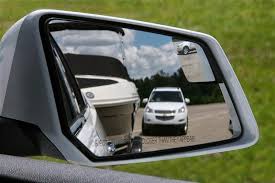
The principle of light shown is
Light can be refracted
Light travels in a straight line
Light can be reflected
Light travels in diffferent medium
Raisha wants to investigate the reflection of light. Which objects can be used to reflect light?


Which ray diagram shows a reflection of light from a flat, smooth surface?


A student wants to investigate the reflection of light. Which objects can be used to reflect light?
Clear glass
Paper
Silver Plate
Black cloth
The silver strip on the safety jacket works to reflect the light of the vehicle.
true
false

We can see because of _______________
photons
black holes
dark energy
light
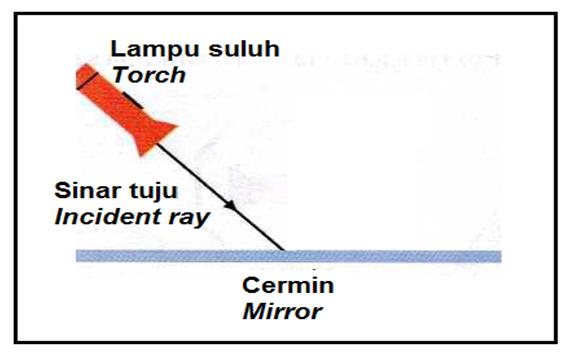
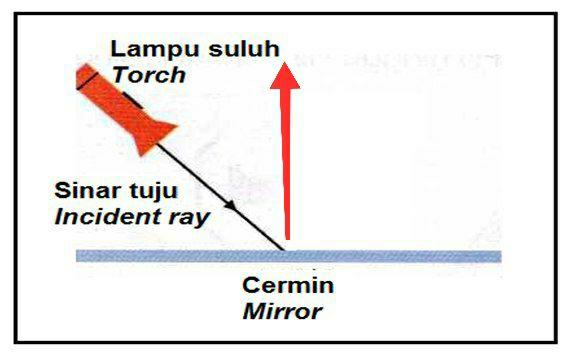
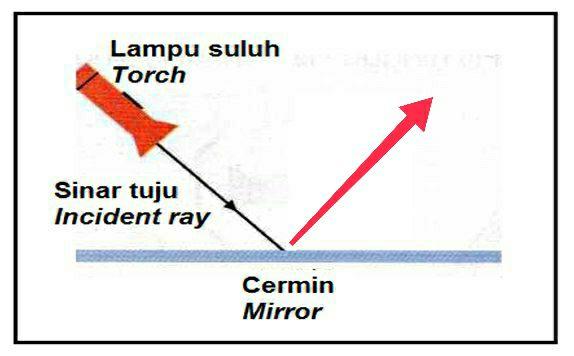
The following diagram shows the ray diagram when a torch light is torched towards a mirror. Which of the following is the correct reflected ray?
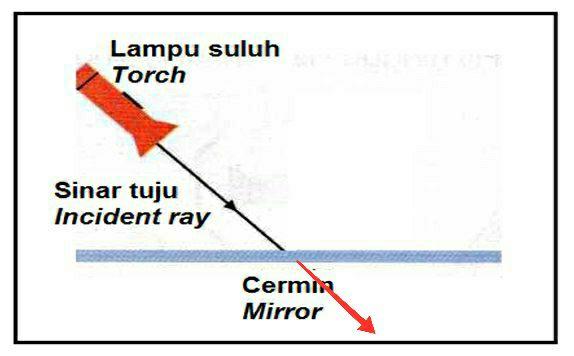
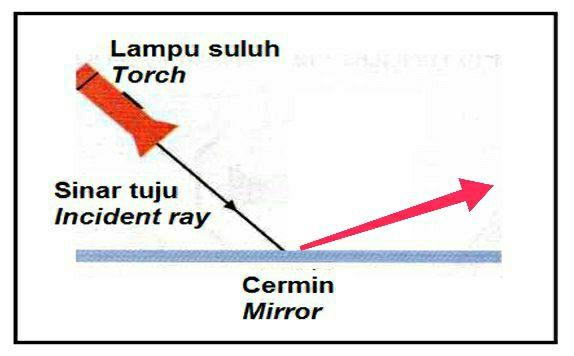

Smooth surface that reflects an image of what is in front of it.
mirror
refraction
reflection

What is a star?
A star is yellow
A star is a body of liquid.
A star is a white body made up of liquids.
A star is a body of hot gases that makes its own light and heat.

True or False. Our Sun is a star.
False
True

Which planet is closest to the sun?
Earth
Mercury
Jupiter
Saturn

What is at the center of the Solar System?
The Sun is at the center of our solar system.
The Earth is at the center of our solar system.
The planet Mars is at the center of the solar system.
The moon is at the center of the solar system.
What is 3rd planet in our Solar System?
Saturn
Earth
Mercury
Mars
What is a orbit?
A spin or a turn.
A object in space
The path a object takes around another object.
A natural satellite.
Describe of the motions of the Earth, Sun, and
moon?
The Earth is at the center of the solar system. The Sun obits the Moon.
The moon is at the center of the solar system. The Earth obits the Sun.
Mars is at the center of the solar system and the Earth orbits the Sun and moon.
The Sun is at the center of the solar system. The Earth obits the Sun and the Moon orbits Earth.

Look at the image. Determine how you would use each item to best represent a model of the Sun, Earth and Moon.
•The basketball represents the Earth.
•The baseball represents the Sun.
•The Golf ball represents the Moon.
•The basketball represents the Sun.
•The baseball represents the Earth.
•The Golf ball represents the Moon.
•The basketball represents the Moon.
•The baseball represents the Earth.
•The Golf ball represents the Sun.
•The basketball represents the Earth.
•The baseball represents the Moon.
•The Golf ball represents the Sun.
Which of the following represents the motion of the Earth, Sun, and Moon?
Earth orbits the moon.
The Sun orbits Earth.
Earth orbits the Sun.
The Sun orbits the moon.
Draw the Solar System in order starting from the Sun.

How long does it take to the Earth to complete a spin on its axis?
Mercury,Saturn
Jupiter, Uranus, Neptune
Jupiter, Neptune,
Mercury,Saturn,
Uranus
Mars,Jupiter,
Saturn,Uranus
Neptune
1. How many planets are there in our entire solar system?


Students researched the Internet to learn who discovered the planets. To their amazement, only 3 of the 8 planets had “official” discoverers because all the other planets are easily seen with the unaided human eye. For the discovery of the 3 planets, it required a good –
Camera
Microscope
Pair of binoculars
Telescope

The Earth spins on an invisible line called an ________?
Equator
Axel
Axis
Orbit

How long does it take the Earth to do one full spin on its axis?
8 hours
24 hours
6 days
365 days

When one side of the Earth faces the sun, it is _________?
Night-time
Cold
Afternoon
Day-time
When our side of the Earth rotates away from the sun, it is _________?
Night-time
Cold
Afternoon
Day-time

How long does it take for the Earth to do one full revolution of the sun?
365 days
366 days
24 days
5 years
The path that the Earth follows when completing its revolution is called an ________?
Axis
Direction
Orbit
Rotation
The Earth spins on its
rotation
equator
axis
The Moon does not make its own
reflection.
light.
The Moon _______________ the light from the Sun.
takes away
reflects
When the Sun shines on half of the Earth, that half is in ________.
day time
night time

Which shows the correct shadow.
A
B

At what time of day is the shadow shortest?
6pm
12pm
2pm
9am

When the Sun is high in the sky, shadows are ___________.
longer
shorter
no different

When the Sun is low in the sky, shadows are ________.
longer
shorter
no different

This is a sundial. What happened to the shadow
between 10am and 12pm?
It stayed the same.
It got longer.
It got shorter.

How are shadows made?
Shadows are made when ...
(a)

We can see things around us because of light reflecting off the object and into our eyes?
True
False

A boy saw a butterfly when he turned on his lamp.
Which of the following shows how the path of light enabled the boy to see the butterfly?
from lamp to butterfly to boy
from lamp to boy to butterfly
from boy to lamp to butterfly
from boy to butterfly to lamp

What time of day are shadows the smallest?
morning
night
noon
dinner time
What is our main source of light?
Sun
Moon
trees
Shadows come in different __________ and ____________
shapes
colors
sizes
Shadows can be _______________ or ______________________
long
color
short
shape
shadow is formed on the ____________ side of light source
left
front
right
opposite

Is the position of the tree's shadow correct?
Yes
No

Is the position of the tree's shadow correct?
Yes
No
What is the colour of the shadow?
red
black
green
When the sun gets higher in the sky, shadows get ______.
longer
gone
shorter
darker
When the sun gets lower in the sky, shadows get______.
longer
gone
shorter
darker
Shadows are longest during _______.
morning and evening
noon
night

Where will the tree's shadow be?
A
B
C

the imaginary line running through the earth from the north pole to the south pole
axis
equator
prime meridian
Shadows change in __________________ and direction as the day goes on.
light
north
compass
length
When the sun is overhead, it is _________________
early morning
late morning
noon
early evening
In the early morning, shadows are _______________________
longer
shorter
noon
It takes 365 days for the earth to rotate once.
true
false
What are two ways in which shadows change?
length and direction
color and size
size and depth
A year is the length of time it takes for Earth to orbit the sun ________.
twice
three times
once
eight times
Earth orbits the sun at the same time as it _________.
spins
wobbles
jumps
does a pirouette
The length of time it takes for Earth to Orbit the sun once
a year
180 days
365 days
6 months
spinning


What does it mean to CAMOUFLAGE?
when a weak animal copies a stronger animal to warn of predators
when an animal is able to change colors to survive in an enviornment
when an animal hibernates during the winter.

A scientist sees a bird while walking outside. She notices the bird has a sharp beak. What can the scientist infer about this bird?
The bird is a male bird
The bird travels long distances
The bird preys on animals for its food
The bird is very pretty
Which of these words tells us adaptations that an aquatic animal might have?
both fins and gills
a curved beak
gills
fins
What is an adaptation?
A place where a living thing lives and gets its needs.
A body part or behavior of a living thing that allows it to survive in its habitat.
When a living thing moves from one place to another.

Which adaptation helps the camel by not having sand go up its nose?
Long eyelashes
Thick fur
Nostrils that can close

Which sentence shares a detail about a polar bear’s white camouflage?
Polar bears eat fish and seals.
Polar bears will hunt for humans.
Polar bears use their white paws to HIDE their black noses in the snow.
Polar bears can smell a seal 20 miles away.

