
 Worksheets
4Q Science reviewer
Total questions: 96
Worksheet time: 32mins
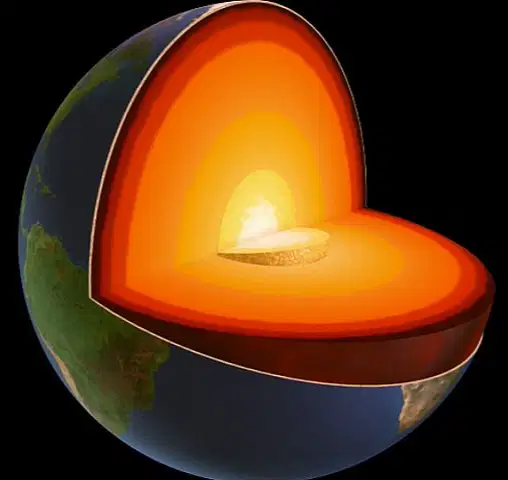
The outermost layer of the Earth is called ___, where continents and oceans lie.
crust
mantle
outer core
inner core
In what layer do we live on?
crust
mantle
outer core
inner core
This layer of the Earth is mostly made of iron.
crust
mantle
core
It is the thinnest layer of the Earth, from 8 to 65 km.
crust
mantle
core
What is the Earth's thickest layer? It is about 2,800 km.
crust
mantle
core
What is the hottest layer of the Earth? It is almost as hot as the sun's surface.
crust
mantle
core
What is the correct order of the Earth's layer?
core, mantle crust
mantle, crust, core
crust, core, mantle
crust, mantle, core
What name was given to the supercontinent that scientists think existed in the past?
Asia
Eurasia
Pangaea
Who came up with the Continental Drift Theory?
Alfred Wegener
Alexander Fleming
Charles Darwin
Soil is made up of...
air and water
dead plants and animals
weathered rocks and minerals
all of these
Which of the following is NOT a type of soil?
clay
loam
muddy
sandy
Which type of soil is best for gardening?
sandy
clay
chalky
loam
The Earth's crust is made of solid rock and soil.
When blocks of rocks in the crust slide or shake, an earthquake occurs.
Cracks formed during an earthquake are called faults.
Melted rock inside the mantle is called lava.
Magma that flows out of a crater is called lava.
What is the most common causes of Tsunamis?
Thunderstorms
floods
underwater earthquakes
landslides
What is the main cause of earthquakes?
pressure from within the Earth's crust
hurricanes
tornadoes
wind
What is lava?
it's another name for magma in the ground
water and rock
when magma escapes the Earth and it comes out of the ground
it's another name for sand
A seismologist is a scientist who studies earthquakes.
Earthquakes move in waves called seismic waves.


A seismograph is an instrument that identifies the strength and point of origin of an earthquake.

seimograph

Small ocean waves that damage shorelines and fishing villages are called tsunamis.
seimograph
Broken-down rocks, air, water, and organic matter make up the soil.
seimograph
This is caused by large earthquakes below or near the ocean floor, but they can also be caused by landslide, volcanic activity or certain types of weather.
earthquake
tsunami
volcanic eruption
The trembling or shaking of the ground caused by the sudden release of energy stored in the rocks beneath the earth's surface.
volcanic eruption
earthquake
landslide
The slow process of breaking down rocks into smaller pieces
Weather
Deposition
Erosion
Weathering
The movement of weathered rock, sometimes caused by moving water or wind
Weathering
Erosion
Landform
Magma
Which of these events do NOT cause a rapid change to Earth's surface?
landslides
earthquakes
volcanoes
weathering and erosion
Humus is decayed material such as remains of plants and animals that were once alive.


Soil that is loose and is easy to dig is loam soil.
Loam soil is a combination of sand, humus, and clay.

Which soil has small grains, holds lots of water, and is very sticky when wet?
clay
sand
silt
dirt
Jonathan has a rock collection. The rocks all look different. What is one way that all rocks are alike?
All rocks are the same size.
All rocks are shiny.
All rocks are the same shape.
All rocks are nonliving objects.
Frank wants to grow some bean seeds in a flowerpot. Which soil should Frank put in the pot?
soil with a lot of clay
soil with a lot of sand
soil with a lot of rocks
soil with a lot of humus
Fossils are found in which type of rock?
Sedimentary
Metamorphic
Igneous
Which rock is formed when lava cools?
Sedimentary
Igneous
Metamorphic
The three types of rocks are...
sedimentary, metamorphic and metatonic
igneous, sedimentary and hard
igneous, sedimentary and metamorphic
chalky, brown and smooth
How are the materials in sedimentary rocks brought together?
By wind, air, water and gravity
By humans
By boat
By plane
Igneous rocks are formed from sediments that settle on the bottom of ocean floors, get cemented, and harden.
By humans
Sedimentary rocks like limestone and sandstone are formed from magma that cools and hardens after a volcanic eruption.
By humans
Metamorphic rocks like marble and quartzite are formed because of intense heat and pressure.
By humans
A natural resource that supplies energy is fuel.
By humans
Soil provides man with food and other materials for his daily needs.


Rocks are storehouses of precious minerals that are also used and needed by man.
Materials that come from the Earth are called fossil fuels.
A diamond is a mineral that is used to produce electric wires, pots, pans, and coins.
Gas from the Earth's crust, oil, and coal are specifically called fossil fuels.
A mineral used for making expensive jewelry pieces, drilling holes, and cutting hard materials is ____.
copper
lead
diamond
Batteries and some kinds of pipes are made of ___.
copper
lead
silver
soil
Atmosphere is the gaseous portion of the earth.
The Earth's natural source of heat and light is the moon.
Scientists who study weather are called cosmetologists.
Factors that affect weather include different air temperatures caused by heat, wind, air pressure, and moisture.
anemometer
What does an anemometer measure?
air pressure
humidity
wind direction
wind speed
What is the science that deals with the study of weather?
weatherology
meteorology
climatology
It is the amount of moisture present in the air.
humidity
clouds
air pressure
Made up of tiny droplets of water suspended in the air
clouds
air
humidity
Puffy white clouds that look like cottons in the sky.
nimbus
cumulus
cirrus
Solid or liquid form of moisture that falls from the atmosphere.
clouds
wind
precipitation

8. These are the highest clouds in the sky. They look white, thin and wispy. They usually mean good weather.
Cumulus
Stratus
Cirrus
10. What type of clouds are called "fair weather clouds" and look like floating cotton?
Stratus
Cumulus
Cirrus
13. These clouds are the closest to the ground. Their name means layer- or sheet like. They bring light & continuous rain or snow and cover most of the sky.
Cirrus
Stratus
Cumulonimbus
Cumulus
The time it takes the Earth to make a complete rotation on its axis is -
one year
one month
one week
one day
The time it takes the Earth to completely revolve around is
one year
one month
one week
one day
The sun is a star made of very hot gases.
The earth's rotation explains why we have sunrise and sunset.
Which is the “Twin planet” of the Earth?


How many planets do we have since 2006?
7
8
9
10
The only planet where humans, plants and animals can survive?


The largest planet in the solar system


The galaxy in which we live in is the
Andromeda
Milky Way
Messier
Sombrero
Which planet is called the evening/morning star?
Jupiter
Venus
Mars
Saturn
Mercury,Saturn
Jupiter, Uranus, Neptune
Jupiter, Neptune,
Mercury,Saturn,
Uranus
Mars,Jupiter,
Saturn,Uranus
Neptune

A meteor that does not burn up but lands on the earth is called a meteorite.


A shooting star is called a comet.
Thousands of asteroids are found between Mars and Jupiter in what we call as Iy Mudball.
Halley's comet, a heavenly body with a head and a tail, is seen every 76 years.
Asteroids, also known as minor planets, are solid blocks or chunks of rocks or metal that have various sizes.

