
 Worksheets
Summative Questions
Total questions: 95
Worksheet time: 1hrs 21mins


all of the living and nonliving things in a place that interact with each other
Which of the following is not a type of ecosystem?
table
ocean
desert
rainforest

Which of the following types of ecosystems would be the best one for a frog?
ocean
mountain
pond
desert
Interact means to _________________.
act together
grow
build a home
hide

Yoanna travelled to Yellowstone National Park. She found an eagle, grey wolf, and bison? Which region would it be?
grasslands
desert
rainforest
ocean

Malek observes all the populations that live in the same place. They make up a /an ______________.
community
ecosystem
habitat
ocean

What is a population?
A community of organisms and the environment in which they live.
All the organisms of the same kind that live together in an ecosystem.
The place where an organism lives and can find everything it needs to survive.
The things both living and non living that surround a living thing.

Habiba observes desert ecosystem. Why do very few plants grow in the desert?
the soil is dry and it does not rain much there
there is not enough animals
there is too much rainfall
Three things that can be found in an ocean ecosystem are:
deer, frogs and trees
sand, coral reef and fish
sharks, coral reef and flowers
snakes, trees and coral
Salt water makes up most of:
The Earth
The Moon
Mars
Hurghada

Which animal can be found in a desert ecosystem?
fish
deer
kangaroo rat
panda
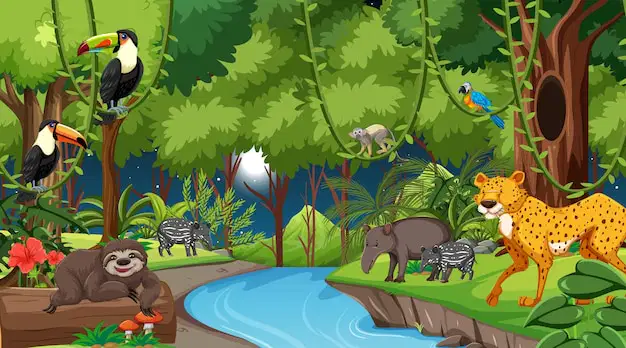
Helen draws two animals that could be found in a rainforest. They are:
zebra and lion
toucan and leopard
clown fish and shark
polar bear and seal
All of these can be sources of freshwater ecosystem EXCEPT -
rivers
oceans
lakes
ponds

If you were a shark, in which ecosystem would you live in?
river ecosystem
saltwater ecosystem
rainforest ecosystem
mountain ecosystem
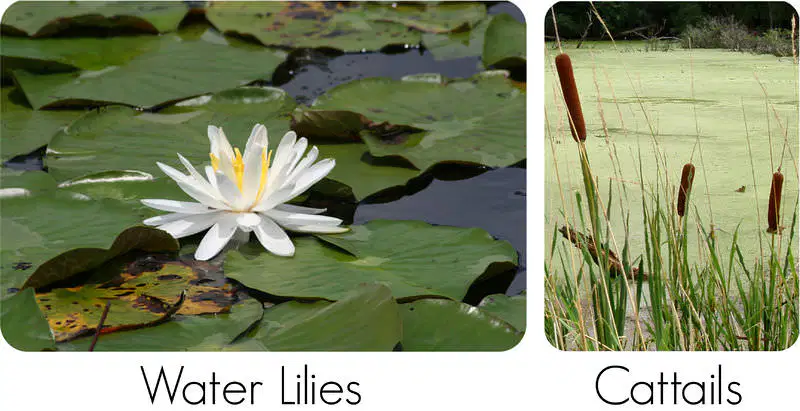
Cattails and water lilies live near or on this freshwater ecosystem.
pond
ocean
river
desert
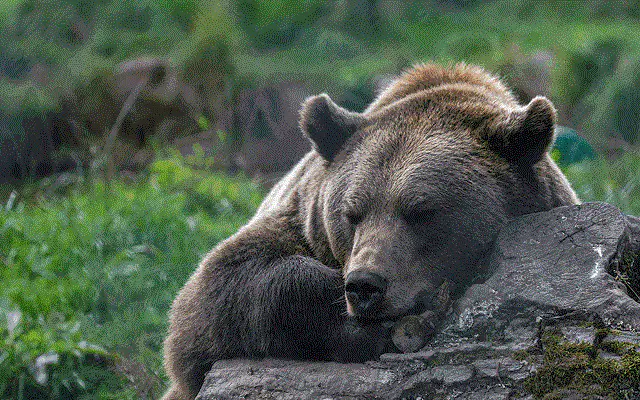
The place in a forest where a bear lives is called its .....
population
community
adaptation
habitat
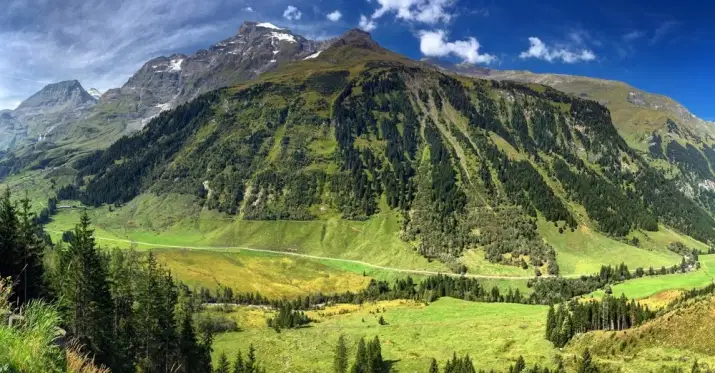
Identify ecosystem:
ocean
mountain
desert
river
all of the living and nonliving things in a place that interact with each other
Which of the following is not a type of ecosystem?
table
ocean
desert
rainforest
Which of the following types of ecosystems would be the best one for a frog?
ocean
mountain
pond
desert
Interact means to _________________.
act together
grow
build a home
hide
Yoanna travelled to Yellowstone National Park. She found an eagle, grey wolf, and bison? Which region would it be?
grasslands
desert
rainforest
ocean
Malek observes all the populations that live in the same place. They make up a /an ______________.
community
ecosystem
habitat
ocean
What is a population?
A community of organisms and the environment in which they live.
All the organisms of the same kind that live together in an ecosystem.
The place where an organism lives and can find everything it needs to survive.
The things both living and non living that surround a living thing.
Habiba observes desert ecosystem. Why do very few plants grow in the desert?
the soil is dry and it does not rain much there
there is not enough animals
there is too much rainfall
Three things that can be found in an ocean ecosystem are:
deer, frogs and trees
sand, coral reef and fish
sharks, coral reef and flowers
snakes, trees and coral
Salt water makes up most of:
The Earth
The Moon
Mars
Hurghada
Which animal can be found in a desert ecosystem?
fish
deer
kangaroo rat
panda
Helen draws two animals that could be found in a rainforest. They are:
zebra and lion
toucan and leopard
clown fish and shark
polar bear and seal
All of these can be sources of freshwater ecosystem EXCEPT -
rivers
oceans
lakes
ponds
If you were a shark, in which ecosystem would you live in?
river ecosystem
saltwater ecosystem
rainforest ecosystem
mountain ecosystem
Cattails and water lilies live near or on this freshwater ecosystem.
pond
ocean
river
desert
The place in a forest where a bear lives is called its .....
population
community
adaptation
habitat
Identify ecosystem:
ocean
mountain
desert
river
all of the living and nonliving things in a place that interact with each other

________can be caused by a natural event like lightning, and also by people.
Floods
Forest Fires
Droughts

Which is one negative effect of fires?
Fires clear space for new plants growth
Pinecones open to let their seeds out
Fires destroy trees and other plants as well as animal habitats

Is when small pieces of rock are carried away by water and sometimes by wind.
flood
erosion
drought

It occurs when it does not rain for a long time. It forces people and animals to look for new places to live.
fires
flood
drought

How do beavers change the environment?
they build mounds
they release poison
they build dams
Plants change the environment by __________________
taking space in an area making it harder for other plants to survive
needing water
going through photosyntesis
Is a large amount of water that covers normally dry land:
flood
fire
erosion

It causes rivers to rise higher and higher:
erosion
drought
flood
They caus flame, heat, smoke, and ash, as a result they can change ecosystems:
erosion
fire
flood

How do termites change ecosystems?
building dams
releasing poison
building mounds

One positive effect of _________ is that some pinecones only open after being heated.
fires
erosion
drought

Where there is not enough rain, _____________ can hurt crops.
drought
flood
erosion

A change in the environment can cause an animal to lose its ________________
color
habitat
adaptation
Shorelines and beaches are worn away by: _________
flood
fire
erosion
plants and animals are made sick by: ______
air
rain
disease


What do plants need to make their own food?
Sun, Water, and Animals
Sun, Oxygen, and Soil
Sun, Water, and carbon dioxide
A food chain is:
an animal that eats only plants.
a diagram that shows how energy moves from one organism to another. (Grass>Rabbit>Hawk)
An animal that is hunted and eaten by another animal.


Perla and Adam observe bacteria under microscope. Bacteria is an example of a
producer
consumer
decomposer


Talia saw a turtle in the sea. She knows this is an omnivore. What do omnivores eat?
only plants
plants and animals
only other animals
dead organisms

How animals and plants are alike (the same)?
Both don't need energy to grow.
Both need energy to grow.
Both are consumers.
3. What does a plant release into the air after photosynthesis?
Carbon dioxide
Sugar
Oxygen
Energy
The process that plants use to make their own food called sugar is called_______________________ .
Metamorphosis
Camouflage
decomposing
photosynthesis
What are three things do plants need to make their own food called sugar?
Sunlight, water and carbon dioxide.
Water, soil, and sunlight.
Water, soil, and oxygen.
Sunlight, love and, family.

Animals that hunt other animals for food are called ____________.
Prey
Predators
What is prey?
An animal that is hunted and eaten by another animal.
An animal that hunts and eats other animals.
Plants play an important part in communities of living things. What is the role of plants?
They are producers.
B. They are herbivores.
C. They are carnivores.
D. They are consumers.
Some living things, such as rabbits, eat only plants. What is the name for living things that eat only plants?
A. carnivores
B. consumers
C. herbivores
D. producers
Some living things, such as rabbits, eat only plants. What is the name for living things that eat only plants?
A. carnivores
B. consumers
C. herbivores
D. producers
In a food chain, there are producers, consumers, and decomposers. What is the role of a producer in a food chain?
A. to eat plants
B. to make food
C. to eat other living things
D. to break down dead things

A food chain, like this one, shows how energy moves between living things.
Which living thing best completes the partial food chain above?
bird
B. plant
C. carnivore
D. herbivore
A food chain shows how living things depend on other living things for energy. Which of the following correctly shows how energy moves through a food chain?
A. grass --> oak tree --> human
B. grass --> chicken --> human
C. human --> chicken --> grass
D. chicken --> grass --> human

The food chain shown below is missing a living thing.
What kind of living thing should go in the missing space to complete the food chain?
A. a producer
B. a carnivore
C. an herbivore
D. a vegetable, such as carrots
Cows are consumers. They eat grass, grains, and hay. What do they get from their
food?
A. energy
B. milk
C. sunlight
D. water
A food chain shows the flow of energy among living things. What is the original source of the energy in most living things?
A. oxygen
B. sugar
C. sunlight
D. water

What is a mountain?
a very high piece of land
an area of flat land
low land between mountains or hills
land that borders the sea or ocean

What is a valley?
a very high piece of land
land that has water all around it
an area of flat land
low land between mountains or hills

What is a plain?
land that borders the sea or ocean
low land between mountains or hills
an area of flat land
land with water touching 3 sides

A ___________________ is an area of land that is much higher than the land surrounding it. It is taller than a hill.
valley
rainbow
mountain
plain

A _____________ is a rounded area of land. It is lower than a mountain.
lake
ocean
valley
hill
A _____________ is a rounded area of land. It is lower than a mountain.
lake
ocean
valley
hill

A _____________ is low land between two mountains or hills.
plateau
valley
plain
cliff

A ________________ is a deep narrow valley with steep sides. It often has a stream or river flowing through it.
lake
canyon
mountain
hill

A ______________ is a large flat area of land without trees. (Like Kansas!)
mountain
river
lake
plain

A ____________________ is a large, flat area of land that is higher than the land around it.
plateau
hill
ocean
plain

