
 Worksheets
Sophomore Final Review 25
Total questions: 100
Worksheet time: 2hrs 40mins
Define sonorous:
Silent and mute
High-pitched and sharp
Rich and deep in sound
Quick and brief
Define contentious:
Peaceful and harmonious
Likely to cause disagreement
Easily satisfied
Quietly content
Define assiduous:
Lazy and unmotivated
Showing great care and perseverance
Randomly scattered
Quickly finished
Define limpid:
Cloudy and opaque
Dark and mysterious
Crystal clear and transparent
Thick and heavy
Define emaciated:
Well-nourished
Athletically built
Moderately thin
Abnormally thin and weak
Define ardent:
Passionate and enthusiastic
Cold and distant
Mildly interested
Completely neutral
Define sophomoric:
Wise and mature
Overconfident and immature
Professionally skilled
Naturally talented
Define compatible:
A. Opposing in nature
B. Able to exist harmoniously
C. Completely identical
D. Mutually exclusive
Define condolence:
Celebration of success
Expression of sympathy
Sign of anger
Show of strength
Define parsimonious:
Extremely generous
Moderately spending
Unwilling to spend money
Financially unstable
Define animosity:
Strong hostility
Deep friendship
Mild dislike
Casual acquaintance
Define vociferous:
Quietly spoken
Loudly outspoken
Carefully considered
Gently whispered
Define renegade:
Loyal follower
Temporary visitor
Person who rebels
Casual observer
Define somber:
Bright and cheerful
Dark and gloomy
Wildly exciting
Mildly amusing
Define commodious:
Cramped and tight
Roomy and spacious
Beautifully decorated
Poorly designed
Define venal:
Honest and trustworthy
Capable of being bribed
Naturally talented
Physically strong
Define ominous:
Suggesting good fortune
Neutral in meaning
Threatening or worrying
Clearly defined
Define pinnacle:
Lowest point
Middle section
Side portion
Highest point
Define garrulous:
Excessively talkative
Quietly reserved
Physically strong
Mentally focused
Define retribution:
Forgiveness for wrongdoing
Punishment for wrongdoing
Financial compensation
Personal growth
The words extant, reprehensible, squalid, and turbulent are examples of what part of speech?
Nouns
Verb
Adjectives
Adverbs
The words animosity, quandary, reprisal, and condolence are examples of what part of speech?
Nouns
Verb
Adjectives
Adverbs
The words chastise, deviate, allocate, and exult are examples of what part of speech?
Nouns
Verb
Adjectives
Adverbs
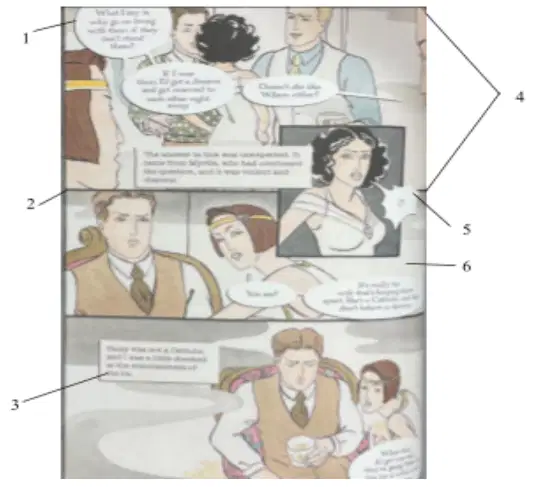
Line one is pointing to a:
Gutter
Panel
Thought Bubble
Speech Bubble
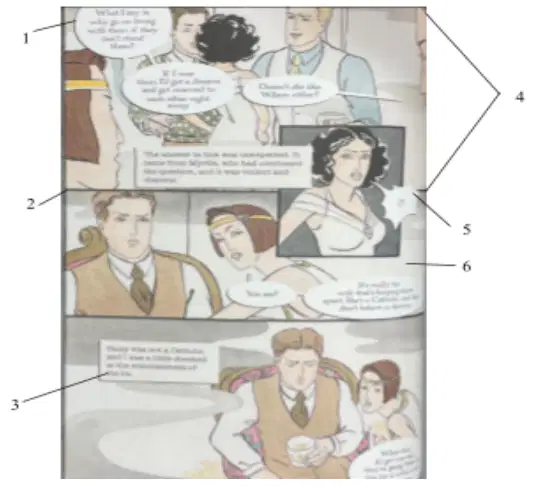
Line two is pointing to a:
Gutter
Thought Bubble
Panel
Speech Bubble
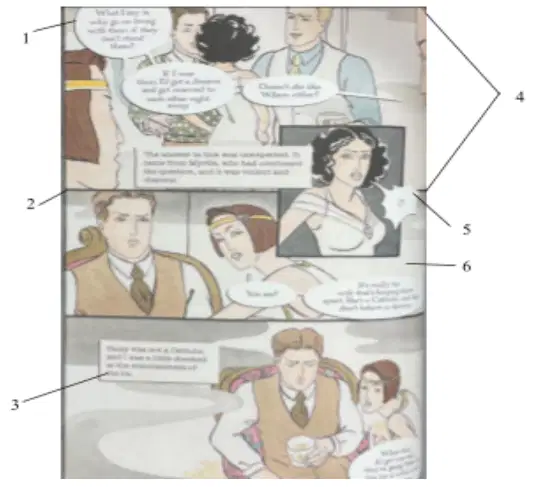
Line three is pointing to a:
Gutter
Panel
Caption
Speech Bubble

Line four is pointing to a:
a. Tier
b. Thought Bubble
c. Gutter
d. Sound Effect

Line five is pointing to a:
Tier
Caption
Speech Bubble
Sound Effect

Line six is pointing to a:
Gutter
Thought Bubble
Panel
Speech Bubble
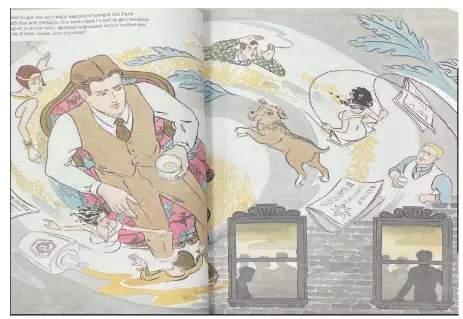
This page from a graphic novel is an example of:
A spread
A Panel
A Tier
A Caption
An editor of a graphic novel is:
They create the text in the story, including choosing text size, typeface, or font, and creating calligraphy. They are responsible for sound effects, titles, and speech balloons.
They are responsible for reviewing the story and offering helpful criticism or catching mistakes before the comic or graphic novel goes to print.
They come in after all the images for the comic are completed. They fill in the black-and-white lines with color.
They are responsible for the visual components of the graphic novel. They illustrate a character’s expression or details in the background to help tell the story.
An artist of a graphic novel is:
They create the text in the story, including choosing text size, typeface, or font, and creating calligraphy. They are responsible for sound effects, titles, and speech balloons.
They are responsible for reviewing the story and offering helpful criticism or catching mistakes before the comic or graphic novel goes to print.
They come in after all the images for the comic are completed. They fill in the black-and-white lines with color.
They are responsible for the visual components of the graphic novel. They illustrate a character’s expression or details in the background to help tell the story.
A letterer of a graphic novel is:
They create the text in the story, including choosing text size, typeface, or font, and creating calligraphy. They are responsible for sound effects, titles, and speech balloons.
They are responsible for reviewing the story and offering helpful criticism or catching mistakes before the comic or graphic novel goes to print.
They come in after all the images for the comic are completed. They fill in the black-and-white lines with color.
They are responsible for the visual components of the graphic novel. They illustrate a character’s expression or details in the background to help tell the story.
A colorist of a graphic novel is:
They create the text in the story, including choosing text size, typeface, or font, and creating calligraphy. They are responsible for sound effects, titles, and speech balloons.
They are responsible for reviewing the story and offering helpful criticism or catching mistakes before the comic or graphic novel goes to print.
They come in after all the images for the comic are completed. They fill in the black-and-white lines with color.
They are responsible for the visual components of the graphic novel. They illustrate a character’s expression or details in the background to help tell the story.
What is the exposition?
The most exciting part of the story is where everything changes
The background information about characters, setting, and conflict
The events that happen after the main conflict are resolved
The final message or theme of the story
What is the rising action?
The ending of the story, where everything wraps up
The part of the story where tension builds and problems develop
The introduction of the characters and setting
The moment when the story’s main conflict is solved
What is the climax?
The turning point or most intense moment of the story
The slow part of the story, where nothing happens
The beginning of the conflict
The explanation of how the conflict started
What is the falling action?
The introduction to the setting and characters
The build-up of problems in the story
The events that happen after the climax, leading to the resolution
The central problem in the story
What is the resolution?
The ending of the story, where everything wraps up
The part of the story where tension builds and problems develop
The introduction of the characters and setting
The moment when the story’s main conflict is solved
What is the main reason Esperanza is unhappy with the house on Mango Street?
It is too far from school.
It is not the big, beautiful house her parents had promised.
It is haunted
It is in a different country than she expected
Which best describes the structure of The House on Mango Street?
A single, continuous plot
A collection of unrelated short stories
A series of vignettes told from a young girl’s perspective
A traditional novel is divided into chapters
What does Esperanza’s name mean in English and Spanish?
Hope and home
Sadness and waiting
Joy and laughter
Dream and desire
Why does Esperanza admire Marin?
Marin has a good job and studies hard.
Marin lives in a big house.
Marin talks about love, makeup, and adult life.
Marin plans to move far away
What do high-heeled shoes symbolize in the vignette where Esperanza and her friends wear them?
Wealth and power
A sudden awareness of their maturity and vulnerability
Strength and confidence
Rebellion against their parents
Why does Esperanza feel ashamed of her house when a nun visits her neighborhood?
The nun laughs at it.
The nun points and says, “You live there?”
The nun warns her about the crime
The nun wants to move in
What happens to Sally after she gets married?
She moves far away and becomes a teacher.
She lives a happy life with her husband.
She is isolated and controlled by her husband.
She opens a shoe store
What is the significance of Esperanza’s desire to have a house “all my own”?
It represents her need for independence and self-identity.
She wants to be popular.
She wants to live close to her cousins.
It’s a family tradition to build houses
Why is the monkey garden important in Esperanza’s development?
It is where she meets her best friend.
It becomes a symbol of childhood innocence lost
It’s where she writes her first poem.
It is a hidden escape from school
What do the three sisters at the wake tell Esperanza?
To forget her past and move on
That she will marry young
That she must come back for those who cannot leave
That she will be famous one day
How does Cisneros use language and style to reflect Esperanza’s age and voice?
Through long, formal sentences
By using simple, poetic language and fragmented imagery
Through rhyming couplets
By writing in the third person
Which theme is most strongly expressed through the lives of women in the novel?
Education leads to failure
Freedom comes from marriage.
Gender roles and the limitations placed on women
Women should stay silent
What does the house on Mango Street symbolize for Esperanza?
Cultural pride
Everything she desires in life
Poverty, shame, and the need to escape
A perfect family life
What do characters like Rafaela, Sally, and Minerva reveal about the experiences of women in Esperanza’s community?
They live freely without restriction
They are educated professionals.
They often feel trapped in abusive or confining relationships.
They serve as villains in Esperanza’s life
Why does Esperanza write stories, according to the novel?
To entertain her siblings
To understand her own identity and create a way out of Mango Street
To get published in magazines
To impress her teachers
Which statement best reflects Esperanza’s attitude toward her neighborhood?
A. She wants to preserve it forever.
B. She feels both connected to and trapped by it.
C. She never wants to leave it
D. She believes it is better than other places
How is the concept of names used symbolically in The House on Mango Street?
Names reflect people’s job titles
Names show Esperanza’s sense of control over someone.
Names express identity, cultural heritage, and personal conflict
Names are used randomly and without purpose
The vignette “Four Skinny Trees” is an example of figurative language that compares her to a tree.
Oxymoron
Metaphor
Personification
Alliteration
What lesson does Esperanza learn by the end of the novel?
That leaving Mango Street means abandoning her roots.
That she cannot ever leave her family
That she must escape Mango Street, but remember to return for others
That Mango Street is perfect and needs no change
Why is The House on Mango Street considered a coming-of-age story?
It follows Esperanza’s physical training for sports.
It shows Esperanza learning to accept her fate
It captures her journey of self-discovery and growing awareness of the world.
It ends with her becoming a parent
What is the definition of “disillusionment”?
A feeling of excitement about a new opportunity
A sense of joy after achieving a long-awaited goal
A feeling of disappointment after realizing something isn’t as good as expected
A belief in the truth of a widely accepted idea
The Great Gatsby took place during which era?
Renaissance Era
The Roaring Twenties
The Great Depression
Enlightenment Era
What is the 18th Amendment?
Freedom of Speech
Right to Bear Arms
Prohibition of Alcohol
Women's Suffrage
Who is the narrator of The Great Gatsby?
Jay Gatsby
Tom Buchanan
Nick Carraway
George Wilson
Where does Nick Carraway live in relation to Gatsby?
In the city
Next door in West Egg
Across the bay in East Egg
In Gatsby's guesthouse
What is unusual about Gatsby's parties?
Only close friends are invited.
Guests must pay an entrance fee.
No one knows the host personally
They are always quiet and formal
Why does Gatsby buy his mansion in West Egg?
He likes the view of the city.
It's affordable.
It's directly across the bay from Daisy
It reminds him of Europe
What does the green light symbolize in The Great Gatsby?
Wealth and power
The American Dream and unattainable desires
Friendship and Disloyalty
The other side of the bay.
What do the eyes of Dr. T.J. Eckleburg symbolize?
Insight
God
The Valley of Ashes
Capitalism
Why might F. Scott Fitzgerald have chosen to name the characters Daisy and Myrtle after flowers in The Great Gatsby?
To indicate that both women are gentle, nurturing, and innocent throughout the novel.
To symbolically reflect their outer beauty and the contrasting realities of their inner lives.
To highlight their direct connection to nature and rural life in the 1920s.
To suggest that both women are fragile victims who are powerless against society's expectations.
Before Daisy and Gatsby reunited, it was raining; however, when they did reunite, the weather cleared up. What does the weather symbolize at this moment?
The unpredictability of nature and its control over human fate
The characters’ inability to confront reality
The emotional shift from tension to hope and renewed connection
The power Gatsby has over his surroundings and destiny
How does George Wilson respond to Myrtle’s death?
He moves to the West.
He confronts Gatsby and kills him.
He writes a letter to Daisy.
He joins the police
What visual element is often used to represent Gatsby’s isolation?
Darkness surrounds his house.
Crowds of people cheering.
Close-up panels of his smile.
Panels showing him alone at large gatherings
How is the American Dream critiqued in the graphic novel?
It is portrayed as purely successful.
It is celebrated through Gatsby’s rise
It is revealed to be hollow and corrupted by materialism.
It is promoted through the Buchanans’ lifestyle
How is Daisy depicted visually and symbolically throughout the novel?
As bold and rebellious
As radiant and golden, but emotionally distant
As hardworking and grounded
As dark and mysterious
What does Gatsby’s lavish lifestyle reveal about the American Dream in the graphic novel?
That anyone can find true happiness through wealth
That success is easy to attain with charm.
That wealth does not guarantee fulfillment or acceptance
That fame is more valuable than love
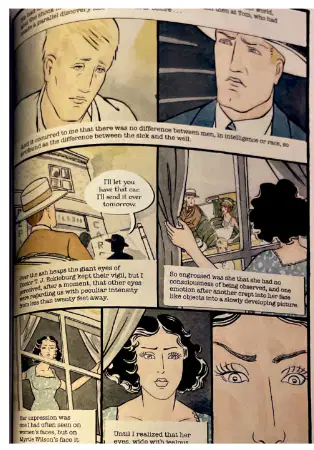
Looking at Tom’s facial expression in tier 1, panel 2, which word would describe him emotionally?
Annoyed
Frustrated
Anxious
Excited
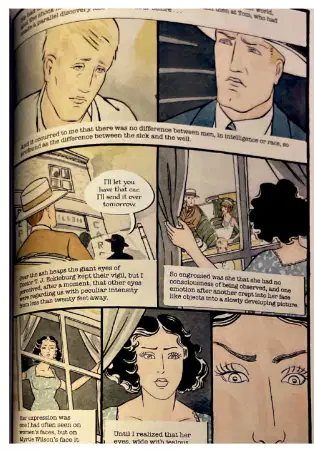
Looking at Myrtle’s facial expression change in the graphic novel page above, which word would describe her emotions?
Angry
Nervous
Jealous
Surprised
How is Gatsby’s funeral depicted in the graphic novel?
Large and extravagant, like his parties
Quiet and nearly unattended
Cancelled due to weather
Held by Daisy’s family
What year did the Nazis invade Sighet, Romania?
1943
1942
1945
1939
What date was Elie liberated by the Allies?
April 11, 1945
April 21, 1946
May 2, 1944
January 28, 1945
What role does Moishe the Beadle play in Elie Wiesel’s early life?
He teaches Elie about Kabbalah and Jewish mysticism
He helps Elie find work in the synagogue
He trains Elie to become a rabbi
He encourages Elie to become a father.
How do the citizens of Sighet react when Moishe returns with warnings about the Nazis?
They immediately flee the town
They believe him and prepare to resist
They assume he has gone mad and ignore his warnings
They report him to the authorities.
Which best describes the transformation of Elie’s relationship with his father during their imprisonment?
A. Elie becomes more independent and detached
B. Their bond strengthens as they rely on each other for survival
C. They grow apart as the struggle for survival intensifies
D. Elie grows resentful of his father’s weakness.
What sight at Auschwitz deeply affects Elie upon his arrival?
The dirty living conditions
Children being thrown into flames
Jewish leaders debating their fate
A group of prisoners singing hymns.
Why is the hanging of the young boy particularly disturbing for the prisoners, especially Elie?
The boy fought back and was punished unjustly
He was related to Elie’s father
His death was slow and symbolized the loss of innocence and faith
The SS forced the prisoners to cheer during the execution.
What strategy does Elie use to avoid losing his gold dental crown early on?
He fakes illness to delay the extraction
He bribes the dentist
He hides it in his shoes
He gives it away to his dad.
Why are Elie and the other prisoners forced to evacuate Buna?
A. A rebellion breaks out among the prisoners
B. The camp is being bombed
C. The Nazis are fleeing from advancing Allied forces
D. An outbreak of disease spreads rapidly.
Which statement describes the prisoners’ march from Buna to Gleiwitz?
It was relatively quick and peaceful
It was an orderly journey with enough food
It was brutal, freezing, and deadly
It was a hopeful transfer to a safer camp.
How does Elie respond emotionally and mentally after the death of his father?
He feels overwhelming guilt and sorrow
He is filled with rage toward the Nazis
He experiences a sense of numb relief and detachment
He vows revenge and begins planning an escape.
What is the symbolic significance of the final scene, when Elie looks into the mirror after liberation?
He sees a hopeful survivor ready to rebuild
He sees himself as a hero of the war
He sees the reflection of his father
He sees a corpse staring back at him, representing all he has lost
Throughout Night, what does silence often represent?
The calm before conflict
The power of prayer
The absence of God and the loss of faith
The comfort of solitude
How does Elie’s view of God change as a result of his experiences in the camps?
He grows more devoted and begins to preach
His faith remains strong
He begins to doubt and eventually loses his faith in God
He turns to other religions for answers
How is the theme of inhumanity conveyed throughout the memoir?
Through the SS guards’ cruelty and the dehumanization of prisoners
Through the leaders of Sighet organizing resistance
Through Elie’s desire to survive
Through discussions of ethics in religious texts
Why is memory a crucial theme in Night for survivors of a concentration camp?
It helps the prisoners forget their pain
It ensures the events are preserved and not repeated
It helps Elie hold onto his childhood joy
It is the only way to cope with suffering
What literary technique does Wiesel frequently use to depict the horrors of the Holocaust?
Rhetorical questions
Humorous anecdotes (personal stories)
Vivid imagery and harsh symbolism
Long descriptive dialogues
What difficult moral choices do prisoners face in Night and is a constant battle for Elie?
Choosing between education and survival
Choosing to report others or remain silent
Choosing between loyalty to family and personal survival
Choosing between fighting or surrendering
Which of the following best describes Elie’s transformation by the end of the memoir?
He becomes hopeful and stronger in faith
He is hardened by trauma, physically weak, and emotionally detached
He is unchanged by his experiences
He becomes a leader among survivors
Why is Night an appropriate title for Wiesel’s memoir?
It reflects the darkness, fear, and spiritual silence he endured
It refers to his time of reflection
It represents a time of rest for prisoners
It contrasts with the light of liberation
How is the father-son relationship portrayed in contrast to other human connections in the camps?
It is often a burden to survival
It is one of the few emotional bonds that remains strong
It is discouraged by Nazi officials
It quickly disappears under pressure
What central message does Wiesel convey through Night?
War brings people closer to God
Silence and unconcerned allow evil to flourish
Faith can survive anything
Revenge brings closure

