
 Worksheets
Flexible Manufacturing Systems - FMS - 1
Total questions: 25
Worksheet time: 13mins
What is a Flexible Manufacturing System (FMS)?
A system that can only manufacture one type of product
A system that can be changed or adapted rapidly to manufacture different products or components at different volumes of production
A system that is always less efficient than traditional manufacturing
A system that does not use computers
When machines are used to manufacture a variety of products/components, this is called '________ flexibility'.
machine
process
volume
routing
Which of the following is an example of machine flexibility as described in the passage?
A company that manufactures only one type of product
An injection moulding machine that can be updated or modified to produce different designs
A machine that cannot be adapted
A machine that does not use computers
Computers are important in flexible manufacturing systems because:
They control and coordinate machines and processes
They increase manual labor
They reduce automation
They slow down production

The injection moulding machine demonstrates machine flexibility in manufacturing CD/DVD storage units by:
Allowing quick changes in moulds to produce different designs
Reducing the need for skilled labor
Increasing the speed of manual assembly
Eliminating the use of plastic materials
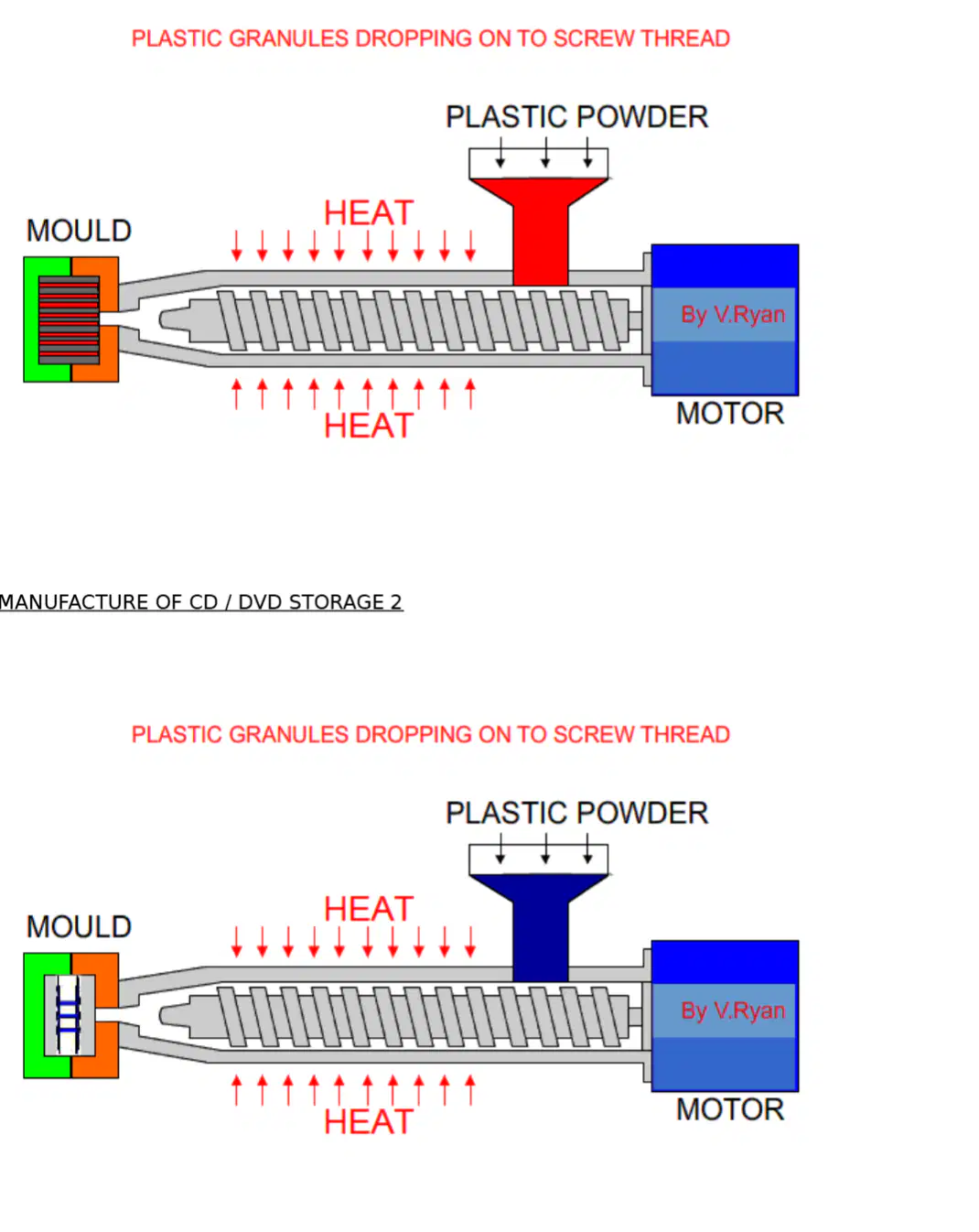
What is the function of the screw thread in the plastic moulding process?
To cool the plastic
To move and mix the plastic powder while heating
To cut the plastic
To color the plastic
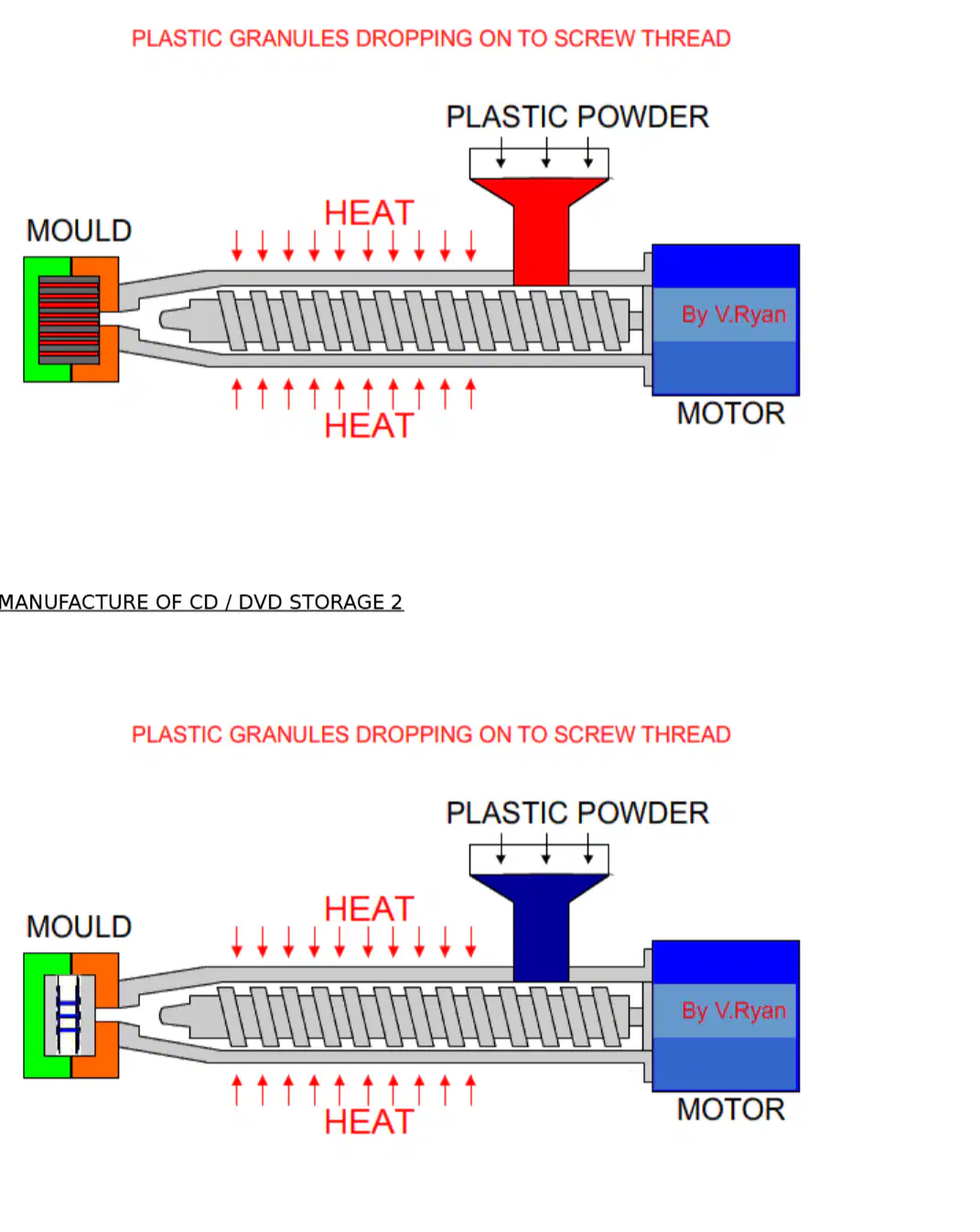
Refer to the diagram showing the manufacture of CD/DVD storage. What is added to the machine at the start of the process?
Metal powder
Plastic powder
Water
Oil

Refer to the diagram showing the manufacture of CD/DVD storage. The plastic powder is moved by a ________ powered by a motor.
screw thread
belt
pulley
chain

Refer to the diagram showing the manufacture of CD/DVD storage. What is the purpose of the mould in the process?
To heat the plastic
To shape the plastic into the desired form
To mix the plastic
To color the plastic
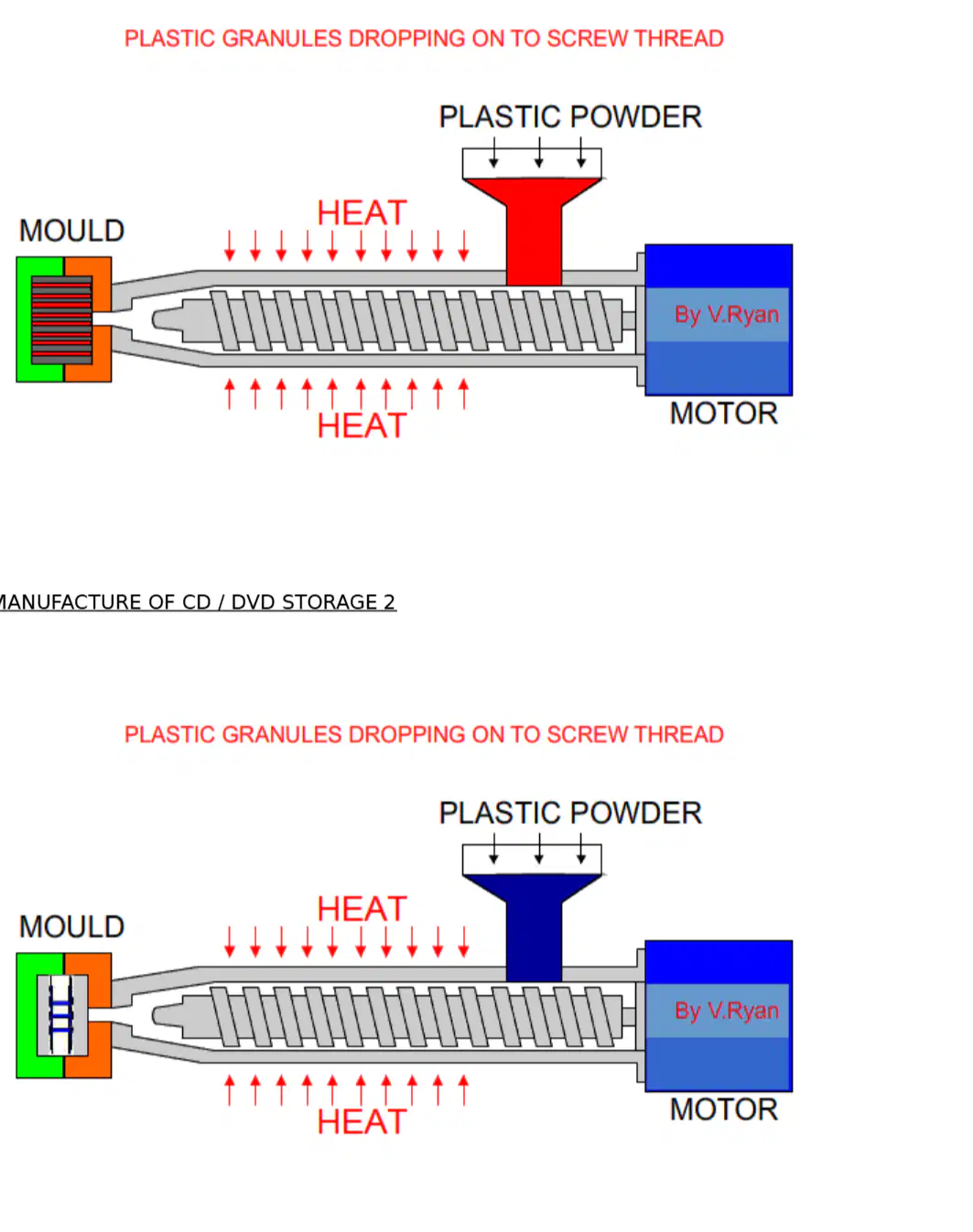
Refer to the diagram showing the manufacture of CD/DVD storage. Heat is applied to the plastic powder as it moves along the screw thread.
True
False
What is routing flexibility in a manufacturing system?
The ability to produce only one type of product
The ability to absorb changes in manufacturing capacity by selecting the right path for product flow
The ability to reduce the number of workers
The ability to increase costs
In a CD/DVD manufacturing plant, routing flexibility allows production lines to be _______ when not required, making the plant more efficient.
shut down rapidly
expanded indefinitely
painted regularly
operated at full speed
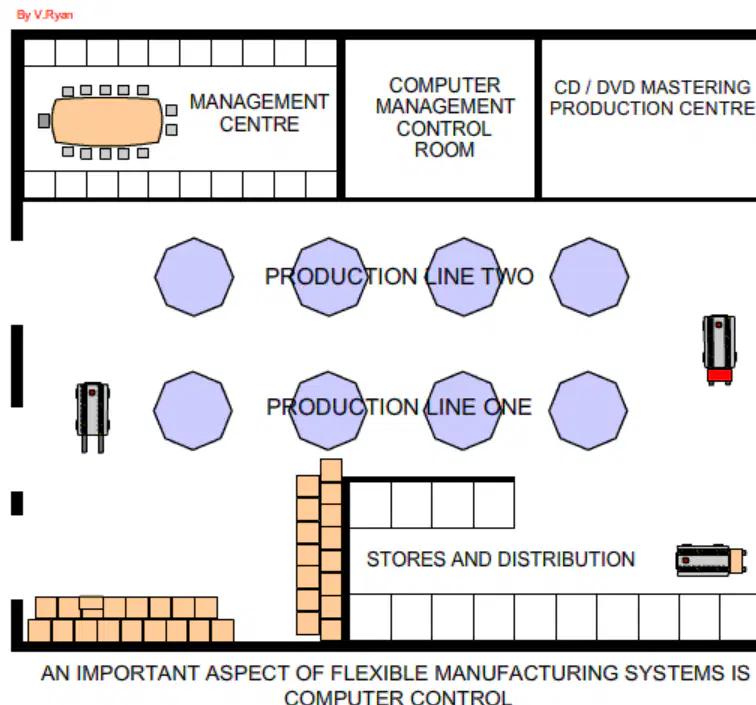
Which area is responsible for overseeing the entire production process?
Management Centre
Stores and Distribution
Production Line One
CD/DVD Mastering Production Centre
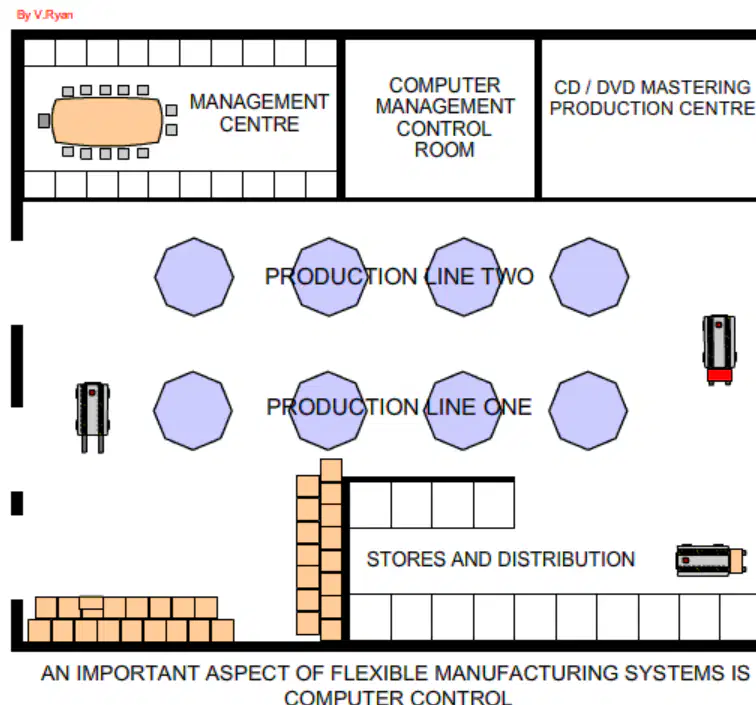
An important aspect of flexible manufacturing systems is computer control.
True
False
What is remote manufacturing as described in the passage?
Manufacturing and designing at different locations
Manufacturing and designing at the same location
Only manufacturing at a remote site
Only designing at a remote site
What is the term used to describe the process where products are designed in one country and manufactured in another?
Local manufacturing
Remote manufacturing
Domestic production
Manual production
Read the passage below and answer the question: A typical example is seen below. The book publishing industry in the UK has seen a shift in its printing (manufacturing) from Europe to Hong Kong or Korea. However, the layout design and content of books remains in the UK. Where does the layout design and content creation for books typically remain, according to the passage?
Hong Kong
Korea
The UK
The USA

What is the first step in the book publishing process shown in the diagram?
The author writes the book and saves all the text in electronic form.
The book is printed and bound.
The book is distributed to bookstores.
The book is edited by a professional editor.
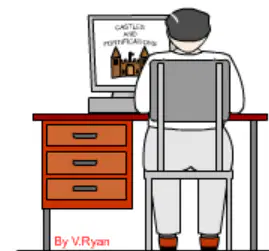
Who is responsible for planning the layout and adding graphics/photographs in the book publishing process?
The Graphic Designer
The Editor
The Publisher
The Author

What does the author do in the final draft stage of the book printing process?
Transfers the book to printers
Reads the final draft and agrees it is ready for printing
Prints the book
Designs the book cover
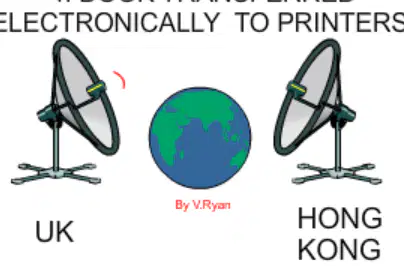
How is the book transferred to the printers in Hong Kong?
By mail
By courier
Electronically via the internet
By fax
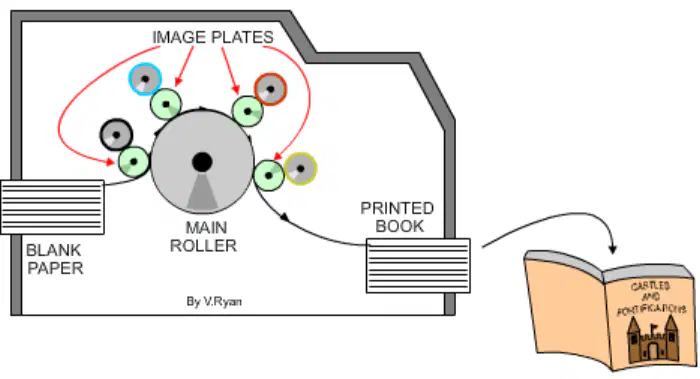
Modern efficient printing techniques are used to print a batch of ______ first edition books at the Hong Kong printers.
five thousand
five hundred
fifty thousand
five million
If sales go well in the UK, it may be necessary to print more batches of the book.
True
False
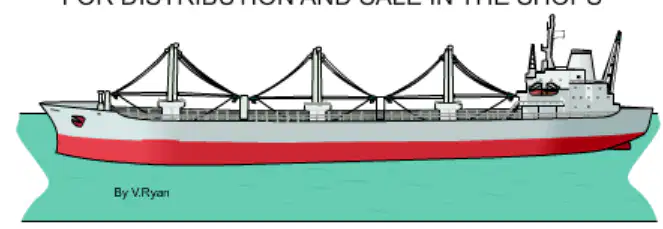
Step 6: The books are placed in a container and shipped back to the UK for _______ and sale in the shops.
distribution
recycling
printing
storage
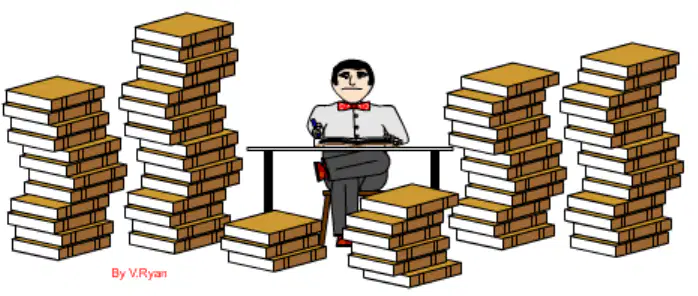
Step 7: Back in the UK, the author promotes the launch of his book by signing _______ copies.
autographed
unsigned
damaged
blank

