
Font size
 Worksheets
Reading Comprehension Quiz for Grade 3
Total questions: 77
Worksheet time: 2hrs 48mins
What does it mean to "generate questions about a text"?
To write a summary of the text
To ask questions about what you are reading
To draw pictures about the text
To copy the text word for word
Which of the following is a text feature that can help you make predictions?
Table of contents
The author’s name
The page number
The font size
What does it mean to create a mental image while reading?
To imagine what is happening in the story
To read the story out loud
To write down every word
To skip parts of the story
Making a connection to a personal experience means:
Remembering something similar that happened to you
Reading the story again
Writing a letter to the author
Looking up words in a dictionary
What does it mean to make an inference?
To guess what will happen next using clues from the text
To copy the text
To read the title only
To skip to the end
Which question could you ask before reading a story to help you understand it better?
What is the title of the story?
What did I eat for breakfast?
How many pages are in the book?
What color is the cover?
Which of these is a characteristic of the fiction genre?
It tells a made-up story
It gives real facts about animals
It shows a map
It has a glossary
If a story describes a "dark, stormy night," what mental image might you create?
A bright, sunny day
A night with thunder and rain
A classroom full of students
A quiet library
Which of the following is an example of making a connection to society?
Relating the story to a news event you heard about
Reading the story silently
Writing your name on the book
Counting the number of chapters
If the text says, "The boy shivered and pulled his coat tighter," what can you infer?
The boy is cold
The boy is hungry
The boy is happy
The boy is running
After reading a story, which question could help you understand it better?
What happened at the end of the story?
What is my favorite color?
How many words are in the story?
What is the author’s name?
Which text feature would help you predict what a chapter is about?
The chapter title
The page number
The font color
The author’s picture
When you read about a "giant red apple," what mental image do you create?
A small green apple
A big red apple
A blue banana
A yellow lemon
If a character in a story moves to a new school, how could you make a personal connection?
Remember a time you started something new
Count the number of pages
Look up the word "school"
Draw a picture of a house
If the text says, "The sun disappeared behind the clouds and the sky turned gray," what can you infer?
It might rain soon
It is getting sunny
It is snowing
It is nighttime
Read the first paragraph of a story. What is a good question to ask during reading to help you understand?
What is happening right now?
What is my favorite food?
How many pages are left?
What is the author’s birthday?
You see a heading in a nonfiction book called "How Plants Grow." What can you predict about this section?
It will explain the steps of plant growth
It will tell a story about a dog
It will show a map of the world
It will list favorite foods
While reading about a snowy mountain, what mental image could you create to help you understand the setting?
Picture a tall mountain covered in snow
Imagine a beach with palm trees
Think of a busy city street
Visualize a desert
You read a story about a girl who helps her friend. How can you connect this to your own life?
Remember a time you helped a friend
Count the number of words in the story
Write a letter to the author
Draw a picture of a tree
The text says, "The puppy wagged its tail and jumped up and down when it saw its owner." What can you infer about the puppy?
The puppy is happy to see its owner
The puppy is tired
The puppy is hungry
The puppy is lost
After reading a story, what is a good question to ask to deepen your understanding?
Why did the main character make that choice?
What is the book’s price?
How many chapters are there?
What color is the cover?
You see a picture of a volcano in a science book. What can you predict about the text near the picture?
It will talk about volcanoes
It will describe a picnic
It will explain how to bake a cake
It will tell a fairy tale
While reading about a busy city, what mental image could help you understand the story?
Imagine tall buildings and lots of cars
Picture a quiet forest
Visualize a small village
Think of a farm
You read about a character who moves to a new country. How can you connect this to something in society?
Think about people who move to new places for work or school
Count the number of pages in the book
Write a story about a dog
Draw a picture of a tree
The text says, "The girl’s hands were shaking as she stood in front of the class." What can you infer?
She is nervous
She is sleepy
She is angry
She is hungry
You are reading a mystery story. What question could you ask during reading to help you solve the mystery?
What clues have I found so far?
What is the author’s favorite color?
How many pages are left?
What is the title of the book?
You see a table of contents in a nonfiction book. How can you use it to make a prediction about what you will learn?
By looking at the chapter titles to guess what topics will be covered
By counting the number of chapters
By reading the last page first
By looking at the pictures only
You read, "The wind howled and the trees bent low." How can creating a mental image help you understand the mood of the story?
By picturing a stormy, scary scene
By imagining a sunny day
By thinking of a quiet library
By visualizing a playground
You read a story about a family celebrating a holiday. How can you connect this to your own experiences or to society?
By thinking about how you or others celebrate holidays
By counting the number of gifts in the story
By writing a list of foods
By drawing a picture of a tree
The text says, "The boy hid his report card behind his back and avoided his mother’s eyes." What can you infer, and what evidence supports your answer?
He is worried about his grades because he is hiding the report card and not looking at his mother
He is excited to show his report card
He is going to play outside
He is hungry

I should read the entire text before answering the questions. REREAD IF needed too.

What strategies would you use for this text?
identify author's purpose, box in plot elements, annotate paragraphs, prove all answers
identify author's purpose, annotate paragraphs, prove all answers
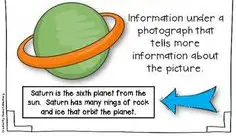
Text that explains the picture next to it.
Glossary
Index
Table of contents
Caption


What is a picture or drawing that adds details to a writing or selection?
(a)
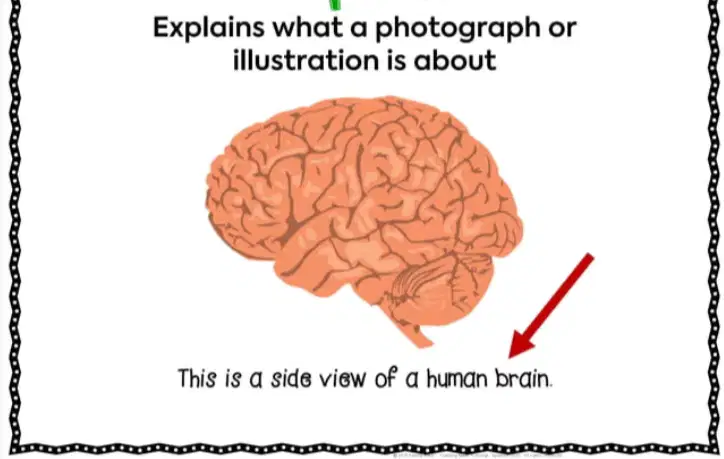
This feature explains what the illustration/photograph is.
Glossary
Index
Table of contents
Caption
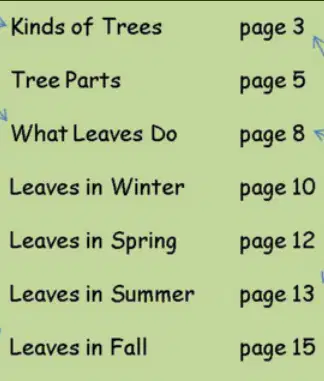
This feature lists topics and gives you the page number to navigate to the information. Found in the front of the book.
Index
Table of contents
Glossary
Diagram

According to the text in the glossary; What sports use rackets and shuttlecocks?
bowling
boxing
basketball
badminton
This feature list topics and gives you the page number to navigate to the information. Found in the front of the book.
Index
Table of contents
Glossary
Diagram
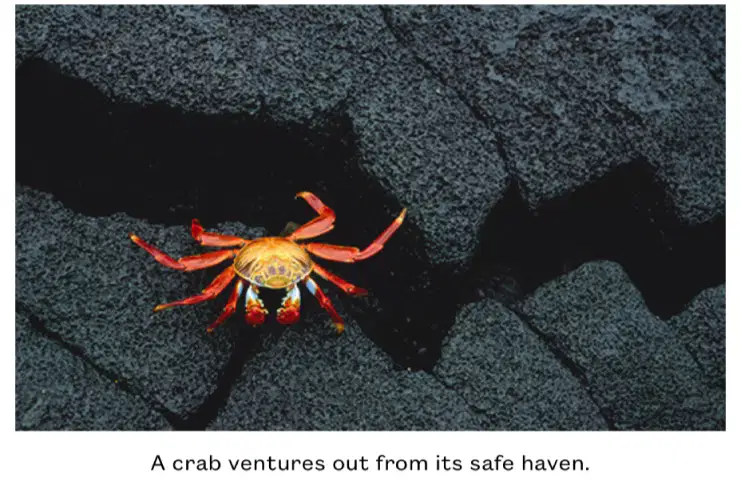
The information under a photograph that thells more information about the picture is...
A "Caption"
A "map"
A "legend"
A "Graph"



Based on this picture, what season is it?
Summer
Fall
Spring
Winter

"I hate the idea of having all those people out there watching me...I just don't like it when I'm around so many people. I wish I just could hide somewhere," whispered Violet.
What can you infer about Violet?
She is energetic
She is shy
She is mean
She hates people
Good readers form MENTAL PICTURES about what they read when they use the strategy of
making connections.
visualizing.
asking questions.
making inferences.
One technique we can practice to help us with visualizing is to
Look up words we are unsure of
Make an assumption about what we read
Connect what we read to our lives
Draw out what we picture
Which reading strategy would include painting a picture in your mind as you read?
asking questions
inferencing
determining importance
visualizing
This step creates pictures in your mind of what you are reading.
visualizing
inferring
monitoring
Making pictures in your mind as you read to help you "see" what you are reading.
Determining what's important
Visualizing
Making predictions
Making an inference
When you paint a picture in your mind as you read, its called:
asking questions
inferencing
determining importance
visualizing

What type of connection is this : I read a story about what life was like before electricity. It reminded me of a time I went camping with my family and we only had the light of our fire to see.
Text to World
Text to Self
Text to Text
Text to Media
What type of connection is this : I read a story about a boy who visited a magic land with witches and wizards. It reminded me of the book Harry Potter.
Text to Self
Text to World
Text to Text
Text to Media
When you make a connection you...
try to understand the passage.
see a picture in my head
form a link between what is happening in the text.

Think about how the text relates to you, other texts, and the world around you.
Predict
Visualize
Clarify
Connect

To relate what you are reading to your own personal experience or background knowledge.
evaluating details
make connections
monitor comprehension
visualize
Think about what you already know about the text. Find ways to relate the text to yourself, other texts, and the world around you.
Predict
Visualize
Clarify
Connect

When something that you read reminds you of something else. Two examples are text-to-text and text-to-self
Making Connections
Predicting
Questioning

This comprehension strategy means to use what you know to understand what you are reading.
visualizing
summarizing
making connections
determining importance
This comprehension strategy means to use what you know to understand what you are reading.
(a)
visualizing
summarizing
determining importance
What will most likely happen next?
Hatti will put the hat back where she found it.
Hattie will go back to school.
Hattie will visit her grandma again.
Hattie will learn how to ride a horse
Predict
Make a guess as to what might happen
To show your work
Citing specific evidence
Writing for a group of younger students
Based on the text below, what can you predict will happen next? "Tom was running late for his meeting. He glanced at his watch and realized he had only five minutes left. He started running towards the office building, but the traffic light turned red."
Tom will stop and wait for the light to turn green.
Tom will call his office to inform them he will be late.
Tom will run through the red light.
Tom will decide to skip the meeting.
Do you think Seth is going to end up getting in trouble?
Yes
No
When you stop reading and think about what might come next
Visualizing
Making Connections
Predicting

Xzavier was running really fast in the hallway. As he turned the corner there was a huge puddle of water_______.
Xzavier cleaned the water up.
Xzavier slipped and fell.
Xzavier went for a swim.
Xzavier was frightened of water.

During the time Barack was in college, he and other students spoke out against
South Africa's white government, which supported terrible treatment of Black people.
What do you think Barack did next?
Barack took classes in college
Barack wanted to help change the injustices he saw
Barack went to South Africa to speak about the injustices he saw
Barack went back to Hawaii

Barack wanted to learn how laws and government worked. He wanted to help change some of the injustices he saw. In 1981, he transferred to Columbia University in New York City.
What do you think happened next?
Barack graduated with a degree in political education
Barack graduated with a degree in biology
Barack graduated with a degree in political science
Barack graduated with a degree in engineering

In November of 2008, Barack Obama was elected the 44th president of the United States and became the first Black president in the history of the country. He, his wife Michelle, and their two young daughters moved into the White House in Washington, D.C., and he began his job as president on January 20, 2009.
In October of that year, President Obama was awarded the Nobel Peace Prize in recognition of his efforts to make the world a better and more peaceful place.
What do you think happened next?
In 2012, Barack Obama was reelected for a third term as president
In 2012, Barack Obama was reelected for a second term as president
In 2012, Barack Obama stepped down from being president

By the time Obama finished college, he knew he wanted to help people in communities. He wanted to involve people in creating better lives for themselves. He also wanted to see local laws changed so people would receive fair treatment. He found a job and moved to Chicago in 1985.
What do you think happened next?
Barack went back to college
Barack moved away from Chicago
Barack became president
Barack became the director of an organization that helped people in low-income neighborhoods find jobs and improve their lives

What will most likely happen next?
She will throw them away.
She will look at them.
She will eat them.
She will put them in the fridge.


