
 Worksheets
CNBR 1-5
Total questions: 100
Worksheet time: 50mins
What class of medications should most be avoided in a patient with bradykinesia, dementia, and likely ubiquitin-positive Lewy bodies in the cortex on pathological examination?
Anticholinergic
Atypical antipsychotic
Nonsteroidal anti-inflammatory
Typical antipsychotic
Dopamine agonist
What pain procedure is best for nerve avulsion pain?
Spinal cord stimulation
Selective dorsal rhizotomy
Midline myelotomy
C1-C2 cordotomy
Dorsal root entry zone lesioning
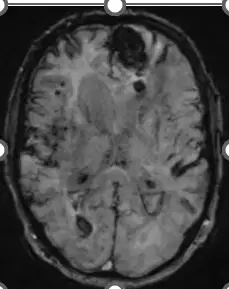
A representative scan from a susceptibility-weighted MRI sequence of a patient’s brain is shown in this image. What is correct about this patient’s disease entity?
Related to poorly controlled hypertension
May be related to mutations in the CCM gene family
May be seen in young patients with sickle cell disease
Characterized by β-amyloid peptide deposits

A study has been designed to test the association between weight lifting and the likelihood of developing lumbar back pain. The following results have been obtained:
Z-test
Z-test
T-test
Rank-sum test
Chi-square
ANOVA
What ganglion receives fibers from the anterior two thirds of the tongue?Pterygopalatine
Pterygopalatine
Gasserian
Otic
Geniculate
Nodosal
A 2-year-old boy presents with an inability to track objects without turning his head. He is noted on exam to have a static facial expression, and no movement in the facial musculature is seen bilaterally. He also is noted by his parents to be able to push up when he is in the prone position. What is the patient’s diagnosis?
Duane syndrome
Mobius syndrome
Poland anomaly
Kallmann syndrome
Klippel-Feil anomaly
A man with HIV, who is a poorly compliant patient, presents with new-onset seizures. An MRI of the brain shows a ring-enhancing lesion with an eccentric “target” sign on contrast enhanced T1 images. This finding likely represents:
Lymphoma
Cryptococcosis
Cytomegalovirus
Toxoplasmosis
Babies with postinfectious and posthemorrhagic hydrocephalus can have the highest success rate of treatment with what procedure?
Shunt placement
Septum pellucidotomy
Endoscopic third ventriculostomy (ETV)
Acetazolamide therapy
ETV and choroid plexus coagulation (CPC)
What nerve endings are nonencapsulated and are found in the alimentary tract, between epithelial cells of the skin, in the cornea, and in connective tissues?
Free nerve endings
Merkel disks
Hair follicle receptors
Missner corpuscles
Pacinian corpuscles
What is a characteristic imaging finding of metachromatic leukodystrophy?
T2 hyperintensity in the dorsomedial and pulvinar thalamic nuclei
Symmetric basal ganglia lesions
Leading edge of enhancement
“Tigroid” pattern
What is the outcome of activating the carotid sinus reflex in a patient with a normal blood pressure and heart rate?
Bradycardia and hypertension
Tachycardia and hypotension
Bradycardia and hypotension
Tachycardia and hypertension
What agent reverses angiographic vasospasm following aneurysmal subarachnoid hemorrhage?
Oral nimodipine
Oral verapamil
Intravenous nicardipine
Intravenous erythropoietin
Intravenous magnesium sulfate
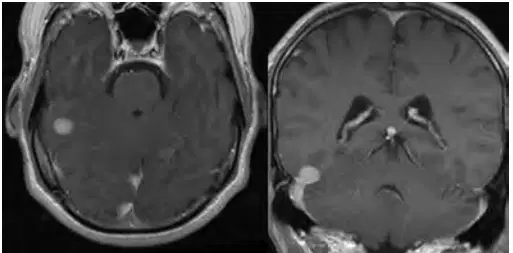
A 40-year-old man underwent an MRI of the brain, demonstrating the lesion shown in these images. The lesion was resected and stained positive for vimentin and CD34, with histological analysis demonstrating uniform spindle cells and staghorn vessels. What is the patient’s likely diagnosis?
Hemangiopericytoma
Meningioma
Lymphoma
Neurosarcoid
According to the North American Symptomatic Carotid Endarterectomy Trial (NASCET), a carotid endarterectomy is indicated for what type of carotid artery stenosis?
Symptomatic carotid artery stenosis greater than 60%
Asymptomatic carotid artery stenosis greater than 60% if the patient is younger than 75 years of age
Asymptomatic carotid artery stenosis greater than 50%
Symptomatic carotid artery stenosis less than 30%
Symptomatic carotid artery stenosis 70 to 99%
A 24-year-old man presents with progressive back pain. Imaging demonstrated an expansile osteolytic lesion in the posterior elements of the middle thoracic spine with a fluid–fluid level. What is the patient’s likely pathology?
Spinal metastatic lesion
Aneurysmal bone cyst
Osteoid osteoma
Osteoblastoma
Eosinophilic granuloma
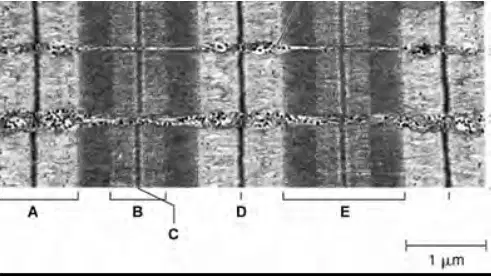
In the electron micrograph shown in this image, what component of the sarcomere contains only myosin?
A
B
C
D
E
. A 45-year-old woman who underwent total bilateral adrenalectomies for Cushing disease 3 years ago returns to clinic with skin hyperpigmentation. What is cause of the hyperpigmentation in this patient?
Melanin-stimulating hormone (MSH) overproduction
Increased production of ACTH secondary to recurrence of Cushing disease
New-onset hemochromatosis
Postinflammatory hyperpigmentation secondary to decreased total steroids
Skin hypersensitivity to the sun
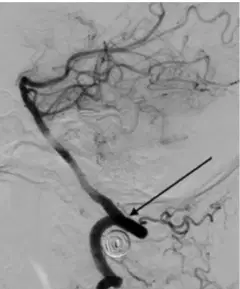
At what segment of the vertebral artery shown in this image is the arrow pointing?
V1
V2
V3
V4
V5
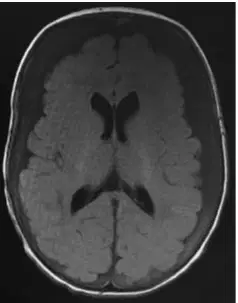
A 4-week-old neonate presents with progressive macrocrania. The Brain MRI, shown in this image, suggests:
Benign extra-axial hygromas
Chronic subdural hematomas
Hydrocephalus
Epidural hematomas
Subdural empyemas
. What chemotherapy agent used for central nervous system tumors works by carbamylating amino groups and inducing DNA cross-linking?
Carmustine
Tamoxifen
Temozolomide
Cyclophosphate
What is the infusion volume of one unit of packed red blood cells in children, and by how much is it expected to increase hemoglobin?
10 cc/kg; 1 g/dL
10 cc/kg; 2 to 3 g/dL
20 cc/kg; 1 g/dL
20 cc/kg; 2 to 3 g/dL
40 cc/kg; 1 g/dL
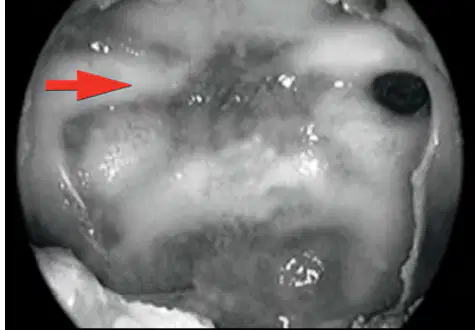
What structure is deep to the arrow in this view from the endoscope during a resection of a pituitary macroadenoma using a transnasal transsphenoidal approach?Pituitary gland
Pituitary gland
Pituitary stalk
Internal carotid artery
Optic nerve
Sella turcica floor
What target for deep brain stimulation is thought to provide the best control of essential tremors?
Globus pallidus pars externa
Subthalamic nucleus
Head of the caudate nucleus
Ventral intermediate nucleus of the thalamus
Globus pallidus pars interna
A patient with severe, large-amplitude hemiballismus in his right upper extremity most likely has a lesion involving what basal ganglia structure?
Ipsilateral putamen
Contralateral putamen
Ipsilateral subthalamic nucleus
Contralateral subthalamic nucleus
Fibers from the flocculonodular lobe of the cerebellum synapse on the vestibular nuclei after first synapsing on what nuclei?
Dentate nuclei
Emboliform nuclei
Globose nuclei
Fastigial nuclei
No additional nuclei
What organ would respond to systemic cocaine administration but not to systemic atropine administration?
Heart
Salivary glands
Pancreas
Sweat glands
Pupils
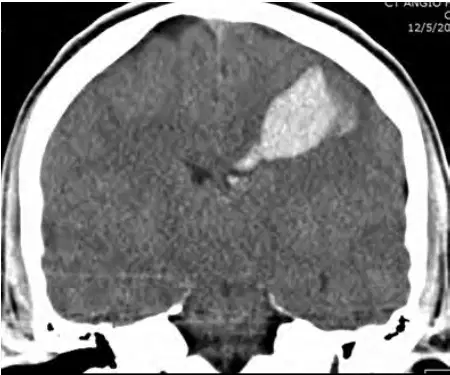
A 20-year-old man with a history of bipolar disease presents with an acute onset of right-sided hemiparesis and expressive aphasia. According to the CT shown in this image, and assuming the most likely diagnosis, what is the risk of re-hemorrhage?
4% in the first 24 hours after hemorrhage
20% in the first 2 weeks after hemorrhage
50% in the first 6 months after hemorrhage
4 to 6% per year
Less than 1% over a lifetime
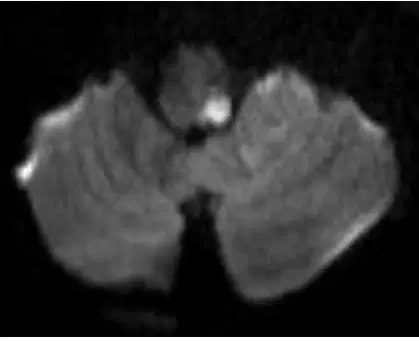
A woman presents to the emergency department with dizziness, nystagmus, and a feeling of falling toward the left. An MRI of the brain was performed, and a representative scan is shown in this image. What vessel likely is involved in this patient’s condition?
Pontomesencephalic artery
Anterior inferior cerebellar artery
Superior cerebellar artery
Posterior inferior cerebellar artery
A sharply circumscribed, lucent lesion with beveled edges is demonstrated on a skull radiograph of a child. What is the likely diagnosis?
Langerhans cell histiocytosis
Hemangioma
Intraosseous meningioma
Metastasis
The afferents from the mammillothalamic tract project from the mammillary bodies to what thalamic nuclei?
Centromedian nuclei
Anterior nuclei
Ventral lateral nuclei
Lateral posterior nuclei
Medial dorsal nuclei
What muscle typically is innervated by the radial nerve itself and not by one of its terminal branches?
A.Extensor carpi radialis longus
Extensor carpi radialis brevis
Extensor carpi ulnaris
Extensor carpi ulnaris
Abductor pollicis longus
A 78-year-old woman presents to the emergency room complaining of weakness and long-standing headaches. She reports that the weakness began in the right upper extremity and then proceeded to involve the right lower extremity followed by the left lower extremity and, most recently, the left upper extremity. Based on these clinical findings, what is the most likely pathological cause of the patient’s symptoms?
Interhemispheric mass
Brainstem infarct
Cervical spine epidural hematoma
Foramen magnum tumor
Third ventricle tumor
The most important predictor of outcome in children with pediatric ependymomas is:
Gross total resection
Radiosurgery
Dose of conformal radiation
Chemotherapy
Steroids
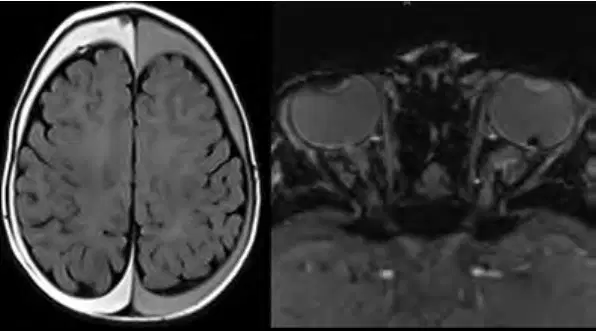
A 5-month-old boy underwent an MRI of the brain,shown in these images. What may be a related finding?Abdominal mass
Abdominal mass
Opisthotonos
Fever
Cutaneous bruising
If additional sodium channels were opened on a neuron at its maximal point of depolarization during an action potential, what would happen to sodium ion flux and membrane potential?
Sodium flux and membrane potential would not change as they are maximized at this point in the action potential.
Sodium ions would enter the neuron, and membrane potential would become more positive
Sodium ions would leave the neuron, and membrane potential would become more positive.
Sodium ions would enter the neuron, and membrane potential would become less positive.
Sodium ions would leave the neuron, and membrane potential would become less positive.
The sural nerve is formed from the combination of two nerves arising from what larger branches?
Deep and superficial peroneal nerves
Tibial and common peroneal nerves
Tibial and femoral nerves
Common peroneal and femoral nerves
Superficial peroneal and tibial nerves
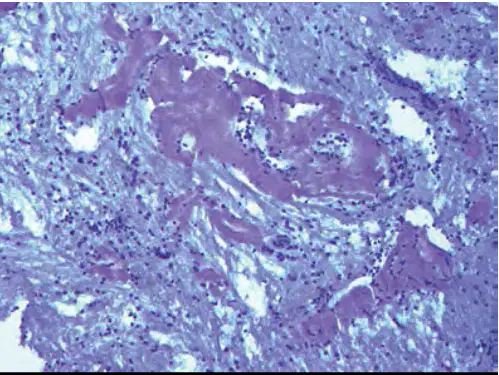
This image shows cerebral vessels stained with Congo red. What is the underlying disease process represented in the image?
Moyamoya disease
Cavernous hemangioma
Cerebral angiopathy
Mucormycosis
Radiation necrosis
A patient presents with exophthalmos and an Orbital bruit. What is the likely finding on CT of the brain and orbits?
Orbital mass
Engorgement of the extraocular muscles
Enlarged ophthalmic artery
Unruptured cavernous sinus aneurysm
Flattening of the posterior aspect of the globe
The cerebral venous angle occurs at what junction?
Internal cerebral vein and basal vein of Rosenthal
Septal and thalamostriate veins
Vein of Galen and inferior sagittal sinus
Caudate and thalamostriate veins
Torcular
What is the standard radiation regimen for stereotactic radiosurgery for trigeminal neuralgia?
20 Gy in four doses directed at the center of the lesion
20 Gy in four doses directed to extend beyond the periphery of the lesion
80 Gy in a single dose directed at the center of the lesion
80 Gy in a single dose directed to extend beyond the periphery of the lesion
100 Gy in a single dose directed at the center of the lesion
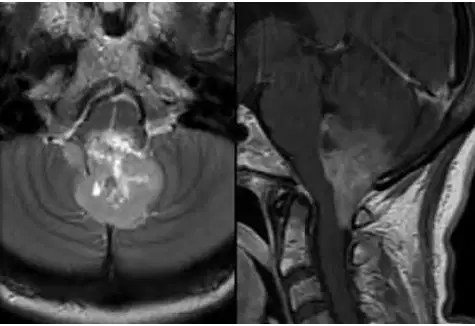
The tumor shown in these images was found to have rosettes and perivascular pseudorosettes on microscopic examination, and stained positive for glial fibrillary acidic protein. What is a characteristic of the lesion?
It commonly arises from the roof of the fourth ventricle.
It is associated with neurofibromatosis type 1.
It may be complicated by polycythemia
Calcification and hemorrhage are common
Cheyne-Stokes respirations are characterized by increasing followed by decreasing tidal volumes separated by periods of apnea. They are seen in heart failure, with rapid blood sugar changes, and in stroke. Where do Cheyne-Stokes respirations originate?
Carotid bodies, pons, and cerebral hemispheres
Diencephalon, medulla, and dorsal pons
Basal ganglia, pons, and cerebral hemispheres
Diencephalon, pons, and carotid bodies
Diencephalon, basal ganglia, and cerebral hemispheres
A patient with bluish pigmentation of the auricles and sclerae presents for evaluation. Levels of homogentisic acid in his urine are elevated. What finding is likely to be seen on a CT of the patient’s spine?
Wedging of adjacent vertebrae
Multifocal Schmorl nodes
Extensive intervertebral disk calcification
H-shaped vertebrae
A 58-year-old man presents with delusions and hallucinations. His wife reports that he has been complaining recently of headaches, irritability, and sleep disturbance, and that he has had a progressive memory decline over the past month. Brain MRI shows high T2 signal without enhancement, mostly in the left mesial temporal lobe. Chest radiograph shows a centrally located pulmonary mass. Cerebrospinal fluid examination shows elevated lymphocytes, elevated protein, normal glucose, elevated IgG index, and oligoclonal bands. Herpes virus PCR is negative. What is the most likely diagnosis?
Herpes simplex encephalitis
Limbic encephalitis
Pontine stroke
Paraneoplastic cerebellar degeneration
Multiple sclerosis
What type of receptor is found on sweat glands along postganglionic sympathetic fibers?
Muscarinic
Adrenergic
AMPA
NMDA
Nicotinic
Sagittal balance is measure from what two positions?
C1 to L5
Opisthion to L5
T1 to sacrum
C7 to sacrum
C7 to L5
A 33-year-old, otherwise healthy man underwent an MRI, shown in these images. Histological analysis of his lesion revealed a large amount of mucin with formation of rosettes and pseudorosettes. “Collagen balls” were evident on periodic acid-Schiff staining. This lesion is consistent with a:
Schwannoma
Metastasis
Myxopapillary ependymoma
Neurofibroma
Paraganglioma
What is the best route for vitamin K administration in the setting of life-threatening hemorrhage in a patient on warfarin
Oral
Intravenous bolus
Subcutaneous
Intravenous slow continuous infusion
Intra-arterial
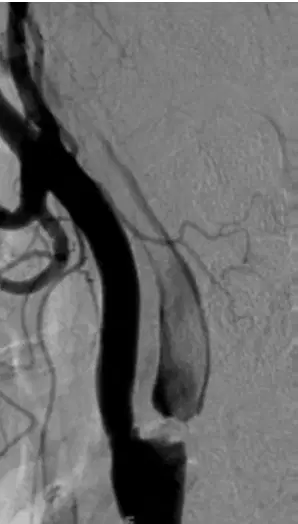
A 68-year-old man with a history of diabetes, hypertension, and multiple prior transient ischemic attacks presents to the emergency department with left-sided hemiplegia and a facial droop. Conventional angiography is performed after MRI of the brain. A digital subtraction image of the patient’s right carotid artery bifurcation is shown in this image. What is the angiographic finding?
Internal carotid artery dissection
Complete occlusion of the internal carotid artery
Fibromuscular dysplasia
Formation of a pseudoaneurysm with flow artifact
Critical carotid artery stenosis with intraluminal thrombus
A 9-month-old, nonvaccinated girl is brought to the emergency room for generalized seizures. She has a stiff neck, is poorly responsive, and has a temperature of 39.1°C. Her parents report that she had one episode of diarrhea earlier in the day. Cerebrospinal fluid Gram stain is negative. What pathogen most likely is the origin of these symptoms?
Cryptococcus
Haemophilus influenzae
Neisseria meningitidis
Streptococcus pneumoniae
Herpes simplex virus
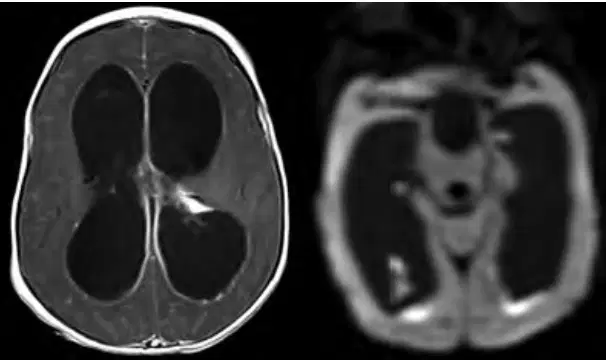
Representative scans of a brain MRI examination in a child are shown in these images. What likely is related directly to the neuroimaging findings?
Nonaccidental trauma
Congenital aqueductal stenosis
Sepsis
Medulloblastoma
What triangle of the skull base is formed by the lateral border of cranial nerve IV, medial border of the ophthalmic division of the trigeminal nerve, and dura between the dural entry points of both cranial nerves IV and the ophthalmic division of V?
Oculomotor
Parkinson (infratrochlear)
Glasscock
Kawase
Inferolateral
What feature of a burst fracture may imply instability and the need for surgery?
Loss of height of 25%
Angulation of 5 degrees
Residual canal diameter 80% of normal
Pain that improves with bracing
Injury to the posterior ligamentous complex
A patient presents with a nystagmus described as the eyes moving up and down discordantly with intorsion of the rising eye and extorsion of the falling eye. What visual field abnormality might be seen on exam?
Loss of peripheral vision (tunnel vision)
Bitemporal hemianopsia
Central scotoma
Binasal hemianopsia
Unilateral inferior hemianopsia
Compared to primary glioblastomas, secondary glioblastomas tend to express what histopathological characteristics?
EGFR gene amplification
PTEN gene mutations
TP53 gene mutations
Allelic gain of chromosomes 10q and 19q
Increased GFAP staining
You perform surgery on a patient with a far lateral herniated disk at L4/L5. You use a lateral approach, and the pars interarticularis is identified. The L4 nerve root can be found anterior to what structure?
L4 pedicle
L5 pedicle
Intertransverse ligament
Disk space
Multifidus muscle
What muscle is innervated by the superior laryngeal nerve?
Transverse arytenoid
Posterior cricoarytenoid
Cricothyroid
Geniohyoid
Stylopharyngeus
The cerebellum projects to what thalamic nucleus (nuclei)?
Anterior nuclei group
Ventral lateral nucleus
Ventral posterior lateral nucleus
Ventral posterior medial nucleus
Medial geniculate body
. What type of nystagmus can be associated with Parinaud syndrome?
Downbeat nystagmus
Seesaw nystagmus
Nystagmus retractorius
Abducting nystagmus
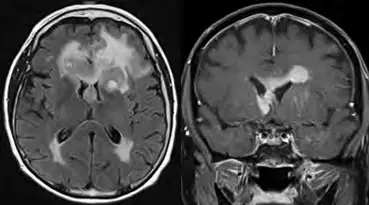
A 65-year-old man undergoes an MRI of the brain.
The enhancing lesion shown in these images demonstrates
diffuse low apparent diffusion coefficient
values. What is the patient’s likely diagnosis?
Glioblastoma
Lymphoma
Tumefactive demyelination
Infection
What feature can distinguish a foot drop caused by L5 nerve root pathology from a foot drop caused by a common peroneal nerve (CPN) palsy?
An L5 nerve root palsy will include weakness of anterior tibialis, which is spared with a CPN palsy.
There is weak internal rotation of the hip with a CPN palsy, which is spared with an L5 nerve root palsy.
There is weakness of foot inversion with an L5 nerve root palsy, which is spared with a CPN palsy.
There is weakness in plantarflexion with a CPN palsy, which is spared with an L5 nerve root palsy.
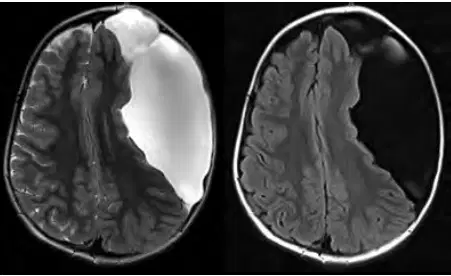
An MRI of the brain was obtained in an 8-year-old boy during a workup for macrocephaly. Axial T2 and FLAIR scans are shown in these images. What is the boy’s likely diagnosis?
Porencephalic cyst
Arachnoid cyst
Neurenteric cyst
Schizencephaly
What are the electroencephalographic changes seen in herpetic encephalitis?
Alpha activity over occipital areas
Beta activity over temporal areas
Alpha activity over frontal areas
3-Hz spike-and-wave discharges
Periodic sharp wave complexes
21-year-old man presents to the emergency room with a radial fracture and wrist drop. What finding supports the diagnosis of injury to the radial nerve and not the posterior cord?
Lack of weakness in the deltoid and latissimus dorsi
Lack of weakness in the serratus anterior
Lack of weakness in the rhomboids
Lack of sensation loss in the medial forearm
Weakness of the brachioradialis
When considering a surgical approach to the L4/L5 level, what complication is seen with an anterior lumbar interbody fusion (ALIF) that generally is avoided with an extreme lateral interbody fusion (XLIF)?
Vascular injury
Neurologic injury
High-volume blood loss
Sexual dysfunction
Interbody subsidence
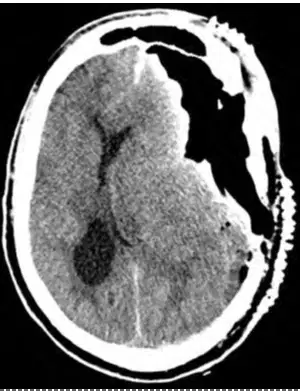
A 56-year-old man underwent an uneventful craniotomy for the resection of a meningioma. On the second postoperative day, he started complaining of increasing headaches and subsequently became unresponsive. An emergent CT of the head is shown in this image. What therapy should be administered or performed next?
Lumbar puncture
Hypertonic saline
Surgical decompression
Mannitol
A 44-year-old man presents to clinic with new double vision and uncoordinated walking. You notice that he has trouble smiling due to weakness on both sides of his face. No other weakness is noted on physical exam. He states that he just recovered from the flu. What is the most likely diagnosis?
Multiple sclerosis
Cerebellar stroke
Miller Fisher syndrome
Ethanol intoxication
Myasthenia gravis
What is the term for stimulation of the median or tibial nerve with averaging of the electroencephalographic waveforms to null out activity that is not time locked to the stimulus?
Motor evoked potential
Brainstem auditory evoked response
Somatosensory evoked potential
Electroencephalogram
Electromyography
A 12-year-old child with shunted hydrocephalus since birth presents with severe abdominal pain and vomiting. Ultrasound is concerning for a large pseudocyst around the peritoneal catheter tip. The next step in this patient’s management should involve:
Antibiotics alone
Complete shunt removal and placement of a ventricular drain
Peritoneal tap
Shunt externalization
Observation
Which Modic type change is hyperintense on T1 and iso- to hyperintense on T2 MRI?
Type 1
Type 2
Type 3
Type 4
What is the function of the nucleus ambiguus?
Provides special visceral efferent fibers to the stylopharyngeus and the laryngeal, pharyngeal, and palatine musculature
Provides special visceral afferent fibers from the posterior one third of the tongue
Provides general visceral efferent fibers to the otic ganglion and eventually the parotid gland
Provides general visceral efferent fibers to the greater petrosal nerve and eventually the pterygopalatine ganglion
Provides special visceral efferent fibers to stylohyoid, stapedius, and posterior belly of the digastric
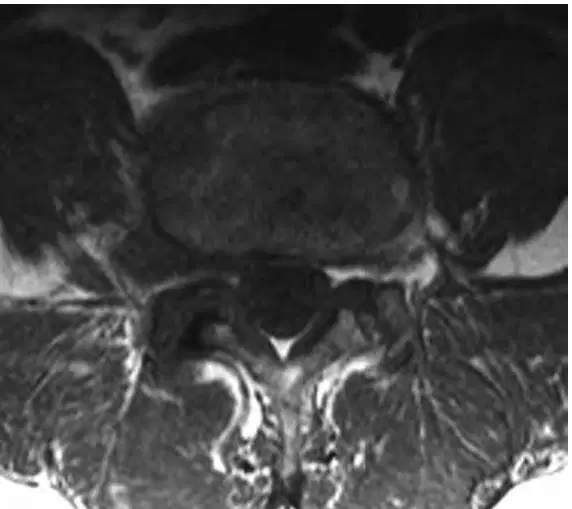
What abnormality is seen on the axial T1-weighted MRI of the lumbar spine shown in this image?
Diffuse bulging disk
Paracentral protrusion
Central extrusion
Foraminal/extraforaminal extrusion
Asymmetrically bulging disk
After suffering a skull base fracture in a motor vehicle collision, a patient presents with persistent rhinorrhea. The most specific finding to determine if this fluid is cerebrospinal fluid is:
Presence of β2-transferrin
Presence of glucose
Positive ring sign
Positive reservoir sign
Salty taste reported by the patient
What deficit is expected with an S1 nerve injury?
Weakness of dorsiflexion and ankle inversion
Weakness of plantarflexion and ankle eversion
Weakness of dorsiflexion and ankle eversion
Weakness of plantarflexion and ankle inversion
A patient presents with unilateral decreased visual acuity over 2 days. She complains of severe eye pain. What is the most likely cause of the symptoms?
Atherosclerosis
Arteritis
Demyelination
Retinal artery embolism
Increased intracranial pressure
What is the Evans ratio?
Largest width of the frontal horns divided by the internal diameter of the
skull from the inner table to the inner table at this level
Largest width of the frontal horns divided by the largest width of the
third ventricle
Largest width of the frontal horns divided by the maximal biparietal diameter of the skull from the inner table to the inner table
Occipital-frontal circumference divided by age (in months) of the child
What paralytic has the shortest time to onset and duration?
Succinylcholine
Rocuronium
Atracurium
Atracurium
Vecuronium
What feature favors a chordoma over a chondrosarcoma?
Lower apparent diffusion coefficient values
Well-circumscribed lesion margins on MRI
Marked T2 hyperintensity
Heterogeneous enhancement
Location at the petroclival synchondrosis
A patient presents with severe back pain that is worse at night and improves when taking aspirin. CT shows an expansile, radiolucent, 2-cm sclerotic lesion in the thoracic pedicle with cord compression and a contralateral spondylolysis. The optimal treatment includes:
Curettage
Complete resection
X-ray therapy
External bracing
Needle biopsy
Subthalamic nucleus deep brain stimulation is a surgical treatment for Parkinson disease. Where is the subthalamic nucleus located?
Ventral to the thalamus, dorsal to the substantia nigra, and medial to
the internal capsule
Ventral to the thalamus, posterior to the third ventricle, and lateral to
the globus pallidus
Dorsal to the thalamus, ventral to the substantia nigra, and medial to
the internal capsule
Ventral to the splenium of the corpus callosum, dorsal to the
quadrigeminal plate, and medial to the thalamus
Ventral to the thalamus, dorsal to the lamina terminalis, and ventral to the
red nucleus
What are the radiographic and clinical incidences, respectively, of vasospasm after aneurysmal subarachnoid hemorrhage?
50% and 50%
10% and 90%
30% and 70%
70% and 30%
100% and 50%
What percentage of children with a Chiari 2 malformation become clinically symptomatic and require surgical decompression?
10%
30%
50%
80%
100%
Horner syndrome can be associated with what lesion or pathology?
Thoracic outlet syndrome and Pancoast tumors
Pancoast tumors and shoulder dislocation
Thoracic outlet syndrome and shoulder dislocation
Pancoast tumors and T5 Chance fractures
Thoracic outlet syndrome and T5 Chance fractures

. Axial contrast-enhanced T1- and T2-weighted MRI scans of the brain of a 33-year-old man are shown in these images. What is the patient’s likely diagnosis?
Ependymoma
Hemangioblastoma
Medulloblastoma
Juvenile pilocytic astrocytoma
Metastasis
What is the formula for estimating a patient’s lumbar lordosis (LL)?
LL = Pelvic tilt + 10
LL = Sacral slope + 5
LL = Pelvic tilt + 5
LL = Pelvic incidence + 10
LL = Pelvic incidence – 10
A 9-year-old boy presents with a headache, upgaze palsy, and pineal region mass. A cerebrospinal fluid analysis was performed showing elevated β-HCG levels. What tumor type is suspected?
Choriocarcinoma
Embryonal carcinoma
Germinoma
Teratoma
Yolk sac tumor
What is the best description for the acidotic/alkalotic state for a patient with the following set of lab values?
pH: 7.44
PaCO2: 26 mm Hg
HCO3 –: 20 mEq/L
PaO2: 53 mm Hg
Respiratory alkalosis with no metabolic compensation
Metabolic alkalosis with respiratory compensation
Respiratory alkalosis with metabolic compensation
Mixed respiratory alkalosis and metabolicacidosis
Combined respiratory and metabolic alkalosis
What are the criteria for monitoring personnel to notify the surgeon about during somatosensory evoked potential recording intraoperatively?
More prominent waveforms
Decrease in peak amplitude more than 50% and decrease in latency more than 10%
Increase in peak amplitude more than 50% and decrease in latency more than 50%
Decrease in peak amplitude more than 50 and increase in latency more than 50%
Decrease in peak amplitude more than 50% and increase in latency more than 10%
How does the syndrome of inappropriate antidiuretic hormone secretion (SIADH) affect cerebral edema?
SIADH decreases cerebral edema
SIADH increases cerebral edema
SIADH has no effect on cerebral edema
. SIADH decreases and then increases cerebral edema
A 45-year-old man has paralysis in cranial nerves IX through XII. What is the most likely diagnosis?
Medial medullary syndrome
Brainstem stroke
Glomus jugulare tumor
Lateral medullary syndrome
Lateral pontine syndrome
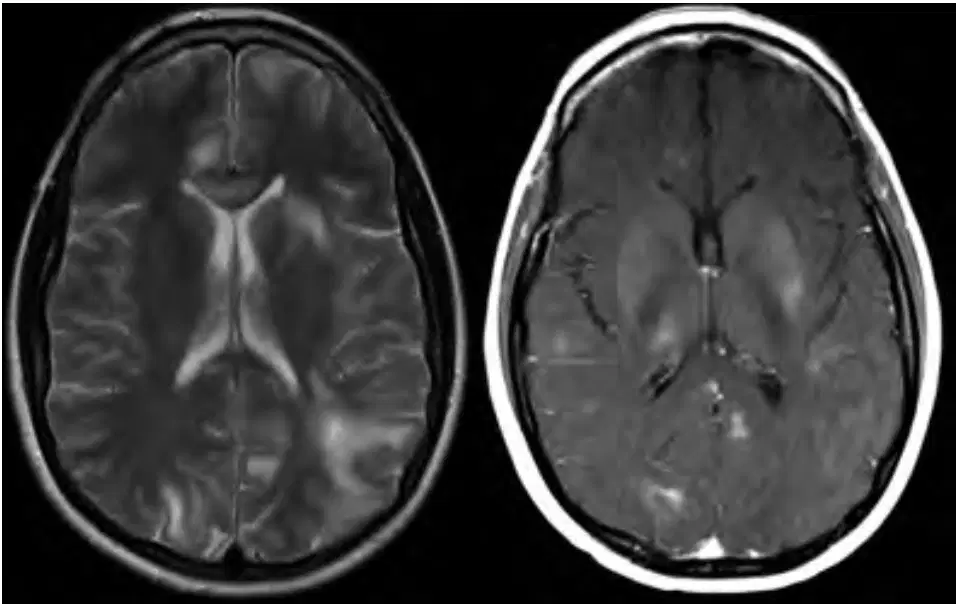
A 38-year-old woman with a history of Hodgkin lymphoma treated with brentuximab presents with altered mental status. Axial T2- and postcontrast T1-weighted images of the brain are shown in these images. The lesions did not show restricted diffusion. What is the likely diagnosis?
Immune reconstitution inflammatory syndrome
Acute disseminated encephalomyelitis
Tumefactive demyelination
Central nervous system lymphoma
Nociceptive pain travels along what spinal tract?
Lateral spinothalamic tract
Anterior spinothalamic tract
Dorsal spinocerebellar tract
Dorsal columns
What is the Magerl technique for placement of lateral
mass screws?
Use a starting point 1 mm medial to the midpoint of the lateral mass and
the midpoint of the mass in the craniocaudal axis, and aim 30 degrees laterally
and 15 degrees cephalad.
Use a starting point 2 mm medial and 1 to 2 mm superior to the center of
the lateral mass, and aim 20 to 25 degrees laterally and 30 Degrees
superiorly (parallel to facet joint).
Use a starting point at the midpoint of the mediolateral and craniocaudal axes
of the lateral mass, and aim 0 to 10 degrees laterally and 0 degrees in
the craniocaudal axis.
Use a starting point at the contralateral spinolaminar junction, and aim toward
the junction of the transverse process and contralateral superior facet.
Use a starting point at the mid–facet line where the superior facet joins
the transverse process, and aim 5 to 10 degrees medially and 10 to 20
degrees caudally
A 53-year-old man patient with a sudden onset of headache and meningismus underwent a CT of the head that showed a small amount of subarachnoid blood limited to the prepontine and interpeduncular cisterns. Conventional angiography at admission and 2 weeks later was negative for a vascular lesion. What is a characteristic of this patient’s likely entity?
It has a high incidence of re-hemorrhage
It has a high incidence of hydrocephalus.
It represents an aneurysm often obscured by vasospasm.
A sentinel headache usually is absent.
In patients with intracranial pressure monitors, what waveform is characterized by Traube-Hering arterial waves that have variable intracranial pressure elevations with a frequency of 4 to 8 per minute?
Lundberg A waves
Lundberg B waves
Lundberg C waves
Lundberg D waves
A man with clinical hypercortisolism undergoes a dexamethasone suppression test. He has no changes in his cortisol levels with low-dose dexamethasone administration; however, cortisol is suppressed with high-dose dexamethasone. What is the most likely diagnosis?
Cushing syndrome
Ectopic ACTH productionAddison disease
Cushing disease
Addison disease
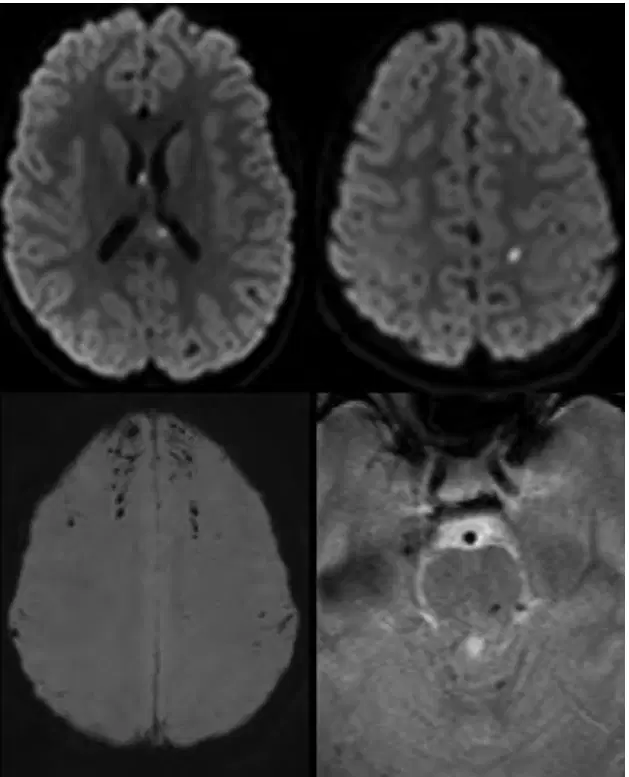
What is the likely diagnosis represented in the gradient echo based and diffusion-weighted sequences shown in these images?
Chronic hypertensive encephalopathy
Cortical contusions
Fat embolism
Septic emboli
Diffuse axonal injuryv
What is the etiology of blindness unique to the transseptal approach to the sella turcica?
Damage to cranial nerves from a cavernous sinus hematoma
Orbital wall fracture
Devascularization of the optic chiasm
Injury to the ophthalmic artery
Injury to the optic radiations
A patient presents with polytrauma after a motor vehicle collision, with multiple skull base and facial fractures. The patient is discharged and returns with chemosis, pulsatile proptosis, and an ocular bruit. Angiogram reveals a low-flow shunt feeding from meningeal branches of the external carotid artery. What type of carotid-cavernous fistula does this patient have?
Type A
Type B
Type C
Type D
. What is the precursor amino acid involved in the synthesis of melatonin?
Tryptophan
Glycine
Proline
Tyrosine

