
 Worksheets
Chemical Reactions Test
Total questions: 23
Worksheet time: 12mins
The law of conservation of mass states…
Matter can be created and destroyed.
Matter can be created but not destroyed.
Matter cannot be created OR destroyed.
A coefficient indicates how many (a) there are of a substance.
Molecules
Moles
Atoms
A subscript in a chemical formula indicates how many (a) there is in a substance.
Molecules
Moles
Atoms
How many total atoms are in the formula C₆H₁₂O₆?
18
27
24
How many total atoms are in the formula Mg(ClO₄)₂?
9
11
12
How many moles are in the formula 2CO₂?
4
3
2
The reactants are on the (a) side of the equation, while the products are on the (b) .
Right
Left
Above
Below
List 4 pieces of evidence that a chemical reaction has occurred:
Possible answers: color change, temperature change, gas production, formation of a precipitate
Possible answers: melting, freezing, boiling, condensation
Possible answers: dissolving, filtering, evaporating, mixing
Possible answers: breaking, tearing, crushing, folding
A chemical reaction can be reversed. In other words, you can change the products back to the original reactants.
True
False
When a reaction creates and emits heat it is (exothermic/endothermic). However when a reaction absorbs heat and is cold to the touch, it is (exothermic/endothermic).
exothermic; endothermic
endothermic; exothermic
exothermic; exothermic
endothermic; endothermic
Label the following reaction types. Use letters to indicate the type of reaction. (S) synthesis (D) decomposition (SR) single-replacement (DR) double-replacement _____ Fe + H2O → Fe3O4 + H2
SR (single-replacement)
S (synthesis)
D (decomposition)
DR (double-replacement)
Label the following reaction types. Use letters to indicate the type of reaction. (S) synthesis (D) decomposition (SR) single-replacement (DR) double-replacement _____ SO2 + H2O → H2SO3
S (synthesis)
D (decomposition)
SR (single-replacement)
DR (double-replacement)
Label the following reaction types. Use letters to indicate the type of reaction. (S) synthesis (D) decomposition (SR) single-replacement (DR) double-replacement _____ FeS + HCl → H2S + FeCl2
DR (double-replacement)
S (synthesis)
D (decomposition)
SR (single-replacement)
Label the following reaction types. Use letters to indicate the type of reaction. (S) synthesis (D) decomposition (SR) single-replacement (DR) double-replacement _____ NaNO3 → NaNO2 + O2
D (decomposition)
S (synthesis)
SR (single-replacement)
DR (double-replacement)
Balance the following equations: a. __ H2 + __ O2 → __ H2O
2 H2 + 1 O2 → 2 H2O
1 H2 + 2 O2 → 2 H2O
2 H2 + 2 O2 → 2 H2O
1 H2 + 1 O2 → 1 H2O
Balance the following equations: b. __ N2 + __ H2 → __ NH3
1 N2 + 3 H2 → 2 NH3
1 N2 + 2 H2 → 2 NH3
2 N2 + 3 H2 → 2 NH3
1 N2 + 3 H2 → 1 NH3
Balance the following equations: c. __ Na + __ Cl2 → __ NaCl
2 Na + 1 Cl2 → 2 NaCl
1 Na + 1 Cl2 → 2 NaCl
2 Na + 2 Cl2 → 2 NaCl
2 Na + 1 Cl2 → 1 NaCl
Balance the following equations: d. __ Mg + __ O2 → __ MgO
2 Mg + 1 O2 → 2 MgO
1 Mg + 1 O2 → 1 MgO
2 Mg + 2 O2 → 2 MgO
1 Mg + 2 O2 → 1 MgO
e. __ Al + __ O2 → __ Al2O3 Fill in the blanks to balance the chemical equation.
4 Al + 3 O2 → 2 Al2O3
2 Al + 3 O2 → 2 Al2O3
2 Al + 2 O2 → 2 Al2O3
3 Al + 2 O2 → 2 Al2O3
f. ___ K + ___ Cl2 → ___ KCl Fill in the blanks to balance the chemical equation.
2 K + 1 Cl2 → 2 KCl
1 K + 2 Cl2 → 2 KCl
2 K + 2 Cl2 → 2 KCl
1 K + 1 Cl2 → 1 KCl
g. ___ GaF3 + ___ Cs → ___ CsF + ___ Ga Fill in the blanks to balance the chemical equation.
1 GaF3 + 3 Cs → 3 CsF + 1 Ga
2 GaF3 + 2 Cs → 2 CsF + 2 Ga
1 GaF3 + 2 Cs → 2 CsF + 1 Ga
3 GaF3 + 1 Cs → 1 CsF + 3 Ga
h. ___ BaS + PtF2 → ___ BaF2 + ___ PtS Fill in the blanks to balance the chemical equation.
1 BaS + 1 PtF2 → 1 BaF2 + 1 PtS
2 BaS + 1 PtF2 → 2 BaF2 + 1 PtS
1 BaS + 2 PtF2 → 1 BaF2 + 2 PtS
2 BaS + 2 PtF2 → 2 BaF2 + 2 PtS
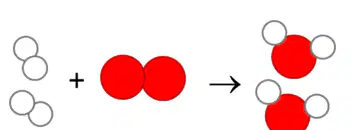
Is the equation below balanced?
yes
no

