
NEW
Font size
 Worksheets
Science EOY Review
Total questions: 24
Worksheet time: 18mins

The table below shows the classification of four animals. Based on this information, which two animals are most closely related?
A. Bottlenose dolphin and Gray wolf
B. Western gorilla and mountain lion
C. Gray wolf and mountain lion
D. All four are equally related
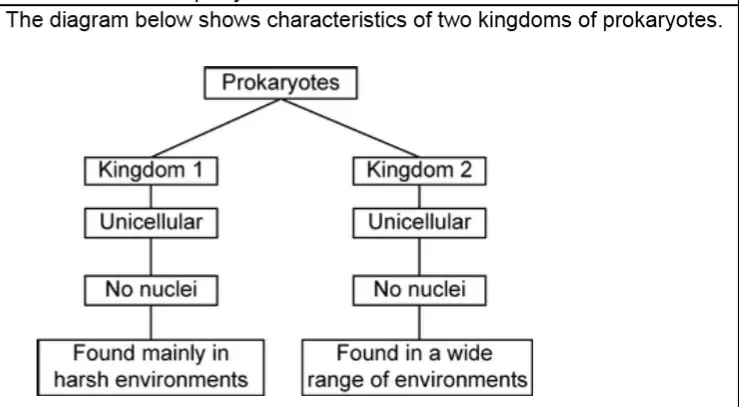
What is Kingdom 1 in the diagram?
Kingdom Plantae
Kingdom Protista
Kingdom Bacteria
Kingdom Archaea
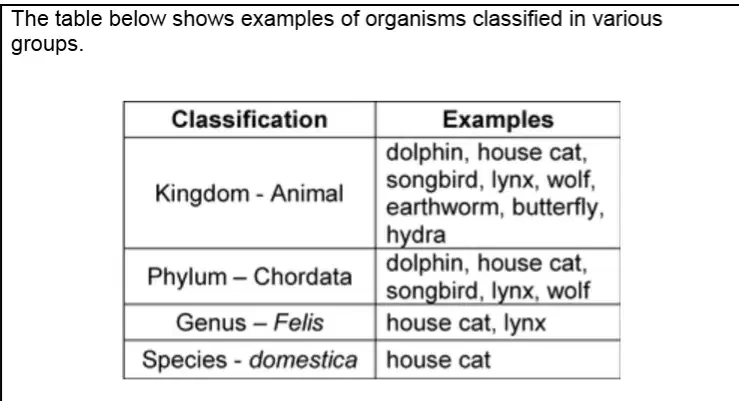
Based on this classification, which organism is the house cat most closely related to?
Dolphin
Lynx
Wolf
Songbird
Which statement describes the importance of organisms in the Kingdom Bacteria to ecosystems?
E. coli, a bacterium, can be found in the human digestive tract and helps promote digestive health.
Organisms in forests would not survive without mushrooms decomposing matter around them.
Extremophiles can make their own energy using light or chemicals, which can be beneficial to the ecosystem.
Marine ecosystems would not thrive without photosynthesizing organisms such as algae.
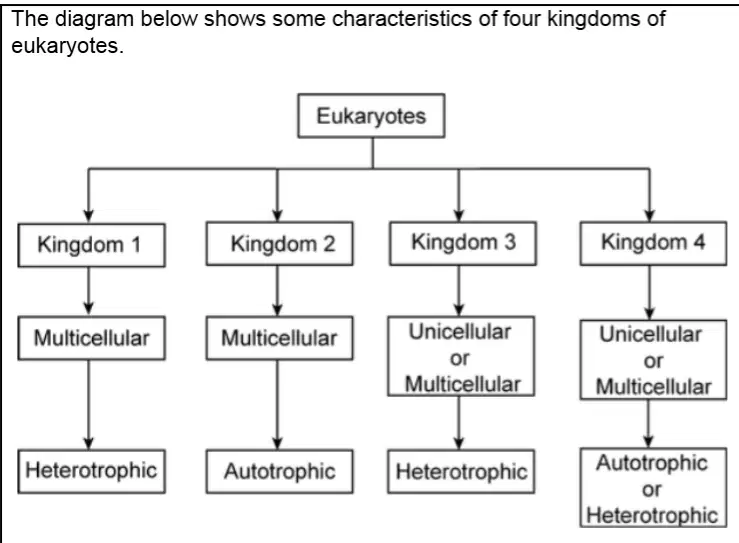
Which of these is the animal kingdom?
Kingdom 1
Kingdom 2
Kingdom 3
Kingdom 4
Which statement correctly describes the principles of taxonomic classification?
A. Scientific names use the organism's domain and kingdom, with the kingdom name written in lowercase
B. The more taxonomic groups two organisms share, the more closely related they are
C. Taxonomic classification is based solely on physical appearance
D. The most specific classification level is domain
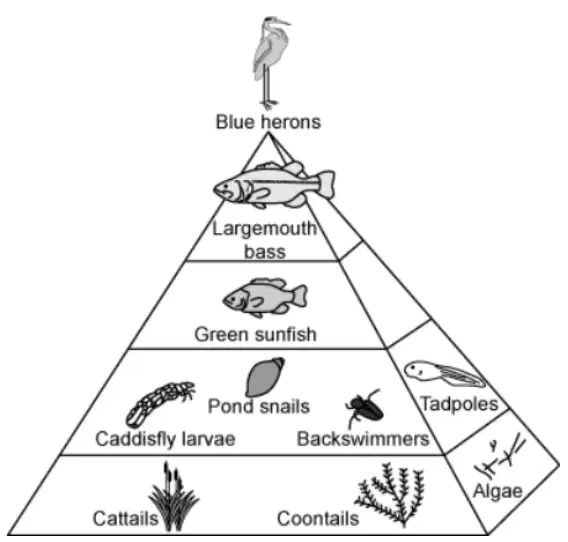
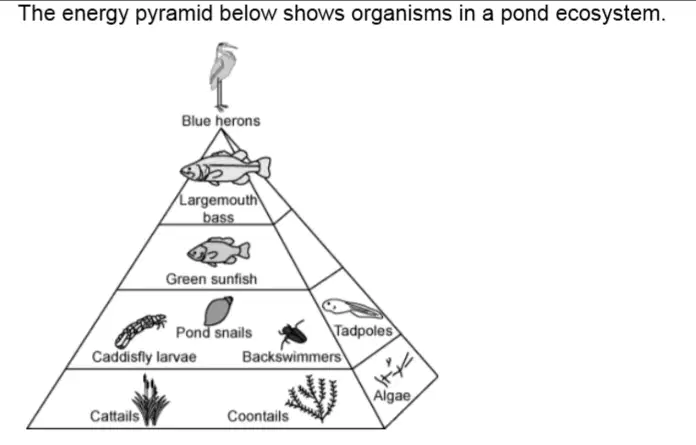
The energy pyramid below models the flow of energy in some pond food chains. Based on the model, which of these consumers would receive the greatest amount of energy from the producers in this energy pyramid?
A. Blue herons
B. Largemouth bass
C. Green sunfish
D. Pond snails
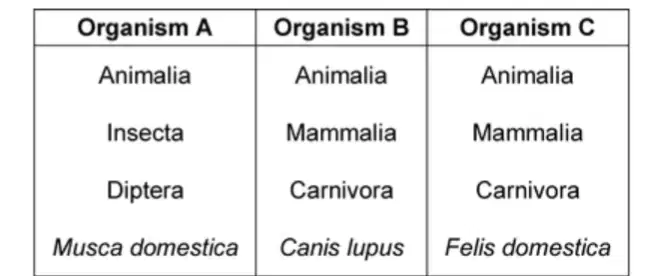
The table below shows the classification of three organisms. | Organism A | Organism B | Organism C | |------------|------------|------------| | Animalia | Animalia | Animalia | | Insecta | Mammalia | Mammalia | | Diptera | Carnivora | Carnivora | | Musca domestica | Canis lupus | Felis domestica | Based on this information, which two organisms are most closely related?
A. Organism A and Organism B
B. Organism A and Organism C
C. Organism B and Organism C
D. All three are the same organism
Mushrooms, yeasts, and molds are organisms that belong to one kingdom. What kingdom do these organisms belong to, and how does this kingdom contribute to ecosystems?
They break down organic material, playing a key role in nutrient cycling and belong to the kingdom Plantae.
They are important for nitrogen fixation and belong to the kingdom Archaea.
They decompose organic matter, returning essential nutrients to the soil and belong to the kingdom Fungi.
They aid in photosynthesis and belong to the kingdom Protista.
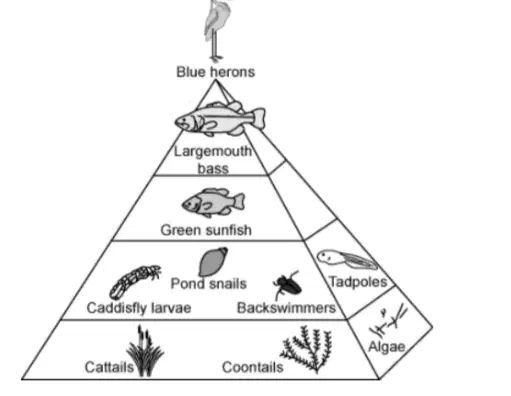
The energy pyramid below shows organisms in a pond ecosystem. Which organism is an example of a secondary consumer?
A. Green sunfish
B. Blue heron
C. Tadpole
D. Algae
Which organisms are producers, and have 100% of the total energy available to use?
Orcas
Phytoplankton
Seals
Squid
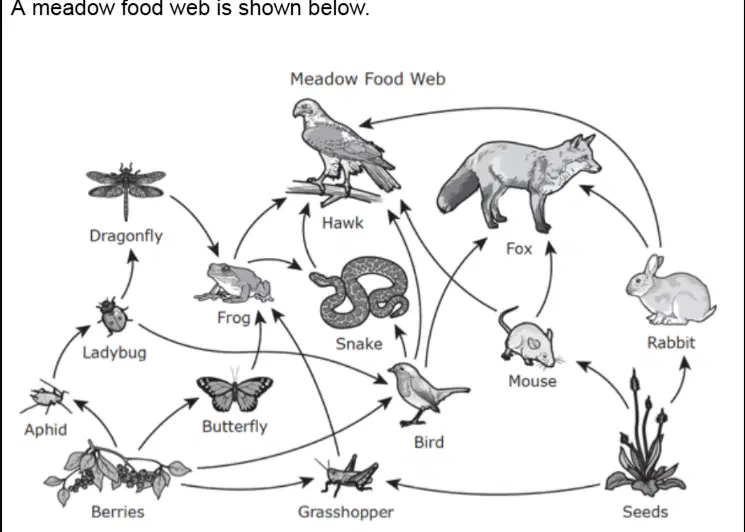
Based on this food web, which organisms are direct sources of energy for secondary consumers?
Snake and hawk
Dragonfly and fox
Frog and berries
Rabbit and aphid
In a nearby lake, there is a sudden increase in algae growth. This leads to a rapid population boom in zooplankton, primary consumers. How is this change likely to affect the energy flow to higher trophic levels?
Energy flow will decrease due to overpopulation of algae.
Only the producer level will be impacted since they store all available energy.
The energy flow to higher trophic levels will increase due to more food available.
The energy flow will stop because zooplankton do not transfer energy.
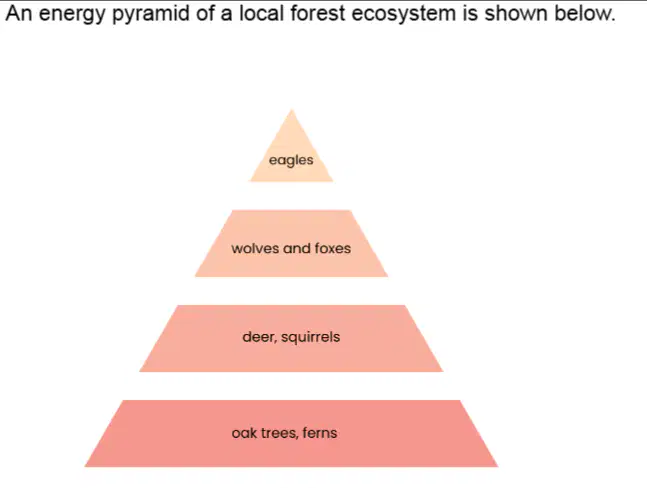
Based on this pyramid, which of these is correct about this forest ecosystem?
Deer and squirrels receive approximately 10% of the energy contained in oak trees and ferns.
Oak trees and ferns receive their energy directly from tertiary consumers.
Eagles receive approximately 90% of the energy contained in wolves and foxes.
Wolves and foxes receive approximately 50% of the energy contained in oak trees and ferns.
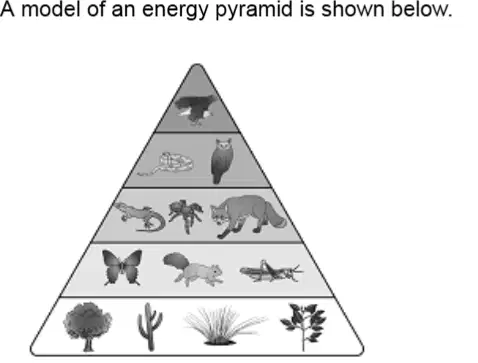
Which statement correctly describes the energy in the trophic levels moving up the energy pyramid?
Energy increases at each higher trophic level.
Energy remains the same at all trophic levels.
Energy decreases at each higher trophic level.
Energy is not transferred between trophic levels.
How much of the available energy from one trophic level is transferred to the next trophic level on average in a food chain?
10%
20%
50%
90%
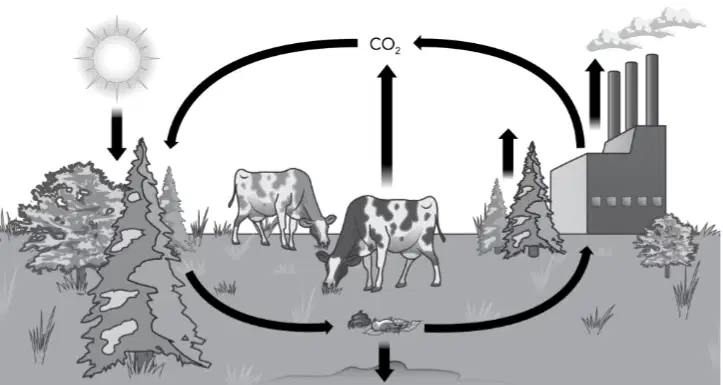
The diagram below shows interactions in the carbon cycle. Which statement correctly describes the carbon cycle?
A. Animals use carbon dioxide from the air for growth. The carbon flows from plants to the sun.
B. Animals use carbon dioxide from the sun for growth. They restore carbon to the plants.
C. Plants use carbon dioxide from the air to produce food made from carbon for plant growth. Animals eat the plants. Carbon moves from plants to animals.
D. Plant use carbon dioxide from the sun to produce food for plant growth. Animals eat the plants. Carbon moves from animals to plants.
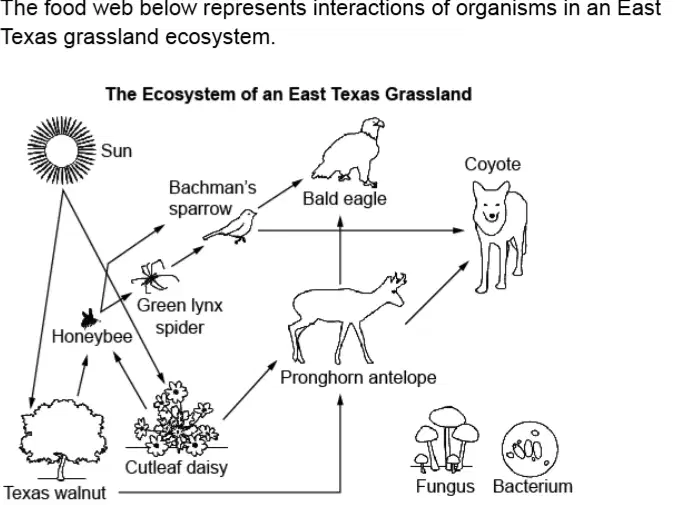
Which of these is true regarding the transfer of matter, keeping deceased organisms from accumulating?
Matter is transferred from decomposers to producers, and consumers break down the remains of both types of organisms.
Matter is transferred from the Sun to decomposers, and remains from decomposers are taken in by producers.
Matter is transferred from the Sun to consumers, and consumers help decomposers break down the remains of producers.
Matter is transferred from producers to consumers, and remains from both types of organisms are broken down by decomposers.
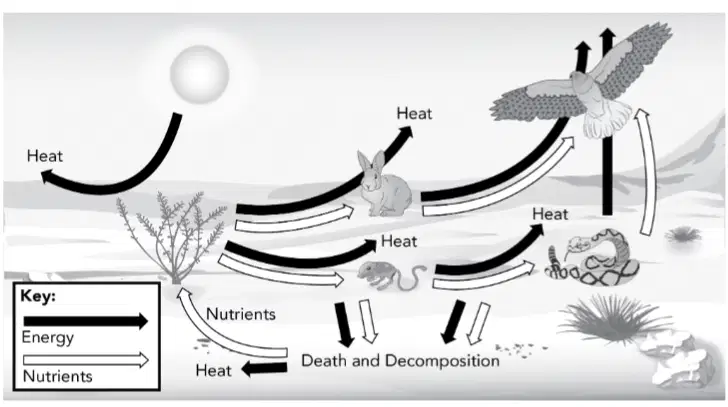
A model of an ecosystem is shown below. (Diagram: A model of an ecosystem with arrows showing energy, nutrients, heat, and decomposition) Which of these describes the flow of energy in this ecosystem?
The sun provides energy to the plants. The rabbit, hawk, and snake eat the plants. Then the snake eats the hawk, and the snake decomposes to provide nutrients to the soil.
The sun provides energy to the plants. The rabbit eats the plants, the snake eats the rabbit, then the hawk eats the snake. The snake or rabbit will decompose and provide nutrients to the soil and plants.
The sun provides energy to the rabbit. The rabbit eats the snake. The hawk eats the rabbit. Then the sun provides nutrients to the soil.
The sun provides energy to the hawk. The rabbit eats the snake and then the hawk eats the rabbit. The snake or rabbit will decompose and provide nutrients to the soil and plants.
Which of these best describes how nitrogen cycles through parts of an ecosystem?
Nitrogen in the atmosphere is taken up by secondary consumers and later passed back to the soil by primary consumers.
Nitrogen in the atmosphere is taken up by tertiary consumers and later passed back to the soil by primary consumers.
Nitrogen in the soil is taken up by producers and later passed back to the soil by decomposers.
Nitrogen in the soil is taken up by primary consumers and later passed back to the soil by producers.
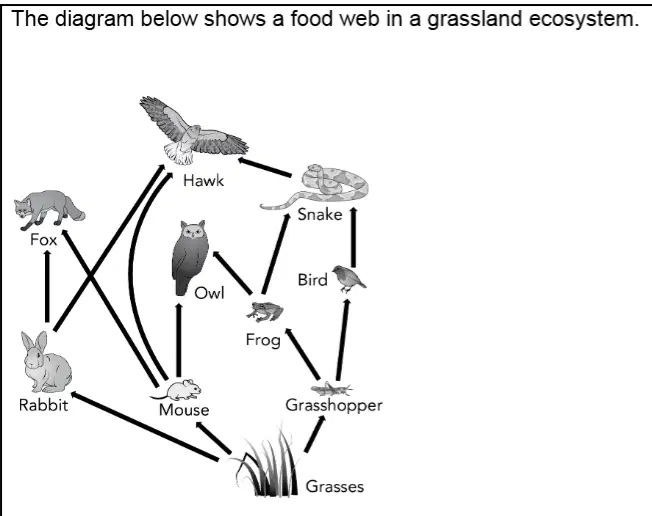
How does energy enter this ecosystem?
Through the grasses by photosynthesis
Through the hawk from decomposition
Through the rabbit from the fox
Through the bird from the snake
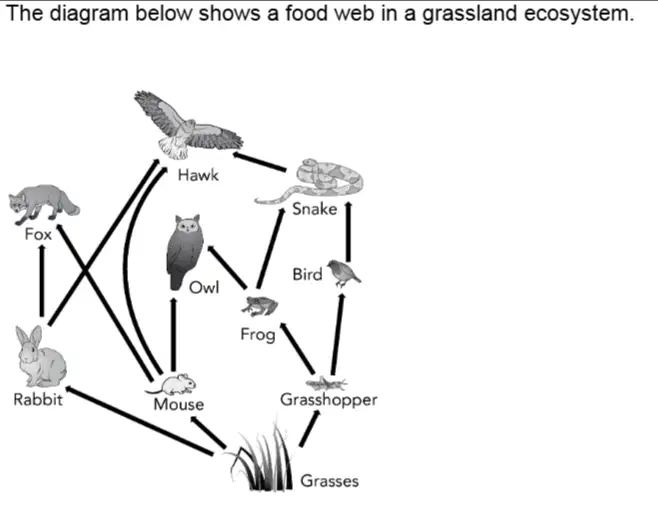
How does the water cycle help sustain an ecosystem?
It moves energy throughout all parts of the ecosystem.
It helps the sun add energy to the trees and grasses.
It removes water and waste from the ecosystem.
It cycles water throughout the ecosystem.
Which of these best explains the role of decomposers in the cycling of matter in a food web?
Decomposers supply nutrients for consumers when consumers eat them.
Decomposers use large amounts of nutrients and store them in their bodies.
Decomposers break down dead organisms and restore nutrients to the soil.
Decomposers are not involved in the food web or recycling of nutrients.
Which processes cycle matter and help to sustain an ecosystem and keep it healthy?
Water cycle
Nitrogen cycle
Carbon cycle
All of the above

