
 Worksheets
Myasthenia Gravis Case Study Worksheet
Total questions: 17
Worksheet time: 9mins
Após descobrir esse histórico familiar da paciente, qual deve ser a conduta médica adequada?
Solicitar exames genéticos e encaminhar para aconselhamento genético
Aguardar novos sintomas antes de agir
Prescrever tratamento sem investigação adicional
Ignorar o histórico familiar
O que fazer agora?
examinar o olho da paciente.
avaliar a região cervical anterior (pescoço) da paciente.
examinar o olho e o pescoço.
Qual exame deve ser indicado para um paciente com dor na região do pescoço?
Raio-X cervical
Eletrocardiograma
Ultrassonografia abdominal
Endoscopia
What procedure would be indicated after these symptoms of discomfort in the face and throat and nasal voice?
cranial tomography to check for stroke.
give antibiotics for flu.
request tomography of the paranasal sinuses to rule out possible sinusitis.
On September 10, the patient returned to the consultation with the result of the CT scan of the paranasal sinuses, which revealed ________.
no significant changes
severe sinusitis
a nasal polyp
evidence of a tumor
The patient reported difficulty in closing her eyes completely.
True
False
The patient reported blurred vision, facial paresthesias when smiling, and difficulty swallowing. What is the medical term for difficulty swallowing?
Dysphagia
Dysphasia
Aphonia
Dysarthria
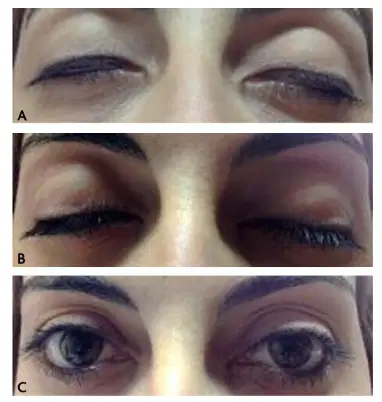
Which exam would you recommend to assess possible brain injury after these symptoms?
Magnetic resonance imaging (MRI)
Computed tomography (CT) scan
Electroencephalogram (EEG)
X-ray
Based on this information, have you already made a diagnosis or do you need more exams?
Diagnosis already made
Need more exams
What did the electromyography with repetitive nerve stimulation of the radial nerve reveal?
Significantly deficient response.
Normal response.
Increased muscle tone.
No detectable electrical activity.
What was the result of the anti-AChR (acetylcholine receptor) antibody test?
Positive result.
Negative result.
Inconclusive result.
Test not performed.
What medication was prescribed that is an acetylcholinesterase inhibitor for treatment?
Pyridostigmine.
Atenolol.
Furosemide.
Metformin.
Which immunosuppressive medications were indicated for better symptomatic control in this case?
Azathioprine and Prednisolone.
Methotrexate and Aspirin.
Ibuprofen and Paracetamol.
Cyclosporine and Metformin.
23: The diagnosis for this case report is:
Diabetes Mellitus
Hypertension
Acute Appendicitis
Pneumonia
What, within the case report, indicates Myasthenia Gravis?
Ptosis (drooping of the eyelid) → due to weakness of the levator palpebrae muscle
exophthalmos
dysphagia
sensation of heaviness in the eyes with difficulty fully closing the eyelids
facial paresthesia
According to the passage, why do patients with chronic neurological diseases need regular neurological consultations?
Because of the chronic nature of the disease and the risk of fluctuations, both in clinical evolution and in response to treatment.
Because regular consultations are required by hospital policy for all patients.
Because neurological diseases can be completely cured with frequent visits.
Because patients with chronic neurological diseases do not require any medication.
According to the passage, what should patients be trained to recognize and report immediately?
An imminent respiratory crisis.
A mild headache.
A change in appetite.
A slight increase in thirst.

