
Font size
 Worksheets
Civics Final Exam Review
Total questions: 200
Worksheet time: 2hrs 40mins
Which of these is a power of the Judicial branch?
Appoint judges to Federal courts
Create and pass tax laws
Declare laws unconstitutional
Conduct foreign policy
Which of these is a power of the Legislative branch?
Interpret laws
Enforce laws
Declare war
Negotiate treaties
The person considered to be the leader of the national Executive branch is known as the
Whip
Speaker
Chief Justice
President
Which of these is a power that the President of the United States can exercise?
Vote for a bill that is being discussed in Congress
Overturn an unconstitutional state law
Veto a bill passed by Congress
Declare a federal law unconstitutional
The "elastic clause" in the US Constitution
Created a federal system for the United States.
Expanded voting in the United States.
Expands the powers of Congress.
Lists the powers of the executive branch.
Legislative, Judicial, and Executive powers are essentially held by different groups and people in the American Government. What principle of government is this?
Reserved powers
Checks and balances
Expressed powers
Separation of Powers

Why would the Founders have structured the government to force the individual branches to work together?
So no branch abuses its power
So the Americans could use their votes for Congressmen to influence the other branches
So the leadership of each branch would never meet and work together.
To avoid going back to a dictatorship.
The Senate confirms presidential appointments/nominations to the Supreme Court. What principle of American government is this?
Executive Privilege
Judicial Review
Checks and balances
Popular Sovereignty
What role does the Executive branch play in checking the power of Congress?
The President can declare war on other countries.
The President can decide that laws of Congress are unconstitutional
The President can veto Congressional legislation (bills)
Congress can create post offices and can impeach judges

Which constitutional principle is shown in the chart?
The absolute power of Congress.
The weakness of the presidency
Judicial activism throughout US history.
Checks and balances in government.
The right to peacefully assemble is a 2nd amendment right
True
False
Freedom of Religion
2nd
1st
3rd
4th
The 4th amendment projects you from ________________ searches
unreasonable
reasonable
government
You are entitled to a _____________ and _______________ under the 6th amendment
speedy & fast
speedy & public
speedy & private
What fraction of the houses of Congress is necessary to approve a proposed amendment?
2/3
1/3
3/4
4/5
Who shares power according to the principle of federalism set up in Article VI?
They believed that the Constitution should only be changed with overwhelming support of the people.
Which case established the principle of judicial review?
McCulloch v. Maryland
Marbury v. Madison
Dred Scott v. Sandford
Engel v. Vitale
Which case led to the desegregation of schools?
Brown v. Board
Plessy v. Ferguson
Tinker v. Des Moines
Hazelwood v. Kuhlmeier
Which case decided that state courts must appoint lawyers for defendants who can’t afford one?
Gideon v. Wainwright
Miranda v. Arizona
Mapp v. Ohio
Texas v. Johnson
“Separate but equal” is lawful according to which case?
Brown v. Board
Dred Scott v. Sandford
Engel v. Vitale
Plessy v. Ferguson
The ruling in this case led to law enforcement being required to advise suspects of their 5th & 6th amendment rights.
Gideon v. Waintwright
In re Gault
Miranda v. Arizona
Mapp v. Ohio
This case determined that Congress can establish banks through the “necessary and proper clause”
McCulloch v. Maryland
United States v. Nixon
Citizens United v. FEC
D.C. v. Heller
The ruling in this case ensure students do not lose 1st amendment rights while at school
Engel v. Vitale
Hazelwood v. Kuhlmeier
Tinker v. Des Moines
In re Gault
This case makes it clear that President's do not have absolute executive privilege
Bush v. Gore
Mapp v. Ohio
United States v. Nixon
Korematsu v. United States
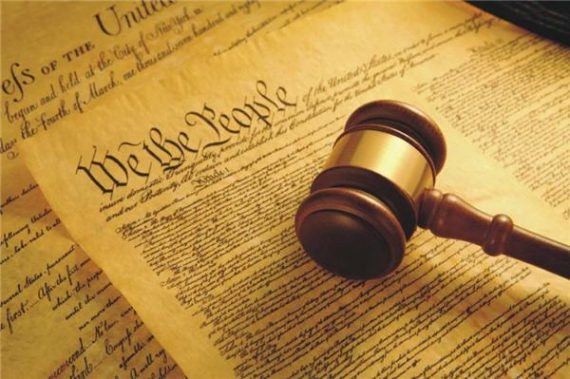
What is it called when the U.S. Supreme Court decides whether something is legal or illegal (unconstitutional)?
supreme court review
due process
segregation
judicial review

The Electoral College was created because:
The Founders wanted to empower the common man
The Founders believed the common man was not informed enough to vote directly
It was a compromise between states
It was a method to increase voter turnout
Which of the following is a source of campaign funding?
Private contributors and Political Action Committees (PACs)
Only government grants
Only public donations
Only corporate sponsorships
A precinct is defined as:
A type of voting machine
A voting district
A political party meeting
A campaign strategy
How does the media influence politics?
By only reporting facts without bias
By shaping public opinion and candidate behavior
By preventing candidates from using advertisements
By eliminating the need for public opinion polls
Public opinion polls are used by candidates to:
Determine their opponents' strategies
Measure the effectiveness and of media coverage
Predict the outcome of elections with certainty
Gauge voter support and adjust their campaigns accordingly
Why are taxes considered a civic duty, even though they are mandatory?
Taxes are a way for citizens to earn money from the government
Taxes are optional contributions that citizens can choose to pay
Taxes are only required for those who own property
Taxes fund public services that benefit all citizens, making them a collective responsibility
The major function of political parties in America is
Educating the public
Presenting solutions to problems
Keeping the party in power responsible to the people
Nominating candidates for public office and presenting them to voters
A reason why Third-Parties (Minor Parties) in this country struggle are
Lack of Money
The United States has historically been a two-party system
Our electoral system makes it difficult for Third Parties to compete
All of the above
How many electoral votes does a presidential candidate need to win?
150
200
270
538
True or False: Candidates, by law, must disclose where their funding is coming from.
True
False
True or False: Presidents are elected based on the popular vote
True
False
True or False: Third-Party (Minor Party) candidates never have any impact on the U.S elections.
True
False
Which of the following most closely resembles a Republican viewpoint?
Government should be quite involved in everyday lives of Americans
Government should be less involved in social programs
Government involvement in the economy is the best way to keep the economy thriving
Government involvement in the economy is the best way to keep the economy thriving
Which spending increase would the DEMOCRATIC party likely support?
Homeland Security
Education
Space Exploration
Military
Candidates for the larger political parties are chosen at party meetings called
conventions
delegates
campaigns
the Electoral College
True or False: The voting age has been 18 since the Bill of Rights were added to the US Constitution.
True
False
Which of the following is NOT a requirement for being eligible to vote in the U.S.
You have to be 18 or older
You have to be a citizen or naturalized citizen of the U.S.
You have to be a taxpayer
You have to meet citizen requirements for your state and be registered by a specified date before an election.
Why is freedom of the press important for a functioning democracy?
Freedom of the press is not important for a functioning democracy.
Freedom of the press leads to misinformation and confusion.
Freedom of the press hinders government control and authority.
Freedom of the press allows for the dissemination of information, promotes transparency and accountability, and enables citizens to make informed decisions.
How does the media influence public opinion on political issues?
The media influences public opinion on political issues through advertising and propaganda.
The media influences public opinion on political issues through framing, agenda setting, and selective reporting.
The media influences public opinion on political issues by providing unbiased and objective reporting.
The media has no influence on public opinion on political issues.
How can the media provide oversight and checks on the political system?
By ignoring political scandals and corruption
By conducting investigative journalism, fact-checking political statements, holding politicians accountable through reporting, and providing a platform for public discourse and debate.
By promoting biased reporting and favoring certain political parties
By spreading misinformation and propaganda
Power is shared between federal & state/local gov'ts. Power struggles between federal & state/local gov'ts can happen.
confederal
fascist
federal
unitary
What kind of power is making laws?
expressed
inherent
concurrent
implied

What is column one?
expressed
reserved
concurrent
implied

What is column 2?
expressed
concurrent
reserved
implied

What is column 3?
expressed
implied
concurrent
reserved
The national government can declare war, the states set up local governments, and both state and national governments can tax. This is an example of
checks and balances
separation of powers
federalism
popular sovereignty
Which of the following is a responsibility of the state government?
public schools
elect mayors
public sewers
deliver mail
States must honor the legality of one another’s civil laws because of the
Necessary and Proper Clause
Full Faith and Credit Clause
Supremacy Clause
Interstate Compacts Clause
The _____ Amendment reserves to the states all powers not given to the federal government or denied to the states.
2nd
10th
14th
22nd
Who/What appoints federal judges?
Congress
President
Supreme Court
Police stations
A committee created to reconcile differences in bills passed by the House and Senate
Conference Committee
Standing Committee
Joint Committee
Select Committee
A permanent committee in Congress
Standing Committee
Conference Committee
Joint Committee
Select Committee
A committee made of members from the Senate and the House of Representatives
Joint Committee
Standing Committee
Conference Committee
Select Committee
A temporary committee appointed for a specific purpose
Select Committee
Joint Committee
Standing Committee
Conference Committee
Allows for members of Congress and their staff to send mail to their constituents or supporters without having to pay postage
Franking Privilege
Gerrymandering
Packing
Cracking
The official count of the US population, conducted every 10 years
Census
Referendum
Incumbent
Cloture
Manipulating the boundaries of a congressional district, so as to favor one party or class
Gerrymandering
One-Person, One-Vote
Packing
Cracking
A tactic used in the Senate to delay or prevent votes on a specific proposal
Filibuster
Cloture
Gerrymandering
Packing
According to the Constitution, which type of bill must originate in the House of Representatives?
Appropriations bills
Tax bills
Public bills
Private bills
For a bill to become a law, it must...
receive a majority vote in both chambers and then be signed by the president
receive a majority vote in the house and then be signed by the president
receive a majority vote in the senate and then be signed by the president
Only the Senate deals with national business. The House deals with state business.
True
False
Who can introduce a bill?
Only a member of Congress can introduce a bill.
Any citizen can introduce a bill.
Only the President can introduce a bill.
Members of the Senate can introduce a bill, but not members of the House.
Approval of government spending.
Approval of government spending lies with the President.
Approval of government spending is determined by the Supreme Court.
Approval of government spending, or appropriation, lies with Congress.
Approval of government spending is managed by state governments.
Overriding a presidential veto.
Congress can override a presidential veto with a simple majority vote.
Congress can override a presidential veto, but it requires a two-thirds vote in both houses.
The Supreme Court can override a presidential veto if deemed unconstitutional.
The President can veto a congressional override of his veto.
What is the role of interest groups in representing individuals, corporate interests, and the public before government?
To elect candidates under a party label
To directly control the operations of government
To inform the public and lawmakers about issues
To enforce government actions
What is the primary focus of interest group activity?
Electing candidates under a party label
Promoting policies that benefit their interests
Controlling the operations of government
Crossing party lines
What do interest groups do to influence political participation?
Encourage voting, campaigning, and contacting lawmakers
Develop grassroots movements from the top down
Frame issues that benefit their causes
Monitor government programs
How do interest groups influence through elections?
By supporting candidates who are sympathetic to their views
By forming political action committees (PACs)
By providing information to lawmakers
All of the above
What does the Federal Election Campaign Act do?
Established zero limits on campaign contributions
Placed legal limits on campaign contributions.
Assigned a banned on campaign contributions
Invoked a temporary hold on campaign contributions
Which one of Locke’s ideas about government was included in the Declaration of Independence?
The government should control all aspects of life.
There should be no government.
A monarchy is the best government.
Government gets its right to govern from the consent of the people (Social Contract)
These rights include life, safety, the ability to earn a living, basic necessities
civil rights
political rights
natural rights
right of revolution
These Constitutional rights protect us from the government having too much power over all people.
civil rights
civil liberties
natural rights
all the above
What is the term for the governments' ensuring of equal protection and freedom from discrimination?
civil rights
civil liberties
civil air patrol
civil actions

Jensen has been in a wheelchair for most of his life. He enjoys being outside, but the curbs down the street have not been modified for wheelchair access, so he can't travel safely for very far. Is this a violation of his civil rights or his civil liberties?
Civil Rights
Civil Liberties
Both civil rights and civil liberties
no violation has occured

Allison and her high school friends, all under the age of 16, decide to go to the mall on Friday night, 8:00pm, past the local curfew for their age. The mall security refuses to let them enter saying they are too young and there is no adult supervision with them. Have these teenagers suffered a violation of their civil rights or civil liberties?
Civil Rights
Civil Liberties
Both Civil Rights and Civil Liberties
No violation has occurred

The NAZI Party of Westminster has applied for a permit to hold a rally in the city's park near a statue of Robert E. Lee. The mayor and county council have instructed the city police department not to issue the permit. Has the NAZI Party suffered a violation of their Civil Rights or Civil Liberties?
Civil Rights
Civil Liberties
Both Civil Rights and civil liberties
No violation has occurred
Who controls fiscal policy?
The Federal Reserve
The Federal Government
The FBI
Federal Income Tax
During economic crisis, the primary role of the Federal Government is to promote a healthy economy by...
controlling the budget
setting spending levels
manipulating taxes and government spending
loaning out money
Increasing taxes...
increases money supply
decreases money supply
Actions by Congress to stabilize the economy.
Fiscal Policy
Monetary Policy
Taxing Policy
Inflation Policy
Actions by the Federal Reserve Bank to stabilize the economy
Fiscal Policy
Monetary Policy
Taxing Policy
Inflation Policy
Deficit Spending:
If the Government decreases spending without decreasing taxes they will decrease the annual deficit and the national debt.
If the Government increases spending without increasing taxes they will increase the annual deficit and the national debt.
is the accumulation of all the budget deficits over time.
Budget Deficit
Budget Surplus
National Debt
Global Debt
the effort by Congress, through hearings, investigations, and other techniques, to exercise control over the activities of executive agencies
impeachment
oversight
conference committee referral
general inspection
independent audit organizations located in most federal agencies
inspectors general
attorney general
brigadier general
general assembly
the agency in the Executive Office of the President with control over the federal budget and regulations
Council of Economic Advisors
General Services Administration
Treasury Department
Office of Management and Budget (OMB)
the 15 departments in the executive branch headed by Cabinet secretaries and constituting the majority of the federal bureaucracy
executive departments
executive office of the cabinet
executive government corporations
corporate departments
What role do bureaucrats play in the federal bureaucracy?
A) They oversee the legislative process
B) They carry out specific tasks and implement legislation and executive orders
C) They manage the judicial system
D) They control the military operations.
the departments and agencies within the executive branch that carry out the laws of the nation.
federal bureaucracy
bureaucrat
political patronage
Pendleton Act
What is the primary responsibility of regulatory agencies such as the Food and Drug Administration (FDA) and the Federal Aviation Administration (FAA)?
maintain citizen health and safety
create new jobs
control the supply of money
set prices for goods and services
Regulatory agencies write new laws and are part of the legislative branch of government.
true
false
What is the term used for the government's restriction and control over business practices?
Monopolization
Regulatory policy
Deregulation
Overregulation
What is the main purpose of the Federal Trade Commission?
To promote monopolies
To oversee government regulation of business practices
To increase government control
To achieve equity goals
What is the potential downside of monopolization?
Increased competition
Boosting economic efficiency
Lower prices for consumers
Lack of competition and higher prices for consumers
The Fed, Federal Reserve System, regulates
US Banking System
Employee Rights
Safety of Food
Environment
Sale of Stocks
The EEOC, Equal Employment Opportunity Commission regulates
US Banking System
Employee Rights
Safety of Food
Environment
Sale of Stocks
The FTC, Federal Trade Commission, regulates
US Banking System
Employee Rights
consumer protection
Environment
Sale of Stocks
OSHA, Occupational Safety & Health Administration, regulates
Safety & Health of Work Place
Employee Rights
consumer protection
Environment
Sale of Stocks


Which of the following is NOT one of the main goals of foreign policy?
Protect the U.S. and Americans
Conserve America's public lands
Support economic growth and human rights
Increase support for American values, like democracy and freedom

Who has the power to negotiate treaties?
Supreme Court
Congress
President
Speaker of the House
An international organization formed after WWII to promote international peace, security, and cooperation
UN (United Nations)
EU (European Union)
NATO (North Atlantic Treaty Organization)
WHO (World Health Organization)
The increased flow of trade, people, technology, culture and ideas among countries.
Colonization
International trade
Globalization
Decolonization
This group promotes free trade
OPEC
WTO
United Nations
Globalization has increased due to
raised trade barriers
new trade organizations
increased communication
resource depletion

Samuel Adams was a member of the ________________________, a radical group who used extreme forms of protests such as burning British goods and tarring and feathering British tax collectors.
Sons of Liberty
Daughters of Liberty
Committees of Correspondene
First Continental Congress

As a response to the Townshend Act, colonists threw snowballs and clubs at British soldiers. British soldiers opened fire killing 5 colonists. This event is known as the _____________________________.
Boston Tea Party
Boston Massacre
The start of the American Revolution
The Battles of Lexington and Concord
Which argument most logically follows from Jefferson’s expressed ideas in the Declaration of Independence?
The rights of men should be supported over those of women.
Monarchy is a bad form of government because rulers are not elected.
All forms of government destroy human rights and should be abandoned.
Any form of government that suppresses people’s freedoms should be overthrown
What is the main idea of the Declaration of Independence?
The colonies are willing to fight to the death against Britain
The colonies are justified in rejecting British rule
The king should be removed from power forcefully
The king treats his other subjects better than the colonies
Who gives government the ability to govern?
The People
Parliament
The King
The Sons of Liberty
A ______________________________ is a government in which voters hold sovereign power; elected representatives, responsible to the people, exercise that power.
Consensus
Democracy
Republic
Social contract
Sovereignty
What are primary elections?
Elections where the party's candidate is chosen directly by the voters
Elections where the party's candidate is chosen by special interest groups
Elections where the party's candidate is chosen by political action committees
Elections where the party's candidate is chosen by caucuses
What is a "tariff"?
A type of cryptocurrency
A government tax on imports or exports
A financial aid program
A measure of cybersecurity
__________ is the governmental principle ensuring that government officials must follow the laws they make.
Checks and Balances
Rule of Law
Popular Sovereignty
Separation of Powers
The idea that government power comes from the people is known as...
limited government
popular elections
popular sovereignty
checks and balances
What type of legislative branch was created by the U.S. Constitution?
Unicameral
Bicameral
Single Branch
3 branch
The Connecticut Compromise sought to balance the interests of _______ and ________________.
free states and slave states
wealthy states and poor states
states with larger and smaller land areas
states with larger and smaller populations
The 3/5 Compromise was for the benefit of _________.
large states
states with a large enslaved population.
small states
free states
Congress must use a ______ system to investigate bills because there are so many to consider.
committee
judicial
partisan
legal
a person hired to influence politicians or political events
Interest Group
Party Platform
Lobbyist
Watchdog
the statement of policies of a national political party
Political Party
Party Platform
Democrats
Interest Group
the course of action the government takes in response to an issue or problem
Public Policy
Interest Group
Political Party
Party Platform
the president's ability to forgive someone of a crime
Justice
Impeachment
Pardon
Judicial Review
to formally bring charges against a president
Judicial Review
Precedent
Impeachment
Executive Order
hears a case in which someone lost in a lower court and asks judges to review the decision
Traffic Court
Juvenile Court
Appeals/Appellate Court
District Court
how similar cases have been decided in the past.
Original Jurisdiction
Checks & Balances
Precedent
Pardon
the authority to hear cases for the first time
Precedent
Judicial Review
Cabinet
Original Jurisdiction
group of advisors made up of the heads/secretaries of each of the 15 departments
Judicial Branch
Executive Branch
Cabinet
Appeals/Appellate Court
a rule issued by the president that has the same power as a law
Executive Order
Precedent
Writ of Certiorari
Justice
A type of autocracy that has kings or queens in the position of ultimate power
Absolute Democracy
Oligarchy
Absolute Monarchy
Constitutional Monarchy
A small group of people have all of the power of the government
Oligarchy
Direct Democracy
Republic
Anarchy
A government controlled by religious leaders
Repbulic
Anarchy
Theocracy
Democracy
(1215) a charter of freedoms that King John of England was forced to sign; the king had to obey the same laws as the citizens of his kingdom
Omega Charter
Magma Lava
Bill of Rights
Magna Carta
An agreement reached by the Pilgrims bound them to live in a civil society according to their own laws
Mayflower Compact
Pilgrim's Promise
New World Contract
Massachusetts Agreement
A pamphlet written to the American colonists in 1775-76 advocating independence from Great Britain
Mayflower Compact
Magna Carta
Common Sense
Declaration of Independence
powers that are not listed in the Constitution but are necessary to carry out the job
Reserved Powers
Inherent Powers
Implied Powers
Enumerated Powers
a proposed law
Veto
Senate
Bill
Statute
Head of the state's executive branch
Speaker of the House
Governor
Secretary of State
Mayor
A member of a community who has rights and responsibilities
Enumerators
Census
Citizen
Community
This is an elected position that is similar to the Vice President but on the state level.
Attorney General
Judge
Lieutenant Governor
General Assembly
What is the name for the North Carolina Legislature?
Attorney General
Chief Justice
Executive Branch
General Assembly
Which is NOT a responsibility of a citizen?
Freedom of religion
Vote in elections
Jury Duty
Follow the laws
charges taken out of a paycheck that citizens who work have to pay
income tax
sales tax
property tax
revenue
money added to all purchases for residents and visitors
income tax
property tax
sales tax
revenue
a city, town, or village that is self-governing
municipality
county
mandated
citizen
Which options below are local government agencies that people come in contact with on a daily basis?
libraries
police departments
schools
fire departments
all of these
____________ is when the tax rate increases as the workers' income increases
Proportional
Progressive
Regressive
Which of the following is NOT a way to become a citizen?
Be born in the US.
Be born in a US territory or military base.
Sign up for the selective service.
Complete the Naturalization process.
True or False: If a person is not born here, but they have American citizen parents, they can still be an American citizen.
True
False
Which of these is a legal obligation or duty?
Vote
Attend civic meetings
Run for office
Serve on a jury
Which Amendment gives African Americans the right to vote?
13
14
15
19
Which Amendment gives women the right to vote?
13
14
15
19
Which Amendment to the US Constitution defines what citizenship is?
5th Amendment
1st Amendment
14th Amendment
2nd Amendment
Which of the following is considered a civic responsibility?
Register and vote
Pay taxes
Sign up for the selective service
Serve on a jury when summoned
What is the role of the Supreme Court in relation to Executive Orders?
To create Executive Orders.
To enforce Executive Orders.
To rule on the constitutionality of Executive Orders.
To approve Executive Orders before they are issued.
Why might a president choose to issue an executive order?
To increase their popularity
To bypass congressional gridlock
To gain public approval
To avoid Supreme Court review
What are concurring opinions in supreme court cases?
Opinions that disagree with the lower court's decision
Written opinions that agree with the lower court's decision
Opinions that have no relation to the lower court's decision
None of the above.
What is the role of a plaintiff in a lawsuit?
Files the case/suit
Defends against the lawsuit
Acts as a witness
Judges the case
What are the Constitutional requirements to be a Supreme Court Justice?
To have a law degree and to be appointed by the President.
To be nominated by the President and approved by the Senate.
To have prior experience as a judge.
To win a national election for the office of Justice.
Using a prior court decision as the foundation for a current court decision is called what?
Anticedent
Remanding
Overturning
Legal Precedent
The opinion written by the judges on the winning side is known as the ...
majority opinion
prevailing opinion
dissenting opinion
fina opinion
Which of the following is NOT a characteristic of a democracy?
A large, powerful upper class
Public school system
Fair and free elections
Citizen participation in civic life


