
 Worksheets
Final Exam: Units 1-2
Total questions: 91
Worksheet time: 46mins
Name
Class
Date
1.
What concept did the Hebrews contribute to democracy?
a)
a. Direct Democracy
b)
b. Monotheism
c)
c. Republic
d)
d. Social Contract
2.
How did the Covenant contribute to the development of democracy?
a)
a. It gave absolute power to kings.
b)
b. It established a rule of law that applied equally to all people, including leaders.
c)
c. It introduced the separation of powers in government.
d)
d. It emphasized the importance of military governance.
3.
Which Hebrew idea supports human rights in democracy?
a)
a. Individualism
b)
b. Republic
c)
c. Enlightenment
d)
d. Natural Rights
4.
What type of democracy did Athens develop?
a)
a. Republic
b)
b. Absolute Monarchy
c)
c. Direct Democracy
d)
d. Representative Democracy
5.
In Athens, citizenship emphasized:
a)
a. Individual rights and responsibilities within the state.
b)
b. The separation of church and state.
c)
c. The power of the military in governance.
d)
d. Equal economic status for all citizens.
6.
What did Socrates contribute to the democratic process?
a)
a. The Social Contract
b)
b. Emphasizing critical thinking and questioning as part of public discourse
c)
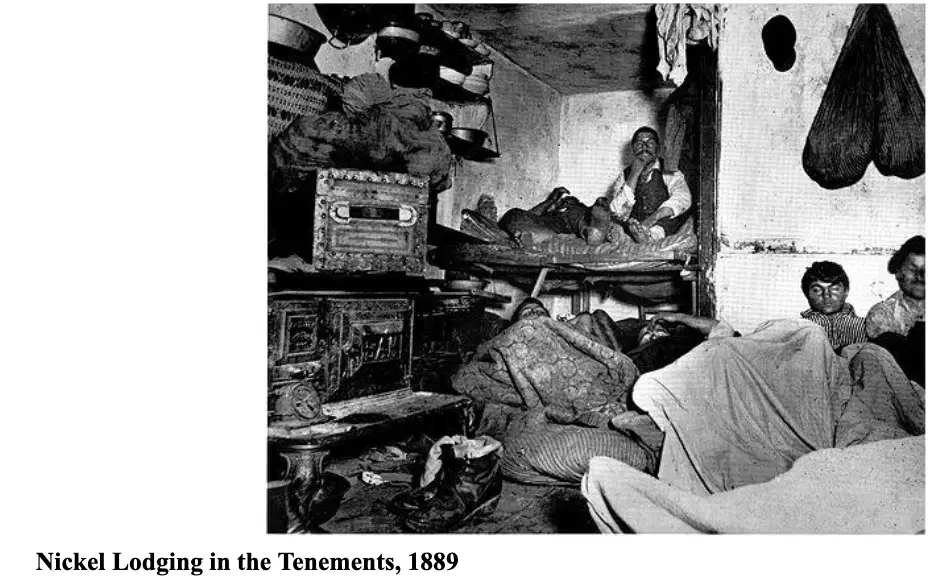
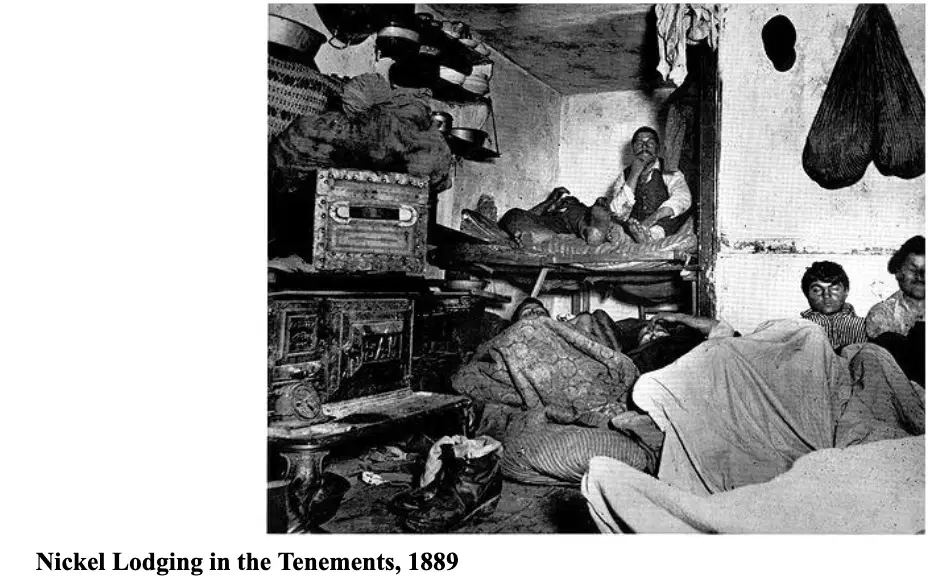
c. Writing about separation of powers
d)
d. Developing the idea of checks and balances
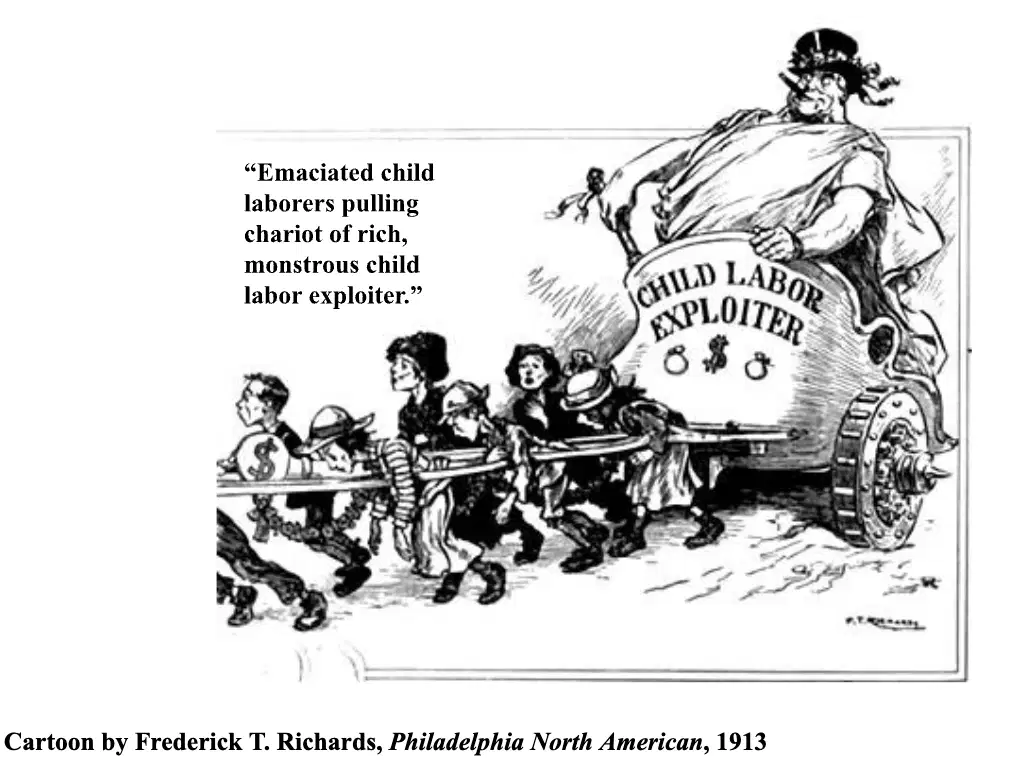
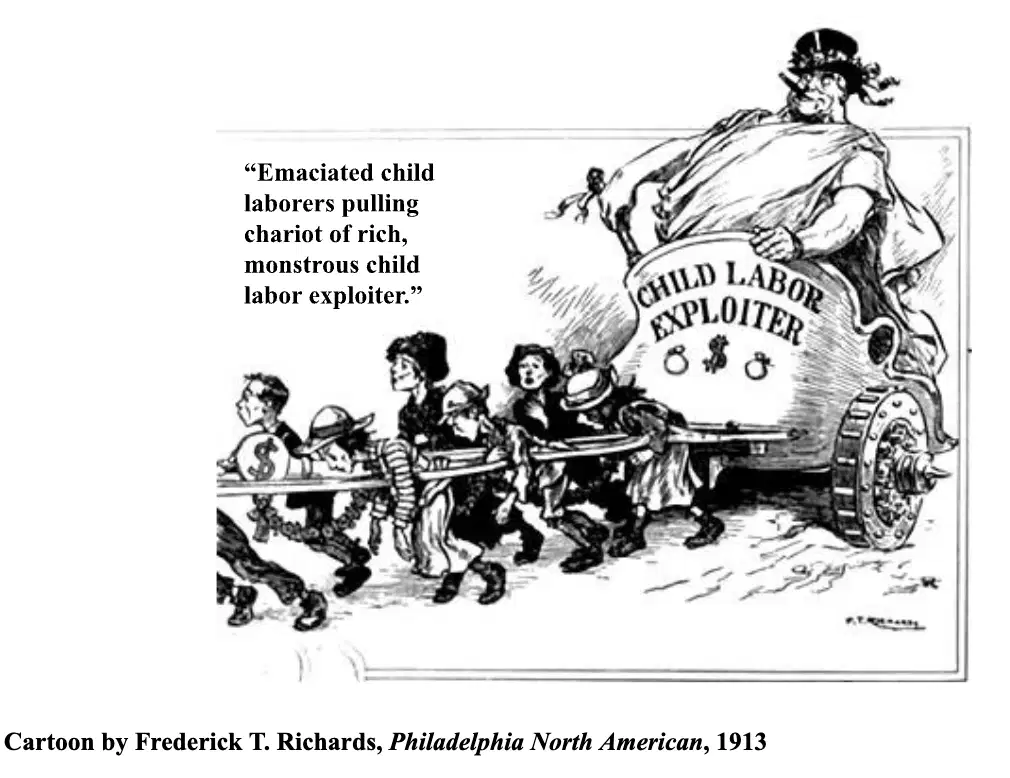
7.
Plato’s work, The Republic, advocated for:
a)
a. Rule by philosopher-kings in an ideal state
b)
b. Direct democracy for all citizens
c)
c. Equal voting rights for all men and women
d)
d. A strong military to enforce democracy
8.
Aristotle argued that the best government balances:
a)
a. Religious and secular rule
b)
b. The needs of the wealthy and the poor
c)
c. The needs of the many and the few
d)
d. The power of monarchs and aristocrats
9.
What system of government did the Romans develop?
a)
a. Direct Democracy
b)
b. Republic
c)
c. Monarchy
d)
d. Empire
10.
What was the significance of the Roman 12 Tables?
a)
a. They emphasized military leadership.
b)
b. They established a foundation for written law and due process.
c)
c. They provided voting rights to all citizens.
d)
d. They divided government into three branches.
11.
The Roman principle of Rule of Law ensured that:
a)
a. Leaders and citizens were bound by the same laws.
b)
b. Only wealthy citizens could participate in government.
c)
c. The military had absolute authority.
d)
d. Religion dictated legal practices.
12.
What natural rights did John Locke argue all people are entitled to?
a)
a. Life, liberty, and property
b)
b. Free speech and voting
c)
c. Freedom of religion and press
d)
d. Education and healthcare
13.
What type of government did Thomas Hobbes believe was necessary to maintain order?
a)
a. Direct democracy
b)
b. Absolute power
c)
c. Republic
d)
d. A limited monarchy
14.
Voltaire promoted which democratic principles?
a)
a. Natural rights and free elections
b)
b. Free speech and religious toleration
c)
c. Checks and balances
d)
d. The rule of law
15.
Jean-Jacques Rousseau introduced the idea of:
a)
a. Monotheism
b)
b. The Republic
c)
c. The Social Contract
d)
d. Checks and balances
16.
Montesquieu’s principle of Separation of Powers divides government into:
a)
a. Executive, Legislative, and Judicial branches
b)
b. Local, state, and federal branches
c)
c. Religious and secular divisions
d)
d. Aristocratic and democratic institutions
17.
What did Montesquieu’s ideas about Checks and Balances help establish?
a)
a. A strong military to protect government institutions
b)
b. A system ensuring no branch of government has too much power
c)
c. Absolute power of monarchs over citizens
d)
d. Equal economic status for all citizens
18.

The excerpt illustrates which of the following about society in Republican Rome?
a)
preferential treatment for elite classes
b)
the patriarchies of ancient Rome
c)
a concern that all citizens enjoy basic equality before the law
d)
public revulsion for the ownership of slaves
19.

Which of the following best characterizes the progression of the principles of the 12 Tables?
a)
absolute rule
b)
due process
c)
direct democracy
d)
aristocracy
20.
What was the 1st Estate in France made up of?
a)
a. Nobility
b)
b. Clergy
c)
c. Bourgeoisie
d)
d. Peasants
21.
Who made up the majority of the 3rd Estate?
a)
a. Nobility
b)
b. Clergy
c)
c. Peasants and Bourgeoisie
d)
d. Military
22.
Why did the Bourgeoisie resent their role in French society?
a)
a. They were excluded from voting rights.
b)
b. They were forced to pay all the taxes while having little political power.
c)
c. They were required to serve in the military.
d)
d. They were unable to own land.
23.
Which Enlightenment idea inspired questioning of authority in France?
a)
a. Social Contract
b)
b. Natural Rights
c)
c. Rule of Law
d)
d. Absolute Power
24.
What financial issue worsened France’s economic problems before the revolution?
a)
a. High military spending
b)
b. Involvement in the American Revolution
c)
c. Building the Palace of Versailles
d)
d. Loss of colonies in Africa
25.
What was the purpose of the Estates General called by King Louis XVI in 1789?
a)
a. To approve new laws for taxation
b)
b. To create a new constitution
c)
c. To address the financial crisis
d)
d. To establish a republic
26.
What was the Tennis Court Oath?
a)
a. A promise to overthrow the monarchy
b)
b. A vow by the 3rd Estate to write a new constitution
c)
c. An agreement to end the Reign of Terror
d)
d. A demand for voting rights for the nobility
27.
The storming of the Bastille symbolized:
a)
a. The end of feudalism
b)
b. A revolt against tyranny and oppression
c)
c. The beginning of the Reign of Terror
d)
d. A demand for the king’s execution
28.
What was the main purpose of the Declaration of the Rights of Man and Citizen?
a)
a. To establish a new monarchy
b)
b. To declare war on neighboring countries
c)
c. To promote freedom and equality for French citizens
d)
d. To form alliances with Enlightenment thinkers
29.
What event forced King Louis XVI and Queen Marie Antoinette to relocate to Paris?
a)
a. The Tennis Court Oath
b)
b. The storming of the Bastille
c)
c. The Women’s March to Versailles
d)
d. The Reign of Terror
30.
What was the National Convention’s most significant action in 1792?
a)
a. Abolishing the monarchy and declaring France a republic
b)
b. Executing Maximilien Robespierre
c)
c. Writing a new constitution
d)
d. Establishing voting rights for all citizens
31.
Which two groups created political tension during the French Revolution?
a)
a. Clergy and Peasants
b)
b. Girondins and Jacobins
c)
c. Bourgeoisie and Military
d)
d. Nobility and Clergy
32.
Who led the Reign of Terror?
a)
a. King Louis XVI
b)
b. Napoleon Bonaparte
c)
c. Maximilien Robespierre
d)
d. Jean-Jacques Rousseau
33.
What was the Guillotine a symbol of?
a)
a. Revolutionary justice
b)
b. Equality among citizens
c)
c. Resistance to monarchy
d)
d. Peace and reform
34.
Who rose to power and ended the revolutionary government?
a)
a. Maximilien Robespierre
b)
b. Napoleon Bonaparte
c)
c. King Louis XVI
d)
d. Jean-Jacques Rousseau
35.
What ideas did the French Revolution spread worldwide?
a)
a. Liberty, Equality, and Popular Sovereignty
b)
b. Monarchy and Feudalism
c)
c. Direct Democracy and Social Contract
d)
d. Capitalism and Industrialization
36.
What systems replaced aristocratic and feudal systems after the French Revolution?
a)
a. Military governments
b)
b. Absolute monarchies
c)
c. Democratic governments and Representation
d)
d. Clerical rule
37.
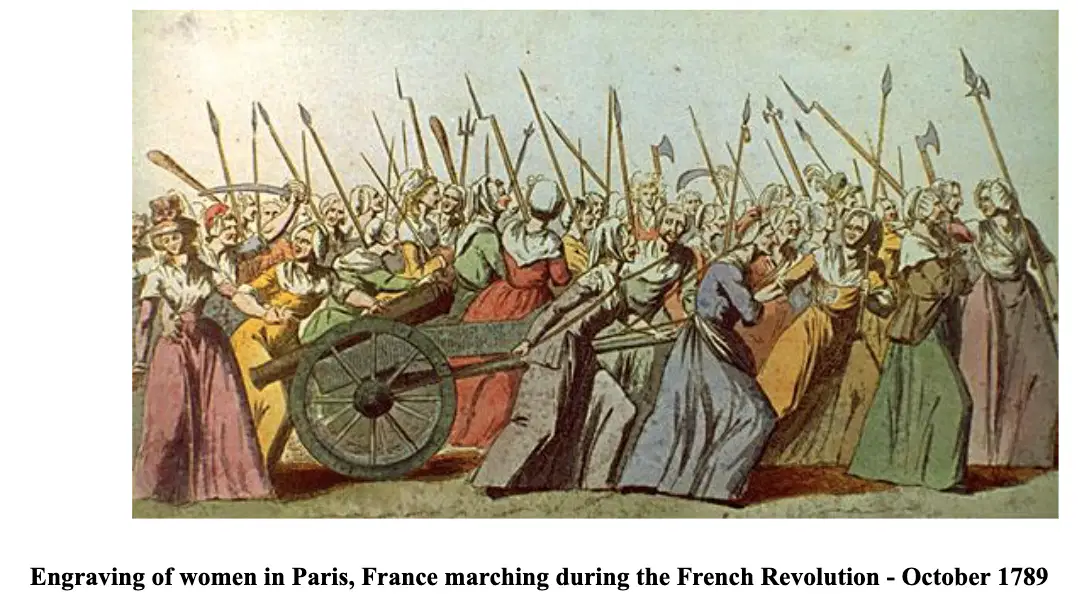
What circumstances led to the revolutionary movement depicted in the engraving?
a)
the reversal of the abolition of feudalism
b)
opposition to de-Christianization
c)
poor living conditions due to crop failures and famine
d)
peasants’ support for persecuted high nobles of Paris
38.
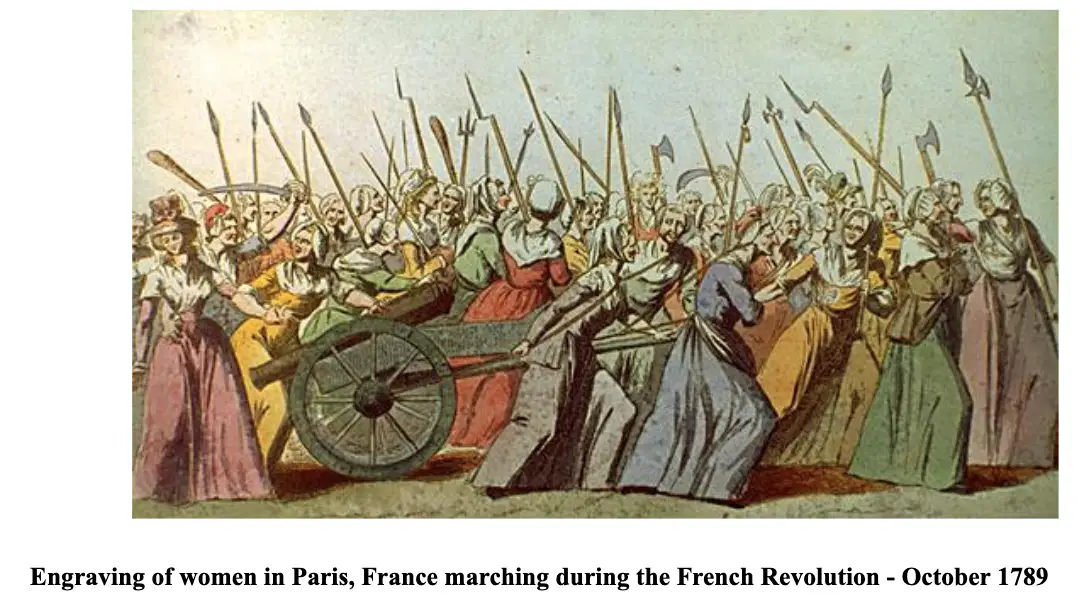
Which of the following is NOT consistent with the causes of the revolutionary movement depicted in the engraving?
a)
unfair taxation policies
b)
bad leadership by the monarchy
c)
cooperative relations between the first and third estates
d)
the success of the American Revolution
39.
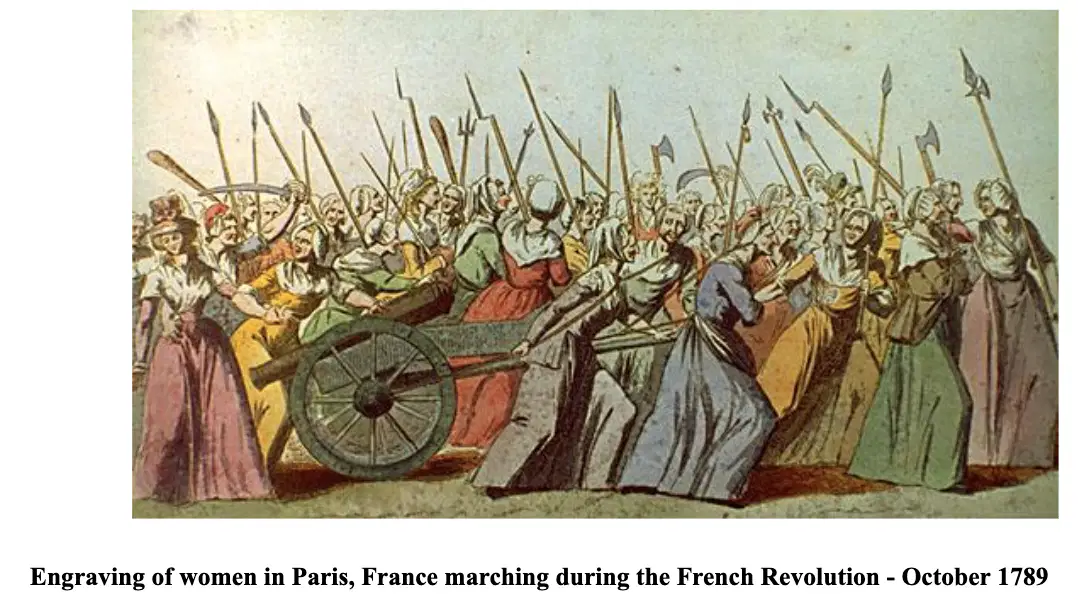
The phrase “law is an expression of the general will” from the Declaration of the Rights of Man and Citizen shows the influence of ________________ upon the revolutionary movement depicted in the engraving.
a)
Wollstonecraft
b)
Descartes
c)
Rousseau
d)
Montesquieu
40.
What was the Agricultural Revolution?
a)
a. A period of advancements in farming techniques that increased food production and population growth
b)
b. The shift from rural to urban economies
c)
c. The rise of industrial factories in Britain
d)
d. The overthrow of feudal systems in Europe
41.
What innovation improved soil fertility and increased crop yields during the Agricultural Revolution?
a)
a. Crop Rotation
b)
b. Irrigation Canals
c)
c. Steel Plows
d)
d. Greenhouses
42.
The Enclosure Movement forced small farmers to:
a)
a. Own large estates
b)
b. Become tenant farmers or move to cities
c)
c. Work in textile factories
d)
d. Build their own mills
43.
What invention by Eli Whitney helped speed up the process of separating seeds from cotton fibers?
a)
a. Spinning Jenny
b)
b. Water Frame
c)
c. Cotton Gin
d)
d. Steam Engine
44.
How did the Agricultural Revolution lead to the Industrial Revolution?
a)
a. It created a demand for foreign goods.
b)
b. It freed up workers to move to cities and created a surplus labor force.
c)
c. It caused the development of railroads.
d)
d. It provided government funding for factories.
45.
Why was Britain the first country to industrialize?
a)
a. It had a strong military and colonial presence.
b)
b. It had access to key natural resources like coal and iron.
c)
c. It was isolated from European conflicts.
d)
d. It was home to the first democratic government.
46.
What geographic advantages helped Britain industrialize?
a)
a. Mountain ranges and forests
b)
b. Rivers, harbors, and canals for transporting goods
c)
c. Deserts and mineral deposits
d)
d. Proximity to the Americas
47.
How did Britain’s financial system contribute to industrialization?
a)
a. By taxing the working class heavily
b)
b. By using government funds to build factories
c)
c. By providing banking systems and private investments for industrial ventures
d)
d. By issuing loans to other European countries
48.
How did global trade support Britain's industrial growth?
a)
a. By creating a built-in market for manufactured goods
b)
b. By eliminating the need for colonies
c)
c. By promoting small-scale, home-based industries
d)
d. By restricting international competition
49.
Why was the textile industry the first to industrialize?
a)
a. It relied on local raw materials like coal and iron.
b)
b. Britain had access to wool, cotton, and skilled labor.
c)
c. It required minimal technological advancements.
d)
d. It was supported by strong agricultural exports.
50.
What were two key inventions in the textile industry?
a)
a. Steam Engine and Assembly Line
b)
b. Cotton Gin and Crop Rotation
c)
c. Spinning Jenny and Water Frame
d)
d. Bessemer Process and Power Loom
51.
Why were factories developed in the textile industry?
a)
a. Because they could be built in rural areas
b)
b. Because new machines were too large for cottage industry production
c)
c. Because governments funded factory construction
d)
d. Because workers demanded smaller-scale operations
52.
What was a major problem in industrial cities?
a)
a. Overproduction of goods
b)
b. Poor sanitation and overcrowding
c)
c. Lack of financial systems
d)
d. Excessive government regulation
53.
What did the Factory Acts address?
a)
a. Child labor laws and hours for young workers
b)
b. Worker housing conditions
c)
c. The construction of railroads
d)
d. Wages for adult workers
54.
What did the 1832 Reform Act achieve?
a)
a. Banned child labor entirely
b)
b. Extended voting rights to middle-class men
c)
c. Established labor unions for factory workers
d)
d. Ended overcrowding in industrial cities
55.
What invention powered factories and revolutionized transportation?
a)
a. Assembly Line
b)
b. Steam Engine
c)
c. Bessemer Process
d)
d. Cotton Gin
56.
How did the Assembly Line increase production efficiency?
a)
a. By introducing steam-powered machinery
b)
b. By dividing labor into specialized tasks
c)
c. By reducing the number of workers required
d)
d. By creating large-scale rail networks
57.
What was the significance of the Bessemer Process?
a)
a. It created the first labor unions.
b)
b. It made steel production more efficient, fueling industrial growth.
c)
c. It revolutionized textile manufacturing.
d)
d. It allowed for faster transportation of goods.
58.
What did Laissez-Faire policies promote?
a)
a. Minimal government interference in industrial growth
b)
b. Strict labor laws for factories
c)
c. Government ownership of industries
d)
d. High tariffs on imported goods
59.
Who made up the Proletariat?
a)
a. Wealthy business owners
b)
b. Industrial workers and the working class
c)
c. Middle-class professionals
d)
d. Agricultural landowners
60.
How did the Bourgeoisie benefit from industrialization?
a)
a. By gaining access to government positions
b)
b. By increasing their wealth and improving living standards
c)
c. By avoiding the hardships of factory work
d)
d. By forming political alliances with the Proletariat
61.
What did Adam Smith advocate in his economic theory?
a)
a. Minimal government interference and free markets
b)
b. Labor unions and wage equality
c)
c. Government regulation of industries
d)
d. Strict trade laws
62.
What was Karl Marx’s vision of Communism?
a)
a. A capitalist society controlled by free markets
b)
b. A system where workers controlled production and wealth was equally distributed
c)
c. A society ruled by a strong central government
d)
d. A political system dominated by aristocrats
63.
What did Social Darwinism argue?
a)
a. Equality among all social classes
b)
b. Survival of the fittest as a justification for economic and social hierarchies
c)
c. The need for government control over industries
d)
d. Universal access to education and healthcare
64.
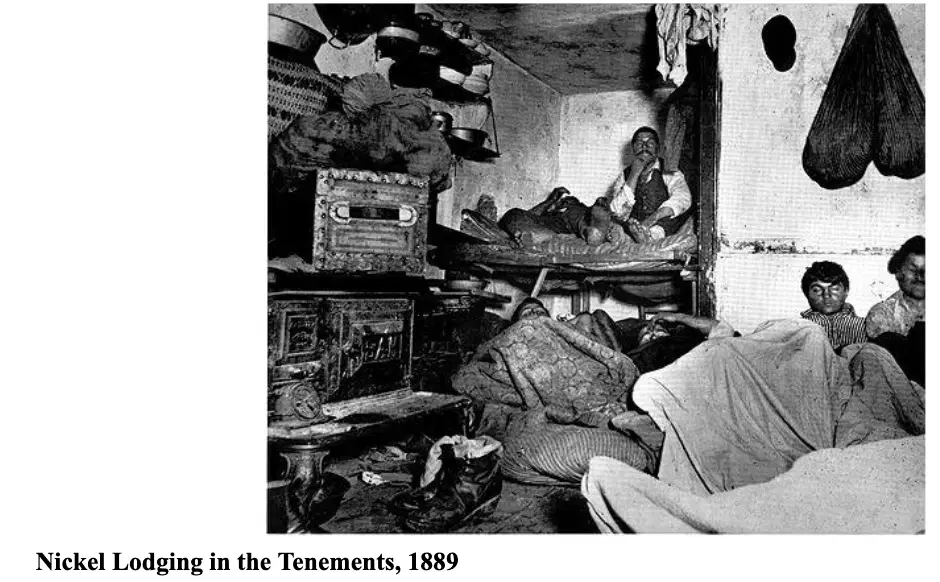
Conditions like those shown in the image were most likely a direct result of which of the following?
a)
laissez faire economics
b)
the 1832 Reform Act
c)
the Factory Act of 1833
d)
the Education Act of 1870
65.
Advocates for individuals such as those shown in the image would have most likely agreed with which of the following perspectives?
a)
the conditions seen are a direct result of the low wages earned by workers in the late nineteenth century
b)
both wealth and poverty are the products of natural selection
c)
laissez faire economics, free of government regulation, would improve social conditions
d)
it is not the government’s responsibility to eliminate the worst abuses of industrial society
66.
How did the Agricultural Revolution contribute to the results seen in the image?
a)
it created more agricultural jobs which ultimately increased workers’ pay
b)
it forced small farmers off their land and into cities to look for work
c)
it decreased the amount of food being produced, which created a need for more farmers
d)
it created famine, which lead to disease and death
67.
The conditions being illustrated in the cartoon had the most significant negative impact on which social group?
a)
the bourgeoisie
b)
the proletariat
c)
the aristocracy
d)
monarchs
68.
Which is the most significant factor of production being portrayed in the cartoon?
a)
capital
b)
land
c)
entrepreneurs
d)
workers
69.
What drove European nations to seek colonies during the age of imperialism?
a)
a. A desire to support local economies in Africa and Asia
b)
b. A need for raw materials, new markets, and cheap labor to fuel their industrial economies
c)
c. A mission to protect the independence of non-European nations
d)
d. A goal to spread democratic principles globally
70.
How did political motives shape imperialism?
a)
a. European nations sought to increase their power and protect overseas interests.
b)
b. Leaders aimed to create alliances with colonized nations.
c)
c. Countries worked to reduce their influence in global affairs.
d)
d. Empires wanted to prioritize education in colonized regions.
71.
Which of the following best defines imperialism?
a)
a. A strategy for isolating a country from foreign affairs
b)
b. A policy of extending a country’s power through diplomacy, economic control, or military force
c)
c. A focus on internal development within a single nation
d)
d. A movement to end colonization worldwide
72.
What was the Berlin Conference’s role in Africa during the 19th century?
a)
a. It sought to eliminate European involvement in Africa.
b)
b. It divided African territories among European powers to reduce conflicts.
c)
c. It established African independence through a formal treaty.
d)
d. It created trade agreements between European nations and African kingdoms.
73.
At the conclusion of the Scramble for Africa, which two countries maintained their independence?
a)
a. South Africa and Egypt
b)
b. Morocco and Kenya
c)
c. Ethiopia and Liberia
d)
d. Nigeria and Ghana
74.
Why was India referred to as the "Jewel in the Crown" of the British Empire?
a)
a. Its geographic location provided military advantages for Britain.
b)
b. Its resources and economic value made it essential to British trade and wealth.
c)
c. It was the first British colony to gain independence.
d)
d. It had a long-standing partnership with Britain before colonization.
75.
What caused the Sepoy Rebellion in 1857?
a)
a. A decrease in wages for Indian soldiers
b)
b. Cartridges greased with cow and pig fat, violating religious customs
c)
c. An attempt to abolish Indian cultural practices
d)
d. The forced recruitment of soldiers into the British military
76.
Which was an outcome of the Sepoy Rebellion?
a)
a. The British government took direct control of India, establishing the British Raj.
b)
b. Indian independence was granted.
c)
c. The East India Company expanded its power over Indian territories.
d)
d. Indian soldiers gained equal representation in the British military.
77.
What distinguished Direct Rule from Indirect Rule in imperial governance?
a)
a. Direct Rule removed local leaders, while Indirect Rule allowed them to govern under European supervision.
b)
b. Direct Rule focused on trade policies, while Indirect Rule centered on military power.
c)
c. Direct Rule involved fewer colonies, while Indirect Rule governed larger territories.
d)
d. Direct Rule relied on negotiation, while Indirect Rule used force.
78.
What was Britain’s main goal in selling opium to China?
a)
a. To reduce trade restrictions and gain economic dominance
b)
b. To support Chinese agricultural production
c)
c. To prevent conflict with Chinese authorities
d)
d. To promote medical advancements
79.
Where was opium grown, and where was it sold?
a)
a. Grown in China and sold in Britain
b)
b. Grown in India and sold illegally to China
c)
c. Grown in Africa and sold in India
d)
d. Grown in Europe and sold in Southeast Asia
80.
What was a significant outcome of the Opium War?
a)
a. Britain gained control over Hong Kong and access to Chinese ports.
b)
b. Chinese officials established stricter regulations on trade.
c)
c. The opium trade was abolished in China.
d)
d. British merchants were banned from trading with China.
81.
How did the Treaty of Nanking affect China?
a)
a. It ended British control over Chinese territory.
b)
b. It forced China to cede Hong Kong and open multiple ports to foreign trade.
c)
c. It restricted the flow of British goods into Chinese markets.
d)
d. It outlawed the opium trade permanently.
82.
What did the Boxer Rebellion reveal about Chinese society?
a)
a. Growing resentment toward foreign influence and missionary activity
b)
b. A desire to adopt European trade policies
c)
c. Widespread support for British control
d)
d. Enthusiasm for Western education systems
83.
What was the purpose of the Open Door Policy in China?
a)
a. To prevent any single country from monopolizing trade in China
b)
b. To allow European nations to divide China into spheres of influence
c)
c. To end foreign control over Chinese ports
d)
d. To promote unrestricted immigration to China
84.
How did King Menelik II of Ethiopia resist European imperialism?
a)
a. By signing alliances with European nations
b)
b. By defeating Italy in the Battle of Adwa
c)
c. By forming a coalition with other African leaders
d)
d. By adopting European cultural practices
85.
What movement inspired colonized nations to fight for independence during the imperial era?
a)
a. Religious reform
b)
b. The Rise of Nationalism
c)
c. Economic industrialization
d)
d. Military expansion
86.
How did Social Darwinism justify imperialism?
a)
a. It argued that cultural diversity was essential for global progress.
b)
b. It claimed that European powers were naturally superior and destined to dominate weaker societies.
c)
c. It promoted equality among all nations.
d)
d. It supported the development of democratic institutions worldwide.
87.
What was Rudyard Kipling’s central argument in his poem White Man’s Burden?
a)
a. Europeans had a duty to bring civilization to non-European peoples.
b)
b. Imperial powers should avoid interfering in foreign cultures.
c)
c. Colonized nations should be given immediate independence.
d)
d. Economic exploitation should be the focus of imperial policy.
88.
What does a Sphere of Influence refer to in the context of imperialism?
a)
a. A region where one country has exclusive trading and political rights
b)
b. An area where local rulers govern without foreign interference
c)
c. A territory controlled directly by a European empire
d)
d. A zone of shared governance between two or more nations
89.

Which of the following is depicted in the cartoon?
a)
Open Door Policy
b)
Boxer Rebellion
c)
3 Principles of the People
d)
Treaty of Nanjing
90.
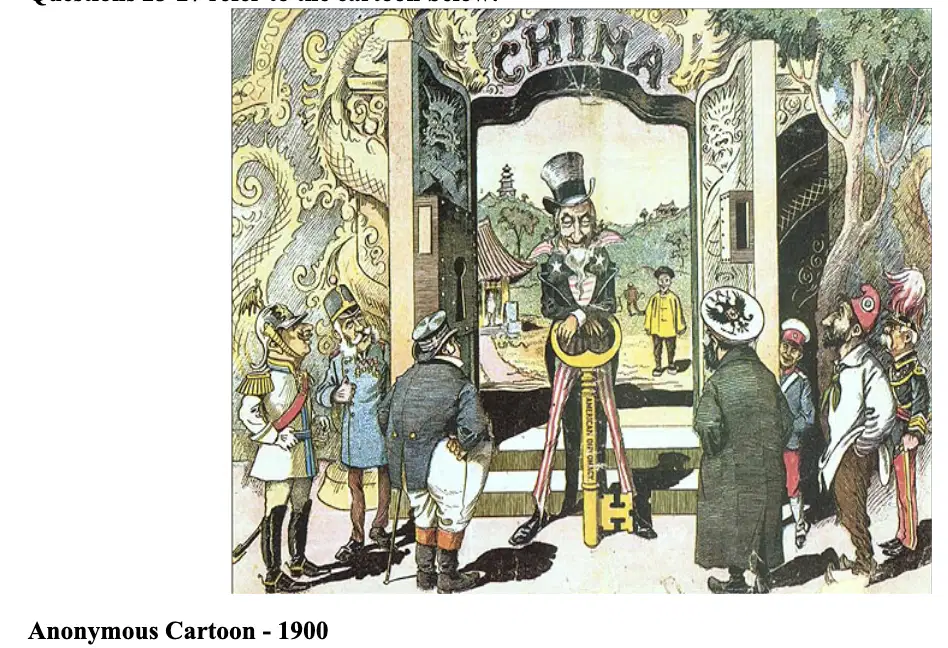
Which of the following was most significant in causing the event depicted in the cartoon?
a)
an unfair trade balance between the East and West
b)
increased conflict amongst imperial powers over resources
c)
countries battling each other over territory and exclusivity
d)
all of the above
91.
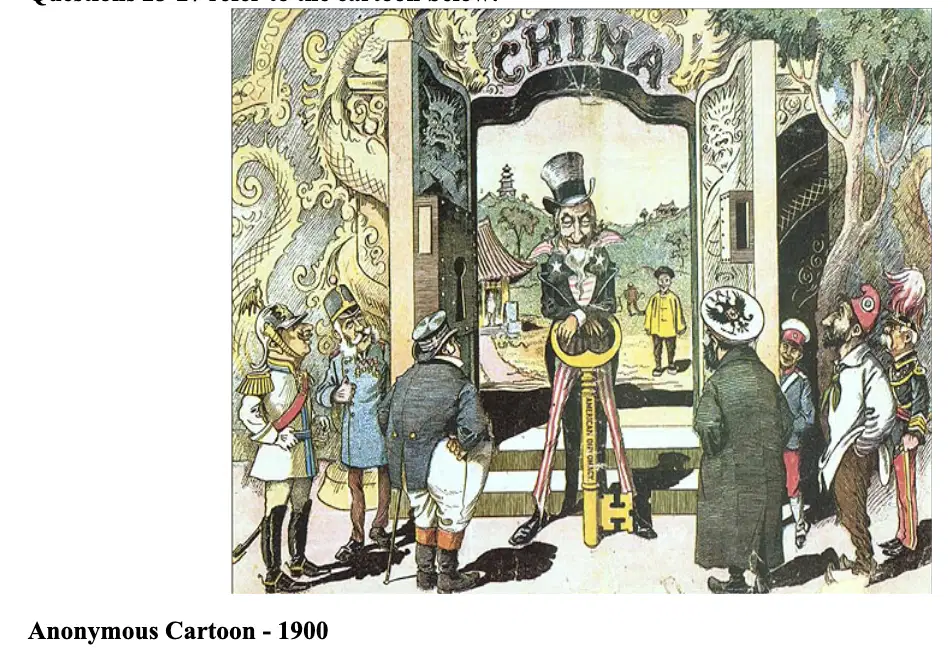
Which of the following would be the most likely result of the event depicted in the cartoon?
a)
equal privileges would be given to countries trading with China
b)
one of the 5 current countries with a sphere of influence would take over all of China
c)
China was divided into colonies
d)
each imperial power would monopolize trade in China
100 %

