
 Worksheets
Special Tractions Lower Limb 2
Total questions: 57
Worksheet time: 29mins
Which of the following is a complication associated with skeletal traction?
Pin tract infections
Improved muscle strength
Decreased resource utilization
Enhanced fracture reduction
Why have surgeons moved away from using skeletal traction?
Because it is too expensive
Because of multiple serious complications
Because it is less painful
Because it is faster than other methods
Which of the following is NOT a complication of skeletal traction?
Muscle wasting
Prolonged bed immobilization with bed sores
Increased resource utilization
Rapid bone healing
A patient on skeletal traction develops bed sores. What is the most likely contributing factor?
Prolonged bed immobilization
Increased physical activity
Enhanced fracture reduction
Decreased nursing care
Evaluate the impact of skeletal traction on healthcare resources and patient outcomes.
It decreases the need for nursing care and improves fracture reduction
It increases resource utilization and may result in less than adequate fracture reduction
It eliminates the risk of infections and muscle wasting
It reduces the length of hospital stay for all patients
What is the first step to take in case of pin loosening or pin tract infection during the application of skeletal traction?
Apply a cast over the pins
Remove all involved pins and place new pins in a healthy location
Increase the weight of the traction
Bandage the area tightly
Which procedure should be performed on pin sites in the operating theater when treating a pin tract infection?
Apply ice packs to the pin sites
Debride the pin sites using curettage and irrigation
Cover the pin sites with adhesive tape
Inject steroids into the pin sites
Why are specimens taken from pin sites in cases of pin tract infection?
To check for bone density
To guide appropriate antibiotic treatment through microbiological study
To measure blood sugar levels
To test for allergies
A patient with skeletal traction develops a pin tract infection. Which sequence of actions best demonstrates the correct management of this complication?
Remove all involved pins, debride the pin sites, and take specimens for microbiological study
Increase the traction weight, apply a cold compress, and monitor for improvement
Bandage the area, prescribe painkillers, and schedule a follow-up visit
Leave the pins in place, apply topical ointment, and restrict patient movement
Who first described the use of the Thomas splint?
Hugh Owen Thomas
Robert Jones
Florence Nightingale
Joseph Lister
What is the primary goal of using a Thomas splint in patient care?
To improve patient care for transport by reducing pain, blood loss, and secondary soft tissue injury by fracture movement
To immobilize the upper limb only
To increase the speed of surgery
To prevent infection in open wounds
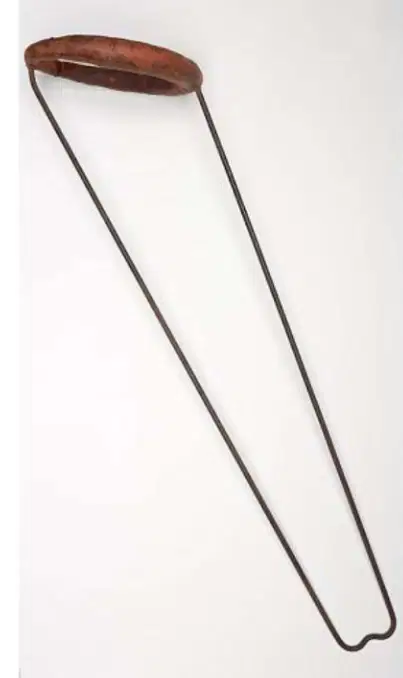
What is the Thomas splint primarily composed of?
A padded oval metal ring covered with soft leather and attached side bars
A wooden rectangular frame with cloth straps
A plastic circular ring with rubber bands
A metal rod with foam padding and Velcro straps
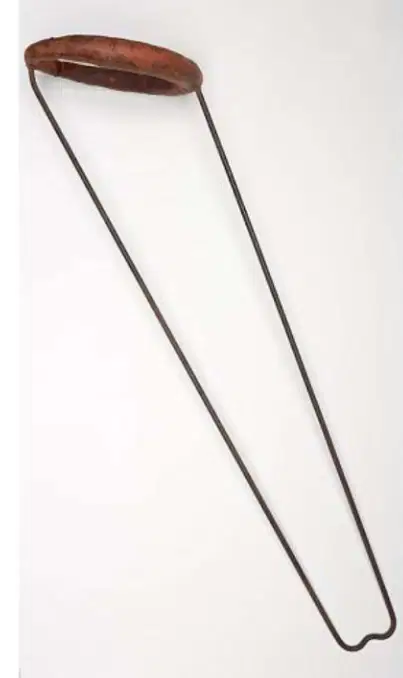
Which of the following best describes the side bars of the Thomas splint?
They are of equal length and parallel to each other
They are of unequal length and exactly bisect the oval ring
They are curved and made of plastic
They are detachable and made of wood
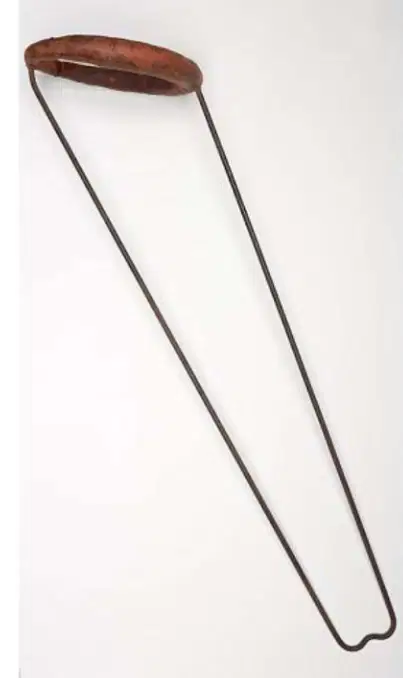
At what angle is the padded ring of the Thomas splint set to the inner side bar?
90 degrees
100 degrees
120 degrees
150 degrees
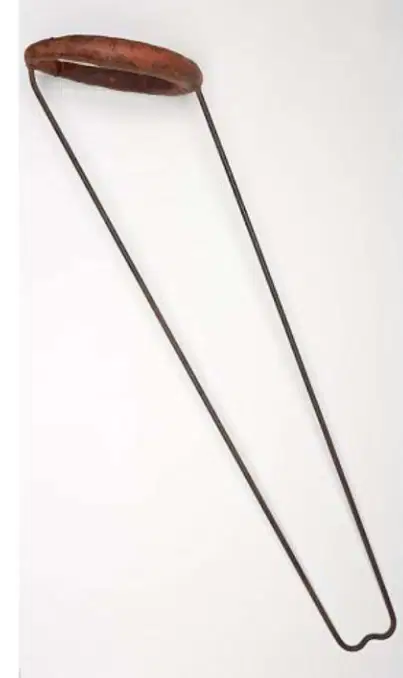
Explain why the side bars of the Thomas splint are made of unequal length.
To make the splint lighter for transportation
To ensure the padded ring is set at a specific angle for proper alignment
To allow the splint to be adjustable in size
To reduce the cost of manufacturing
At the distal end, how are the two bars of a Thomas splint joined together?
In the form of a W
In the form of an X
In the form of a V
In the form of an O
What is the purpose of angling the outer side bar 2 inches (5.0 cm) below the padded ring in a Thomas splint?
To clear the prominence of greater trochanter
To increase the length of the splint
To provide extra padding
To make the splint lighter
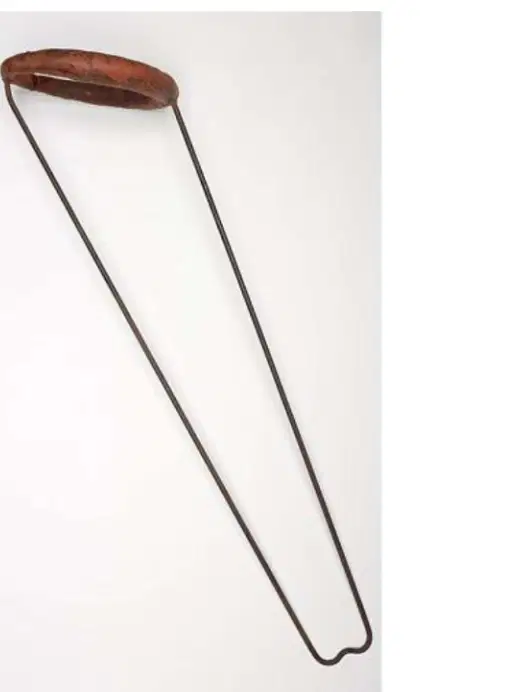
What does the image represent?
Thomas splint
Crutch
Walking stick
Arm sling
What is the primary use of a Thomas's splint?
Temporary stabilization of femoral shaft fractures
Permanent fixation of bone fractures
Treatment of head injuries
Immobilization of wrist fractures
Why is it important to select the appropriate size of the Thomas's splint when using it for treatment?
To ensure adequate fracture stability and pain relief
To reduce the cost of treatment
To speed up the healing process
To prevent allergic reactions
A patient with a femoral shaft fracture needs to be transported to a hospital. Which device would be most appropriate to use for temporary stabilization during transport?
Thomas's splint
Cervical collar
Arm sling
Plaster cast

According to the instructions for applying a Temporary Thomas splint, what position should the patient be in?
The patient should lie down on his or her back.
The patient should sit upright.
The patient should lie on his or her stomach.
The patient should stand up.
What is the first step in determining the size of the inner circumference of the ring of a Thomas’s splint?
Measuring the length of the leg
Measuring the circumference of the thigh
Measuring the width of the foot
Measuring the diameter of the knee
Explain the importance of accurately measuring the thigh circumference before applying a Thomas’s splint.
It ensures the splint fits properly and provides effective immobilization.
It helps in diagnosing the type of fracture.
It determines the patient’s blood pressure.
It is used to calculate medication dosage.
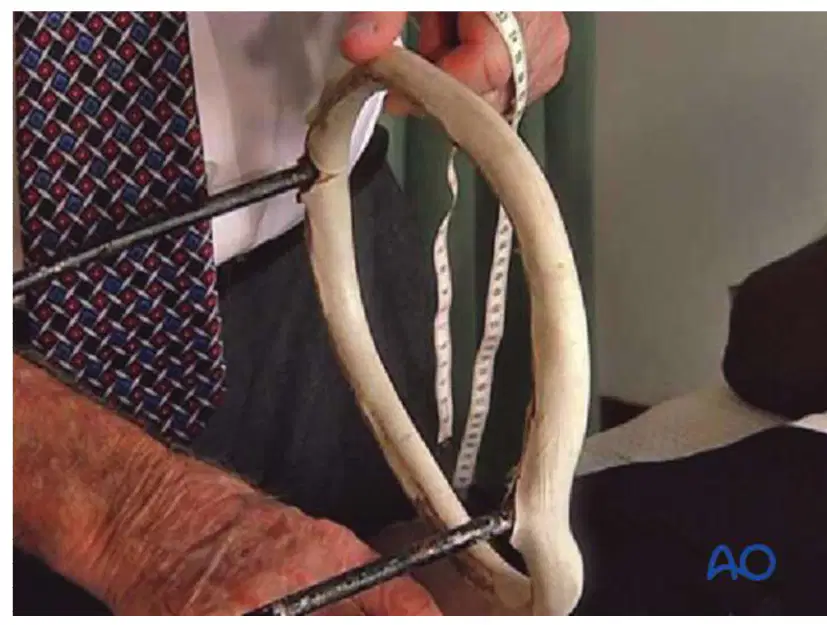
When choosing a Thomas's splint to be used, how many centimeters should be added to the measurement to allow for swelling?
Four centimeters
Two centimeters
Six centimeters
Eight centimeters

If a patient’s limb measures 60 centimeters in circumference, what should be the minimum inner circumference of the Thomas’s splint selected, according to the guidelines?
64 centimeters
60 centimeters
62 centimeters
66 centimeters
Why are twenty centimeters added to the measured length of the patient’s leg when establishing the length of a Thomas splint?
To ensure the splint extends beyond the foot for proper immobilization.
To make the splint easier to transport.
To reduce the weight of the splint.
To match the length of the opposite leg.
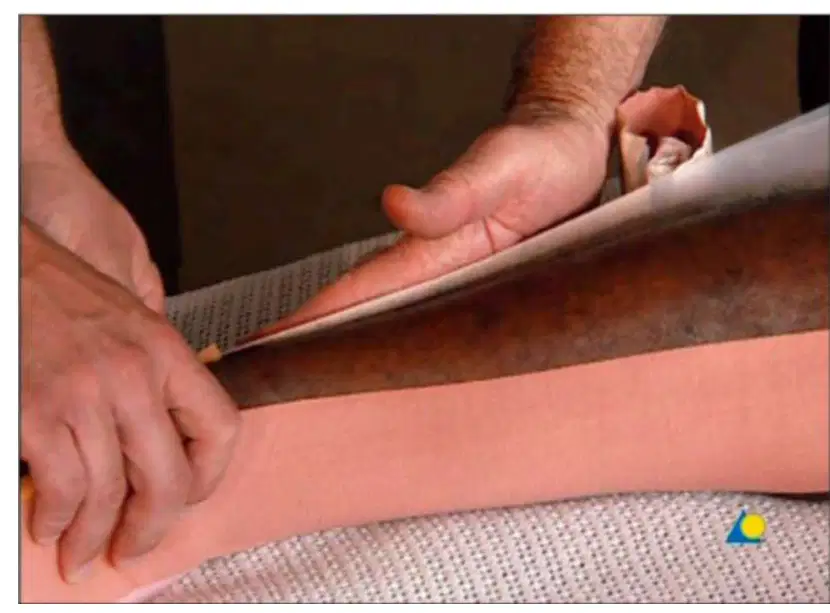
What is the purpose of verifying that there are no wrinkles in the adhesive strip when applying a temporary Thomas splint?
To prevent pressure sores
To improve blood circulation
To increase the strength of the splint
To reduce swelling
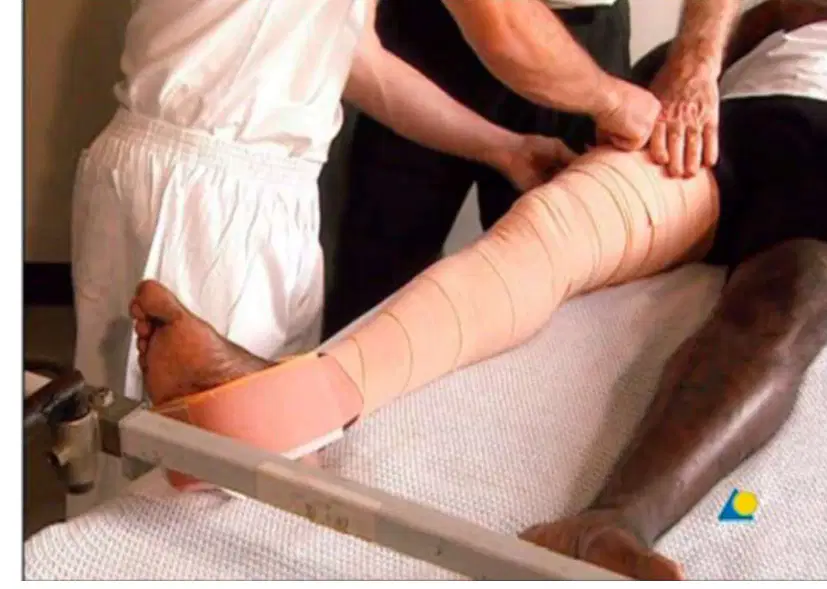
What is the final step in the application of skin traction for a Temporary Thomas splint?
Wrapping the tensor bandage over the adhesive strips
Applying ice to the affected area
Removing the adhesive strips
Massaging the leg muscles
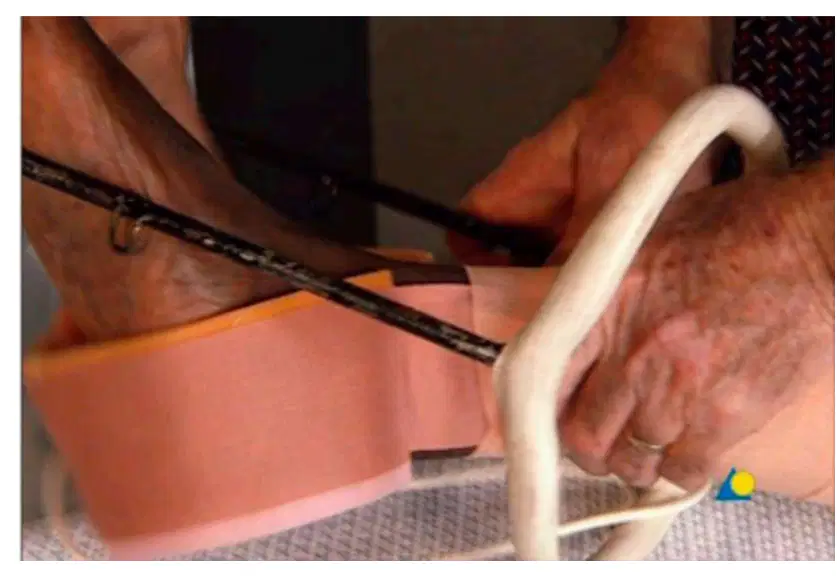
How is the Thomas's splint applied to a patient?
By passing it over the patient’s leg, upwards, to the groin.
By wrapping it around the patient’s waist.
By placing it under the patient’s back.
By attaching it to the patient’s foot only.
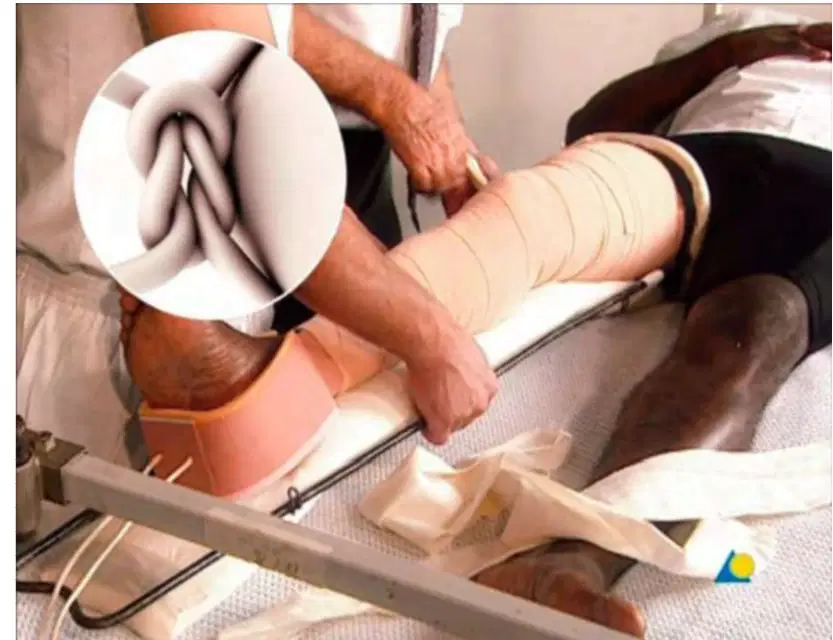
What is the primary purpose of using flannelette bandage slings in the application of a Temporary Thomas splint?
To provide warmth to the leg
To support the leg on the Thomas’s splint and provide support to the Kramer wire
To prevent infection
To immobilize the foot only
What is the primary purpose of applying traction with a Temporary Thomas splint?
To immobilize a fractured femur
To reduce swelling in the leg
To increase blood flow to the limb
To prevent infection
How is traction applied to a fractured femur using a Thomas's splint?
By tightly tying the cord at the end of the traction strip assembly to the distal end of the splint
By wrapping a bandage around the entire leg
By placing ice packs on the fracture site
By elevating the leg above heart level
Why is it important to tightly tie the cord at the end of the traction strip assembly in the use of a Thomas's splint?
To ensure effective traction is applied to the fractured femur
To keep the splint clean
To prevent the patient from moving
To reduce pain immediately
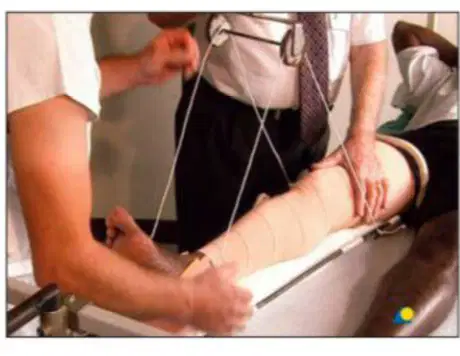
What is the primary function of the T-pulley in the installation of a Temporary Thomas splint?
To exert traction on the patient's leg
To suspend the patient's leg dynamically
To immobilize the patient's leg completely
To apply pressure to the wound
Why is the T-pulley used in the Temporary Thomas splint setup, according to the provided material?
To apply continuous traction to the leg
To allow the patient to use a bed pan or be bathed
To reduce swelling in the leg
To prevent the patient from moving
A patient with a Temporary Thomas splint needs to be bathed. Explain how the T-pulley system assists in this process.
It immobilizes the leg so the patient cannot move
It suspends the leg dynamically, making it easier for the patient to be bathed
It applies pressure to stop bleeding
It keeps the leg elevated above the heart
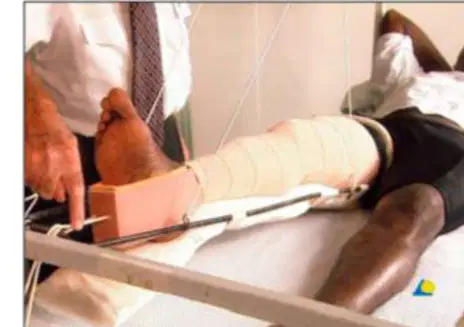
What should be done if pressure points are found when using a Thomas's splint?
Increase the tension in the traction cord
Remove the splint immediately
Relax the tension in the traction cord a little
Apply ice to the area
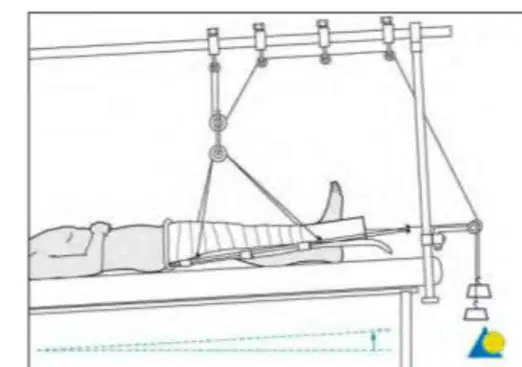
What is the primary reason for elevating the foot of the bed when using a Temporary Thomas splint?
To prevent the patient from slipping towards the foot of the bed
To increase the comfort of the patient
To reduce swelling in the leg
To make it easier for nurses to access the patient
Which of the following best explains how elevating the foot of the bed helps balance the patient when using a Thomas splint?
The weight of the patient counteracts the weight at the distal end of the splint
The elevation increases blood flow to the leg
The elevation reduces the need for a splint
The elevation makes it easier to change the bed sheets
A patient with a Temporary Thomas splint is slipping towards the foot of the bed despite the splint being properly applied. What is the most appropriate action to take?
Elevate the foot of the bed
Remove the splint
Add more weights to the splint
Lower the head of the bed
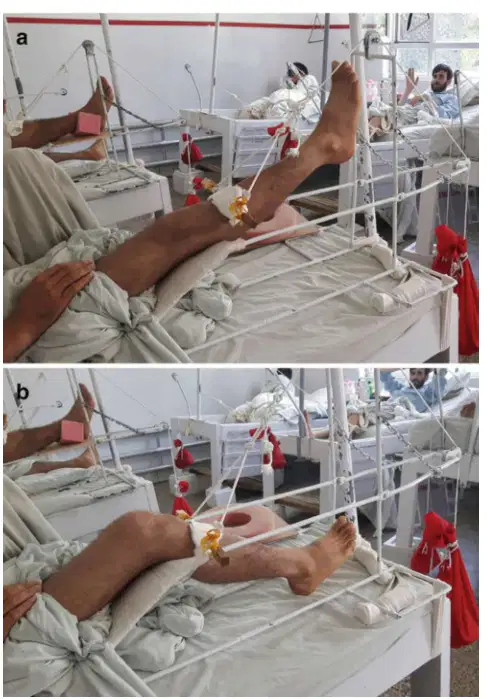
Which condition is most commonly managed using the Böhler–Braun frame for lower limb traction?
Fractures of the femoral shaft
Dislocation of the hip joint
Sprain of the ankle
Soft tissue injury of the thigh
Which of the following is an indication for using unilateral leg traction with the Böhler–Braun frame?
Unstable fractures of the tibia or femur
Minor sprains of the ankle
Dislocated shoulder
Simple wrist fracture
Why might a physician choose to use a Böhler–Braun frame for a patient?
The patient has a comminuted fracture extending into the knee joint
The patient has a mild headache
The patient has a broken finger
The patient has a sprained wrist
Which type of fractures is unilateral leg traction using the Böhler–Braun frame especially associated with?
Open fractures with severe soft tissue damage
Closed fractures with minimal tissue damage
Fractures of the upper limb
Fractures that do not require traction
What is one advantage of the Böhler–Braun frame for leg traction in terms of patient transportation?
It is lightweight and disposable
The traction apparatus is self-contained, making transportation easier
It requires no medical supervision
It can only be used in operating rooms
Which of the following statements is true regarding the application of the Böhler–Braun frame for leg traction?
It can only be applied with skeletal traction
It can be applied with either skin or skeletal traction
It is only suitable for children
It is not used for fractures
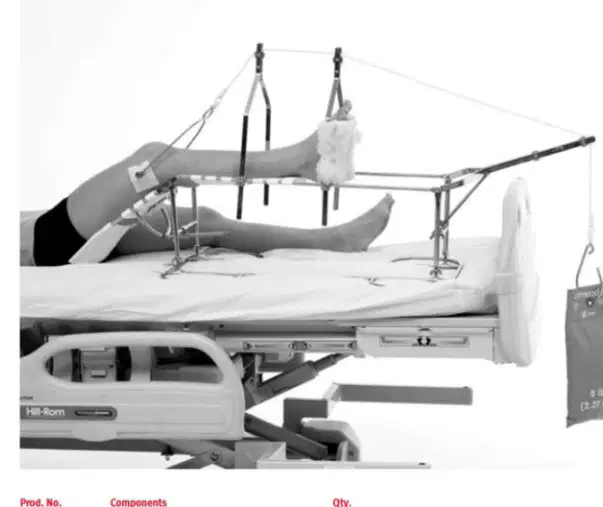
For using the Böhler–Braun Frame for leg traction, how should the patient be positioned on the bed?
The patient should be flat on their back with the bed level.
The patient should be sitting upright with the bed elevated.
The patient should be lying on their stomach with the bed tilted.
The patient should be on their side with the bed raised at the head.
What is the primary purpose of ensuring the bed is level when using the Böhler–Braun Frame for leg traction?
To maintain proper alignment and support for the patient.
To increase the effectiveness of the traction weights.
To allow the patient to move freely.
To make it easier for the patient to sit up.
Why is it important to ensure elastic bandages are not tighter at the proximal end of the femur or lower leg than at the distal end?
To prevent muscle cramps
To avoid swelling
To increase blood flow
To reduce pain
A patient with a Böhler–Braun Frame complains of discomfort in the perineal area. What is the best course of action?
Remove the frame
Pad the area with a large dressing or sheep skin
Apply ice to the area
Ignore the complaint
What is the purpose of using an overhead frame and trapeze in leg traction with a Böhler–Braun frame?
To facilitate patient care and help the patient move about more easily
To increase the weight on the splint
To prevent the patient from moving
To apply medication to the affected leg
Which leg should an anti-embolism stocking be applied to when using a Böhler–Braun frame?
The affected leg
Both legs
The unaffected leg
Neither leg
Isabella is receiving leg traction after a fracture. What can pressure from slings, wrappings, or her leg lying against the side of the frame cause?
Peroneal nerve damage
Muscle atrophy
Bone infection
Skin rash
How often should the neurovascular status of a leg in traction be checked?
Every hour
Every two hours
Every four hours
Once a day
If skeletal traction is used, what should you do regarding care of the pin sites?
Refer to your institution’s policies
Clean with alcohol daily
Cover with a sterile dressing at all times
Leave the pin sites open to air
A patient in leg traction is experiencing numbness on the side of their leg. What is a likely cause based on the information provided?
Pressure from slings or the leg against the frame
Lack of exercise
Poor nutrition
Excessive movement

