
 Worksheets
Wound Care Basics
Total questions: 82
Worksheet time: 41mins
Which of the following is NOT a requirement for the wound bed to ensure proper healing through the expected stages?
The wound bed needs to be well vascularized
The wound bed should be free of devitalized tissue
The wound bed should be dry and exposed to air
The wound bed should be clear of infection and moist
Why can wounds that demonstrate progressive healing, as evidenced by granulation tissue and epithelialization, undergo closure or coverage?
Because they are always free of microbes
Because they have reached a stage where tissue regeneration supports closure
Because they no longer require moisture
Because they are always infected
All wounds are colonized with microbes. What does this imply about wound infection?
All wounds are infected
Only wounds with visible pus are colonized
Not all wounds that have microbes are infected
Wounds without microbes heal faster
A wound is not healing as expected and remains dry and covered with dead tissue. Based on wound care philosophy, what should be addressed to promote healing?
Increase the dryness of the wound
Remove devitalized tissue and maintain moisture
Reduce vascularization
Avoid covering the wound
Which of the following is NOT a goal of wound dressings according to the wound care philosophy?
Eliminate dead space
Control exudate
Increase bacterial overgrowth
Ensure proper fluid balance
A hospital is evaluating two types of wound dressings. Dressing A is cost-efficient, controls exudate, and is manageable for staff, but does not prevent bacterial overgrowth. Dressing B is less cost-efficient but prevents bacterial overgrowth and ensures proper fluid balance. Based on the wound care philosophy, which dressing better aligns with the philosophy and why?
Dressing A, because cost-efficiency is the most important factor
Dressing B, because preventing bacterial overgrowth and ensuring fluid balance are critical
Dressing A, because it is manageable for staff
Both dressings equally align with the philosophy
Which combination of features would best describe an ideal wound dressing based on the wound care philosophy?
Eliminates dead space, is cost-efficient, and is difficult to manage
Controls exudate, prevents bacterial overgrowth, and ensures proper fluid balance
Is expensive, eliminates dead space, and is not manageable
Prevents bacterial overgrowth, is not cost-efficient, and is hard to manage
Which of the following is NOT one of the basic principles for the management of a wound or laceration?
Haemostasis
Analgesia
Cleaning the wound
Antibiotic therapy
Arrange the following steps in the correct order for the management of a wound or laceration: Analgesia, Skin closure, Cleaning the wound, Dressing and follow-up advice, Haemostasis.
Haemostasis, Analgesia, Cleaning the wound, Skin closure, Dressing and follow-up advice
Analgesia, Haemostasis, Cleaning the wound, Skin closure, Dressing and follow-up advice
Cleaning the wound, Haemostasis, Analgesia, Skin closure, Dressing and follow-up advice
Haemostasis, Cleaning the wound, Analgesia, Skin closure, Dressing and follow-up advice
Which of the following best describes a "clean wound"?
A wound that shows no signs of infection or inflammation and does not involve repairing or removing an internal organ.
A wound that is infected and requires removal of an internal organ.
A wound that only affects the bones and joints.
A wound that always involves the digestive system.
What is the typical risk for infection in clean wounds?
Less than 2%
About 10%
More than 20%
Exactly 5%
If a wound involves the eyes, skin, or vascular system and shows no signs of infection or inflammation, how should it be classified?
Clean wound
Infected wound
Chronic wound
Contaminated wound
A patient presents with a wound that does not require the repair or removal of an internal organ and shows no inflammation. What reasoning supports classifying this as a clean wound?
Clean wounds do not involve infection or internal organ intervention.
Clean wounds always require antibiotics.
Clean wounds are only found on the legs.
Clean wounds must be surgically closed.
Which of the following best describes a clean-contaminated wound?
A wound with visible signs of infection at the time of surgery
A wound that does not involve any internal organs
A wound with no signs of infection at the time of surgery but involves repairing or removing an internal organ
A wound that is always caused by trauma
Which of the following procedures is an example of a clean-contaminated wound?
Surgery on the skin
Surgery on the lungs
Surgery on broken bones
Surgery on the heart
Explain why clean-contaminated wounds have a risk of infection that is usually less than 10%, even though they involve internal organs. Use evidence from the definition and examples provided.
Because the wounds are always exposed to the environment
Because there are no signs of infection at the time of surgery and sterile techniques are used
Because the wounds are not treated surgically
Because the wounds are always infected before surgery
Which of the following best describes contaminated wounds?
Wounds that are always closed and never involve internal organs.
Open, fresh accidental wounds or wounds involving repair or removal of an internal organ.
Wounds that are only caused by burns.
Wounds that never have a risk of infection.
Why might incisions after surgery involving the gastrointestinal tract be at a high risk of becoming infected?
Because the digestive tract is sterile.
Because blood and other fluids can spill from the organ into the wound.
Because the wound is always closed.
Because the surgery is minor.
A patient undergoes surgery to remove part of their intestine. Based on the information provided, what type of wound classification would this most likely fall under, and why?
Clean wound, because the intestine is not exposed.
Contaminated wound, because it involves repairing or removing an internal organ and there is a risk of fluid spillage.
Chronic wound, because it takes a long time to heal.
Superficial wound, because it only affects the skin.
Which type of wound is characterized by having an infection already present at the time of surgery?
Clean wound
Contaminated wound
Dirty-contaminated wound
Surgical wound
Which of the following best describes an incisional wound after surgery?
A wound made by cutting through skin, muscle, and fat to repair or remove a body part
A wound caused by a burn
A wound that occurs naturally without surgical intervention
A wound that only affects the outer layer of skin
During which types of surgery are small incisions typically created?
Laparoscopic and robotic surgery
Open-heart surgery only
Dental surgery
Eye surgery
What is the primary purpose of excisional wounds in surgical procedures?
To remove a cyst or other type of tissue
To close a wound
To inject medication
To measure blood pressure
Compare and contrast incisional and excisional wounds in terms of their surgical purpose.
Incisional wounds are for repairing or removing body parts, while excisional wounds are for removing cysts or tissues.
Both are used only for cosmetic surgery.
Incisional wounds are accidental, excisional wounds are planned.
Both are used to inject anesthesia.
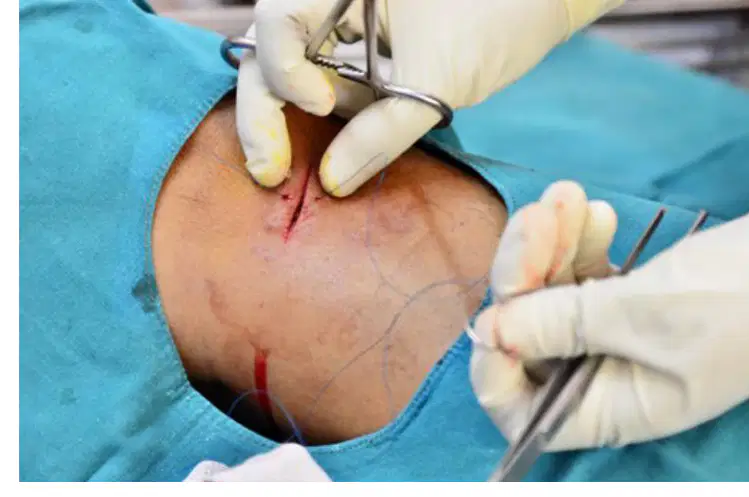
Which of the following is a primary goal of wound care after surgery?
To let the wound heal rapidly without infection or complication
To keep the wound open for a longer period
To avoid any medical intervention
To ensure the wound leaves a permanent scar
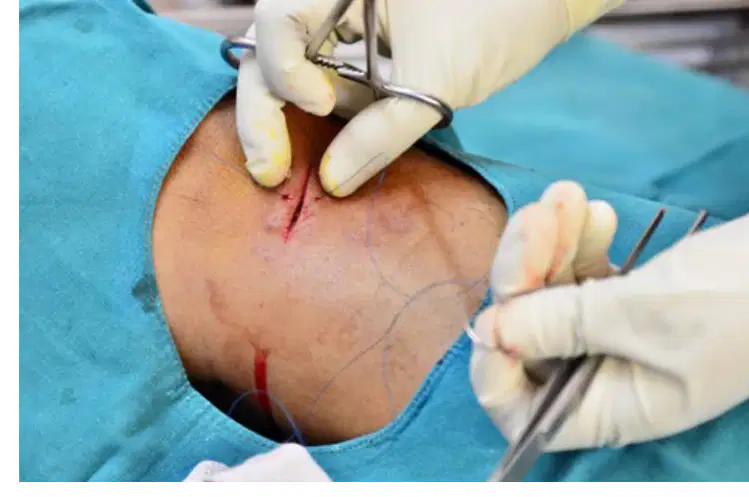
Why is it important for the affected area to return to the best level of function and appearance after surgery?
It helps the patient regain normal activities and confidence
It increases the risk of infection
It delays the healing process
It makes the wound more visible
A patient’s surgical wound is healing slowly and shows signs of infection. Based on the goals of wound care after surgery, what should be the primary concern for the healthcare provider?
Preventing further infection and promoting rapid healing
Ignoring the infection and waiting for natural healing
Focusing only on the appearance of the wound
Allowing the wound to remain open
Which of the following best describes the goal of aseptic surgical procedures?
To speed up the healing process of wounds
To eliminate the risk of transmission of all harmful microorganisms
To reduce the pain experienced by patients during surgery
To minimize the use of surgical instruments
How do aseptic practices benefit surgical patients?
They increase the duration of surgery
They prevent the cross-contamination of pathogens
They reduce the need for anesthesia
They ensure faster wound closure
Why is cross-contamination of post-operative wounds considered a high risk for surgical patients?
It can lead to the transfer of microorganisms such as bacteria, fungi, viruses, and parasites from one patient to another
It causes wounds to heal more quickly
It reduces the effectiveness of pain medication
It increases the patient's immune response
Which of the following best describes the purpose of wound irrigation?
To close the wound using stitches
To remove bacteria, exudate, purulent material, and residual topical agents from an open wound
To apply a bandage directly to the wound
To dry the wound using heat
Which solution is commonly used in wound irrigation?
Alcohol
Saline or other topical solutions such as hypochlorous acid or mild soapy water
Vinegar
Hydrogen peroxide only
Explain why wound irrigation is considered an important step in wound care. Use evidence from the description to support your answer.
It helps wounds heal faster by closing them immediately.
It removes harmful substances and reduces the risk of infection by flushing out bacteria, exudate, and residual agents.
It prevents the wound from bleeding.
It makes the wound look cleaner for cosmetic reasons only.
A nurse is preparing to irrigate a wound. Which of the following actions best demonstrates the correct application of the wound irrigation concept described?
Pouring alcohol directly onto the wound
Using a syringe to apply a steady flow of saline solution to the wound
Covering the wound with a dry cloth
Applying ointment without cleaning the wound
When cleansing a wound, why is it important to begin at the center and work outward?
To avoid introducing additional contamination
To save time during the procedure
To reduce pain for the patient
To use less antiseptic solution
Which of the following steps is necessary when preparing the wound field for treatment?
Clipping interfering hair and washing adjacent regions with an antiseptic solution
Applying a bandage before cleaning
Using only water to rinse the wound
Leaving the wound exposed to air
A patient arrives with a wound covered by long hair and dirt. Describe a sequence of actions you would take to properly cleanse and prepare the wound for further treatment.
Clip interfering hair, wash adjacent regions with antiseptic, cleanse from center outward, drape surrounding areas
Apply a bandage immediately, then clean the wound later
Clean only the wound itself, ignoring the surrounding area
Start cleaning from the outside and move toward the center
What is the purpose of draping the areas surrounding a wound during treatment?
To maintain a sterile field and prevent contamination
To keep the patient warm
To absorb excess antiseptic solution
To make the wound more visible
Why is it important to use instruments rather than gloved fingers when removing visible debris from a wound?
Instruments are more precise and reduce the risk of infection.
Gloved fingers are more sterile than instruments.
Instruments can introduce more bacteria into the wound.
Gloved fingers can remove debris more effectively.
If there is a possibility that metallic contaminants or pieces of broken bone have been missed in a wound, what is the recommended next step?
Close the wound immediately.
Image the wound to search for debris.
Apply a bandage without further inspection.
Use only antiseptic to clean the wound.
Explain the purpose of mechanically debriding a wound and what is removed during this process.
To remove devitalized or shredded tissue.
To add new tissue to the wound.
To increase blood flow to the wound.
To apply medication directly to the wound.
A patient presents with a wound that may contain metallic fragments. Describe a strategic approach to ensure all debris is identified and removed.
Use imaging to locate debris, then mechanically debride the wound to remove devitalized tissue.
Only use gloved fingers to feel for debris.
Immediately close the wound without further inspection.
Apply a topical ointment and bandage the wound.
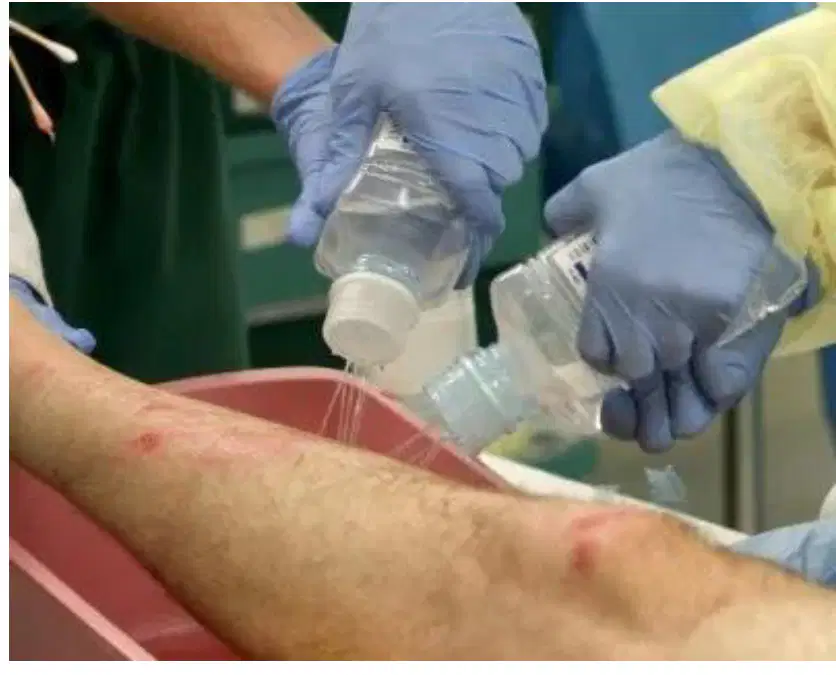
Which of the following is a correct method for irrigating a wound as described in the material?
Pouring a warm cleansing solution into the wound and allowing it to drain by gravity
Applying ice directly to the wound
Covering the wound with a dry cloth only
Using alcohol to clean the wound without rinsing
What is the purpose of using a suction device during wound irrigation?
To remove the cleansing solution from the wound
To increase blood flow to the wound
To apply medication directly to the wound
To dry the wound quickly
A patient has a wound that needs to be irrigated. Which of the following steps demonstrates strategic thinking in choosing the best irrigation method?
Assessing the wound size and depth to decide between pouring solution or using an irrigation syringe
Always using the same method for every wound
Ignoring the wound type and using any available liquid
Skipping irrigation and covering the wound immediately
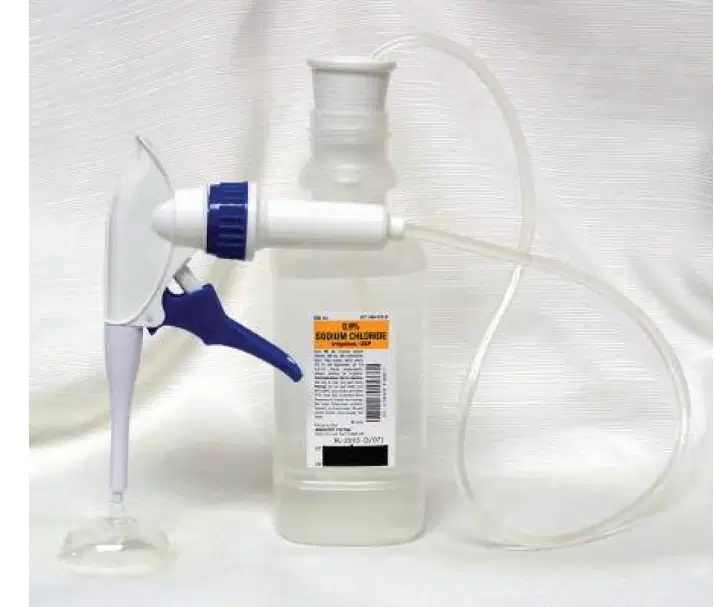
Which of the following best describes the function of a purpose-made wound irrigation system in treating wounds?
It pumps large volumes of fluid at a practitioner-selected pressure and collects the fluid.
It applies medication directly to the wound without using any fluid.
It only removes debris from the wound using suction.
It seals the wound to prevent infection.
Why is it important for a practitioner to select the pressure when using a wound irrigation system?
To ensure the fluid is delivered at a safe and effective level for wound cleaning.
To increase the speed of wound healing regardless of wound type.
To reduce the amount of fluid used in the procedure.
To avoid using any fluid during the process.
Which solution is considered the standard for wound irrigation?
0.9% saline (normal saline)
10% Betadine scrub
Distilled water
Hydrogen peroxide
When using 1% povidone-iodine (Betadine solution) for wound irrigation, what should be done immediately after its application?
Flush the wound with sterile 0.9% saline solution
Apply 10% Betadine scrub
Cover the wound with a dry bandage
Leave the solution to dry on the wound
Explain why it is important to use sterile 0.9% saline as the standard irrigating solution for wounds rather than other solutions like distilled water or hydrogen peroxide.
It is isotonic and less irritating to tissues
It is cheaper than other solutions
It has a stronger disinfectant property than hydrogen peroxide
It stains the wound for better visibility
Why are some antiseptic solutions that are effective on intact skin not recommended for wound irrigation?
They are too harsh for wounds.
They are not effective on bacteria.
They are too expensive.
They cause wounds to heal faster.
Which of the following solutions is NOT recommended for wound irrigation due to its harshness?
10% povidone-iodine
Normal saline
Sterile water
Distilled water
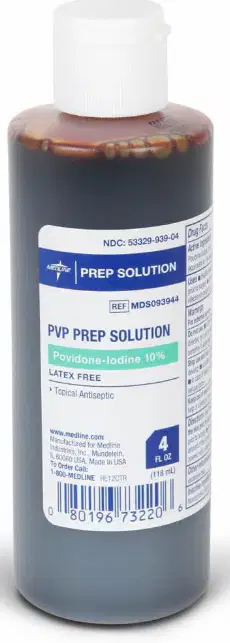
What is the primary use of the solution shown in the image, and why should it be avoided for wound irrigation?
It is a topical antiseptic effective on intact skin but too harsh for wounds.
It is a pain reliever for open wounds.
It is a moisturizer for dry skin.
It is a disinfectant for surgical instruments only.
After washing a wound, what is the recommended method for drying it before closing?
Gently pat it dry with sterile gauze, starting at the center and working outward
Rub the wound vigorously with a towel
Let the wound air dry without touching it
Use a hair dryer to dry the wound quickly
A patient presents with a wound. Explain how your decision to close or not close the wound could impact the healing process and the final appearance of the scar.
Closing the wound appropriately can reduce infection risk and may result in a smaller scar
Not closing the wound always leads to faster healing and no scar
Closing the wound has no effect on infection or scarring
The method of closing the wound only affects pain, not healing or scarring
When deciding about wound closure, what factor do physicians consider in the area of the wound?
The color of the skin
The local skin tensions
The patient's age
The type of bandage available
Why are the edges of a wound more easily pulled apart in areas of high skin tension, such as the scalp or the front of the tibia?
Because the skin is thinner in these areas
Because the wound gaps in the direction of the greatest tension
Because there is less blood flow in these areas
Because these areas heal faster
A physician is treating a wound on the front of the tibia, an area of high skin tension. What should the physician anticipate regarding the wound edges and closure?
The wound edges will stay together easily
The wound will gap perpendicular to the lines of greatest tension
The wound will gap in the direction of the greatest tension
The wound will not require any special consideration
Why do surgeons make elective incisions in or parallel to skin creases and perpendicular to underlying muscles?
To achieve the thinnest scars
To increase blood flow to the area
To reduce the risk of infection
To speed up the healing process
Which of the following best describes the approach physicians take when making the long axis of a wound seam?
Parallel to skin creases, perpendicular to underlying muscles, and along the local line of least skin tension
Perpendicular to skin creases, parallel to underlying muscles, and along the line of greatest skin tension
Diagonal to both skin creases and muscles, regardless of skin tension
Randomly oriented to avoid muscle damage
A patient is concerned about scarring after surgery. Based on the principles described, what should the surgeon consider when planning the incision to minimize scarring?
Make the incision parallel to skin creases and perpendicular to underlying muscles
Make the incision perpendicular to both skin creases and muscles
Make the incision along the direction of greatest skin tension
Make the incision randomly to avoid nerves
What is another term for primary wound closure?
Healing by secondary intention
Healing by delayed intention
Healing by primary intention
Healing by indirect closure
A patient undergoes a typical surgical operation. What type of wound closure is most likely used at the end of the operation?
Secondary wound closure
Primary wound closure
Delayed primary closure
Open wound management
Which of the following best describes secondary wound closure?
It allows the wound to contract and re-epithelialize on its own.
It involves immediate stitching of the wound edges.
It always results in no scarring.
It is only used for minor wounds.
Why might secondary wound closure be preferred for highly contaminated wounds?
It speeds up the healing process.
It significantly reduces the risk of infection.
It prevents any scarring.
It keeps the wound environment dry.
Secondary wound closures tend to leave a larger scar. What is a benefit of this method despite the increased scarring?
It protects bacteria inside a warm moist tissue environment.
It avoids protecting bacteria inside a warm moist tissue environment.
It eliminates the need for any wound care.
It always results in faster healing.
Explain why secondary wound closure is also called healing by secondary intention or indirect closure. Use evidence from the information provided.
Because the wound heals without direct closure, allowing natural contraction and re-epithelialization.
Because the wound is closed immediately with sutures.
Because it involves the use of antibiotics only.
Because it is the fastest method of wound healing.
What is the main purpose of delayed primary closure in wound treatment?
To immediately close the wound with sutures or staples
To let the wound remain open initially and later close it with sutures or staples
To leave the wound open permanently
To use only antibiotics for wound healing
Which of the following best describes the type of wounds for which delayed primary closure is most appropriate?
Clean wounds that heal quickly
Highly contaminated wounds that may need repeated debridement or antibiotics before closure
Minor cuts and scrapes
Burns that do not require closure
Why is delayed primary closure sometimes referred to as healing by third intention or tertiary wound repair?
Because it is the fastest method of wound healing
Because it involves two-part closure: initial opening and later closure
Because it uses only antibiotics for healing
Because it is used only for surgical wounds
What type of material should be used for packing a wound in secondary closure, and how should it be prepared?
Dry cotton balls, left unmoistened.
Sterile fine-mesh gauze moistened with sterile 0.9% saline.
Non-sterile cloth, soaked in alcohol.
Plastic wrap, moistened with water.
A patient has a wound that requires secondary closure. Explain the reasoning behind using a dry, thick absorbent sterile pad or pack of gauze pads as the cover dressing.
It prevents the wound from drying out completely.
It absorbs exudate and helps maintain a sterile environment.
It keeps the wound moist at all times.
It allows bacteria to grow, promoting healing.
Why is it important for a physician to ensure that all bleeding is stopped before directly closing a wound?
To prevent the formation of hematomas or seromas
To speed up the healing process
To avoid the need for anesthesia
To reduce pain during closure
What can happen if a hematoma or seroma forms in a closed wound?
It can push the edges apart, slow healing, and increase infection risk
It can immediately heal the wound
It can decrease the chance of infection
It can make the wound smaller
A hematoma is best described as which of the following?
A swelling containing a mass of blood, usually clotted
A clear serum-filled swelling
A type of infection
A type of wound closure technique
How does the presence of a seroma in a closed wound affect the healing process?
It slows the healing process and increases the chance of infection
It speeds up the healing process
It has no effect on healing
It prevents the wound from closing
What is the main difference between a hematoma and a seroma?
A hematoma contains clotted blood, while a seroma is filled with clear serum
A hematoma is a type of infection, while a seroma is not
A hematoma speeds healing, while a seroma slows it
A hematoma is always painful, while a seroma is not
Why are sutures considered the best choice for certain wounds?
They are the fastest to apply.
They are best for wounds being pulled apart by tension and require detailed matching of opposing edges.
They are the least expensive option.
They do not require any medical skill to use.
A patient has a wound that is being pulled apart by tension from the surrounding tissues. Which wound closure method would be most appropriate, based on the information provided?
Tape
Sutures
Staples
Adhesives
A doctor is deciding how to close a wound that requires precise alignment of the skin edges. Which method should they consider using?
Tape
Staples
Sutures
Steri-strips
Why are metal staples generally not recommended for use on facial wounds?
They are less comfortable and tend to leave a patterned scar.
They are more expensive than other methods.
They are difficult to sterilize.
They heal wounds more slowly.
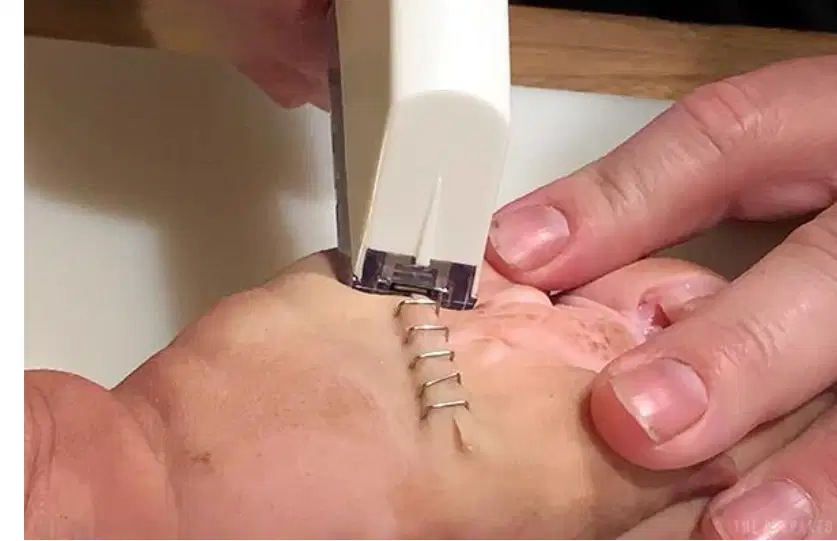
Which of the following is an advantage of using staples over sutures for treating wounds?
Staples are more likely to cause inflammation.
Staples hold a wound together more strongly and are quicker than sutures.
Staples are more reactive than sutures.
Staples result in longer healing times than sutures.

