
 Worksheets
Types of Sutures and Suture Removal
Total questions: 55
Worksheet time: 28mins
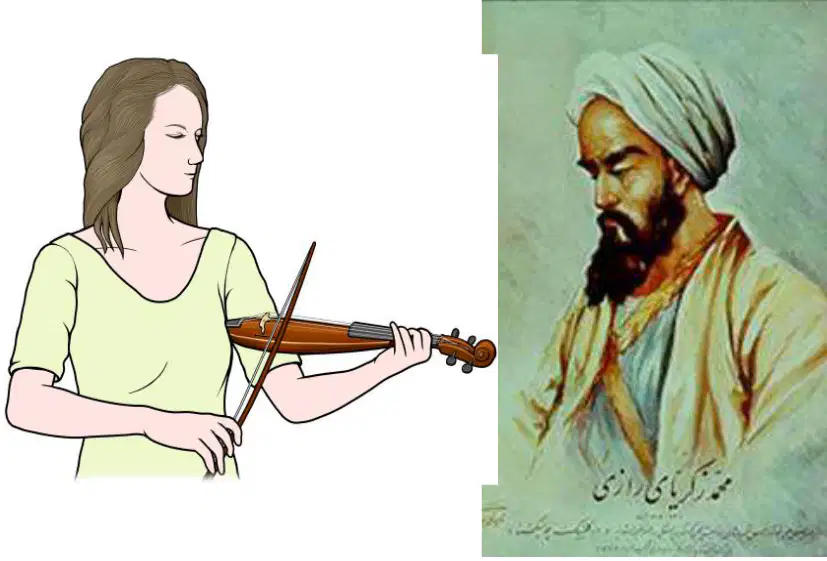
Why was Rhazes of Arabia significant in the history of surgical sutures?
He invented the first surgical instrument.
He was the first to use "kit gut" to suture abdominal wounds.
He discovered anesthesia.
He wrote the first medical textbook.
Which of the following factors must be considered when using sutures in surgical practice?
The color of the suture material
The amount of tissue reaction caused by the suture
The length of the surgical procedure
The age of the patient
A surgeon is choosing a suture material for a patient. Which of the following is NOT a factor that should influence their choice?
Familiarity with the material
Ease of handling
Patient’s favorite color
Subjective preferences
Given the need to close an infected wound, what should a surgeon prioritize according to acceptable surgical practice?
The speed of the procedure
Drainage and closure of the wound
The cost of suture material
The patient’s dietary habits
Compare and contrast monofilament and multifilament sutures in terms of their structure and handling properties.
Monofilament sutures are braided and have good handling; multifilament sutures are single-stranded and resist microorganisms.
Monofilament sutures are single-stranded and resist microorganisms; multifilament sutures are braided and have good handling.
Both types are single-stranded and have variable knot strength.
Both types are braided and resist harboring microorganisms.
If a surgeon wants to choose a suture based on its structure, which classification should they consider?
Monofilament vs. Multifilament (braided)
Absorbable vs. Nonabsorbable
Natural vs. Synthetic
Coated vs. Uncoated
If you have two suture sizes, 5-0 and 4-0, which one has the smaller diameter and why?
4-0, because a higher number means a smaller diameter.
5-0, because more zeroes indicate a smaller diameter.
4-0, because fewer zeroes indicate a smaller diameter.
Both have the same diameter.
A surgeon needs a suture with higher tensile strength. Based on your knowledge, which size should they choose and why?
A smaller size, because it has higher tensile strength.
A size with more zeroes, because it is stronger.
A larger size, because it has higher tensile strength.
Any size, because tensile strength is not related to size.
If a wound requires support for up to 6 months, which type of suture material is most appropriate?
Absorbable suture with extended wound support
Nonabsorbable suture
Rapidly dissolving absorbable suture
Surgical tape
Which type of suture is recommended for use in potentially contaminated tissues?
Non-absorbable multifilament sutures
Monofilament or absorbable sutures
Silk sutures
Stainless steel sutures
A surgeon is closing a wound in tissue that may be contaminated. Based on best practices, which suture material should the surgeon select to minimize the risk of infection, and why?
Multifilament, because it is stronger
Monofilament or absorbable, because it reduces the risk of converting contamination to infection
Silk, because it is easy to tie
Stainless steel, because it is non-reactive
Which of the following is recommended to achieve the best cosmetic results when closing wounds?
Use the largest available suture material
Use the smallest inert monofilament suture materials such as nylon or polypropylene
Use absorbable sutures only
Leave wounds open to air
Why is it recommended to use rapidly absorbed sutures in the urinary and biliary tract?
To prevent infection from bacteria
To avoid the formation of scar tissue
Because foreign bodies in fluids with high concentrations of crystalloids may act as a nidus for precipitation and stone formation
To increase the strength of the tissue
A patient’s postoperative course may produce sudden strains on the suture line. What should be done to address this situation?
Remove the sutures immediately
Reinforce the suture line with retention sutures
Use thinner sutures
Leave the wound open
What should be done with retention sutures once the patient’s condition is stabilized?
Leave them in permanently
Tighten them further
Remove them as soon as the patient’s condition is stabilized
Replace them with new sutures
How does the specific design of a surgical needle relate to its use in surgery?
The design is chosen randomly and does not affect its use.
The design depends on the intended surgical use, with each variation having merits and disadvantages.
All surgical needles have the same design for every procedure.
The design is only for aesthetic purposes.
Why might a surgeon choose a specific variation of a surgical needle for a procedure?
Because all needles are identical
To match the intended surgical use and balance the merits and disadvantages of each variation
Based only on the color of the needle
Because the patient requests it
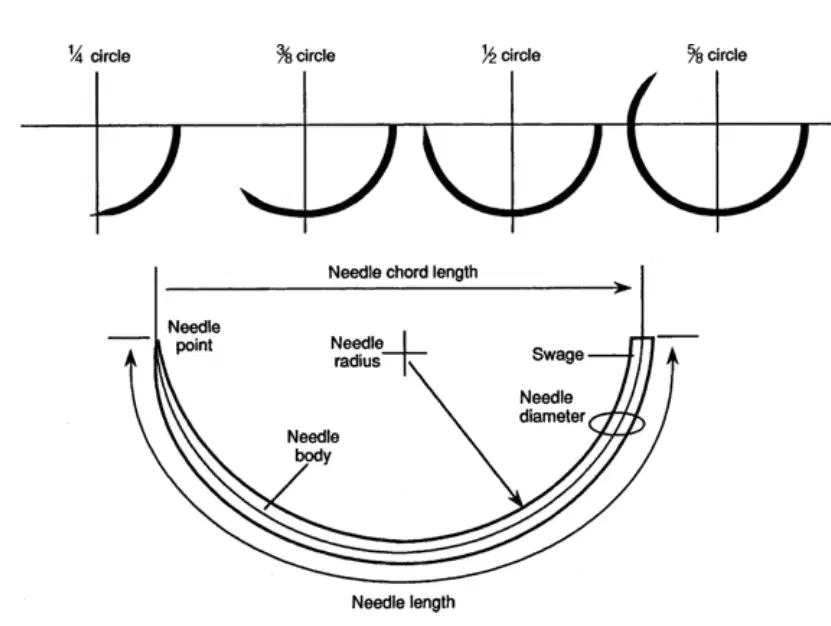
A surgeon needs to select a needle for skin closure. Based on the information provided, which needle shapes should they consider and why?
1/4 circle and straight, because they are the smallest
3/8ths and 1/2 circle, because they are most common for skin closure
Double curved, because they are always used for skin
Any shape, as all are equally suitable for skin closure
Given a scenario where minimizing tissue trauma is critical, which needle type would be most appropriate to use and why?
Cutting needle, because it has a sharp edge on the inside of the curve
Reverse cutting needle, because it reduces the chance of suture pulling through tissue
Blunt point needle, because it is used for hard tissue
Taper point needle, because it is used for surgical applications in soft tissue
What is the primary goal of optimal wound closure?
To create a thick scar for protection
To obtain a fine line scar that maintains both the form and appearance of the tissue
To leave the wound open for natural healing
To use as many stitches as possible
Which of the following statements best describes the historical significance of the world's oldest suture?
It was used by the Indian physician Sushruta in 500 BC.
It was placed by an embalmer on a twenty first dynasty mummy around 1100 B.C.
It was first described in detail in the 19th century.
It was invented in Europe during the Middle Ages.
Given the objectives of suturing, how would you explain the role of sutures in the initial days following an injury?
Sutures provide mechanical support until the wound can withstand stress on its own.
Sutures immediately heal the wound.
Sutures prevent all types of infections.
Sutures are only used for cosmetic reasons.
Why is it important for a surgeon to be aware of the differences in healing rates among various tissues and organs when suturing?
To ensure the correct dosage of anesthesia is given
To select the appropriate wound support duration for each tissue type
To reduce the cost of surgical materials
To minimize the length of the surgical incision
Which of the following factors can influence the postoperative course and the rate of healing in a patient after suturing?
The color of the suture material
The patient's age only
Infection, debility, respiratory problems, and obesity
The type of anesthesia used
Why is it important to prepare the skin with betadine on the outside before a procedure?
To make the skin more flexible
To reduce the risk of infection by disinfecting the area
To numb the skin
To mark the incision site
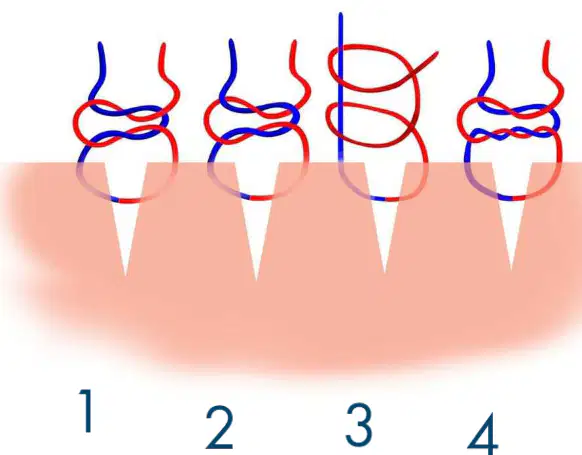
Which knot is represented by number 1 in the diagram of basic knot tying?
Square knot
Granny knot
Slip knot
Surgeon's knot
Why must the knots in a continuous suture be very secure with minimal tension on the wound?
To make the wound heal faster.
Because the wound will come apart if one loop or knot gives way.
To reduce the risk of infection.
To make the suture more visible.
Which of the following statements best explains why a horizontal mattress suture might be chosen over other suture techniques for certain wounds?
It can be done as a continuous suture, making it efficient for closing wounds quickly.
It is the only suture that does not require any tension on the wound edges.
It is always the most aesthetically pleasing option.
It is only suitable for surgical incisions.
Why should vertical mattress sutures not be used on the volar surface of hands or feet, or on the face?
Because they are too weak for these areas.
Because they cause excessive scarring.
Because of blind placement of the deep part of the suture.
Because they are too expensive for these areas.
Why is knot security important in surgical sutures?
To ensure the suture holds under all conditions
To make the suture more colorful
To reduce the cost of surgery
To increase the length of the suture
Which of the following best describes a postsurgical complication related to sutures?
Slippage of the knotted suture after surgery
Immediate tissue regeneration
Decreased risk of infection
Enhanced absorption of the suture
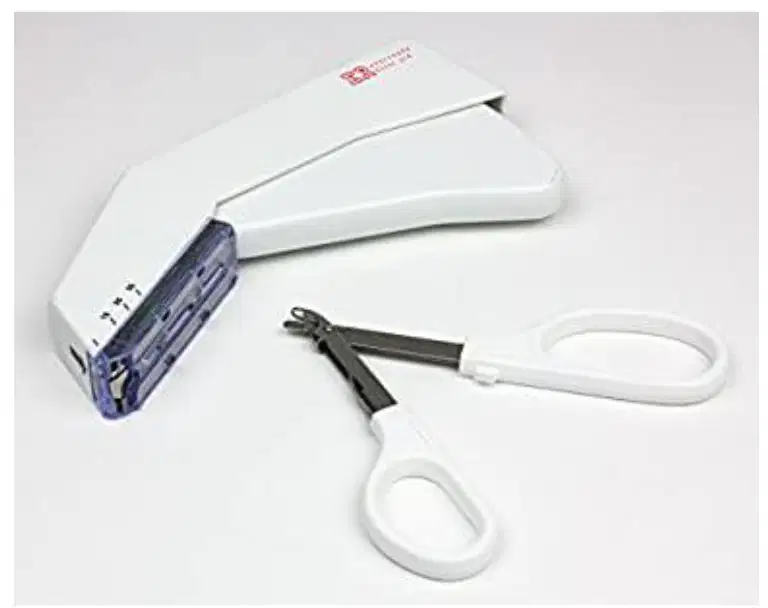
In which decade was surgical stapling introduced?
Late 1970s
Early 1960s
Mid 1980s
Early 2000s
If staples and clips are applied properly, what is the expected cosmetic outcome compared to sutures?
Noticeable scarring
No cosmetic difference
Increased risk of infection
Higher cost
Given the list of supplies, which item is specifically used to clean the incision site prior to suture removal?
Sterile dressing tray
Steri-strips
Sterile outer dressing
Non-sterile gloves
If an OT forgets to use non-sterile gloves during suture removal, what potential issue could arise?
Increased risk of infection for both patient and nurse
The suture will not be removed properly
The patient will feel more pain
The supplies will become sterile
During a patient assessment, which of the following should be included to ensure comprehensive safety?
Only check the patient’s temperature
Assess ABCCS, suction, oxygen, and safety
Ask the patient if they are comfortable and leave
Only check the patient’s blood pressure
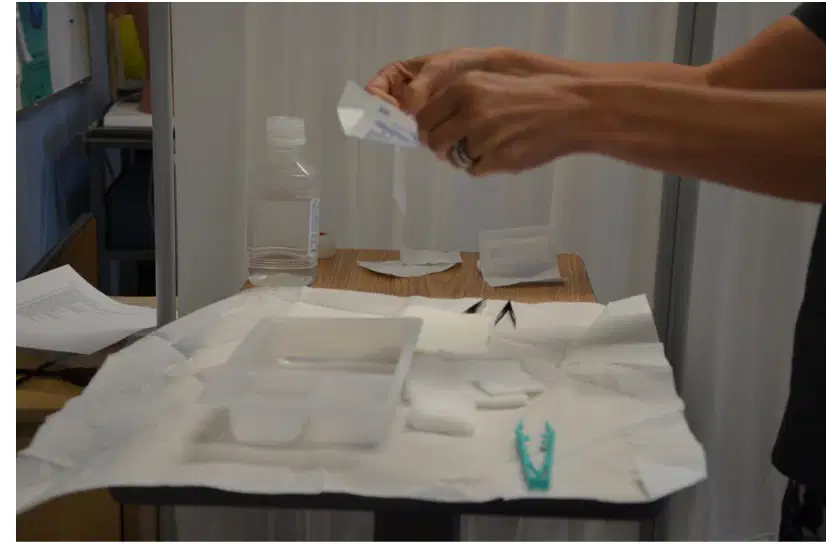
Why is it important to prepare the sterile field and add necessary supplies in an organized manner before suture removal?
It allows easy access to required supplies for the procedure.
It reduces the time needed for the procedure.
It ensures the patient feels comfortable.
It helps to avoid using any supplies.
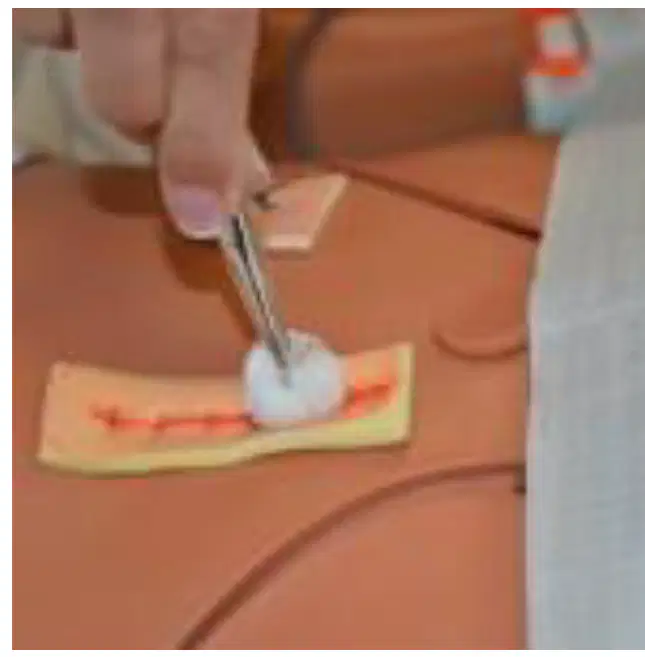
A nurse is preparing to remove sutures and notices dried blood around the wound. According to best practice, what should the nurse do before proceeding?
Remove the sutures immediately.
Apply sterile gloves and start the removal.
Clean the incision site to loosen and remove the dried blood.
Ignore the dried blood and continue.
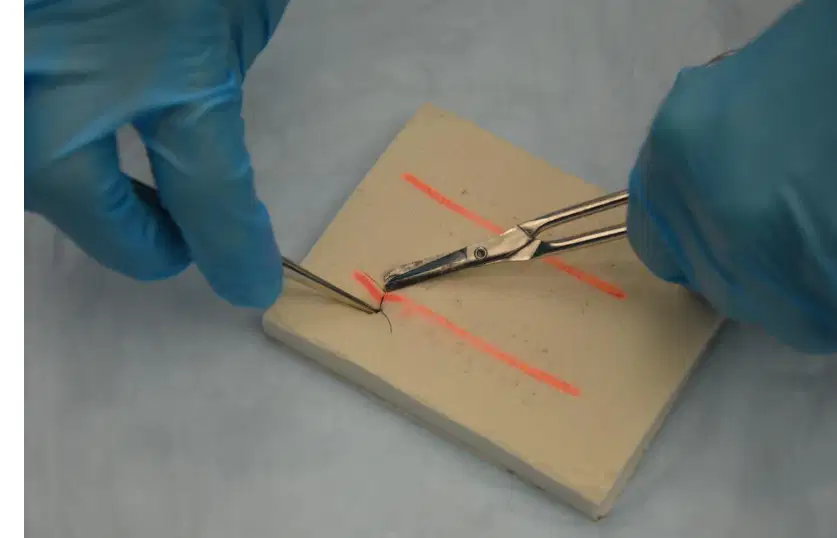
When removing intermittent sutures, which hand should hold the scissors to allow for dexterity?
Dominant hand
Non-dominant hand
Either hand
Both hands together
Explain how the positioning of scissors and forceps in the hands contributes to effective suture removal.
It allows for better dexterity and control during the procedure
It makes the process faster but less accurate
It is only for comfort and has no effect on the outcome
It is required by law in all medical procedures
Why is it important to assess wound healing after the removal of each suture?
To determine if the wound needs to be re-stitched immediately.
To decide if each remaining suture should be removed.
To ensure the patient does not feel pain.
To check if the forceps are working properly.
What is the recommended method for handling the suture during removal?
Cut the suture in the middle and pull both ends.
Grasp the knotted end with forceps and pull it out in one continuous action.
Use bare hands to pull the suture out slowly.
Twist the suture before pulling it out.
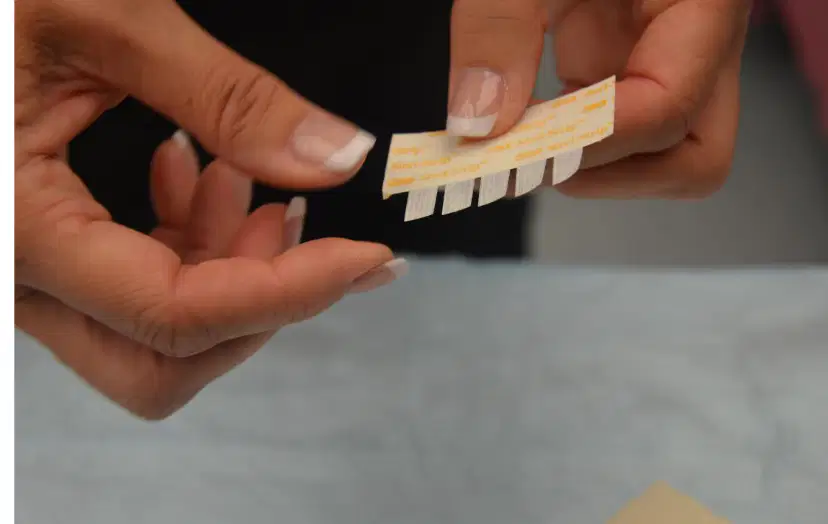
What should you do if wound edges open while removing sutures?
Continue removing sutures and ignore the wound edges
Stop removing sutures, apply Steri-Strips, and notify appropriate health care providers
Apply a bandage and continue removing sutures
Use adhesive tape and do not notify anyone
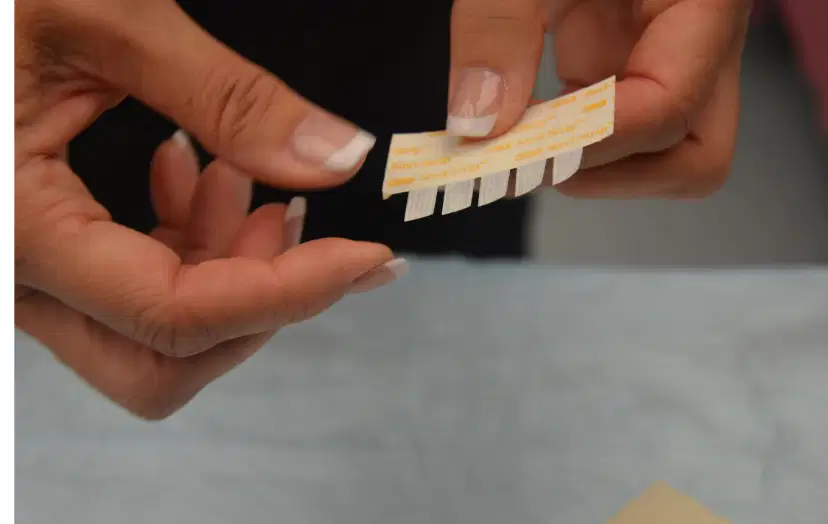
When using the principles of sterile technique during suture removal, where should Steri-Strips be placed?
Only at the beginning of the incision line
On the location of every removed suture along the incision line
Only at the end of the incision line
Randomly along the wound
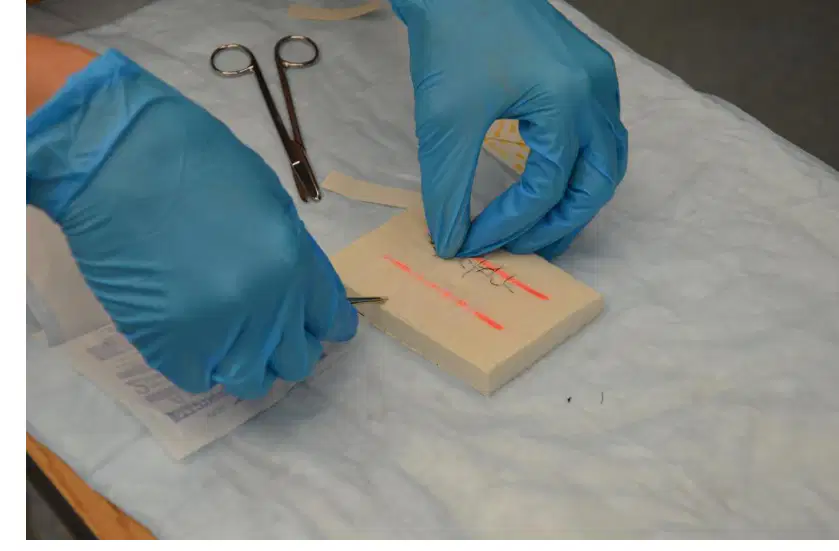
A patient has just had their sutures removed. What is the next step to ensure the incision heals properly, based on the procedure described?
Place Steri-Strips along the incision line
Leave the incision open to air
Apply a heavy bandage
Re-suture the wound
What is the correct sequence after snipping the first and second sutures during continuous suture removal?
Grasp the knotted end and gently pull out the suture, then place it on sterile gauze
Immediately cut all remaining sutures
Apply pressure to the wound before removing the suture
Leave the suture in place for observation
Why is it important to place the removed suture on sterile gauze after removal?
To prevent contamination and maintain sterility
To reuse the suture for another patient
To measure the length of the suture
To check the color of the suture
If a student accidentally snips the suture on the opposite side of the knot instead of distal to the knot, what potential complication could arise?
The suture may not be removed completely, increasing infection risk
The wound will heal faster
The suture will dissolve on its own
The knot will become tighter
Why is it important to instruct a patient to take showers rather than bathe after suture removal?
Bathing increases the risk of wound infection.
Showers are more comfortable for the patient.
Bathing can cause the wound edges to separate.
Showers help Steri-Strips fall off faster.
After removing sutures, what should be done with scissors and forceps?
Throw them away in the regular trash.
Send them for sterilization or dispose of them as appropriate.
Give them to the patient as a souvenir.
Wash them with soap and water only.
Which of the following is a possible complication related to suture removal?
Wound dehiscence
Rapid healing
Increased blood flow
Reduced pain
If excessive force is applied during suture removal, what is a likely outcome?
The wound may reopen or become damaged.
The wound will heal more quickly.
The sutures will become stronger.
The wound will not be affected.
Explain why leaving sutures in for an extended period can make their removal difficult and painful.
The wound may heal around the sutures, embedding them in tissue.
The sutures will dissolve and disappear.
The wound will become infected immediately.
The sutures will fall out on their own.
Why is it important to stop removing sutures if wound dehiscence is observed?
To prevent further opening of the wound and allow for proper management.
To save time during the procedure.
Because it is a standard step in all suture removals.
To avoid using additional medical supplies.
How long can it take for a wound to completely heal and the scar to mature after suture removal?
A few days
One to two weeks
Months to one year
Two to three years

