
 Worksheets
Unit 101 - Health & safety in a Construction Environment
Total questions: 45
Worksheet time: 23mins
1. Which of the following must be included in an accident report?
Witness statements from bystanders
Weather conditions at the time
Details of the accident including date, time, location, and involved parties.
Personal opinions about the accident
Which legislation outlines the legal requirement for risk assessments?
Environmental Protection Act 1990
Occupational Health and Safety Act 2000
Workplace Safety Regulations 1992
Health and Safety at Work Act 1974

What is meant by a 'near miss' in the workplace?
A 'near miss' is an incident that could have resulted in an accident but did not.
A 'near miss' is a safety procedure that must be followed.
A 'near miss' is a minor injury that requires no medical attention.
A 'near miss' is an accident that caused no injuries.

What is the main benefit of identifying hazards early?
It has no impact on workplace safety.
It increases the likelihood of accidents.
It helps prevent accidents and injuries.
It delays the identification of risks.
What is the main benefit of identifying hazards early?
It helps prevent accidents and injuries.
It complicates the safety assessment process.
It has no impact on safety measures.
It increases the likelihood of accidents.

What is the main purpose of a risk assessment?
To eliminate all risks completely.
To identify, evaluate, and prioritize risks.
To create a risk management team.
To increase the number of risks identified.
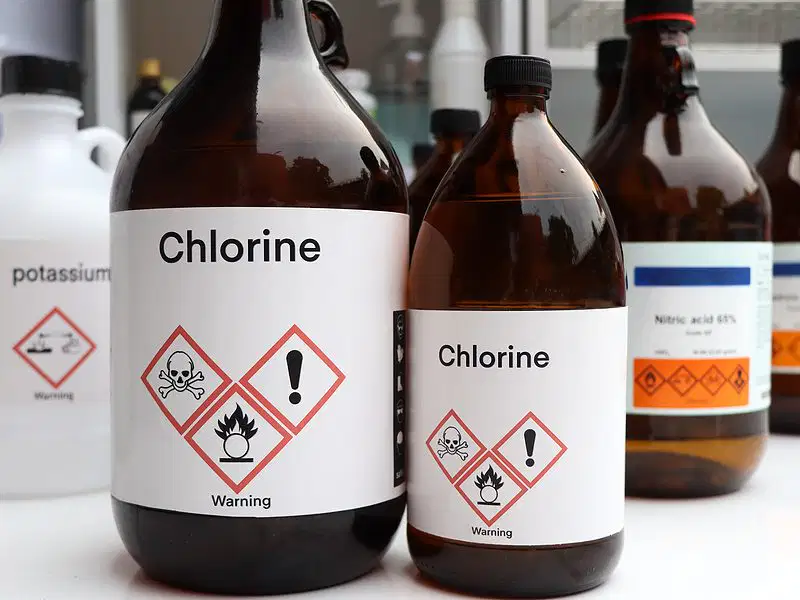
Which of the following is considered a hazard?
Water is considered a hazard.
Sunlight is considered a hazard.
Fresh air is considered a hazard.
Chemicals are considered a hazard.
Why are method statements important in construction?
They are only necessary for large projects.
They replace the need for safety training.
Method statements are important in construction because they provide clear guidelines for safe and efficient work practices.
They are used to calculate project costs.
Who is responsible for reporting accidents on site?
The construction workers
The site supervisor or safety officer
The project manager
The clients
What is the purpose of a dynamic risk assessment?
The purpose of a dynamic risk assessment is to evaluate and manage risks in real-time.
To eliminate all potential risks completely.
To provide a static analysis of past risks.
To assess risks only after an incident occurs.

Which of the following is a common cause of workplace injuries?
Slips, trips, and falls
Excessive paperwork
Poor communication
Lack of training

What is the importance of wearing gloves when handling bricks?
Wearing gloves protects hands from injuries and improves grip when handling bricks.
Gloves are used to keep bricks warm.
Wearing gloves makes it harder to handle bricks.
Gloves are only necessary for wet bricks.
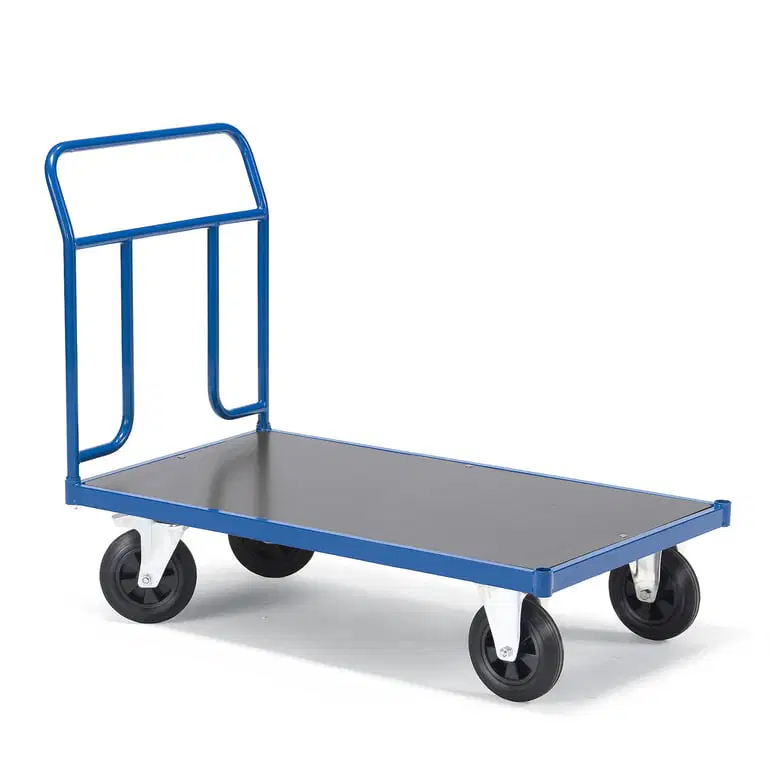
Which of the following is a manual handling aid?
Forklift
Conveyor belt
Pallet jack
Trolley
Why should lifting equipment be checked regularly?
To make the equipment look new and shiny.
Lifting equipment should be checked regularly to ensure safety and proper functioning.
To comply with insurance requirements only.
To increase the weight capacity of the equipment.
Which regulation covers manual handling in the workplace?
Manual Handling Operations Regulations 1992
Occupational Safety and Health Administration Guidelines
Workplace Safety Regulations 2005
Health and Safety at Work Act 1974
What is an employee's responsibility when lifting heavy objects?
Use proper lifting techniques and seek assistance if necessary.
Lift with your back to avoid strain.
Use any available equipment without training.
Ignore safety protocols and lift quickly.
What is a common injury caused by incorrect manual handling?
Shoulder dislocation
Wrist sprain
Back strain
Knee injury
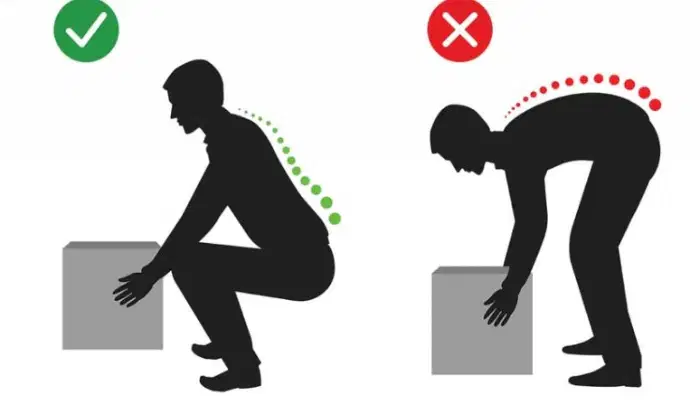
What is the correct posture when lifting a heavy object?
Bend at the waist and twist while lifting
Stand close, bend knees, keep back straight, lift with legs.
Stand far away and reach for the object
Lift with your back straight and arms only

What is a pallet truck used for?
A pallet truck is used for cooking food.
A pallet truck is used for lifting and transporting pallets.
A pallet truck is used for cleaning floors.
A pallet truck is used for measuring weight.

Which of the following is a fall arrest system?
Guardrail system
Personal protective equipment
Safety net system
Safety harness and lanyard system

What is a risk of using an unstable ladder?
Increased risk of falling and injury.
Enhanced grip on the rungs.
Increased height for better reach.
Improved stability and safety.
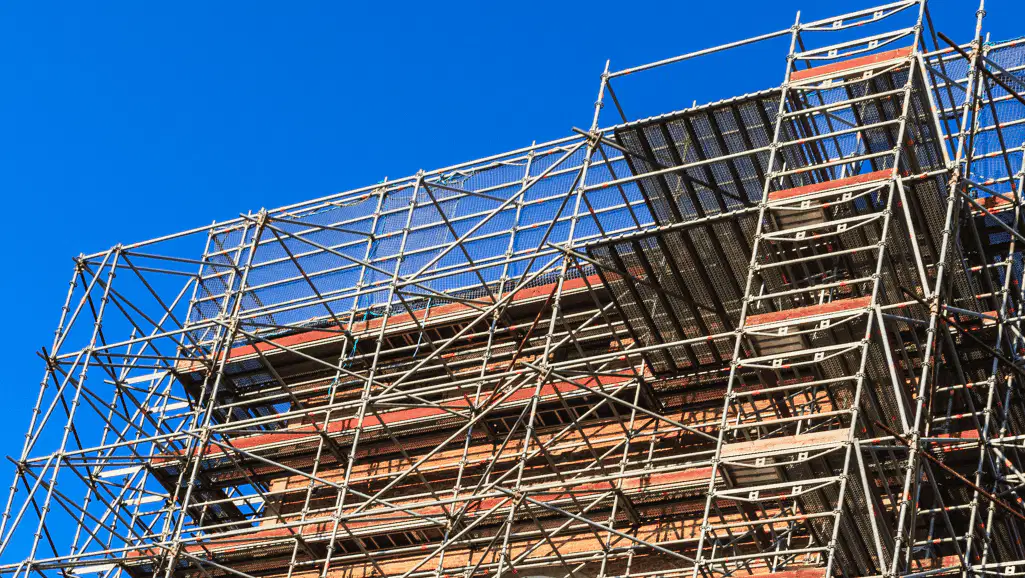
What should be done before using a scaffold?
Use the scaffold without any checks.
Place heavy materials on the scaffold immediately.
Ignore weather conditions before use.
Inspect and ensure proper assembly and stability of the scaffold.
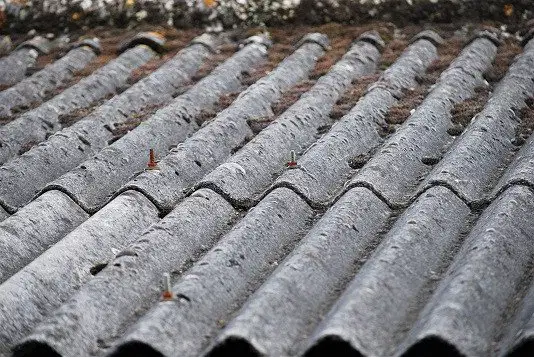
Which item is considered fragile roofing material?
Corrugated asbestos sheeting
Metal sheets
Wooden planks
Asphalt shingles
Who is responsible for ensuring the area below work at height is safe?
The project manager overseeing the project.
The site supervisor or safety officer.
The construction workers on site.
The equipment manufacturer providing the tools.
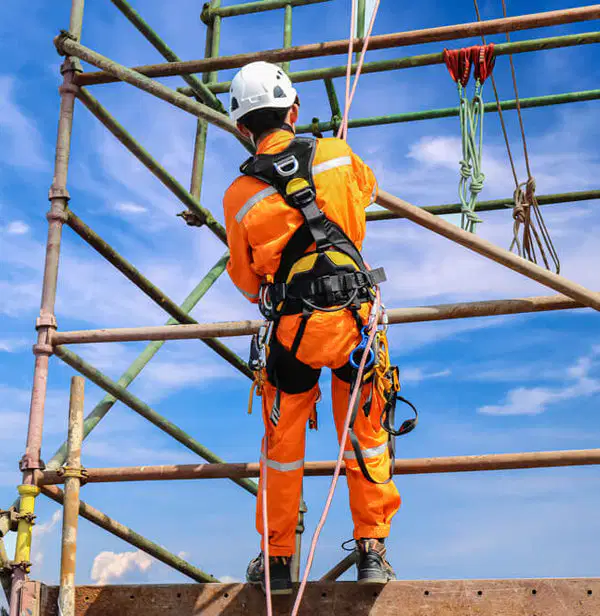
What is meant by 'working at height'?
Working at height means performing tasks in locations where there is a risk of falling.
Working at height refers to working in a basement.
Working at height means working on flat surfaces only.
Working at height is about using ladders indoors.
Why is it important to use PPE when working at height?
It is important to use PPE to protect against falls and minimise injury risks when working at height.
PPE is only necessary for indoor work.
Using PPE increases the risk of accidents.
PPE is primarily for aesthetic purposes.
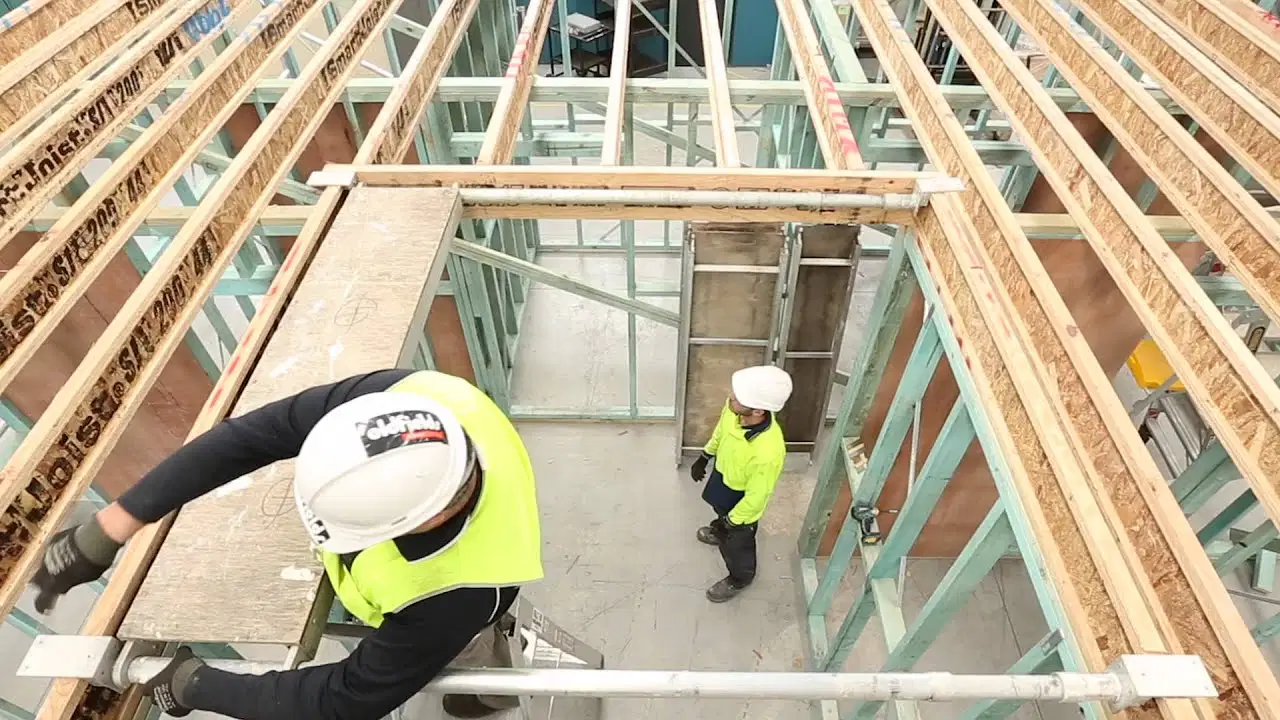
Why must internal voids be clearly marked?
To ensure safety and prevent accidents.
To improve sound quality.
To increase internal temperature.
To enhance aesthetic appeal.
Which regulation governs working at height?
Work at Height Regulations 2005
Manual Handling Operations Regulations 1992
Construction (Design and Management) Regulations 2015
Health and Safety at Work Act 1974

What is a common cause of dermatitis on site?
Contact with cement
Allergic reaction to food
Psoriasis from weather changes
Eczema from stress
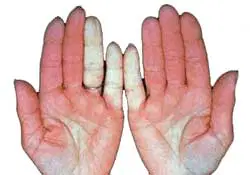
Which condition is caused by hand-arm vibration?
Tendonitis
Hand-Arm Vibration Syndrome (HAVS)
Carpal Tunnel Syndrome
Raynaud's Disease
What risk is associated with asbestos exposure?
Allergic reactions and sensitivities.
Increased risk of heart disease.
Skin irritation and rashes.
Lung cancer, asbestosis, and other respiratory diseases.
How should flammable liquids be stored?
Store flammable liquids in a kitchen cabinet.
Keep flammable liquids in direct sunlight for easy access.
Store flammable liquids in glass containers only.
Store flammable liquids in approved containers, away from heat sources, in well-ventilated areas.
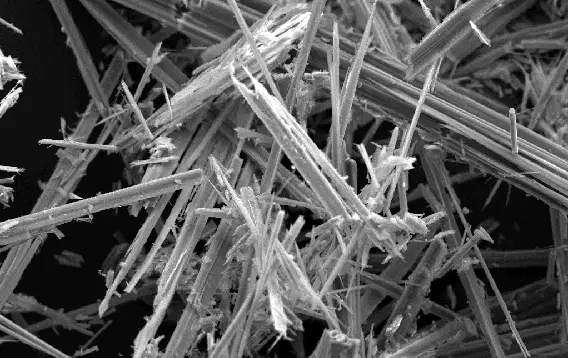
Which of the following is a type of asbestos waste?
Asbestos-containing materials (ACM)
Asbestos-free materials
Non-hazardous waste
Construction debris
Why is personal hygiene important on site?
It is not important as long as safety gear is worn.
Hygiene practices can be ignored if the weather is good.
Personal hygiene is important on site to prevent illness, ensure safety, and promote a healthy work environment.
Personal hygiene is only necessary in food-related jobs.
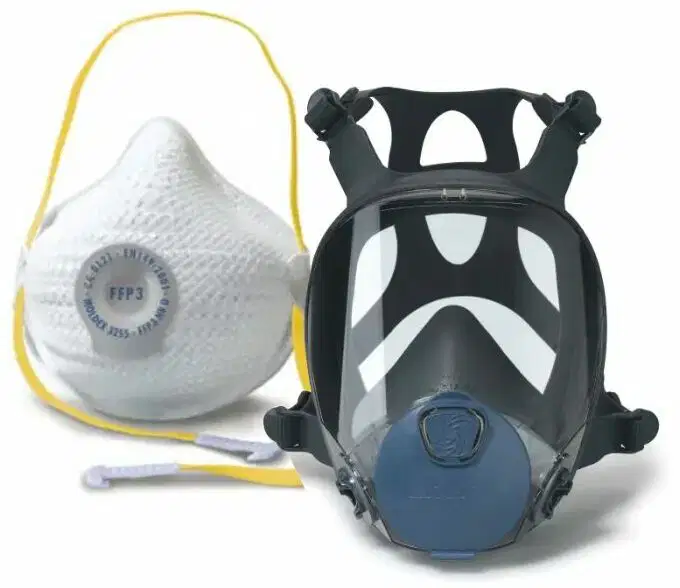
What type of PPE protects against dust inhalation?
Hard hats
Gloves
Safety goggles
Respirators or dust masks

What PPE is recommended for handling cement?
Gloves, dust mask or respirator, safety goggles, long-sleeved clothing.
Short-sleeved clothing
No protective gear
Sunglasses
1. Which of the following can reduce noise-induced hearing loss or tinnitus?
Increase volume of music to drown out noise
Use hearing protection devices and limit exposure to loud noises.
Use cotton balls as earplugs
Avoid regular hearing check-ups
1. Which regulation covers substances hazardous to health?
Control of Substances Hazardous to Health (COSHH) Regulations 2002
Chemical Safety Regulations 2015
Environmental Protection Act 1990
Health and Safety at Work Act 1974
Which of these is a substance hazardous to health?
Asbestos
Cotton
Water
Sugar

Why is it important to limit access to hazardous materials?
To increase the availability of hazardous materials for research.
To promote the use of hazardous materials in everyday products.
To ensure that hazardous materials are easily accessible for all employees.
It is important to limit access to hazardous materials to prevent accidents and ensure safety.

1. Which of the following is a plant and machinery-related hazard?
Inadequate training for employees
Poor lighting in the workspace
Moving parts of machinery
Excessive noise from machinery
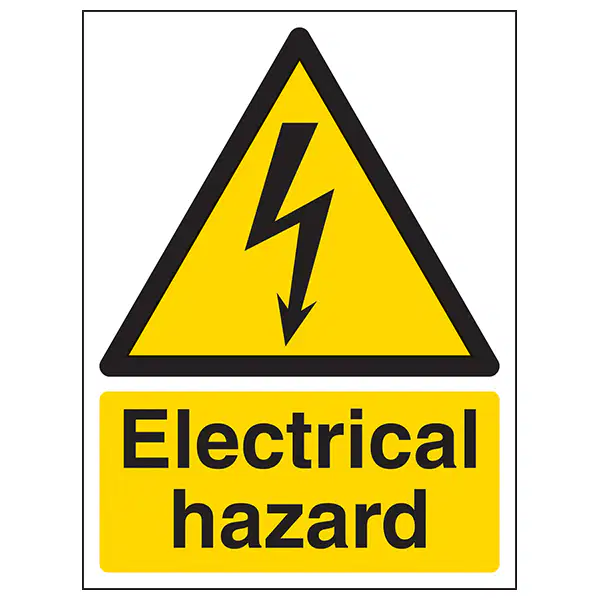
What sign indicates an electrical hazard?
A sign with a red circle and a slash.
A sign with a blue square.
A sign with a green checkmark.
A triangle sign with a lightning bolt symbol.
What should be done if equipment appears damaged?
Report the damage and cease use of the equipment.
Attempt to fix the equipment without reporting it.
Ignore the damage and proceed with the task.
Continue using the equipment as normal.
What is the risk of standing too close to operating machinery?
Increased efficiency of the machinery
Improved communication with operators
The risk includes injury from moving parts, flying debris, and accidental contact.
Enhanced visibility of the work area
Why are safeguards fitted to machinery?
To protect operators and personnel from hazards and prevent accidents.
To reduce the cost of production.
To increase the speed of the machinery.
To enhance the aesthetic appeal of the equipment.

