NEW
Font size
 Worksheets
Mechanical Wave Properties and Types
Total questions: 30
Worksheet time: 23mins
What is the formula for calculating wave speed?
wave speed = amplitude × frequency
wave speed = wavelength / time
wave speed = frequency + wavelength
wave speed = frequency × wavelength
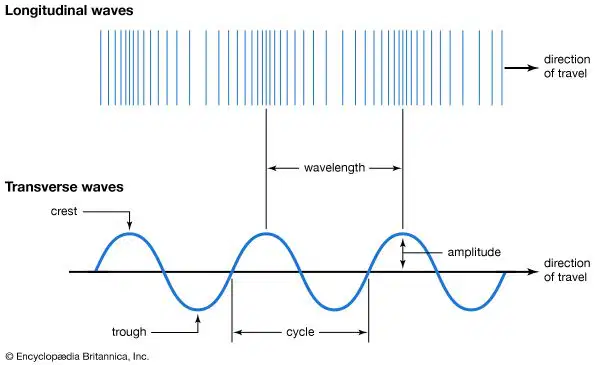
What is rarefaction in a longitudinal wave?
Rarefaction is a region in a longitudinal wave where particles are tightly packed, resulting in higher pressure.
Rarefaction is the point in a longitudinal wave where energy is at its maximum.
Rarefaction refers to the speed of a longitudinal wave as it travels through a medium.
Rarefaction is a region in a longitudinal wave where particles are spaced farther apart, resulting in lower pressure.
What is the relationship between wavelength and frequency in a longitudinal wave?
Wavelength and frequency are directly related in a longitudinal wave.
Wavelength and frequency are inversely related in a longitudinal wave.
Frequency increases as wavelength increases in a longitudinal wave.
Wavelength has no effect on frequency in a longitudinal wave.
Explain how energy is transferred in mechanical waves.
Energy is transferred by the movement of light waves.
Energy is transferred through electrical signals in a vacuum.
Energy is transferred via chemical reactions in solids.
Energy in mechanical waves is transferred through the vibration of particles in a medium.
How does the frequency of a sound wave relate to its pitch?
Higher frequency means lower pitch.
Higher frequency means higher pitch, and lower frequency means lower pitch.
Pitch is unrelated to frequency.
Frequency only affects volume, not pitch.
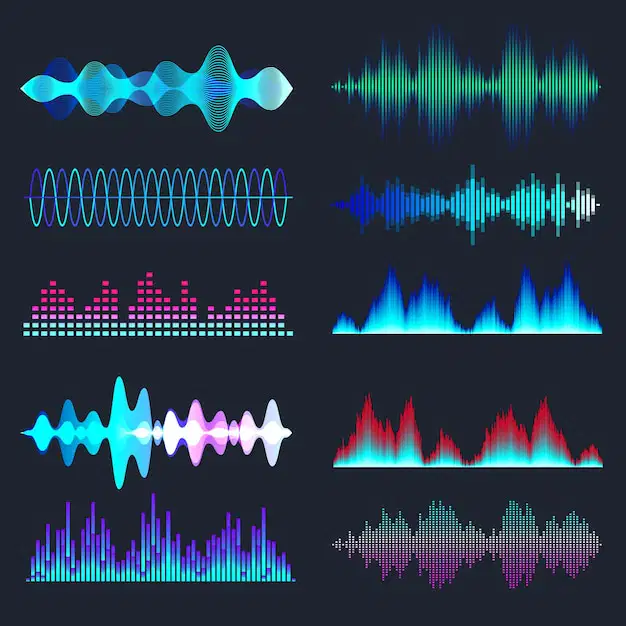
Describe how waves can interfere with each other.
Waves can only interfere if they are of the same frequency.
Waves can interfere constructively or destructively, affecting their amplitudes.
Waves can only interfere in one way, either amplifying or canceling each other.
Waves do not interact with each other and travel independently.
What is the relationship between wavelength and frequency in electromagnetic waves?
Wavelength and frequency are unrelated.
Higher frequency results in longer wavelength.
Wavelength is inversely proportional to frequency.
Frequency is the distance between successive crests.

What happens to frequency when wavelength decreases?
stays the same
decreases
increases
There is no relationship between wavelength & frequency.
Which color the visible light waves have the lowest frequency?
red
yellow
green
violet
Which EM waves are have a SHORTER wavelength than visible?
radio
none
infrared
x-rays
Which EM waves have the longest wavelength?
radio
x-rays
ultraviolet
gamma rays

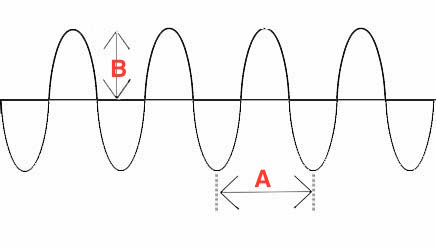
The two waves have different...
amplitudes
speeds
wavelengths
frequencies

Which electromagnetic radiation has the shortest wavelength?
infrared
gamma
microwave
ultraviolet
Which electromagnetic radiation has the longest wavelength?
infrared
gamma
radio
ultraviolet

What is the number of complete waves passing a fixed point in a given amount of time?
Amplitude
Intensity
Wavelength
Frequency

What is the frequency of this wave propagated in a second?
1 Hz
5 Hz
10 Hz
Which one of the following is NOT an example of a mechanical wave?
sound wave
water wave
earthquake (seismic) wave
radio wave
A tuning fork starts to vibrate when a certain note is played on the piano. This is an example of ___________________.
resonance
reflection
refraction
diffraction
Your body needs ______________________ to make Vitamin D.
infrared waves
microwaves
visible light waves
ultraviolet waves
The part of the electromagnetic spectrum usually used for communication is ___________________.
radio waves
infrared waves
ultraviolet waves
gamma rays
Which is the speed of light in a vacuum?
131 m/s
9.8 m/s2
3 x 10⁵ m/s
3 x 10⁸ m/s