
NEW
Font size
 Worksheets
Topic 5 computational thinking
Total questions: 60
Worksheet time: 30mins
What is required for the output to be true in an AND operation?
Both inputs need to be on (true)
One input needs to be on (true)
The input is changed to the opposite
It can do 2 instructions at the same time
In an OR operation, what condition makes the output true?
Both inputs need to be on (true)
One input needs to be on (true)
The input is changed to the opposite
It can do 2 instructions at the same time
What happens to the input in a NOT operation?
Both inputs need to be on (true)
One input needs to be on (true)
The input is changed to the opposite
It can do 2 instructions at the same time
What does a dual core mean in terms of processing?
Both inputs need to be on (true)
One input needs to be on (true)
The input is changed to the opposite
It can do 2 instructions at the same time
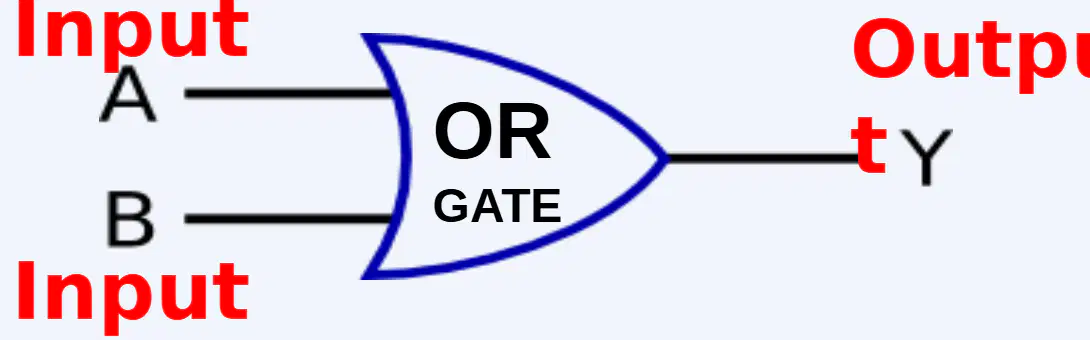
What is the function of an OR gate in digital circuits?
It outputs true only if both inputs are true.
It outputs true if at least one input is true.
It outputs false if both inputs are true.
It outputs true only if both inputs are false.
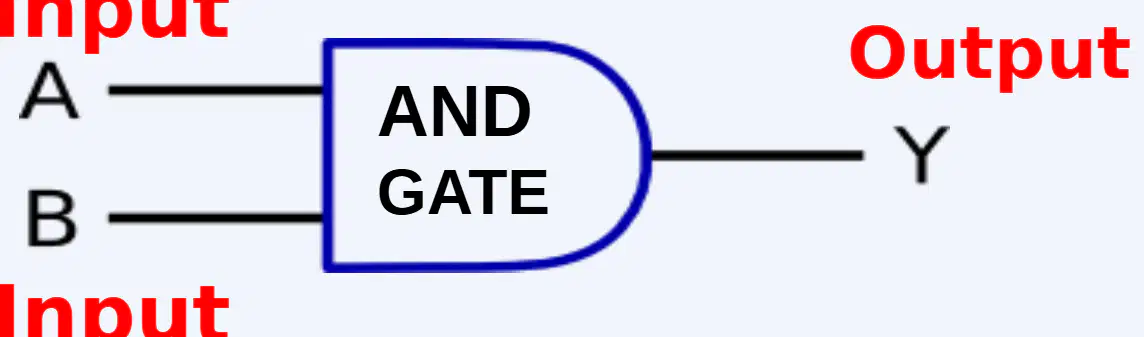
What is the function of an AND gate in digital circuits?
It outputs true only if both inputs are true.
It outputs true if at least one input is true.
It outputs true if both inputs are false.
It outputs true if one input is true and the other is false.
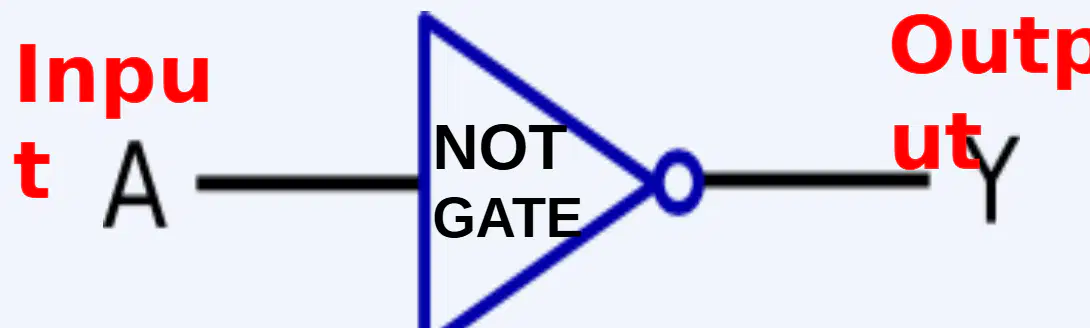
What is the function of a NOT gate in digital circuits?
It outputs the same value as the input.
It outputs the opposite value of the input.
It adds two input values.
It multiplies two input values.
What is the condition for the output to be true in an AND operation?
Both inputs need to be on (true)
One input needs to be on (true)
Both inputs need to be off (false)
One input needs to be off (false)
In an OR operation, when is the output true?
Both inputs need to be off (false)
One input needs to be on (true)
Both inputs need to be on (true)
One input needs to be off (false)
What does a NOT operation do to the input?
Changes the input to the same
Changes the input to the opposite
Turns the input off
Turns the input on
What is one of the objectives of Lesson 3: Decomposition and Abstraction?
Learn about historical events
Understand what is meant by computational thinking
Study the life cycle of plants
Explore different art techniques
What skill will students develop in Lesson 3?
Writing poetry
Decomposing and abstracting problems
Playing musical instruments
Cooking recipes
What is computational thinking primarily used for?
Programming computers
Solving problems logically
Thinking like a computer
Writing code
Which of the following is NOT true about computational thinking?
It is the same as programming
It involves solving problems
It is a useful skill
It is not about thinking like a computer
Why is the ability to turn complex problems into simpler ones considered useful?
It helps in programming
It is a skill used every day
It makes computers think
It is only useful for mathematicians
What does the term "decomposition" refer to?
Combining different parts to form a whole
Breaking something into smaller parts
Preserving something in its original form
Painting something in different colors
In computational thinking, what are the essential characteristics of a house known as?
Details
Patterns
Designs
Structures
Why are problems easier to solve when they share patterns?
Because they are more complex
Because they require different solutions
Because the same problem-solving solution can be used
Because they are unique
Which of the following is considered a non-essential element when picturing a house?
Walls
Windows
Garage
Roof
Which of the following pieces of information will NOT help someone who is trying to draw a house?
There are houses in London
A house has windows
A house has walls
A house has a door
What is the process of breaking something down into smaller parts to make it easier to understand?
Pattern Recognition
Abstraction
Decomposition
Algorithm
Which computational thinking term involves writing down step-by-step instructions?
Algorithm
Abstraction
Pattern Recognition
Decomposition
What does pattern recognition involve in computational thinking?
Grouping items into similar categories
Ignoring irrelevant information
Writing step-by-step instructions
Breaking down complex problems
Which term refers to ignoring irrelevant information and only focusing on the main thing?
Decomposition
Abstraction
Algorithm
Pattern Recognition
What are the types of operators used within algorithms as mentioned in the lesson?
Arithmetic, relational, and boolean
Logical, conditional, and loop
String, integer, and float
Input, output, and process
What is one of the objectives of the lesson on determining outputs?
To create new algorithms
To identify the outputs of algorithms
To learn about data storage
To understand user interfaces
What does the "+" operator mean?
Subtract
Add
Multiply
Divide
What operation does the "-" symbol represent?
Add
Multiply
Subtract
Divide
Which operator is used to multiply numbers?
+
-
*
/
What does the "/" operator do in mathematics?
Add
Subtract
Multiply
Divide
What is the result of 5 + 5?
10
15
20
25
What is 100 minus 50?
25
50
75
100
Calculate 2 multiplied by 2.
2
4
6
8
What is 20 divided by 4?
2
4
5
6
Find the sum of 25 and 37.
52
57
62
67
What is the result of 500 minus 230?
250
270
300
320
Calculate 12 times 12.
124
132
144
156
What is 35 divided by 5?
5
6
7
8
What does the relational operator ">" mean?
Less than
Greater than
Equal to
Not equal to
Which relational operator is used to check if two values are equal?
!=
>
==
<=
What is the meaning of the relational operator "<="?
Greater than
Less than
Less than or equal to
Greater than or equal to
Which operator would you use to express "not equal to"?
==
!=
<
>=
Is the statement "5 > 7" true or false?
True
False
Neither
Cannot be determined
Is the statement "6 == 6" true or false?
True
False
Neither
Cannot be determined
Is the statement "6 <= 9" true or false?
True
False
Is the statement "10 != 11" true or false?
True
False
What is one of the purposes of learning about flowchart symbols?
To memorize computer codes
To understand the purpose of flowchart symbols
To write essays
To draw maps
What skill will you develop related to flowcharts in this lesson?
Writing poetry
Identifying outputs from flowcharts
Painting landscapes
Solving algebra equations
Which of the following is an activity you will learn in this lesson?
Create flowchart diagrams
Build a robot
Design a website
Cook a meal
What is the purpose of turning algorithms into flowcharts?
To make them more colorful
To be precise when telling the computer what to do
To make them more complex
To hide the steps from users
What shape is used to start and end a flowchart?
Rectangle
Circle
Oval
Triangle
What does a rectangle represent in a flowchart?
Start or end
Decision
Process
Input/Output
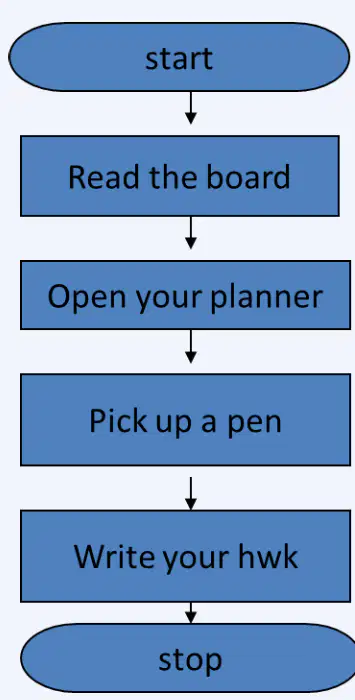
Which of the following is an example of a process in a flowchart?
Start
Decision
Pick up a pen
Stop
Which symbol is used to represent a decision in a flowchart?
Parallelogram
Diamond
Oval
Rectangle
What is the output of an AND gate if one input is true and the other is false?
Cannot be determined
False
Both true and false
True
Which computational thinking skill involves finding similarities among problems?
Decomposition
Algorithm
Abstraction
Pattern Recognition
Which logic gate outputs true only if both inputs are true?
NOT gate
AND gate
XOR gate
OR gate
What is the result of 8 divided by 2?
2
4
6
8
Which of the following is an essential feature when drawing a house?
Roof
Swimming pool
Garage
Garden
What does abstraction help you do in computational thinking?
Multiply numbers
Draw flowcharts
Write computer code
Focus on important details and ignore unnecessary ones

