
NEW
Font size
 Worksheets
Safe Driving Practices Quiz
Total questions: 26
Worksheet time: 13mins
What is the main purpose of maintaining a space cushion around your vehicle?
To give you distance to react in emergencies and avoid a crash.
To make your car go faster.
To save fuel while driving.
To listen to music safely.
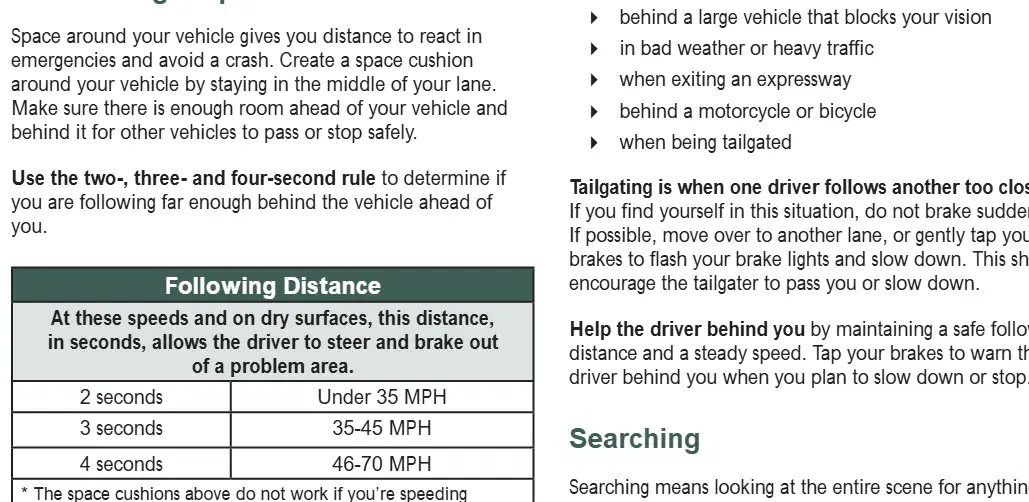
According to the table, how many seconds should you allow for following distance when driving at 46-70 MPH on dry surfaces?
4 seconds
2 seconds
1 second
3 seconds
Which of the following situations requires you to increase your following distance?
When driving behind a large vehicle that blocks your vision
When driving on a sunny day with no traffic
When driving at night with no other cars around
When driving in a parking lot
Why is it important to look ahead while driving, according to the material?
It helps identify risks early and provides more time to react.
It helps you drive faster.
It allows you to listen to music better.
It helps you avoid using your mirrors.
Imagine you are approaching an intersection. What is the best way to check for other vehicles before entering, based on the information provided?
Check from left to right and then left again before entering.
Only look straight ahead.
Only check your rearview mirror.
Honk your horn and drive through quickly.
What is a blind spot when driving?
An area where vehicles cannot be easily seen by the driver
A place to park your car
A type of road sign
The front windshield of a vehicle
Which of the following is a safe way to check your blind spot before changing lanes?
Quickly turn your head and glance over your shoulder
Only use your rearview mirror
Only use your side mirrors
Honk your horn
Why is it important to be especially aware of pedestrians when making a right or left turn?
Pedestrians have the right-of-way and may be crossing the street
Pedestrians always walk on the sidewalk
Pedestrians are not allowed to cross at intersections
Pedestrians must wait for vehicles to turn first
What should a driver do when approaching a bicyclist on the road?
Pass with at least three feet of clearance
Honk repeatedly to warn the bicyclist
Ignore the bicyclist and continue driving
Drive as close as possible to the bicyclist
A driver is about to change lanes on a busy street. What steps should they take to ensure the safety of bicyclists and motorcyclists?
Check blind spots, look for small vehicles, and give enough space before changing lanes
Only use mirrors and change lanes quickly
Ignore smaller vehicles and focus on larger ones
Change lanes without signaling
What is a "No-Zone" in relation to trucks, tractor-trailers, buses, and RVs?
An area where these vehicles are not allowed to drive
A special parking area for large vehicles
Blind spots where crashes are more likely to occur
A zone where only motorcycles can travel
Which of the following is a safe practice when driving near light rail trains?
Always drive on the tracks to avoid traffic
Never obey signs and traffic signals
Always look both ways before turning across train tracks
Try to pass or shift on train tracks
Why is it important to check for motorcycles twice before pulling out into traffic?
Motorcycles are always faster than cars
Motorcycles are larger and easier to see
Motorcycles are smaller and can be easily missed
Motorcycles always stop at intersections
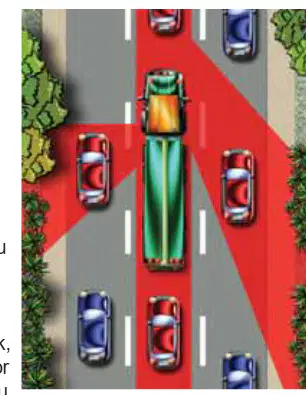
If you cannot see the driver’s face in the side view mirror of a truck, what does it mean?
The driver can see you clearly
You are in the truck’s No-Zone or blind spot
The truck is about to turn
The truck is parked
Before driving a vehicle with a light to medium trailer attached, which of the following should you check?
That the trailer is empty
That the pin securing the ball mount to the receiver is intact
That the trailer is painted a bright color
That the trailer has no windows
When driving a vehicle with a light to medium trailer attached, what should you do if your trailer starts to sway?
Speed up quickly
Slow down
Turn off your headlights
Honk your horn
What is the most common mistake drivers make when backing up?
Not using turn signals
Failing to look both ways behind them
Driving too fast
Forgetting to use headlights
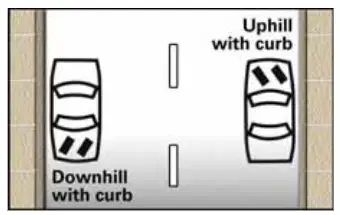
When parking uphill with a curb, which way should you turn your front wheels?
Turn wheels right
Keep wheels straight
Turn wheels left
Turn wheels toward the curb
Which of the following is NOT a place where you are allowed to park?
In a parking space reserved for disabled persons
On crosswalks or sidewalks
On the right side of a two-way street
In front of your own driveway
Why is it important to always know where other vehicles are positioned around you while driving?
To avoid getting lost
To identify and avoid risks
To save fuel
To drive faster
When driving near a large truck, what should you do to avoid being in its blind spot?
Flash your headlights at the truck driver
Honk your horn continuously
Drive as close as possible to the truck
Stay out of the areas directly beside and behind the truck
What is the safest way to ensure you are not in another driver's blind spot?
Follow closely behind the vehicle
Only use your horn to alert them
Drive directly alongside other vehicles for long periods
Make sure you can see the other driver in their side mirror
Why should you avoid sudden lane changes near vehicles towing trailers?
Trailers never use turn signals
Trailers need more space to maneuver and may not stop quickly
Trailers are easier to see than cars
Trailers are always empty
When driving in rainy or wet conditions, what should you do to maintain a safe following distance?
Increase your following distance to allow more time to stop
Drive closer to the vehicle ahead
Turn off your headlights
Use your horn more frequently
What is the best way to avoid a collision with a vehicle in your blind spot?
Rely only on your rearview mirror
Change lanes quickly without checking
Honk your horn before moving
Check your mirrors and look over your shoulder before changing lanes
Why should you leave extra space when driving behind a motorcycle?
Motorcycles can stop more quickly than cars
Motorcycles are not affected by road conditions
Motorcycles always drive slowly
Motorcycles take up more space on the road

