
 Worksheets
7255 -101 Mock Paper (2)
Total questions: 47
Worksheet time: 31mins
What is the purpose of a method statement?
To detail the procedure of how a task should be performed.
To ensure compliance with environmental regulations.
To calculate the amounts of materials needed for a job.
To provide timings for the order of activities that will be taking place.
What is the most common cause of work-related fatalities in construction environments?
Falls when working at height.
Being hit by a flying object.
Incorrect use of PPE by employees.
Tiredness from long working hours.
What are the most common causes of work-related injuries in the construction industry?
Lifting and moving heavy objects.
Slips, trips and falls.
Hand and arm vibration.
Exposure to chemicals, dust and noise.
What is a potential implication of employees ignoring accident prevention measures in the workplace?
Higher risk of personal injury.
Increased costs to the employer for providing PPE.
Increased workplace productivity.
Reduced requirement for staff training
What term is defined as: ‘An unexpected incident that leads to injury or harm’? Required to answer. Single choice.
Risk.
Hazard.
Accident.
Competence.
What is a health and safety risk associated with construction materials? Required to answer. Single choice.
Transport delays.
Excessive weight of loads.
Use of incorrect tools.
Cost increases.
What hazard is associated with incorrect storage of bulk materials? Required to answer. Single choice.
Blocked exits.
Damage to materials.
Increased chance of falling objects.
Reduced double handling of materials
Which of the following is a risk associated with building service activities? Required to answer. Single choice.
Leaving sharp ends on cut piping.
Electrocution from exposed cables.
Storage of ducting at a high level.
Working in bad weather conditions.
What is a potential hazard associated with the storage of waste materials?
What is the main reason why accidents and near misses should be reported? Required to answer. Single choice.
To reduce the need for training and monitoring.
To identify competence in the workforce.
To learn from incidents and improve safety.
To ensure disciplinary action can be taken.
What is the typical procedure for reporting an accident in a construction environment? Required to answer. Single choice.
The injured person informs family members about the accident.
HR department notify the emergency services of an on-site accident.
Colleagues inform each other so that they don’t have a similar accident.
Employees inform their supervisor about the accident.
What is the main reason for ensuring safe manual handling in a construction workplace? Required to answer. Single choice.
To encourage greater productivity.
To increase the physical strength of employees.
To minimise allergic reactions.
To prevent musculoskeletal injuries.
An employee's responsibility regarding manual handling under current legislation and official guidance is to:
Follow safe systems of work and use equipment provided
Ignore manual handling procedures if in a hurry
Rely solely on supervisors to ensure safety
Lift heavy loads without assessing the risk
What forms part of the correct procedures for safe manual lifting in accordance with Health and Safety Executive guidance? Required to answer. Single choice.
Lifting whilst standing on uneven ground or a slope.
Take the longest route to avoid obstacles.
Twist the body in the direction you want to move the object using both hands.
Using proper lifting techniques, such as bending the knees and keeping the back straight.
What is the most important reason for using safety equipment when handling materials on construction sites?
To avoid additional workload associated with manual handling.
To comply with the company policy on uniforms and PPE.
To reduce the chance of an accident or injury occurring.
To enhance the company’s professional reputation.
Which of the following is an aid that can assist with manual handling in construction environments? Required to answer. Single choice.
Ladder platform.
Safety harness.
Tool lanyard.
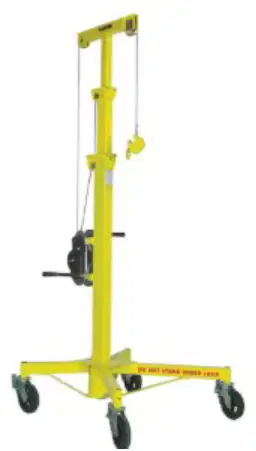
Which mechanical lifting aid can assist with manual handling?
Roustabout.
Metal toolbox.
Builder’s bucket.
Holdall.
What manual handling aid should be used to move a large pile of loose materials from one area of a site to another?
Shovel.
Lifting sling.
Wheelbarrow.
Builder’s bucket.
What type of lifting aid is used for lifting glass?
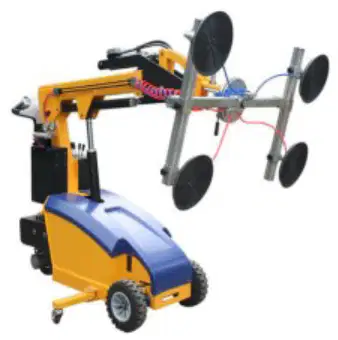
What is the device shown in the image?
Vacuum lifter.
Kerb lifter.
Lifting sling.
Pallet truck.
Which activity would be defined as ‘working at height’? Required to answer. Single choice.
Climbing down into an excavated pit.
Lowering materials with a forklift to the ground.
Lifting materials with the use of a crane.
Working on a scaffold.
Which of the following is an employee’s responsibility whilst working at height? Required to answer. Single choice.
Completing tasks quickly to minimise time spent at height.
Writing their own risk assessment.
Training other workers who have not worked at height before.
Using the appropriate safety equipment.
Which is a risk associated with dropping tools from height? Required to answer. Single choice.
What is the most common hazard associated with the stability of a ladder?
Carrying too many tools while ascending the ladder.
Damage to the ladder rungs.
Standing the ladder on uneven ground.
Insufficient ladder strength to support the weight of the user.
What is the most common risk associated with working with overhead cables?
Electrocution.
Fall from height.
Neck strain.
Fires.
What is the most common risk associated with working on fragile roofs?
Falling through the roof.
Exposure to harmful materials.
Water damage to the roof structure.
Exposure to harsh weather conditions.
What is a potential hazard directly attributable to scaffolding structure?
Excessive noise from those working below the scaffold.
Exposure to being sunburnt whilst working on a scaffold.
Strains from moving materials around whilst working on a scaffold.
How can the risks associated with working on a temporary scaffold be minimised?
By leaving equipment set up overnight.
By using lanyards to prevent the dropping of tools.
By encouraging positive collaboration between workers.
By carefully scheduling working rotas for scaffold users.
Which regulation specifically covers operatives working on ladders?
Provision of Use of Work Equipment Regulations 1998 (PUWER).
Work at Height Regulations (WAHR).
Management of Health and Safety at Work Regulations (MHSWR).
Lifting Operations and Lifting Equipment Regulations (LOLER).
Which material is controlled by current COSHH regulations?
Cement.
Aggregate.
Unplasticised Poly Vinyl Chloride (UPVC).
Damp Proof Membrane (DPM).
Which is a common risk associated with the excessive use of power tools in construction environments?
Eye strain.
Contact dermatitis.
Respiratory illness.
Hand arm vibration.
What is a potential risk that can be caused by not washing cement from the skin following construction activities? Required to answer. Single choice.
a) Contact dermatitis.
b) Vibration white finger.
c) Asbestosis.
d) Sunburn.
What risk could be caused by incorrect manual handling techniques? Required to answer. Single choice.
Respiratory illness.
Hearing loss.
Contact dermatitis.
Musculoskeletal problems.
What is the most common cause of falls when working on ladders? Required to answer. Single choice.
Lack of training.
Carrying tools with lanyards.
Incorrect use of protective equipment.
Not maintaining three points of contact.
What is a potential risk to health from moving plant on construction sites? Required to answer. Single choice.
Being struck and injured.
Chemical burns.
Falling from height.
Hearing damage and loss.
Which one of the following can cause the loss of concentration and balance? Required to answer. Single choice.
a) Head injury.
b) Chemical burns.
c) Dehydration.
d) Sleep deprivation.
What is the most important reason for correctly storing chemicals on construction sites?
To reduce project running costs.
To minimise the risk of fire and explosions.
To prevent environmental contamination.
To protect lives of employees.
What is the most important reason for maintaining good personal hygiene within a construction environment?
To help maintain a professional appearance.
To reduce the spread of infection.
To maintain a pleasant work environment.
To minimise the risk of contaminating equipment.
What is the most common potential risk to the health of employees exposed to asbestos in construction environments?
Hearing loss.
Skin allergies.
Respiratory disease.
Vibration white finger.
Which building waste materials could contain asbestos? Required to answer. Single choice.
a) Alcohol in the system.
b) Drinking too much coffee.
c) Working near heavy plant.
d) Working with emulsion paint.
What PPE is required, in addition to a hard hat and boots, when drilling masonry to attach a TV wall bracket to a plaster and block wall? Required to answer. Single choice.
Knee protection, eye protection and hearing protection.
Eye protection, hearing protection and gauntlets.
Hearing protection, respiratory protection and eye protection.
Cotton gloves, harness and eye protection.
What is the most common form of injury when moving machinery? Required to answer. Single choice.
Electrocution.
Sight loss.
Being crushed.
Hearing loss.
What is a potential hazard related to the use of plant on-site? Required to answer. Single choice.
Loss of hearing.
Electromagnetic radiation.
Moving machinery.
Striking buried services.
Which one of the following safeguards should be used when mobile plant is being used? Required to answer. Single choice.
a) Warning signs.
b) Trench barriers.
Which document outlines safe working practices for activities carried out close to moving plant? Required to answer. Single choice.
Method statement.
Site map.
Accident book.
Time sheet.
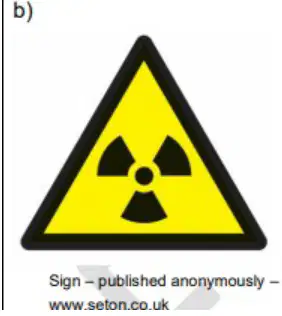
Which is a hazard warning sign used to indicate that plant is operating nearby? Required to answer. Single choice.
[Image: No pedestrian sign] Option 1
[Image: Radiation warning sign] Option 2
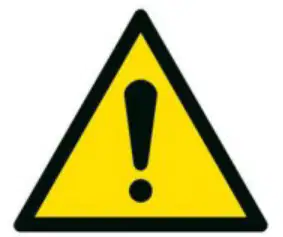
Which of these signs is a warning sign?
(Yellow triangle with black exclamation mark)
(Blue circle with white exclamation mark)

