
 Worksheets
EXAM 3-1
Total questions: 90
Worksheet time: 45mins
What is a covalent bond?
Electrons are transferred between atoms
Electrons are shared between atoms
Atoms lose protons
Atoms gain neutrons
What is an ionic bond?
Electrons are shared between atoms
Electrons are transferred between atoms, resulting in the formation of ions
Atoms share protons
Atoms lose neutrons
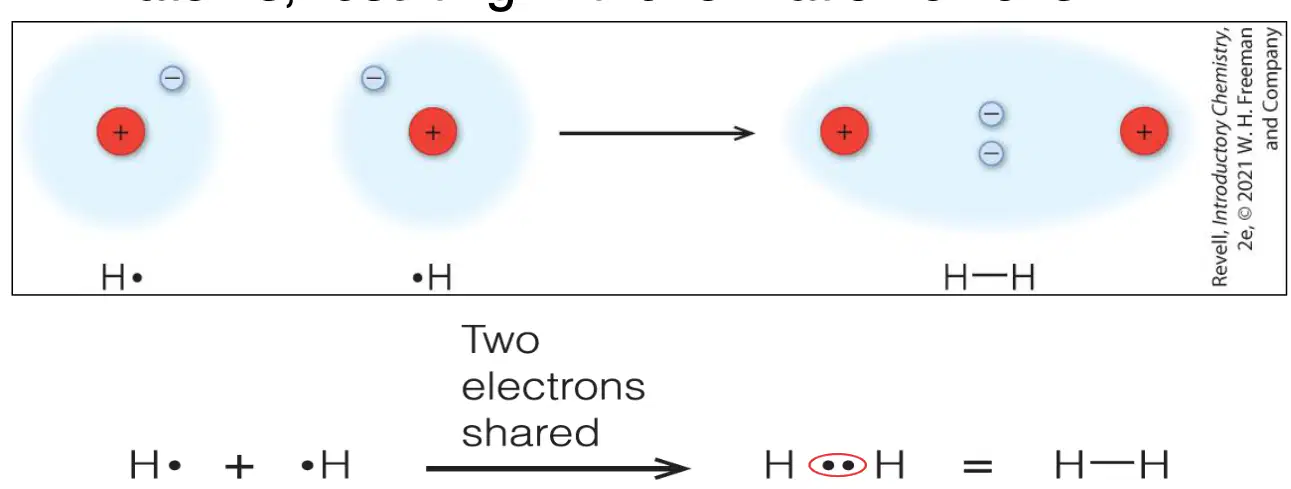
In a covalent bond, two ________ are shared between atoms.
electrons
protons
neutrons
ions
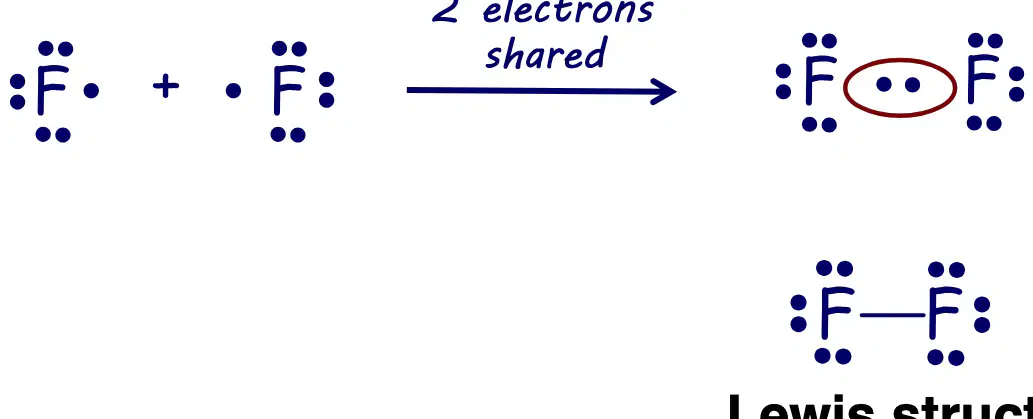
What type of bond is formed when two fluorine atoms share two electrons as shown in the diagram?
Ionic bond
Covalent bond
Metallic bond
Hydrogen bond
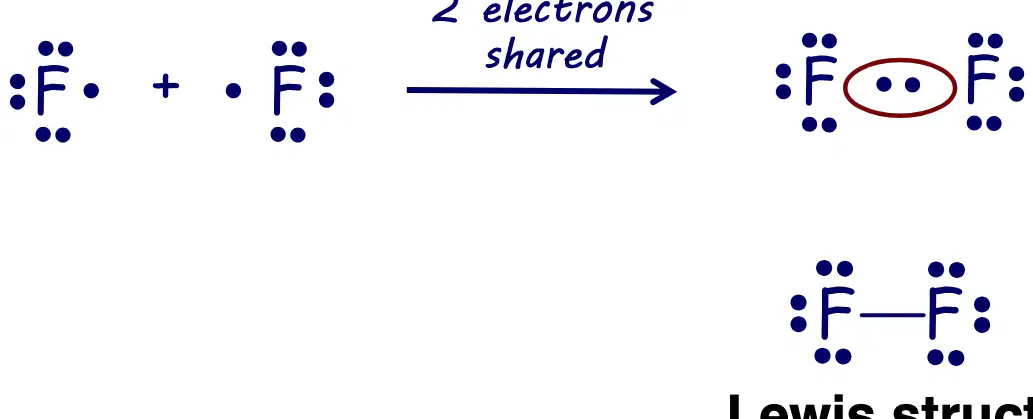
How many electrons are shared between the two fluorine atoms in the covalent bond shown in the diagram?
2 electrons
1 electron
4 electrons
6 electrons
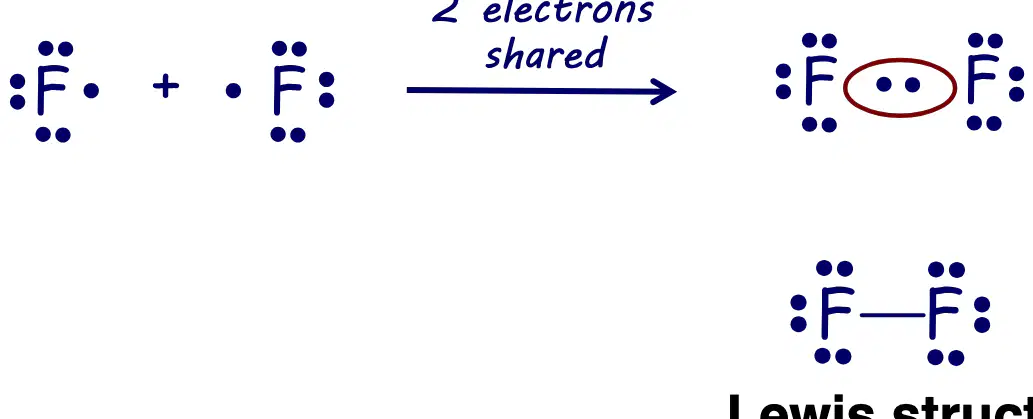
What is the Lewis structure for the F2 molecule as shown in the diagram?
The Lewis structure for F2 is :F—F: with each F atom surrounded by six dots representing lone pairs.
The Lewis structure for F2 is F=F with each F atom having four dots representing lone pairs.
The Lewis structure for F2 is F—F with no lone pairs on either atom.
The Lewis structure for F2 is F:F with each F atom surrounded by eight dots representing lone pairs.
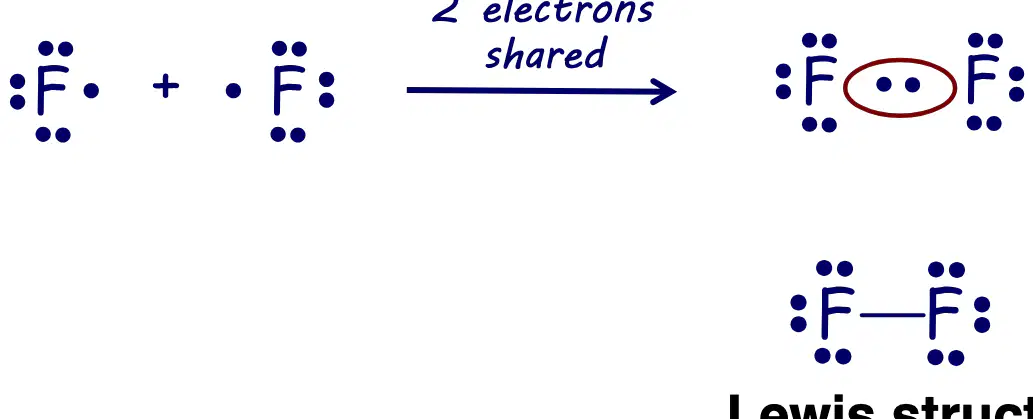
The process of covalent bonding between two fluorine atoms involves:
Each atom sharing one electron to form a single covalent bond.
Each atom transferring two electrons to the other atom.
Each atom gaining two electrons from the other atom.
Each atom losing one electron to the other atom.
Fill in the blank: The diatomic molecule formed by Hydrogen is _____.
H₂
H₂O
O₂
CO₂
Fill in the blank: The diatomic molecule formed by Nitrogen is _____.
N₂
NO₂
NH₃
N₂O
Fill in the blank: The diatomic molecule formed by Oxygen is _____.
O₂
O₃
O
O₂⁻
Fill in the blank: The diatomic molecule formed by Fluorine is _____.
F₂
F₃
F₄
F
Fill in the blank: The diatomic molecule formed by Chlorine is _____.
Cl₂
ClO₂
ClO
Cl
Fill in the blank: The diatomic molecule formed by Bromine is _____.
Br₂
BrO
BrCl
Br
Fill in the blank: The diatomic molecule formed by Iodine is _____.
I₂
I₃
IO₂
I
What do molecular formulas show in a molecule of a compound?
The ratio of atoms
The actual number of atoms of each element
The mass of the compound
The color of the compound
Is it necessary to simplify and reduce molecular formulas like in ionic compounds?
True
False
Binary covalent compounds are a combination of two ________.
nonmetals
metals
metalloids
noble gases
According to the nomenclature for molecular compounds, what is the correct order for naming?
Prefix + name of 1st element + 2nd prefix + base name of 2nd element + ide
Name of 1st element + prefix + 2nd prefix + base name of 2nd element + ide
Prefix + 2nd prefix + name of 1st element + base name of 2nd element + ide
Prefix + name of 2nd element + 2nd prefix + base name of 1st element + ide
The first element in a molecular compound is the more ________ one (left & bottom of periodic table).
metal-like
nonmetallic
gaseous
radioactive
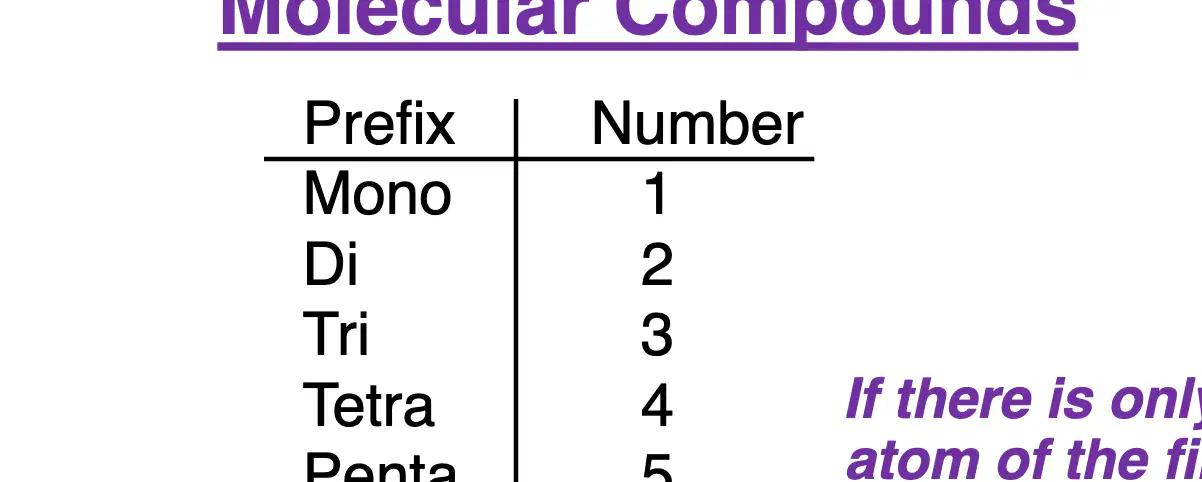
What is the prefix for the number 1 in molecular compounds?
Mono
Di
Tri
Tetra
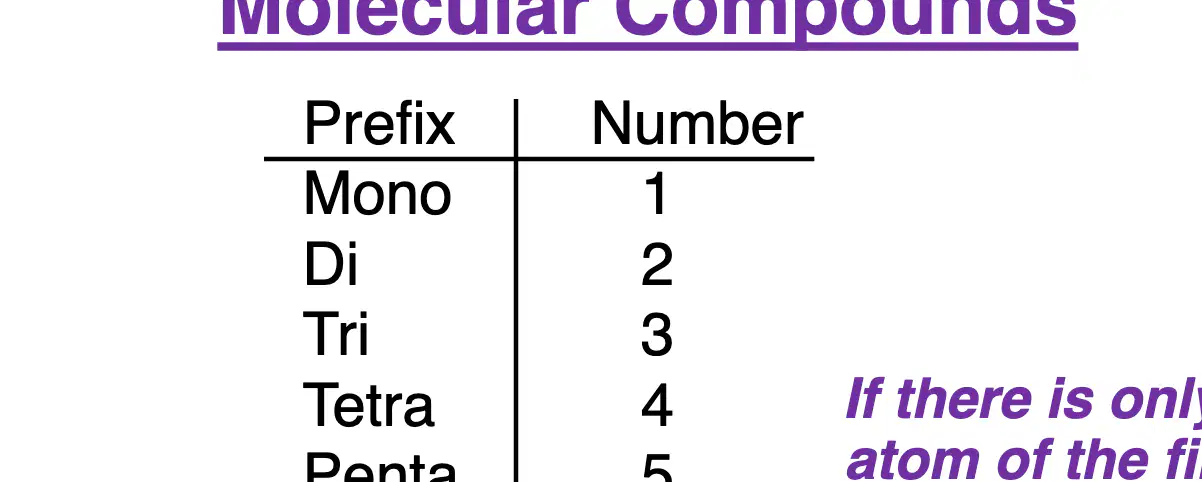
What is the prefix for the number 2 in molecular compounds?
Mono
Di
Tri
Tetra
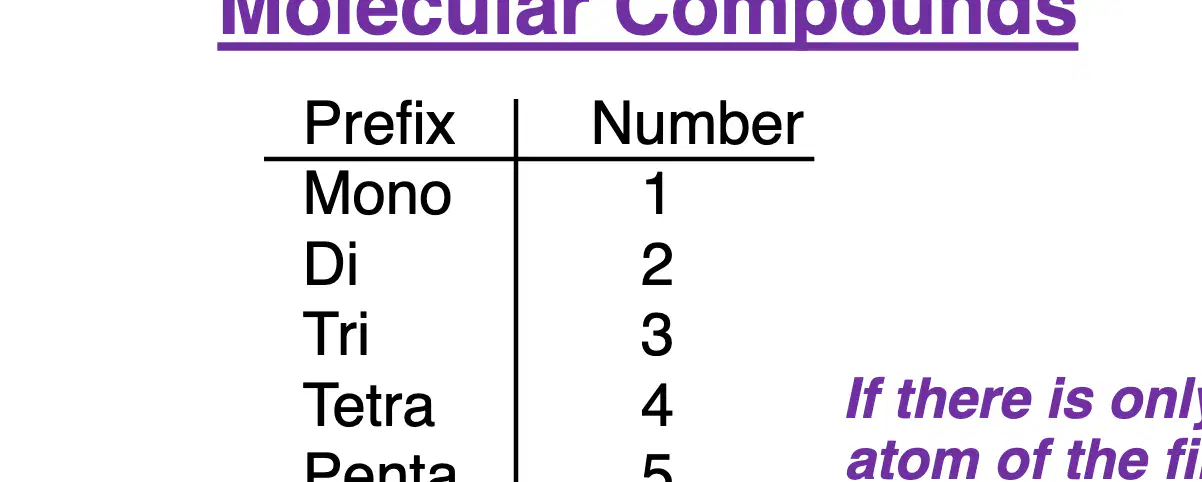
What is the prefix for the number 3 in molecular compounds?
Mono
Di
Tri
Tetra
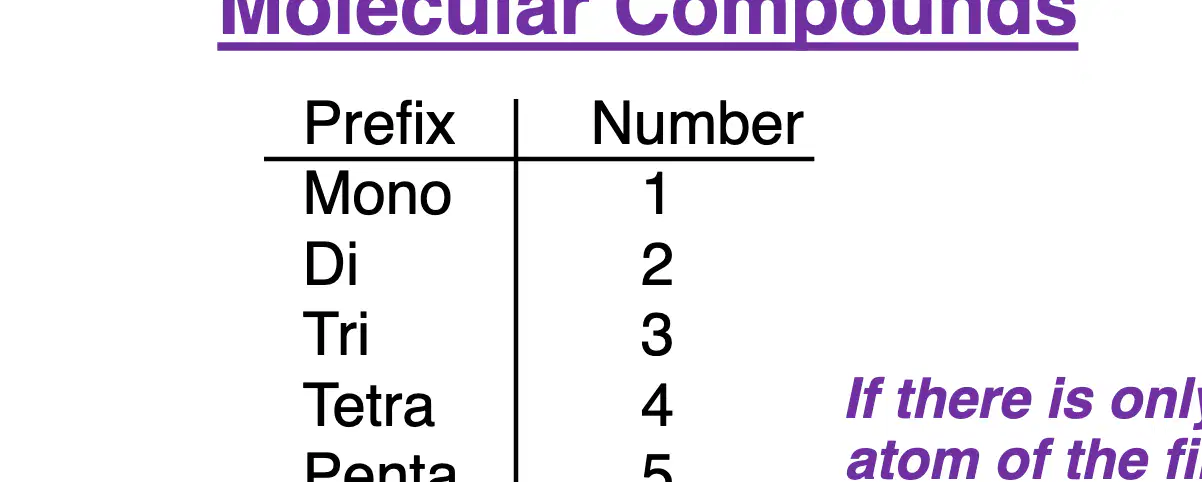
What is the prefix for the number 4 in molecular compounds?
Mono
Di
Tri
Tetra
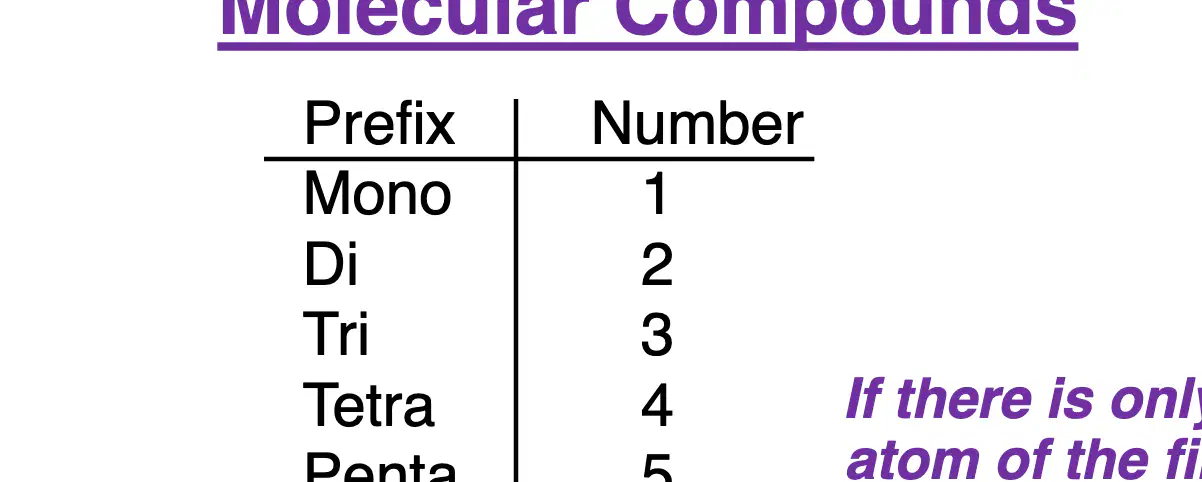
What is the prefix for the number 5 in molecular compounds?
Penta
Hexa
Hepta
Octa
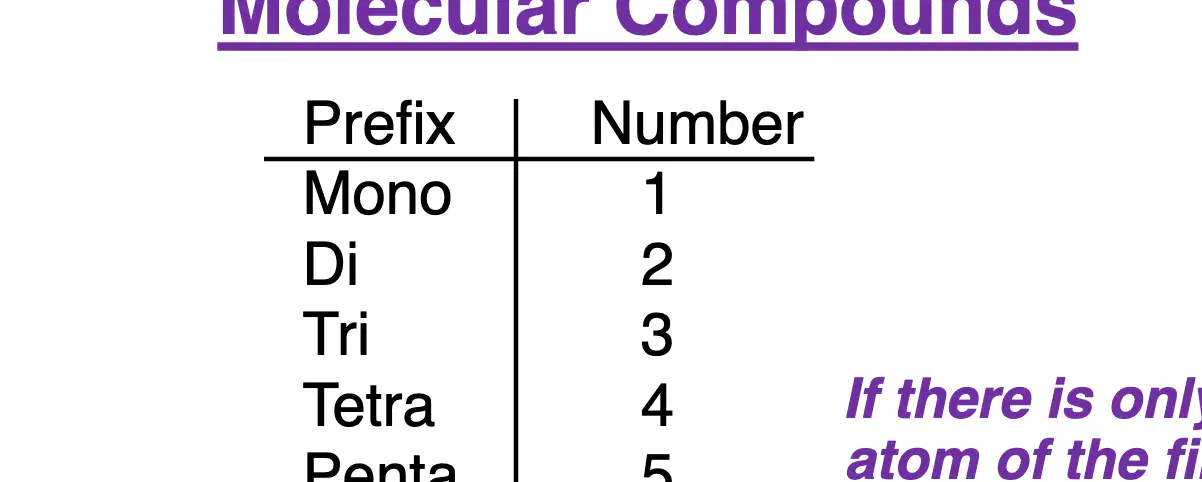
What is the prefix for the number 6 in molecular compounds?
Penta
Hexa
Hepta
Octa
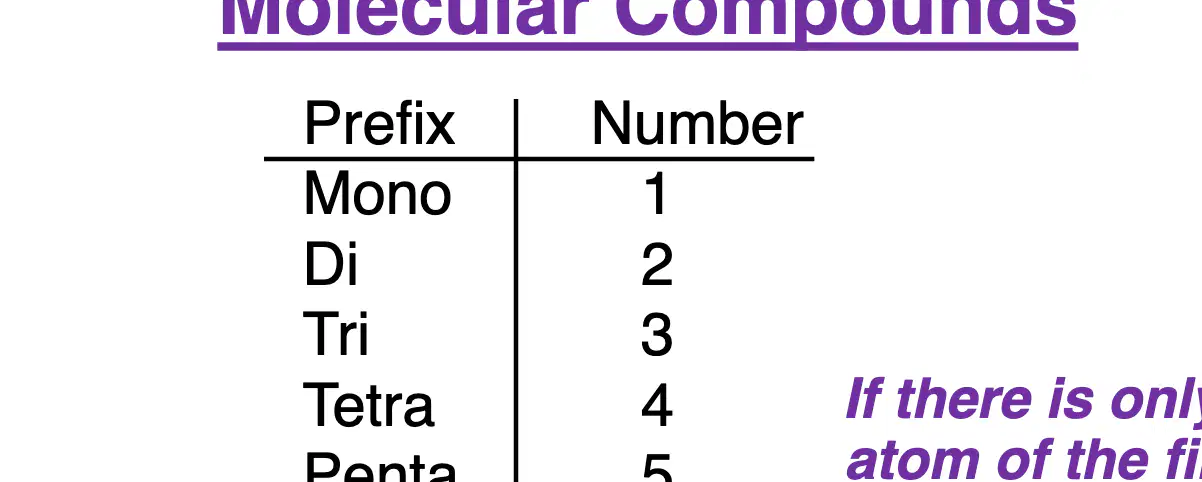
What is the prefix for the number 7 in molecular compounds?
Hepta
Octa
Nona
Deca
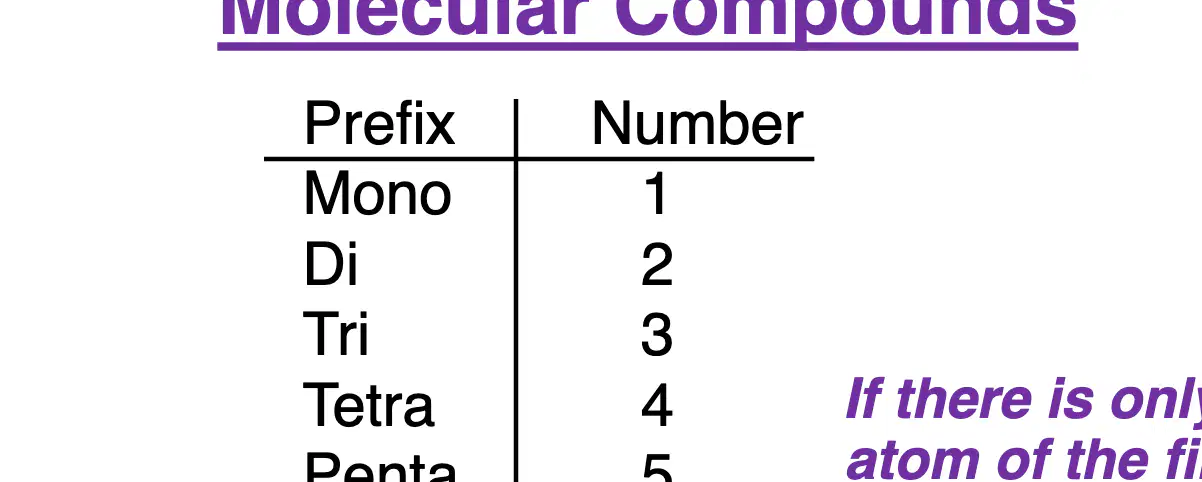
What is the prefix for the number 8 in molecular compounds?
Hepta
Octa
Nona
Deca
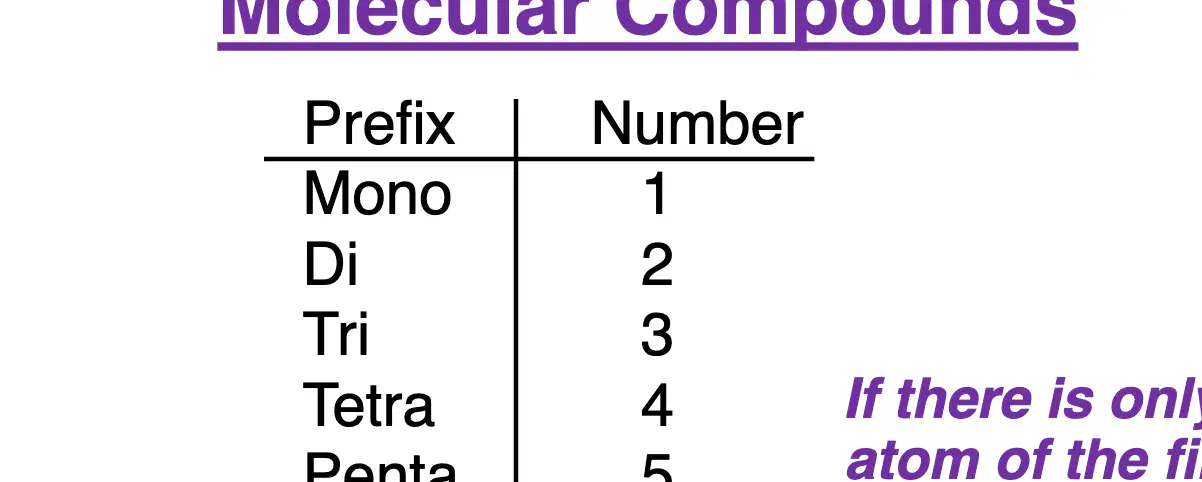
What is the prefix for the number 9 in molecular compounds?
Hepta
Octa
Nona
Deca
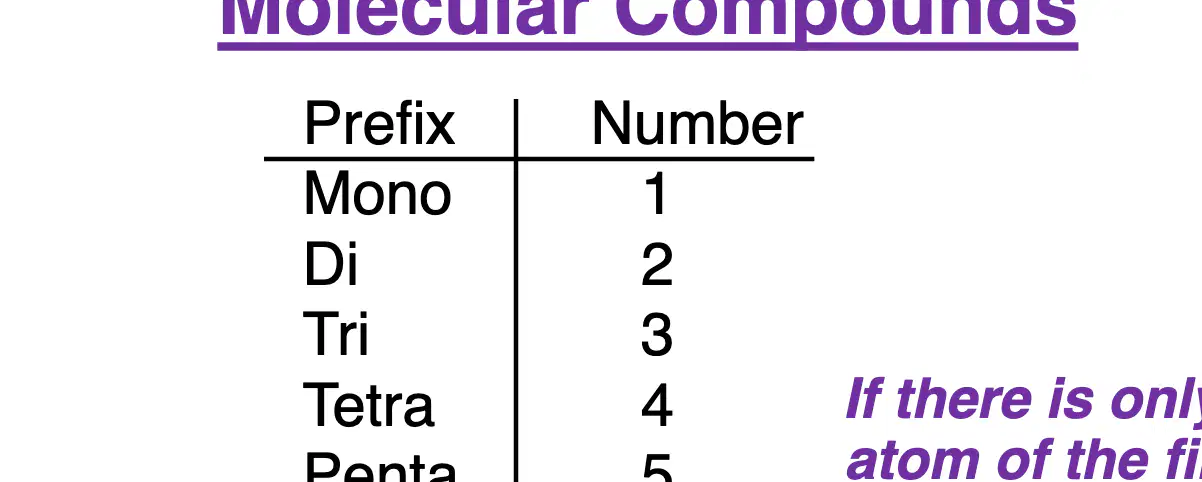
What is the prefix for the number 10 in molecular compounds?
Hepta
Octa
Nona
Deca
Fill in the blank: If there is only 1 atom of the first element, omit the prefix ____ (implied).
mono
di
tri
tetra
Name C3O2: ________
Tricarbon dioxide
Dicarbon trioxide
Carbon suboxide
Tricarbon monoxide
Name PCl5: ________
Phosphorus pentachloride
Phosphorus trichloride
Potassium pentachloride
Phosphorus pentafluoride
Write the chemical formula for Carbon disulfide: _______
CS2
CO2
C2S
CSO2
Write the chemical formula for Disulfur hexafluoride: _______
SF6
S2F6
SF4
S6F2
Write the chemical formula for a compound with 2 nitrogen and 4 oxygen atoms: _______
N2O4
NO2
N2O
NO
What's Wrong With the Following? What is wrong with the name 'SF₄: monosulfur pentafluoride'?
Can omit 'mono' since S appears first.
'Pentafluoride' should be 'tetrafluoride'.
Sulfur should be named as 'sulfide'.
The prefix 'mono' should be used for fluorine instead.
What is wrong with the statement 'Dichlorine heptaoxide is Cl₂O₆'?
Hepta means 7 so should be Cl₂O₇.
Hepta means 6 so should be Cl₂O₆.
Dichlorine means 3 so should be Cl₃O₇.
Hepta means 8 so should be Cl₂O₈.
What's Wrong With the Following? What is wrong with the name 'N₂O₃ is dinitrotrioxide'?
Needs to be separate words. Nitrogen needs to be completely written out. Should be dinitrogen trioxide.
The name should be trinitrogen dioxide.
The name should be nitro dioxide trinitrogen.
The name should be dinitrogen pentoxide.
What is the correct formula for iodine pentafluoride?
IF₅
F₅I
IF₄
F₄I
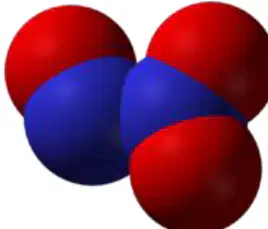
What is the correct formula for the following compound? Blue: Nitrogen Red: Oxygen
Nitrogen oxide
Binitrogen tetraoxide
Dinitrogen trioxide
Dinitrious pentaoxide
Fill in the blank: Atoms can fulfill the octet rule by ________ electrons (ions) or by ________ electrons (covalent bonds).
gaining or losing; sharing
sharing; gaining or losing
losing; gaining
sharing; losing
Which of the following is a characteristic of molecular compounds?
A) Oppositely-charged ions
B) Share electrons
C) Don’t form molecules
D) Formula unit or empirical formula
Which of the following is a characteristic of ionic compounds?
Share electrons
Between nonmetal atoms
Oppositely-charged ions
Usually form molecules
Molecular compounds are formed between ________ atoms.
nonmetal
metal
noble gas
alkali
Ionic compounds don’t form molecules.
True
False
Molecular compounds usually form molecules and have a ________ formula.
molecular
empirical
ionic
structural
The formula for a molecular compound is called a ________ formula, while the formula for an ionic compound is called a ________ or ________ formula.
molecular; formula unit; empirical
empirical; molecular; structural
ionic; empirical; molecular
structural; molecular; formula unit
Identify the following compound as ionic or covalent, and name it: MgF₂
ionic, magnesium fluoride
covalent, magnesium difluoride
ionic, magnesium difluoride
covalent, magnesium fluoride
Identify the following compound as ionic or covalent, and name it: Fe(NO₃)₃
ionic, iron(III) nitrate
covalent, iron(III) nitrate
ionic, iron(III) nitrite
covalent, iron(III) nitrite
Identify the following compound as ionic or covalent, and name it: P₂O₄
covalent, diphosphorus tetroxide
ionic, phosphorus(IV) oxide
covalent, phosphorus dioxide
ionic, diphosphorus tetroxide
Identify the following compound as ionic or covalent, and name it: SCl₆
covalent, sulfur hexachloride
ionic, sulfur hexachloride
covalent, sulfur chloride
ionic, sulfur chloride
Which of the following formula/name pairs is correct?
K₃N potassium nitride
Mg₂Cl magnesium chloride
Al₂O₃ dialumin trioxide
CuS copper sulfide
Which of the following is true about acids and bases?
They produce specific types of ions that other compounds do not.
They do not produce any ions.
They are always solid at room temperature.
They cannot dissolve in water.
According to the Arrhenius definition, what is an acid?
A substance that contains hydrogen and dissociates in water to yield H+.
Any substance that can donate a H+ ion to another substance.
A substance that relates to electron pairs.
A substance that contains oxygen.
Fill in the blank: According to the Bronsted-Lowry definition, an acid is any substance that can donate a ____ ion to another substance.
H+
OH-
Na+
Cl-
Which acid definition relates to electron pairs?
Arrhenius
Bronsted-Lowry
Lewis
None of the above
For our purposes, which acid definition are we using?
Arrhenius definition
Bronsted-Lowry definition
Lewis definition
Ostwald definition
Which element is listed first to recognize acids?
H (Hydrogen)
O (Oxygen)
C (Carbon)
N (Nitrogen)
Which of the following is a property of acids?
Sweet taste
Corrosive (burns your skin!)
Turns red litmus paper blue
Does not react with metals
Acids have a ______ taste.
sour
sweet
bitter
salty
What gas is formed when acids react with metals?
Hydrogen gas
Oxygen gas
Carbon dioxide
Nitrogen gas
When acids react with carbonates, what gaseous product is formed?
CO₂ (carbon dioxide)
O₂ (oxygen)
H₂ (hydrogen)
N₂ (nitrogen)
Acids turn blue litmus paper ______.
red
green
yellow
blue
What are molecular compounds (covalently bonded) called when they provide ions in water?
Bases
Electrolytes
Salts
None of the above
The process by which molecular compounds provide ions in water is called _________.
ionization
sublimation
condensation
deposition
Strong acids dissociate completely in water.
True
False
Which of the following is a strong acid?
HCl
CH3COOH
H2CO3
NH3
Fill in the blank: Weak acids only ________ dissociate.
partially
completely
rarely
never
Which of the following is NOT a strong acid?
HNO3
H2SO4
HClO4
CH3COOH
According to the information provided, what does it mean for a strong acid to ionize 100% in solution?
It means the acid completely dissociates into its ions in water.
It means the acid only partially dissociates in water.
It means the acid does not dissociate at all in water.
It means the acid forms a weak base in water.
What is the formula for Hydrochloric acid?
HCl
H2SO4
HNO3
H2CO3
What ions are produced when Hydrochloric acid (HCl) is dissolved in water?
H⁺(aq) + Cl⁻(aq)
Na⁺(aq) + Cl⁻(aq)
H₂O(l) + Cl₂(g)
H⁺(aq) + OH⁻(aq)
What is the formula for Hydrobromic acid?
HBr
HCl
H2SO4
HNO3
What ions are produced when Hydrobromic acid (HBr) is dissolved in water?
H⁺(aq) + Br⁻(aq)
H₂(aq) + Br₂(aq)
HBr⁺(aq) + H⁻(aq)
H⁺(aq) + Br₂⁻(aq)
What is the formula for Hydroiodic acid?
HI
HBr
HCl
HF
What ions are produced when Hydroiodic acid (HI) is dissolved in water?
H⁺(aq) + I⁻(aq)
H₂O(l) + I₂(s)
H₂(g) + I⁻(aq)
H⁺(aq) + IO₃⁻(aq)
What is the formula for Nitric acid?
HNO₃
H₂SO₄
HCl
H₂CO₃
What ions are produced when Nitric acid (HNO₃) is dissolved in water?
H⁺(aq) + NO₃⁻(aq)
H₂O(l) + NO₂⁻(aq)
H⁺(aq) + NO₂⁻(aq)
H₃O⁺(aq) + NO₂⁻(aq)
What is the formula for Perchloric acid?
HClO₄
HClO₃
HClO₂
HClO
What ions are produced when Perchloric acid (HClO₄) is dissolved in water?
H⁺(aq) + ClO₄⁻(aq)
H₂O(l) + Cl⁻(aq)
H⁺(aq) + Cl⁻(aq)
HClO₄⁻(aq) + H⁺(aq)
What is the formula for Chloric acid?
HClO₃
HClO₄
HClO₂
HCl
What ions are produced when Chloric acid (HClO₃) is dissolved in water?
H⁺(aq) + ClO₃⁻(aq)
H⁺(aq) + ClO₂⁻(aq)
H₂O(l) + Cl⁻(aq)
H⁺(aq) + Cl⁻(aq)
What is the formula for Sulfuric acid?
H₂SO₄
HNO₃
HCl
H₂CO₃
What ions are produced when Sulfuric acid (H₂SO₄) is dissolved in water?
H⁺(aq) + HSO₄⁻(aq)
Na⁺(aq) + Cl⁻(aq)
H₂O(l) + SO₄²⁻(aq)
H⁺(aq) + Cl⁻(aq)
Fill in the blank: Weak acids are all acids, except for the seven ______ acids.
strong
basic
neutral
organic
Fill in the blank: Weak acids ionize ______ in water.
only partially
completely
not at all
very rapidly
Fill in the blank: Weak acids dissolve mainly as ______ with a small percentage of ions.
molecules
atoms
salts
bases
What ion do acids produce?
OH-
H+
Na+
Cl-
What is H3O+ called?
Hydroxide ion
Hydronium ion
Hydrogen ion
Chloride ion
Fill in the blank: The ion that acids produce is _____.
H+
OH-
Na+
Cl-

